
In August, gardens positively drip with ripening tomatoes, cucumbers, and zucchini. Herbs and summer fruits are at their peak, and elderberries have begun to ripen.
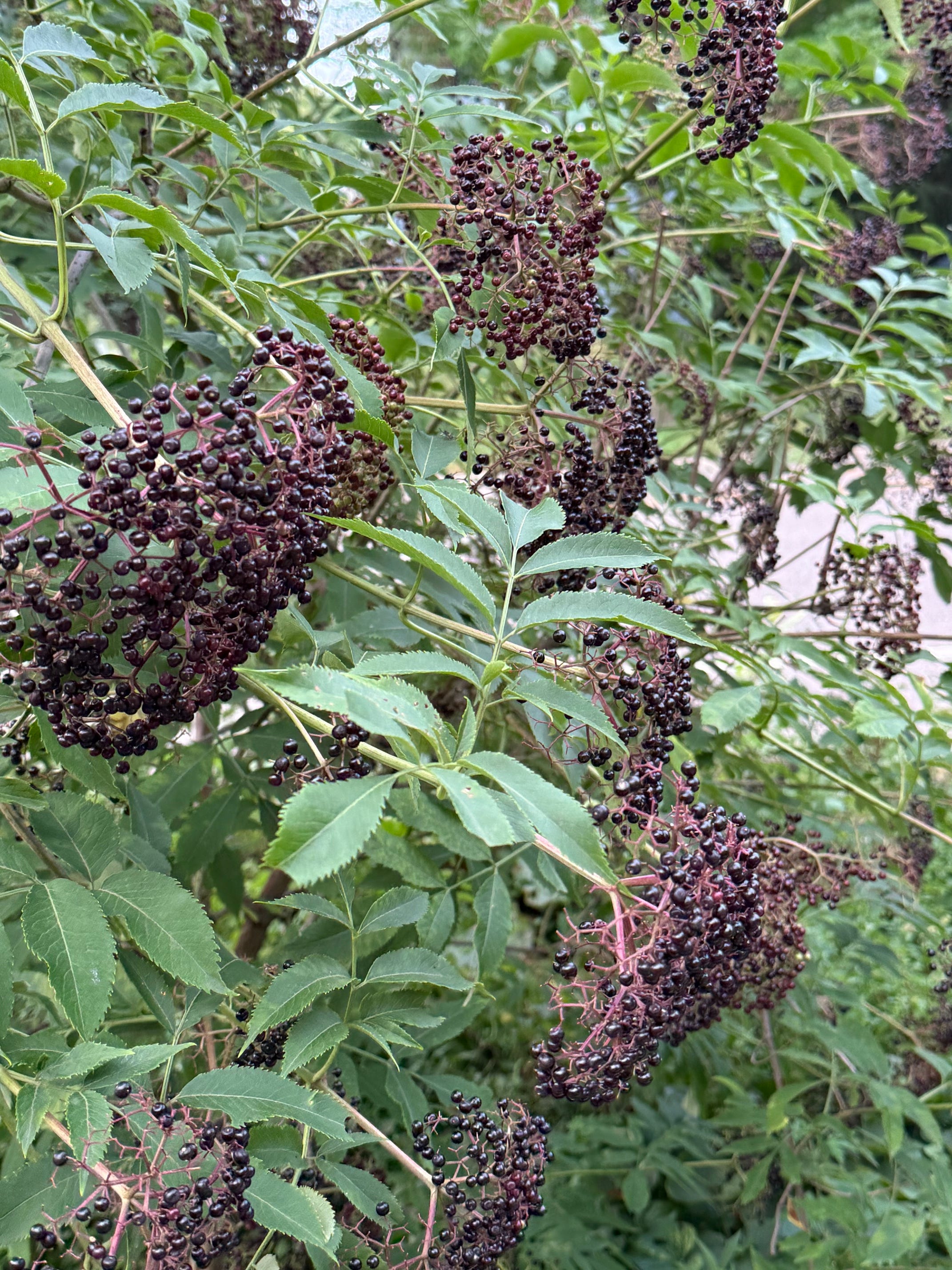
Now’s the time to gather up plenty of elderberries to enjoy in drinks, syrups, baked goods, and more.
I’ve foraged a lot of wild elderberries, but it’s the ones I grow in my parking strip that I’m always most excited about, in large part because growing them in my own garden means I know exactly when it’s time to harvest and don’t have to drive somewhere to hunt for them.
Additionally, elderberry cultivars have generally been selected for their larger, more flavorful fruit or more abundant berries, while those you find wild can vary a lot on those scores.
If you have a place in your yard for them, I highly recommend growing your own elderberries. They’re pretty low maintenance, plus you get the bonus harvest of elderflowers in early summer. If you want to know more, you can find details about growing elderberries in this guide, and more than you’d ever want to know about types of elderberry here.
But if you don’t grow your own, wild elderberries are easy to find and forage. They’re not hard to identify once you know what you’re looking for, and bringing in a big harvest is quick work when you find a productive bush. Elderberry season can last awhile because different shrubs ripen at different times, and most berries on any given plant don’t ripen all at the same time.
Here’s what to know about elderberry identification.
Thanks for reading Garden & Forage with HealthyGreenSavvy! This post is public so feel free to share it.
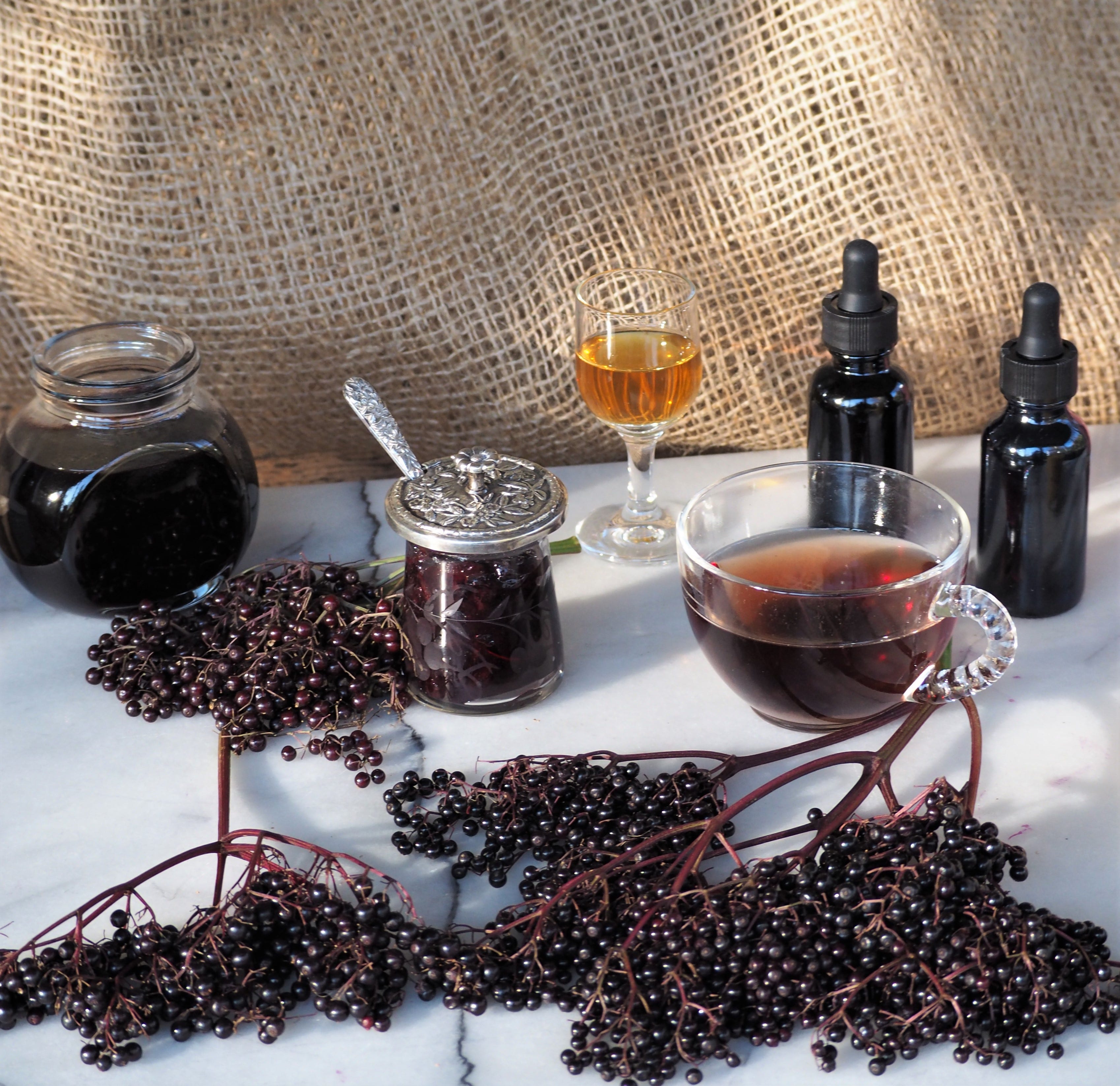
Once you’ve got a nice supply of elderberries, here are my top tips for using them. You can enjoy them as a flavorful addition to food, or make some simple medicinal preparations to support health this winter. Some of the berries I’m harvesting now will go into baked oatmeal and muffins, while others will flavor vinegar or get turned into tinctures I use to fight off viruses in winter. Last year I combined them with some of the aronia berries I harvested for extra powerful immune-supporting tinctures and syrups.
Another valuable medicinal plant to seek out right now is goldenrod.
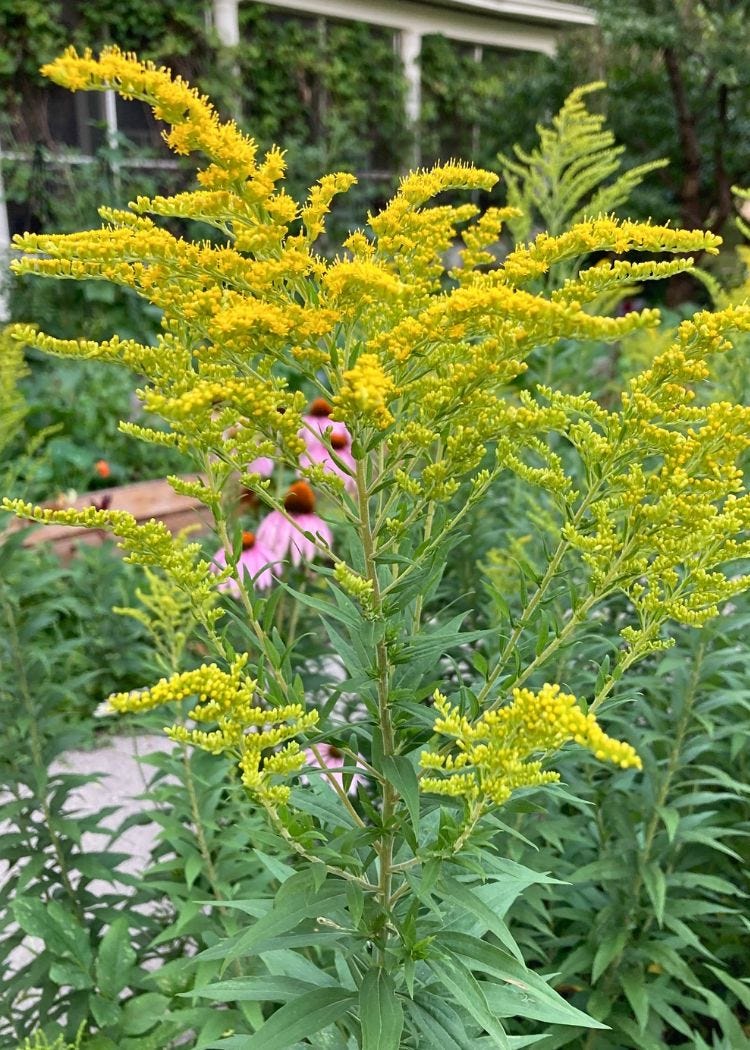
Common goldenrod (often mistaken for ragweed — here’s how to distinguish goldenrod from ragweed) is another easily foraged medicinal plant that’s great to have on hand for a number of complaints, and it’s one herbalists often recommend for seasonal allergies.
Here’s what to know about foraging and using goldenrod.
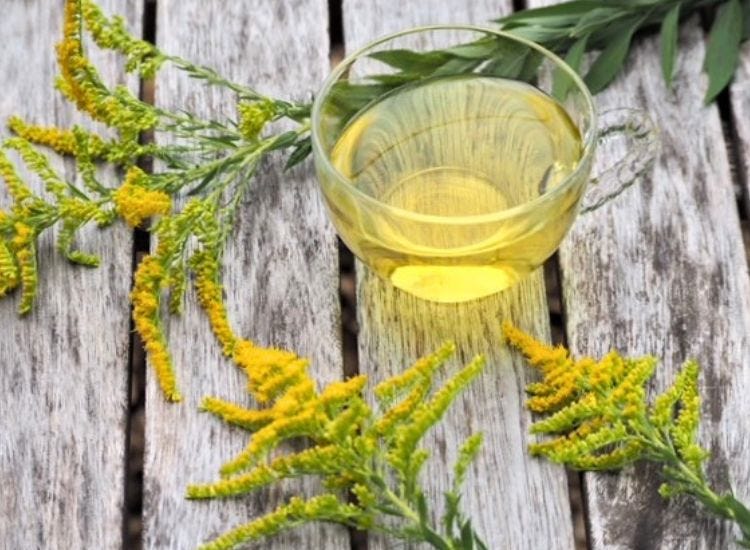
Use some fresh to make a simple goldenrod tea, and dry some to use later for respiratory ailments and digestive support.
Some less wild plants you might be pondering how to use right now: Cucumbers and zucchinis.
We go through a lot of cucumbers just eating them on their own and in salads, but I was surprised when I looked into it for a post how versatile this garden staple is.
Even if you’re pretty into preserving herbs and other garden produce, most people don’t think about preserving cucumbers unless it’s making pickles.
But you have plenty of options beyond pickles when faced with a boatload of cucumbers, from crunchy chips to frozen cubes you can add to your favorite healthy smoothie recipes all year long.
For the cukes you don’t care to preserve, you can explore this collection of 35 creative cucumber recipes, including soups, drinks, salads, stir fries, even sorbet.
And if you grow zucchini or know someone who does, you likely have more than you know what to do with. Once you’ve done a few rounds of ratatouille, zucchini chips, zucchini bread, and other favorites, explore dozens more healthy zucchini recipes to help you make the most of your harvest.
Hope you’re eating some delicious seasonal foods this week!
Susannah
No posts
Comments
Nothing yet. Say the first thing.
Sign in to join the conversation.