
This piece was written by Veronica Vigdorchik, Program Director in Israel for Healing Across the Divides (healingdivides.org). She writes from her firsthand experience working on the ground in Israel, where she partners daily with the communities and organizations described below:
To be a Jewish citizen of Israel today is to live in a state of constant, compounding stress. But for me, the deepest anger does not just come from the external threats we face. It comes from within. It comes from watching my neighbors—the Arab-Palestinian citizens of this country—being systematically abandoned to an epidemic of blood and terror, while the state looks on with calculated indifference.
I am angry because I believe in a simple, non-negotiable truth: all human lives are equal. I want us all to live in safety. I want my Palestinian neighbor in his town to be able to walk to the grocery store without checking the street for gunmen. I want Palestinian mothers to send their children to play outside without the suffocating dread that a stray bullet will end their lives. Yet today, this basic, fundamental right to life is being denied to nearly 20% of Israel’s population.
How did we get here? And what does it mean to try and build community when the very ground you stand on is stained with blood?
The explosion of violence in the Arab-Palestinian community inside Israel over the last few years is not an accident, nor is it a cultural inevitability. It is the direct result of systemic sociopolitical and economic oppression, combined with decades of deliberate state neglect.
For years, Israeli authorities operated under a chilling, unwritten premise: “As long as they are shooting each other in Arab towns, it won’t reach Jewish cities. Let them fight among themselves.” Organized crime syndicates were allowed to fester, weapons flooded the streets, and the police looked the other way. This structural neglect does more than just abandon lives; it actively feeds into and reinforces deeply ingrained racist stereotypes. By letting the blood flow unchecked, the state tacitly validates a toxic narrative that Palestinians are inherently violent, reducing an entire society to a caricature of lawlessness. It creates a devastating self-fulfilling prophecy that is used to justify public apathy and further state inaction.
This neglect turned toxic with the election of the current government, which placed Itamar Ben Gvir—a far-right politician with a history of anti-Arab incitement—as the Minister of National Security, directly in charge of the police. Under his watch, the neglect has turned into active abandonment.
The numbers are staggering and historic:
The Death Toll: In 2022, there were 109 homicides in the Arab sector. By 2025, that number skyrocketed to an unimaginable record of 255 murders. The year 2026 is breaking even more horrifying records, with 109 citizens murdered by June alone—putting the community on track for another bloodbath.
The Impunity: If you murder a Jewish citizen in Israel, there is a 70% chance the police will solve the crime. If you murder an Arab citizen, that rate drops to a pathetic 10.5% to 15%. The state has essentially sent a message to criminal organizations: You can kill with total impunity.
For American readers, this reality should sound devastatingly familiar. It is the same structural violence, systemic disinvestment, and deliberate under-policing of violent crime that has plagued marginalized Black and Brown neighborhoods in the United States for generations. When the state withdraws its protection, gangs step into the vacuum, and innocent families pay the ultimate price.
In this terrifying environment, two grassroots organizations funded by Healing Across the Divides—Al-Baqour and Citizens Building Community (CBC)—are attempting to do the impossible. They are working to heal trauma and build community resilience. But their staff and participants do so at the risk of their own lives.
Al-Baqour works in the Bedouin Arab communities of the Negev desert—one of the most marginalized populations in the country. Their program, “Ana Watfli” (My Child and I), is designed to support early childhood development, teaching new mothers how to foster healthy physical and emotional growth in their infants. It is supposed to be a safe, nurturing space for mothers to bond and share.
But violence does not respect safe spaces.
From December 2025 to February 2026, Al-Baqour ran a workshop cycle in the city of Rahat. On the very last day of the program, as the mothers prepared for their final session and evaluation, the program facilitator’s son was shot and killed in an incident of gun violence. The tragedy shattered the group. The participating mothers, the staff, and the facilitator were plunged into deep trauma and grief. Out of respect for the facilitator’s loss, the final evaluation was halted. A program designed to teach mothers how to nurture new life was abruptly ended by the violent theft of a young life.
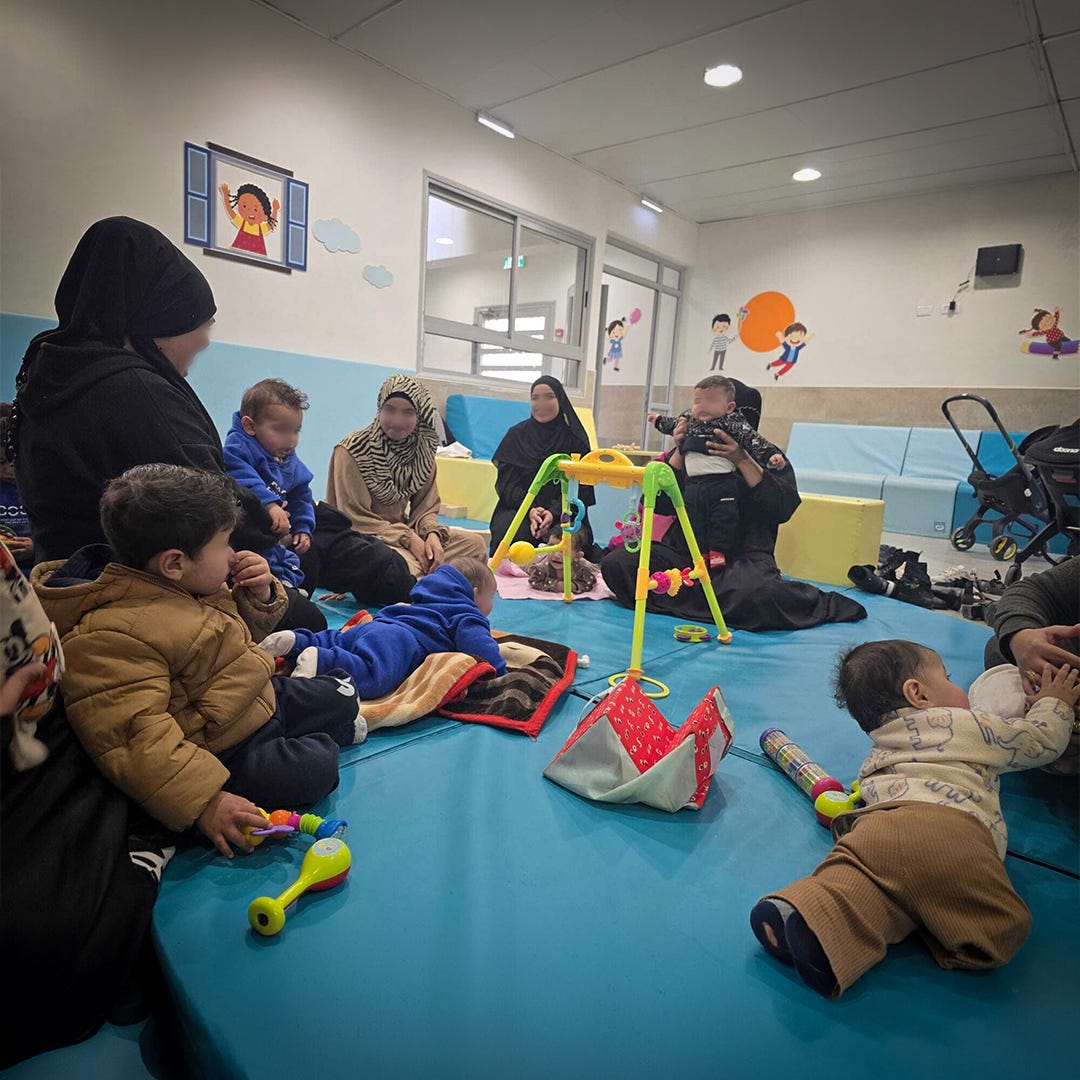
The trauma, however, does not stop at a single tragedy; it is woven into the daily reality of the staff. The organization’s CEO recently shared a devastating breakdown of what her team is enduring just to keep their programs running: out of 16 facilitators on staff, three have had immediate family members murdered. Several others belong to families locked in active, highly threatened disputes.
The toll this takes on the organization’s daily operations is agonizing. One staff member suddenly had to flee to the southern city of Eilat for a week just to escape immediate danger; another suffers from chronic, trauma-induced insomnia. Most horrifyingly, two members of the senior management team are in the direct line of fire. One was shot alongside her infant baby while they were sitting outside their home. Another lies awake listening to gunfire targeting her uncles’ homes in the dead of night.
This is the psychological tax of doing community work here: you are never just an educator or a social worker; you are a first responder to community-wide grief, operating while your own home is being targeted.
Further north, in the mixed Jewish-Arab cities of Lod and Ramla, Citizens Building Community (CBC). Their project, “Healing Lod & Ramla Families: Trauma-Informed Community Resilience,” aims to train local community fellows to support families dealing with severe, chronic trauma.
Lod and Ramla are centers of intense gang warfare, where stray bullets regularly pierce living room windows and extortion is a daily business model. CBC’s staff and community fellows operate in an atmosphere of constant physical danger. They are not just treating trauma; they are experiencing it in real-time.
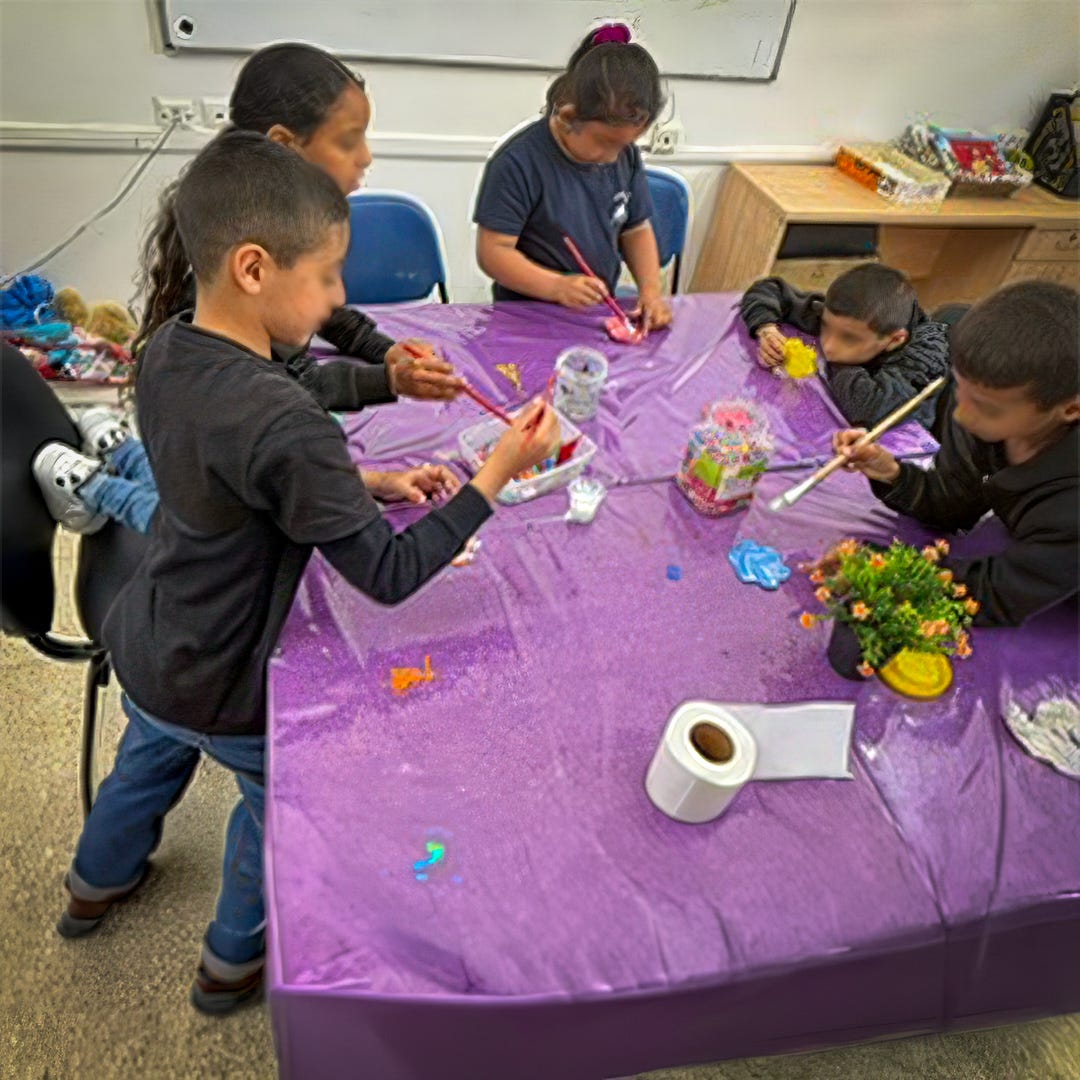
For CBC, this danger is not theoretical—it is deeply woven into the history of the organization. The founder and director of the organization, who also serves as a local elementary school principal, was shot and wounded several years ago in a targeted attempt to silence and intimidate him. To this day, the crime remains completely unsolved, with no suspects ever identified or brought to justice.
When a school principal and community leader can be shot in broad daylight with absolute impunity, and when staff must walk through neighborhoods where heavily armed criminals rule the streets, every community meeting or home visit becomes a calculated risk. To advocate for peace and safety in Lod and Ramla is to put a target on your back. Yet, CBC continues to build these fragile safety nets, providing psychological first aid to families who have been completely forgotten by the state.
These two organizations are holding up the crumbling walls of our shared society with their bare hands. But they cannot do it alone.
As a Jewish Israeli, I refuse to accept a reality where a child’s safety depends on their ethnicity. I refuse to be silent while the police force of my country abandons an entire society to be slaughtered.
If we want a future here, we must recognize that our safety is bound together. My neighbor’s children must be as safe as my own. Until the state of Israel treats the murder of an Arab child with the same urgency as the murder of a Jewish child, we will all continue to drown in this cycle of fear, anger, and blood.
We must demand accountability. We must support the brave people of Al-Baqour and CBC who risk everything every day. Because if we lose them, we lose our humanity.
The people of Al-Baqour and CBC refuse to give up, even when their own lives are on the line—and they should not have to carry this weight alone. Stand with them today by getting involved and making a donation at https://healingdivides.org/donate/, because every gift helps keep these fragile safety nets from breaking.
This piece is written in loving memory of Mukhtar Ata Abu Medighem, who was taken from us at the young age of 22, and in deep honor of his mother, Hala, and his father, Ata, for their courage and resilience.
No posts
Comments
Nothing yet. Say the first thing.
Sign in to join the conversation.