
Why it matters: Yesterday we talked about how much the brain likes predictability. The converse of that is disliking uncertainty. New environments, new schools, new classes and curriculums can lead to anxiety which can make for big emotions (especially in brains that haven’t learned to recognise or regulate their emotions). In experiments in the lab, if you have a 50% chance of receiving a mild shock (and therefore a 50% chance of not receiving a shock) most people show more signs of stress and anxiety than when there is a 100% chance (ie a certainty) that they will receive a shock. The uncertainty is more stressful than the certainty of the shock!
It makes sense that uncertainty would be stressful. The brain is making predictions to understand, interpret and prepare to act based on incoming and internal states and information.
In uncertain and unpredictable environments the brain has to weigh up more information in deciding how to act, and incorrect predictions could have larger consequences. Imagine trying a new food without getting to taste or smell it first- bet you are a lot more nervous than if you have some clues as to what you are about to ingest!
Age specific practical tips:
Under 3s: Play and Read: Play is a gift in this situation. Role play a day at nursery or preschool. Have dolls or toys go to nursery and go through all the steps of a day. Read books related to going to nursery so that your child gets a better sense of what to expect - talk through what is happening in the books (this is good for language development too!)
Age 4-5: Read and Talk: Books about school anxiety are a great starting point for talking about what is coming up and where anxieties lie. Is it being away from parents, is it making new friends or is it worries about school work getting harder. Have open conversations regularly and talk about ways to make this easier. Maybe it involves a playdate this week to get used to seeing friends again, or arranging to walk or travel to school at the same time as a class mate.
Age 6-8: Talk and problem solve: You want to be helping your kids practice meta-cognition (thinking about thinking) and self-regulation (monitoring and managing your thoughts and behaviours). Ask your children what is causing them anxiety and help them come up with ways to help reduce their anxiety. Worried about lessons getting harder? How can we feel more prepared?
Age 8+ Listen: Get into the habit of actively listening without judgement (stop yourself from interrupting or trying to fix things). You want to encourage your children to open up to you about their worries. You might not be able to fix things, and they might not want you to, so just listen. You are providing them with a safe space to air their concerns not trying to fix everything.
Day 2 Checklist:
🔲 Encourage play, reading or talking to process anxieties
🔲 Talk through what to expect (use books or TV to make this even more easily visualisable)
🔲 Encourage problem solving - talk through worries and think about ways to ease anxieties when there are obvious fixes. Worried about maths- how can we be more confident? Where can we find information to help (guide them to the curriculum and resources to practice)
🔲 Learn to listen. Not every problem can be fixed, but every problem benefits from someone listening
Day 3: Tomorrow is all about getting organised. I’ll share simple organisational systems that can help everyone feel less overwhelmed
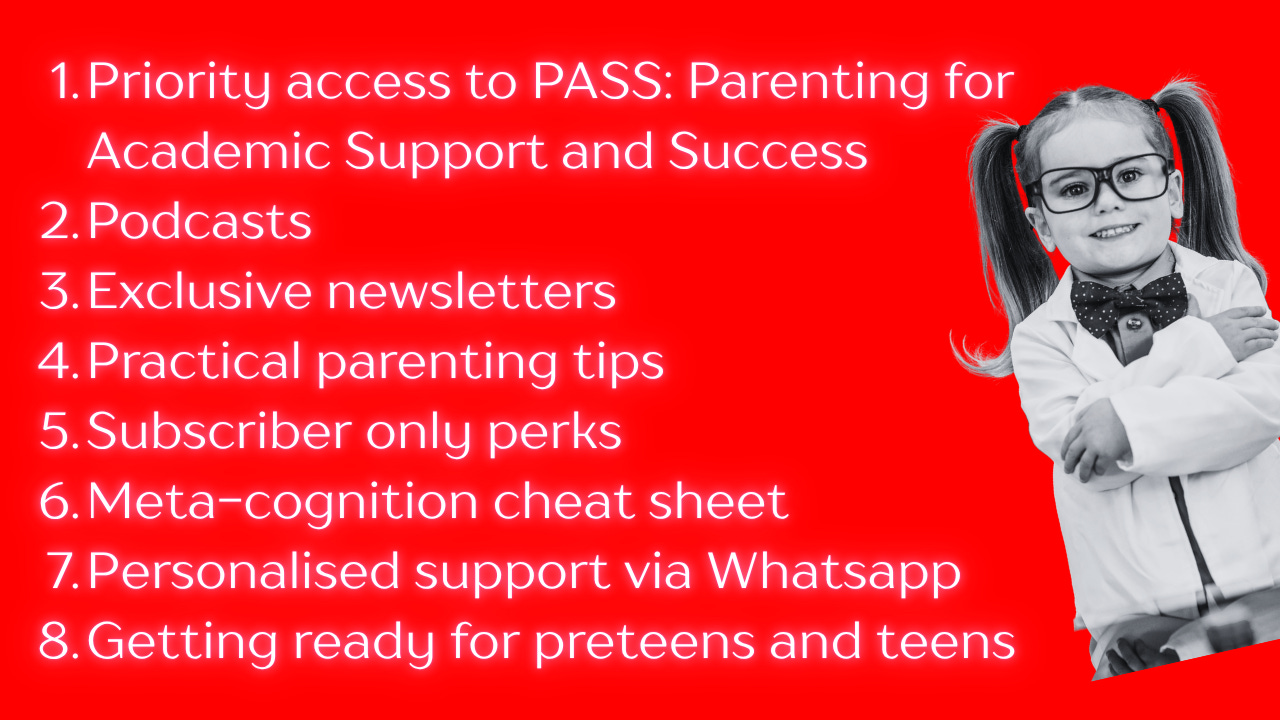
Quick one: I am launching PASS (Parenting for Academic Support and Success) an evidence-based guide to raising kids who love to learn. Know how much you should be reading to them? When to stop? How to support maths and science? What keeps kids curious? This will be everything you need for supporting kids 5-10 with education.
Find this useful? Consider becoming a paid subscriber:
Comments
Nothing yet. Say the first thing.
Sign in to join the conversation.