
I have been back home from Morocco for just about a month now and have struggled to put the experience into words (I clearly failed when trying to convey a mix of emotions in Fes). I love Morocco for its complexity, the fact that I cannot easily tell the story of a month spent there when anyone asks. It wasn’t easy travel, and I’m glad I did it. I miss so much about the daily life I settled into there: wandering the medinas, the mint teas (once I realized I needed to ask for no sugar), the food, the hospitality and kindness of those who hosted me, and the extreme diversity in landscapes. Now that I’m back home, I’m starting to look back on the places I went and sift through my notes and photographs to make a few photo essays like this one.
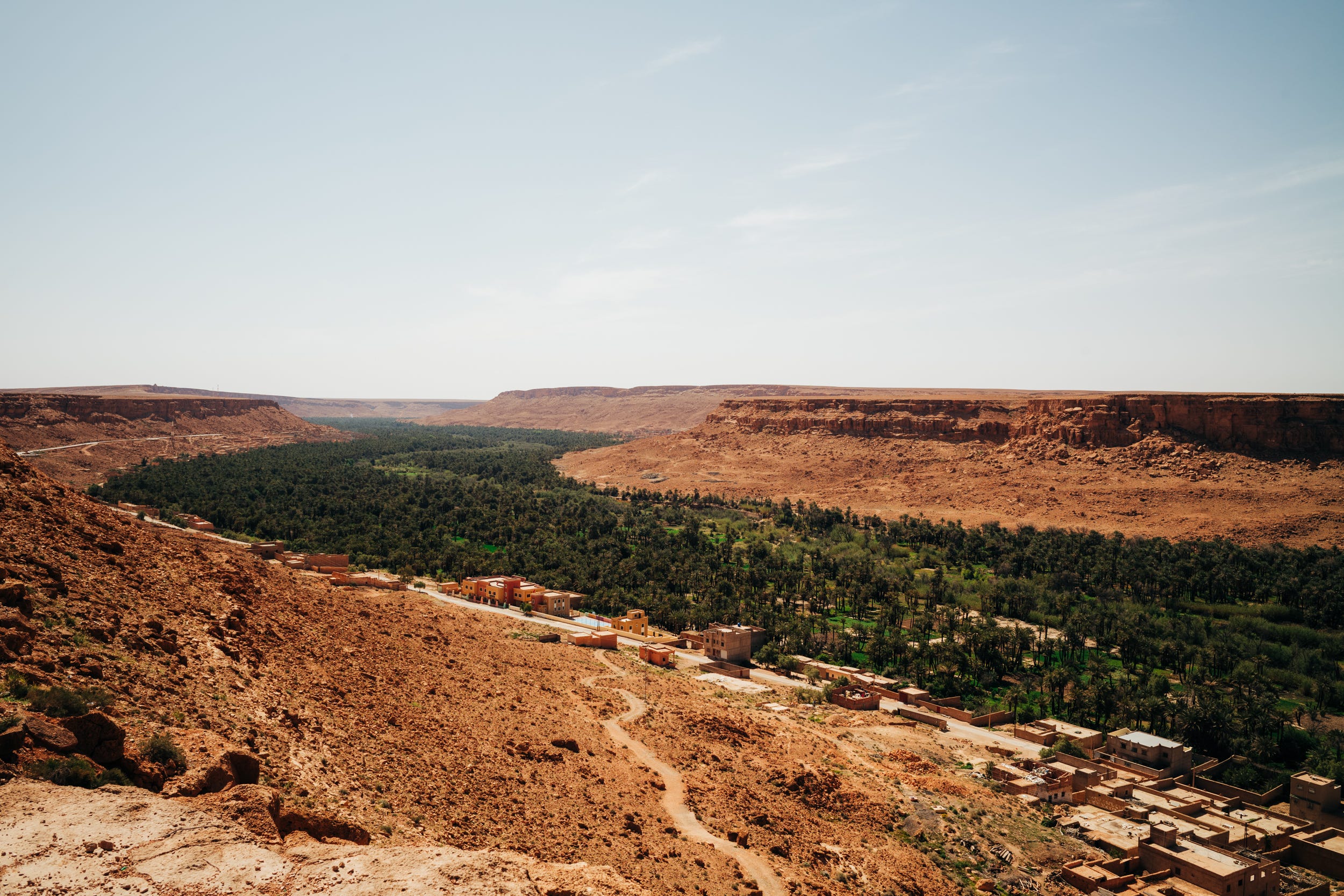
I spent about a week between Agadir and Merzouga, in the enormous area where the Anti-Atlas and High Atlas fade into the edge of the Saharan desert. I normally spring for the freedom of having my own wheels every chance I get, but not renting a car was one of the best decisions I made in Morocco. Getting out of and back into the city, where most rental companies are located, would have been a hassle (the driving in the desert itself is pretty easy) by myself. Instead of stressing about the checkpoints and the way people drive, I was able to stare at this big expanse of landscape as it passed by, actually taking it all in. If I weren’t traveling alone, I might have done it differently and rented a car, but not driving in Morocco is definitely not a regret of mine. I also met some other wonderful travelers, and we spent a couple of days doing day trips together.
One of the best things I did in the desert was join a guided trip to see an oasis village near Merzouga. The desert has drawn me in since before I ever picked up a camera, and having grown up by the ocean, I think it's sometimes even more inspirational to me simply because of how exotic it feels. Things tend to move slowly here, as they also do by the ocean. There’s a simplification of life, a certain kind of humility that comes with living closely to an environment that sustains and can also kill you. The light and the surrounding landscape that reflects it in the desert are also unlike anywhere else. I often think that the only other place I could live happily aside from near the ocean is in the desert, which kind of makes no sense, but I think it speaks to the feeling I get in both places, the understanding of my smallness in this massive world.
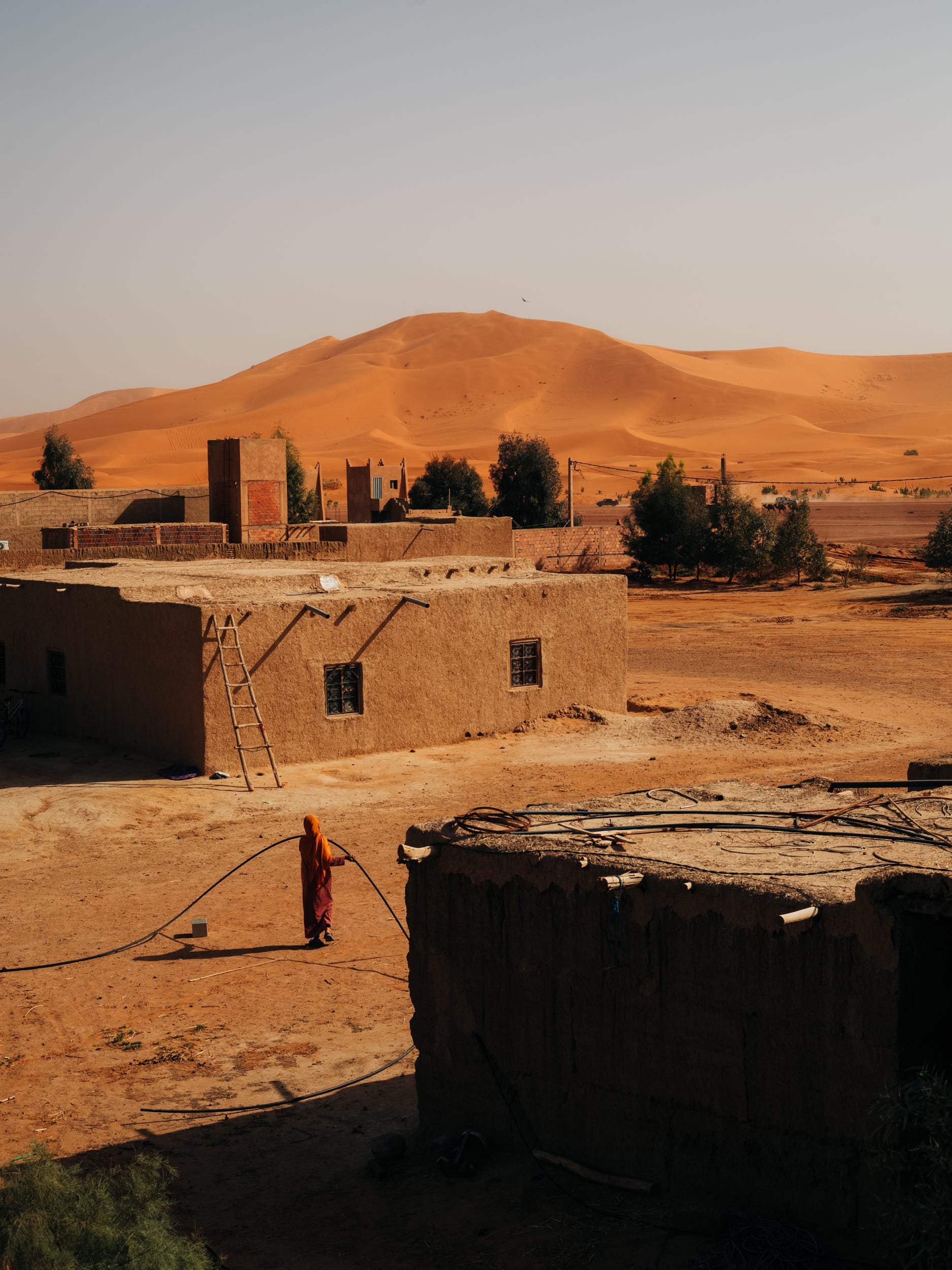
On this trip, our guide took us into an oasis garden where each family takes turns doing their share of work to move water from a well deep below the desert and into their plots of land. This form of cooperative water sharing is an ancestral, community-driven process that involves a network of gravity-fed tunnels (the Khettara), which don’t need pumps to tap into the water table. Community members and farmers (the Jama) meet with each other each week to coordinate watering, work, and maintenance schedules. The water is then hauled up from wells in buckets and dumped into open-air irrigation channels. This form of cooperative water management in the Sahara relies on community collaboration, and while I’m sure that the details differ in some places, the general approach for small villages like the one I visited is largely the same across the region.
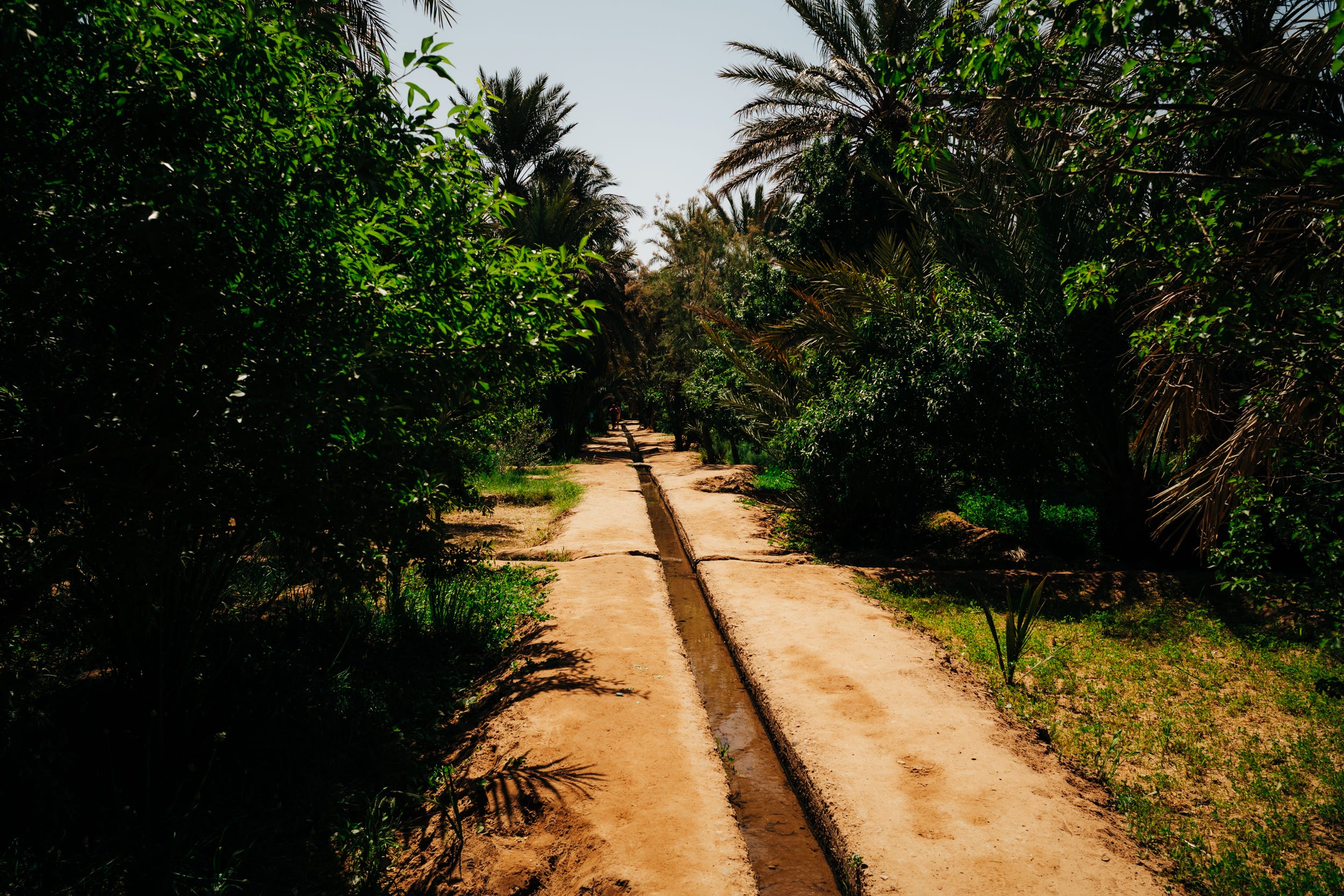
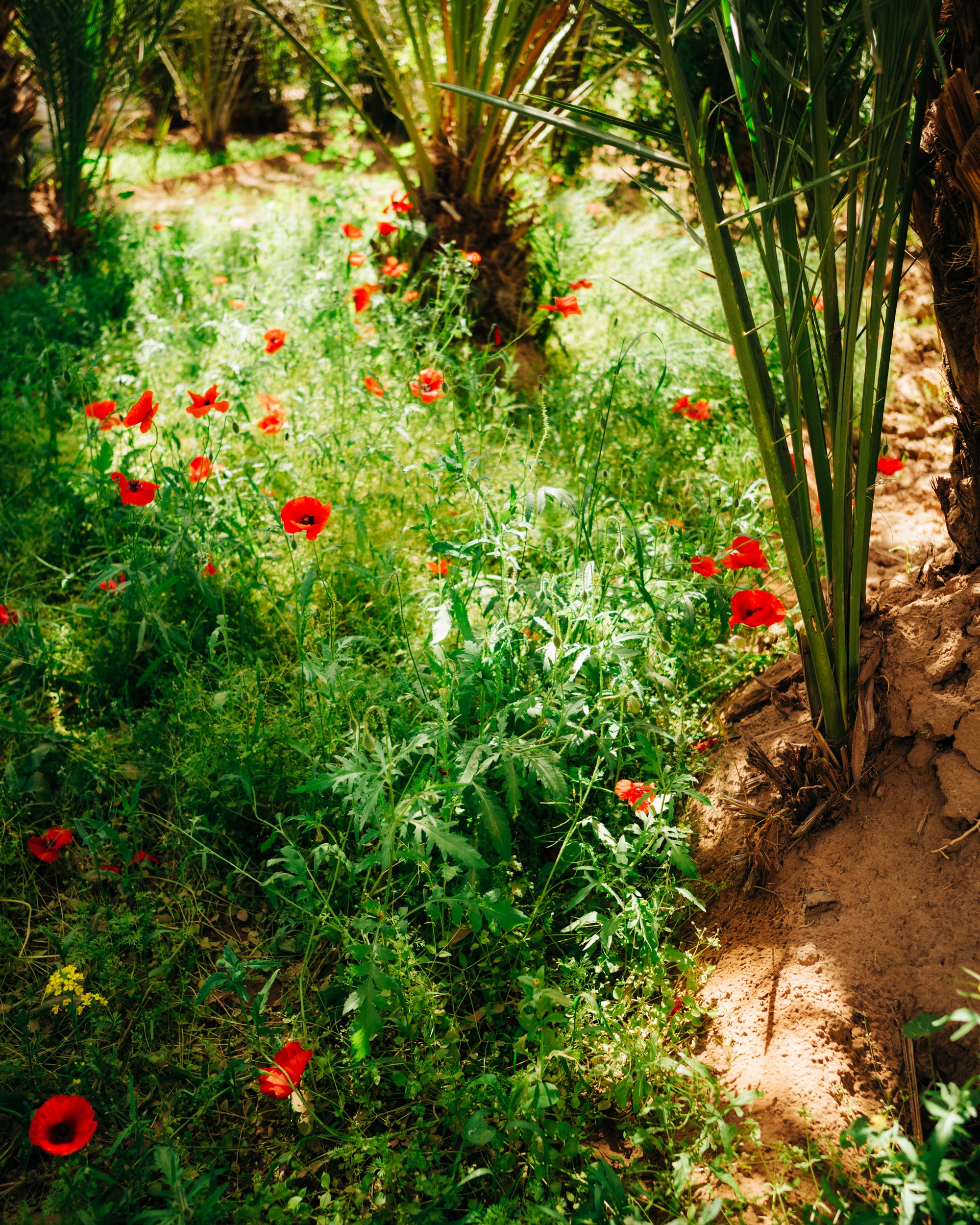
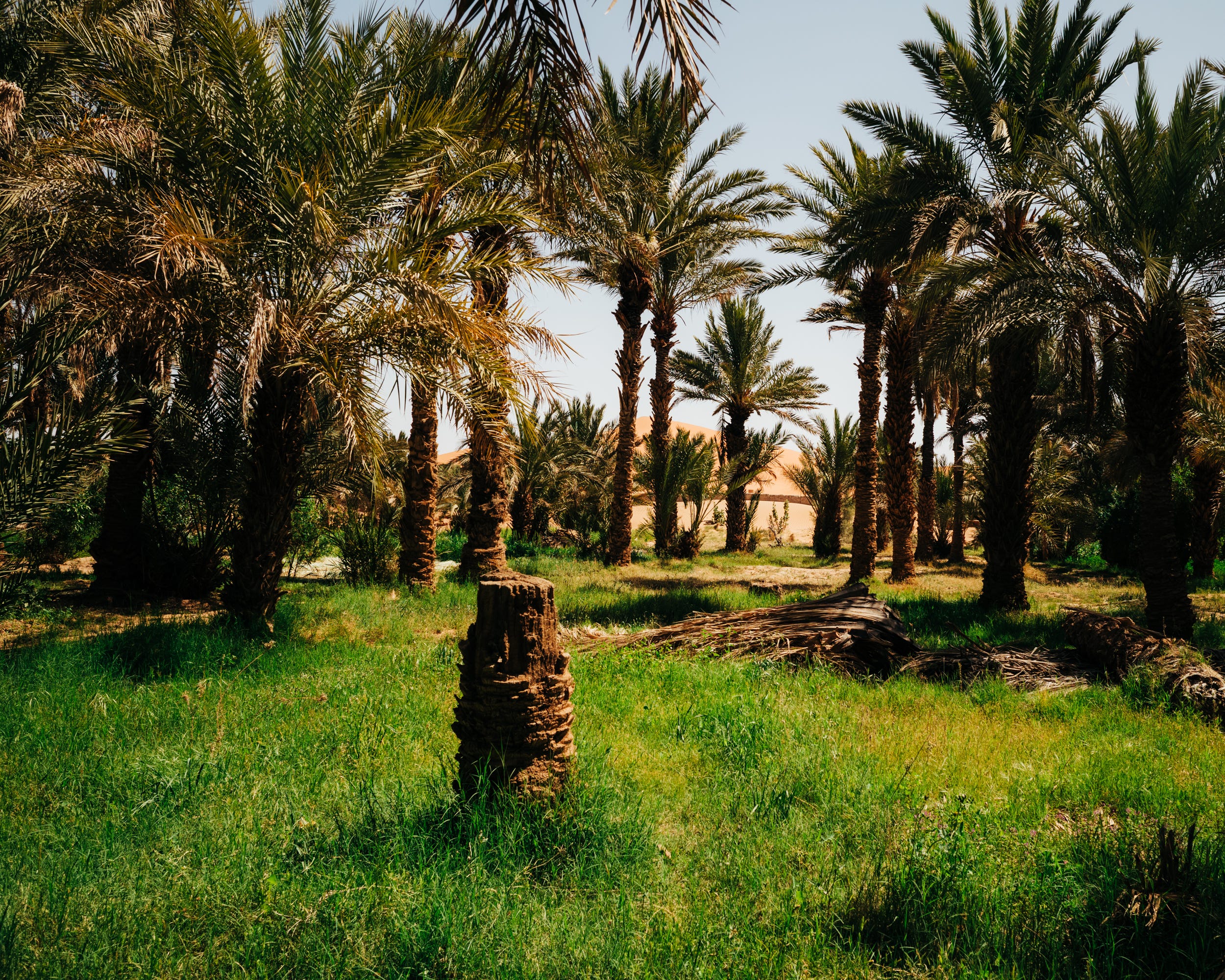
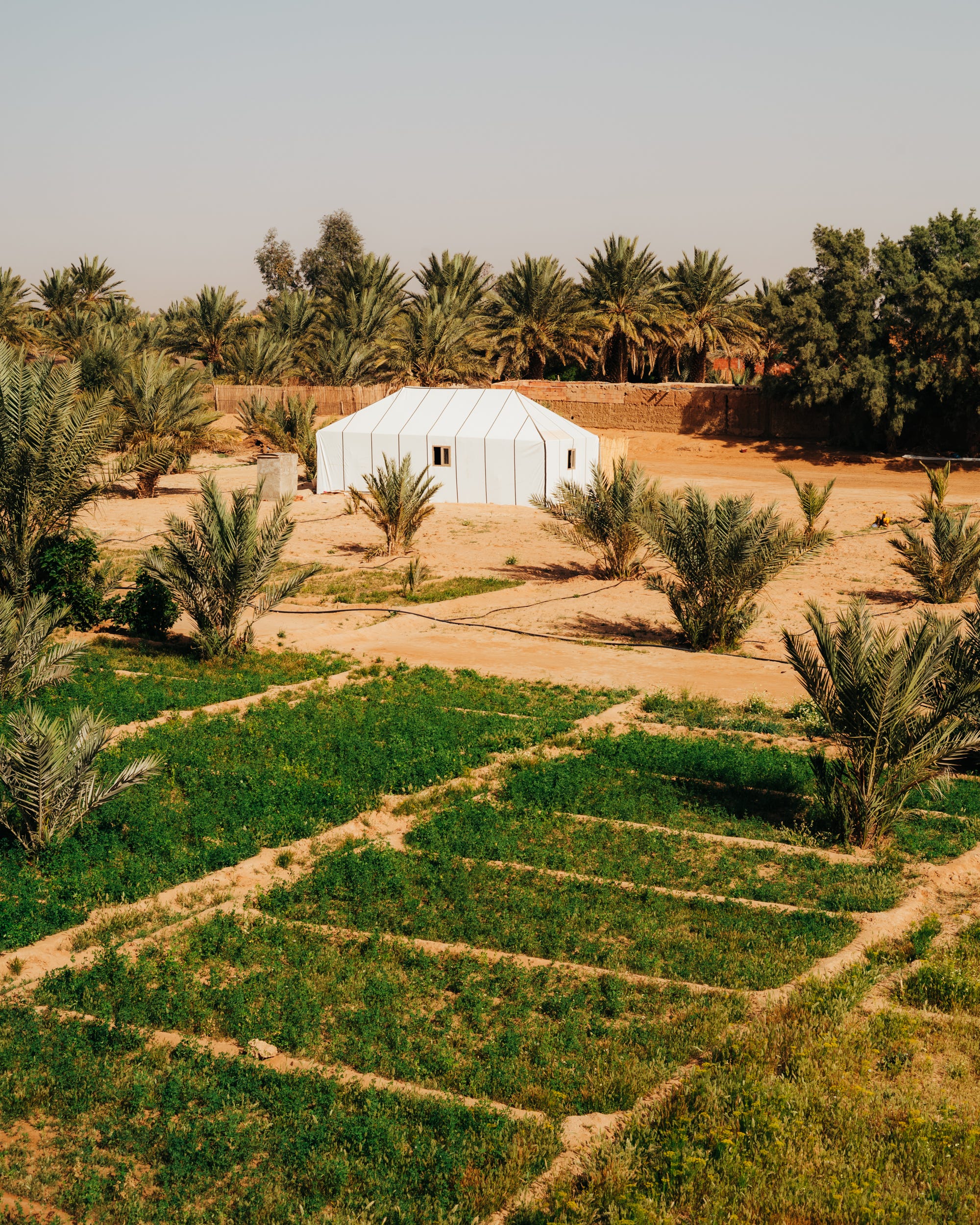
Inside the garden, each family has their own plot of land, and they take turns around the clock in 8-hour shifts, diverting the water by making little mud dams where their canal branches off the main canal. When it’s a family’s time for water, they break their mud dam down to let the water flow into their plot and rebuild it when their time is up so that the water can continue to flow into their neighbors’ plots. Everyone collectively watches out for the structural maintenance and cleanliness of the canals. Most of the produce people eat, and the herbs used for medicine in this village, come from these gardens.
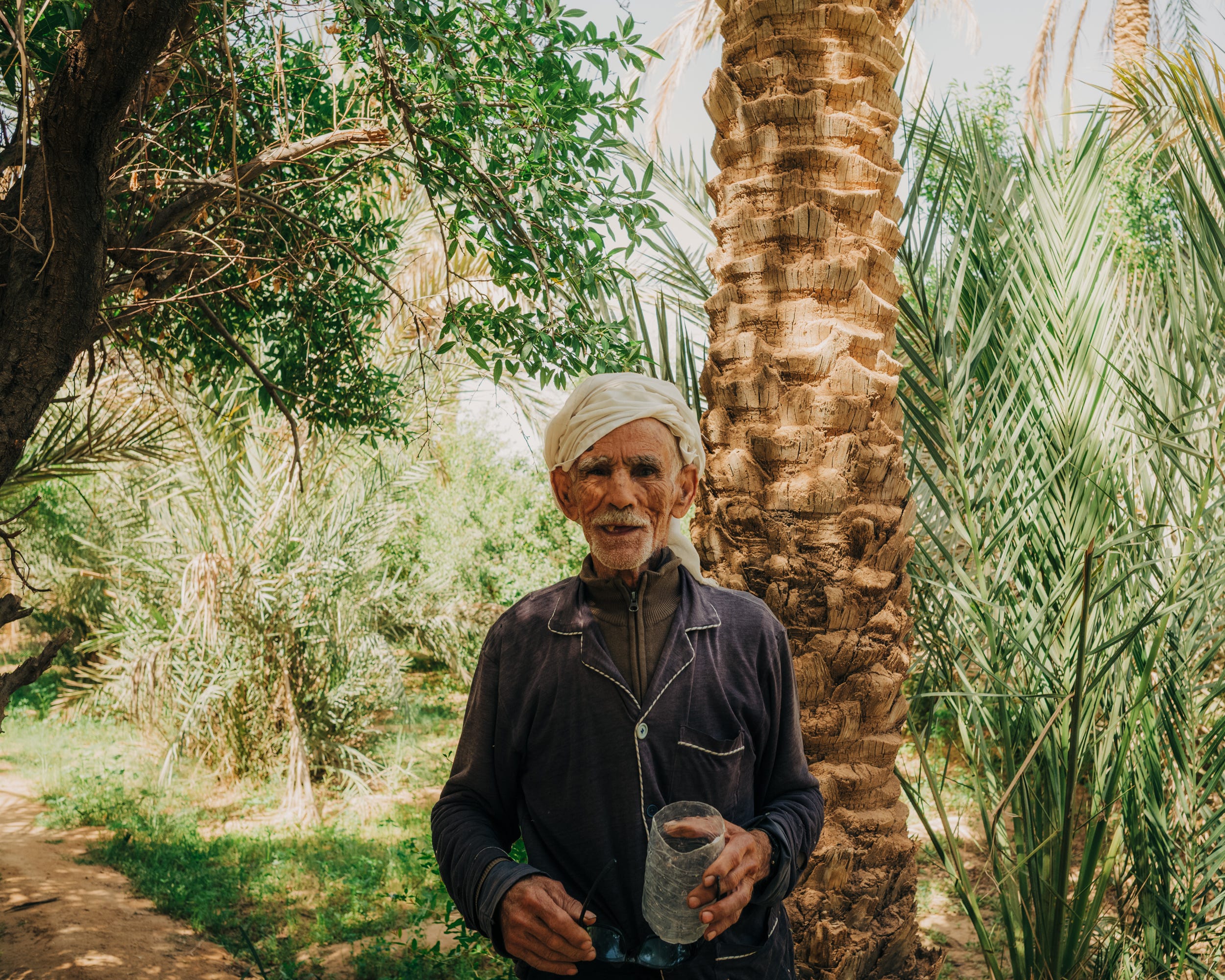
While walking through, we bumped into the man who built this specific oasis garden nearly 50 years ago. He was excited to talk with us and explained to our guide, Najim, how he started and organized the plots, and Najim then translated a summary to us in English. It felt like a really special moment because they both spent a while talking to each other in Arabic, Najim mostly just listening to the man, and he clearly learned something himself about the history of the place. When Najim asked for a picture with all of us together, I asked if I could take a portrait of the man who built this garden before we left, and he kindly said yes.
In my naive mind, I think of oases as places that simply exist in the middle of the desert by some chance, an aquifer or spring that creates a lake, or a river that runs through the area. It’s actually pretty rare nowadays that an oasis occurs naturally as a result of a spring or aquifer forcing the water up, I learned. Morocco has lost two-thirds of its oasis habitat due to record heat, drought, and water scarcity in the last 100 years. It takes a lot of work to maintain an oasis and keep it from drying up. Seeing this village exist as a result of one person’s extremely hard work, later sustained by a community of other people’s continuous effort, was humbling. It made me then think about the definition of an oasis, which is, according to Merriam-Webster:
a fertile or green area in an arid region (such as a desert)
something that provides refuge, relief, or pleasant contrast
This little village embodies both definitions, because it isn’t just a fertile and green area in the midst of the desert; it’s also a glimpse into a way of life that, although very difficult, involves a community of engaged people participating and sustaining each other. A pleasant contrast to our extremely dysfunctional modern world and something that felt foreign to me. Through a straightforward and democratic process, they share the work and distribute the water that everyone needs so they can all grow food. They really don’t have any choice if they want to survive. I’m sure there are problems here, and I absolutely do not want to simplify things because life in these villages is difficult, but this way of sharing a vital resource has been working for them for centuries.
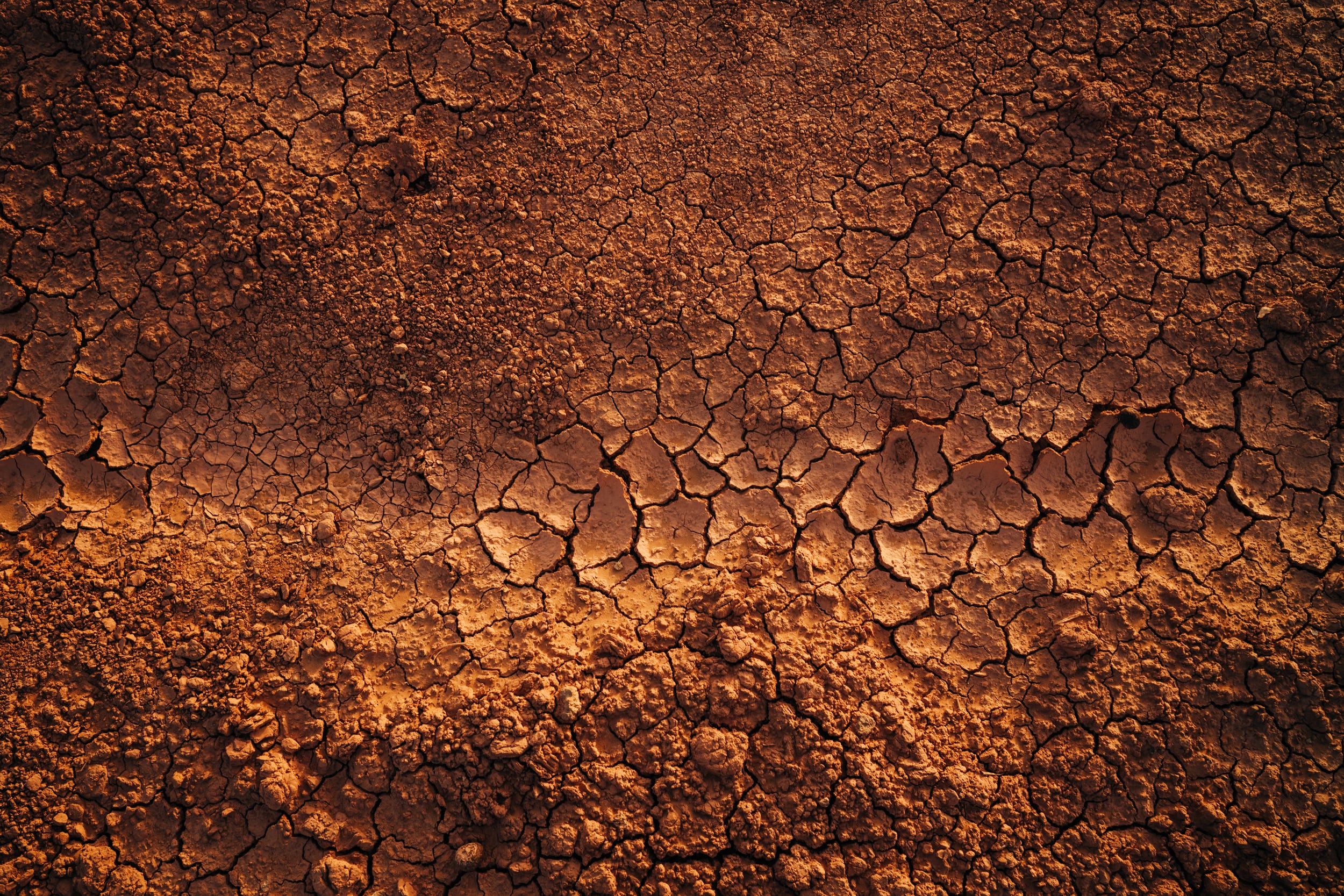
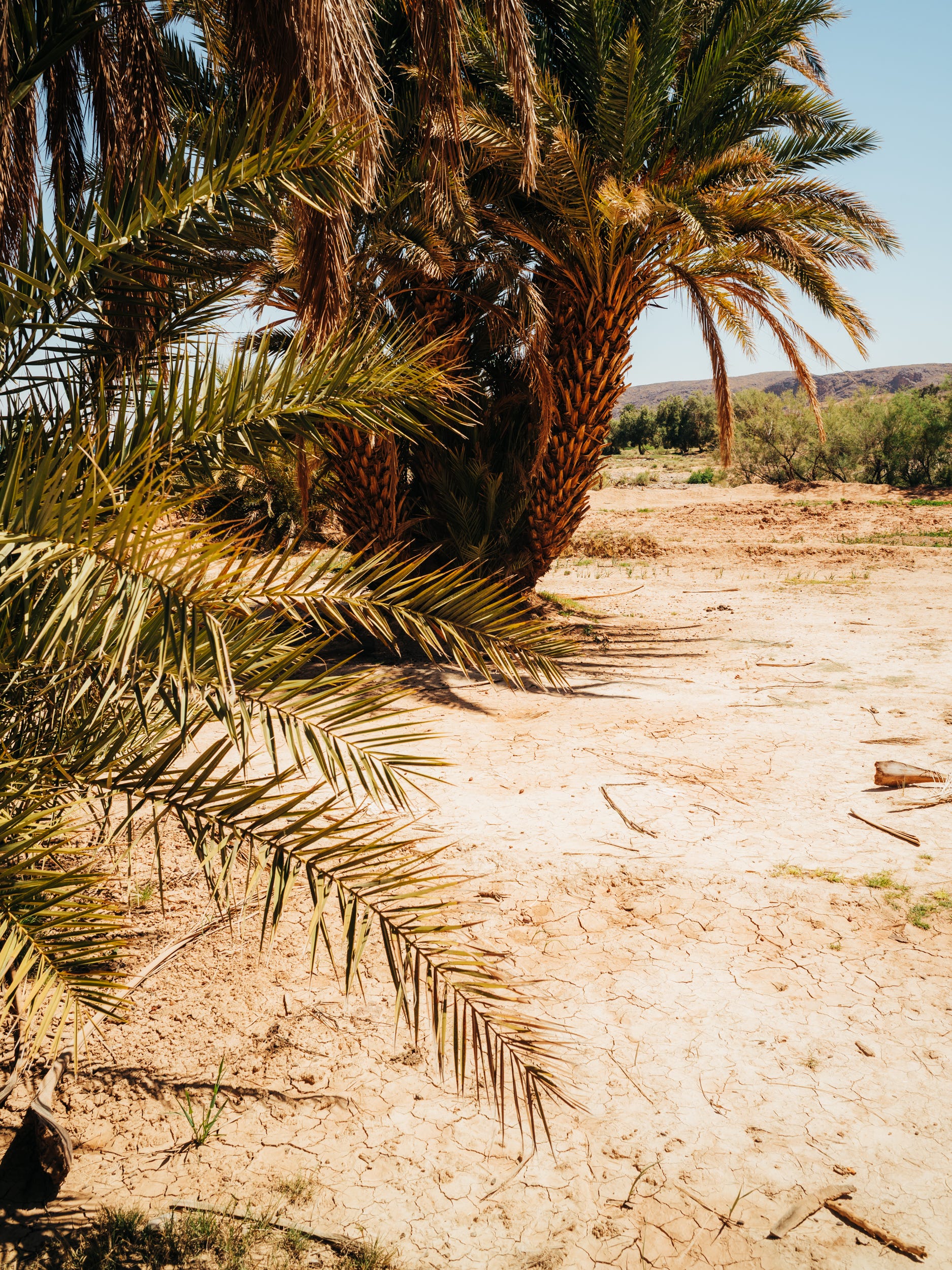
It made me think about our world and the concept of community, how the idea of taking care of this planet and each other has started to feel so quaint and far off in the face of endless wars, rampant corruption, and injustice. It’s very hard to solve the climate crisis we’re in when we just can’t seem to stop killing each other. It’s also very hard to simply exist in the modern world without unintentionally inflicting harm or damage, most often to the people and living things who are the most disadvantaged. Global problems are way more complex than moving water from a well in the desert. Still, I think seeing this place made me realize how a good community in any context is like an oasis (that second definition), providing us with much-needed refuge and life if we’re willing to be a part of it and do the work. There’s so much beauty to me in the idea of a group of people building a garden where nothing can grow, and probably more than a few lessons we could all learn out there in the desert.
Thanks for reading Having Been There! If you enjoyed reading this post, please feel free to share it.
If you made it this far and are unsure of what I do, hello! My name is Chris. I’m a photographer and writer based in Providence, RI. I do a bit of everything with a camera and work with brands, musicians, restaurants, hotels, small businesses, and travel publications to help them visualize their own story through my lens. If you’d like to work together, please reach out at hello@chrismongeau.com or through the form below.
Comments
Nothing yet. Say the first thing.
Sign in to join the conversation.