
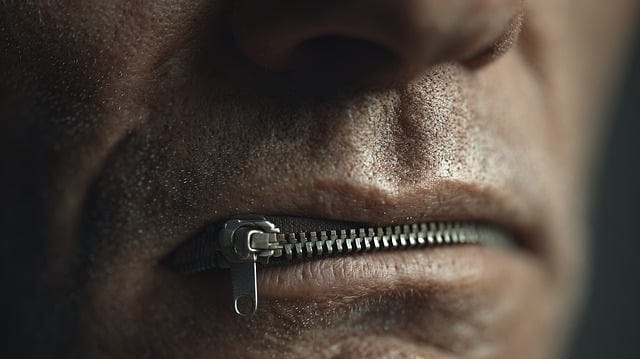
IT’S ONLY TWO WORDS
From time immemorial there’s been two words that, when combined, hold power like few other words do. Those two words are simply, I’m sorry.
Those two words are the most freeing, liberating, and healing pairing of words that can be uttered, yet they’re the most difficult words to say, especially among Christians.
Anyone who’s been around the church for any length of time will no doubt be able to recall a time when they were hurt by fellow Christians. It’s not something we ever expect to happen among those who are called to love even their enemies, but when we’re dealing with fallen human beings it is inevitable. However, when the one who needs to apologize refuses to do so, it can drive an even deeper wedge between the parties involved.
It’s amazing when you think about it. In spite of the Bible’s warning about careless speech, every single day a virtual tome of words cascade unrestrained from our lips with little to no consideration (and is often the reason we need to apologize). Yet the words I’m sorry have the hardest time coming out of our mouths. Why? Because humility is the key to an apology’s release, but our pride holds that key with a frighteningly tight death grip.

We are so quick to displace blame, justify our actions, or simply disregard the hurt we’ve caused another, but consider how much progress could be made in our relationships if we would simply bring ourselves to sincerely utter those two humbling words. And oh, how the love of Jesus Christ would be beautifully displayed if we did.
The refusal to admit wrong is a burden that both parties end up having to bear: the wrongdoer for their wrong that’s gone unconfessed, and the one wronged who must now fight valiantly to prevent animosity and bitterness from taking root in their hearts against the wrongdoer (not only for the original offense, but compounded by the wrongdoer’s refusal to apologize).
The wrongdoer may be able to successfully sear their conscience enough to move on after the incident as if nothing happened, but the one wronged must not only forgive the one who wronged them, he will also be taxed with maintaining constant vigilance over himself to prevent the flames of bitterness and resentment—that will be ever-creeping at the door of his heart—from turning into an inferno because the one at fault will not say those two simple words.
“Relations among professing Christians are in a shameful state because so few can bring themselves to say [I’m sorry] and mean it. So unresolved issues lie there like rotting corpses, bringing a spiritual stumbling block to the offended, and a hindrance between God and the unrepentant offender.”
- Ingrid Schlueter

ENCOURAGEMENT
God tells us to pursue peace with all men and to be at peace with all men, but unspoken apologies cause great resentments which leads to painful estrangements. I’ve seen it devastate lifelong friendships and even families (because no one can hurt you like a loved one).
So what about you? Is there someone you’ve offended or hurt that you still haven’t apologized to or asked forgiveness from? If so, humble yourself and do what needs to be done to restore that relationship today, because our time on earth is way too short to carry the added burden of resentment and animosity through an already tumultuous life.
“By this all men will know that you are My disciples, if you have love for one another.”
John 13:35
J.L. Pattison is a freelance writer and author of four contemporary speculative fiction books. His articles have been featured in such publications as Liberation Day, Predict, Koinonia, The Startup, The Writer’s Sanctuary, and The Writing Cooperative, and have also been featured at Mere Liberty, Doorway Publishing, and on Wretched TV.

Before you go, if you want to show your appreciation for this article—and encourage J.L. Pattison to produce more content like this—then please share this article far and wide on social media and consider buying him a coffee.
No posts
Comments
Nothing yet. Say the first thing.
Sign in to join the conversation.