
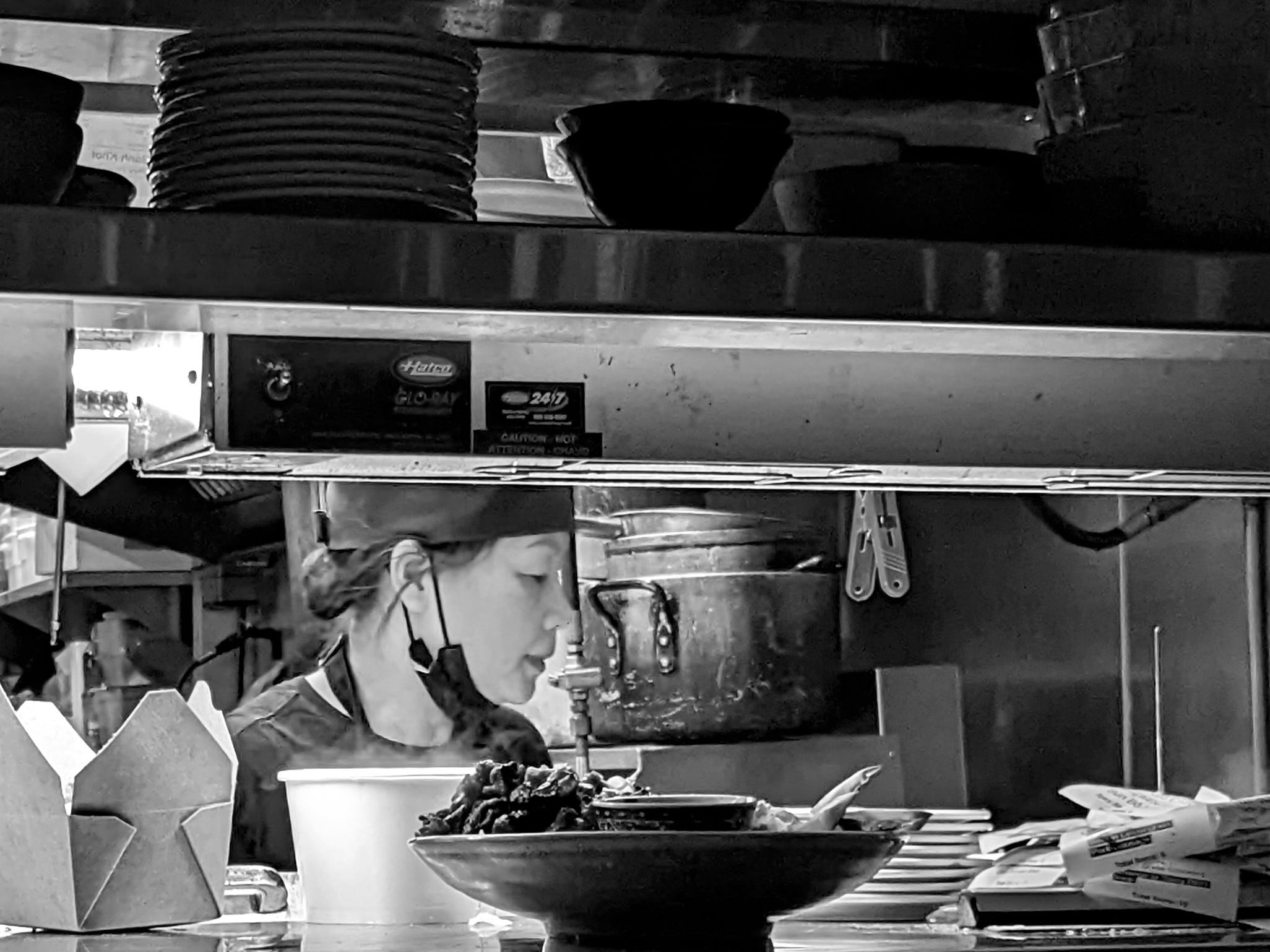
For anyone who’s had to leave home for an extended period of time—perhaps even permanently— food is more than just sustenance; it’s a way to preserve a sense of identity, culture, and to feel comforted in an unfamiliar environment. We all try our best to adapt to new spaces until, one day, unexpectedly, we call the new environment, “home.”
During this journey, though, many will encounter the following disparate sentiments in pursuit of certain foods: each person’s [family member] makes the best [insert food here]. There will always be something wrong with how someone else makes that dish; always a key ingredient, a flavor, a method, a depth missing.
But perhaps most egregious of all is the key component that will always be missing is the taste of home: The soft sunlight pouring through a kitchen window onto a vinyl tablecloth that feels slightly too sticky no matter how many times it’s been wiped down; the mawkish scents of anise, cinnamon, dried cuttlefish, and burnt incense that punctuate the air; the gentle smile bestowed upon you as you sit happily at the table, slurping pliant noodles and inhaling beefy soup; the time and moment in which, no matter what was going on, you felt safe and sated. A nurturing voice asking, “Ăn thêm không, con? Ngon không?”
In other words, love.
The problem is that we try to apply reasoning to this missing ingredient. So much discourse around diaspora cuisine in America is centered around this notion of “authenticity.” I often hear my mother’s scathing reviews: “They made this all wrong. It doesn’t taste right.” Friends saying, “My dad makes this so much better.” Aunties sticking up their nose and candidly remarking, “That place is just not good.”
While there is often validity to these remarks, sometimes it doesn’t sit well with me. When someone says a restaurant isn’t “authentic,” they’re dismissing so much: The possibility that the chef behind this restaurant eats differently from them; the restaurant’s very real need to change their food’s taste to fit the local palette in order to survive; the need to use different ingredients because the traditional ones are hard to source or can’t be found locally; the significance of growing up in a very different time and place, with a variety of influences that have come to define the individual experience.
The diners just need to start understanding that we’re cooking our experiences, not our ethnicities.
— Avsih Naran, founder of Pijja Palace, via Eater
When these restaurants are falling short in “authenticity,” what they’re actually missing is the element that reminds people of their ideas of home. Chef Jenny Dorsey succinctly defines authenticity as, “a point of view at a point in time.” And it doesn’t mean anyone is in the wrong to feel that way; at the same time, I think there’s enough space in the world for every culinary story to coexist.
On the flip side, there are also those who grew up rejecting their culture due to a variety of reasons, and have only begun to reconnect with their heritage via food as adults. Those who sit quietly as their peers speak nostalgically of culinary traditions in their households. Those who’ve had to redefine and reclaim their heritage from the clutches of a toxic, bigoted family. Those who use food as a means to discover and feel more confident with their identity. These stories and journeys are absolutely valid, too.
Emotional Eater seeks to share those stories of diaspora eaters, chefs, food, and restaurants; to share the feelings I feel when I eat these experiences. I hope to be able to bring a sense of curiosity, relatability, perspective, empathy, and newfound appreciation for the stories that we are so blessed to be able to taste.
No posts
Comments
Nothing yet. Say the first thing.
Sign in to join the conversation.