
I bought these extremely sweet 19th century little chairs at an antique store last week and it felt serendipitous because I set out hoping to find a set of chairs exactly like them. When I got them set up at home though I wasn’t so sure because they’re noticeably a different wood tone than the other woods in the room, which are much darker. As time goes on though, they’re growing on me and it’s gotten me thinking about the art of mixing wood tones. Which then reminded me that this is a topic I’ve been asked to write about! So here goes!
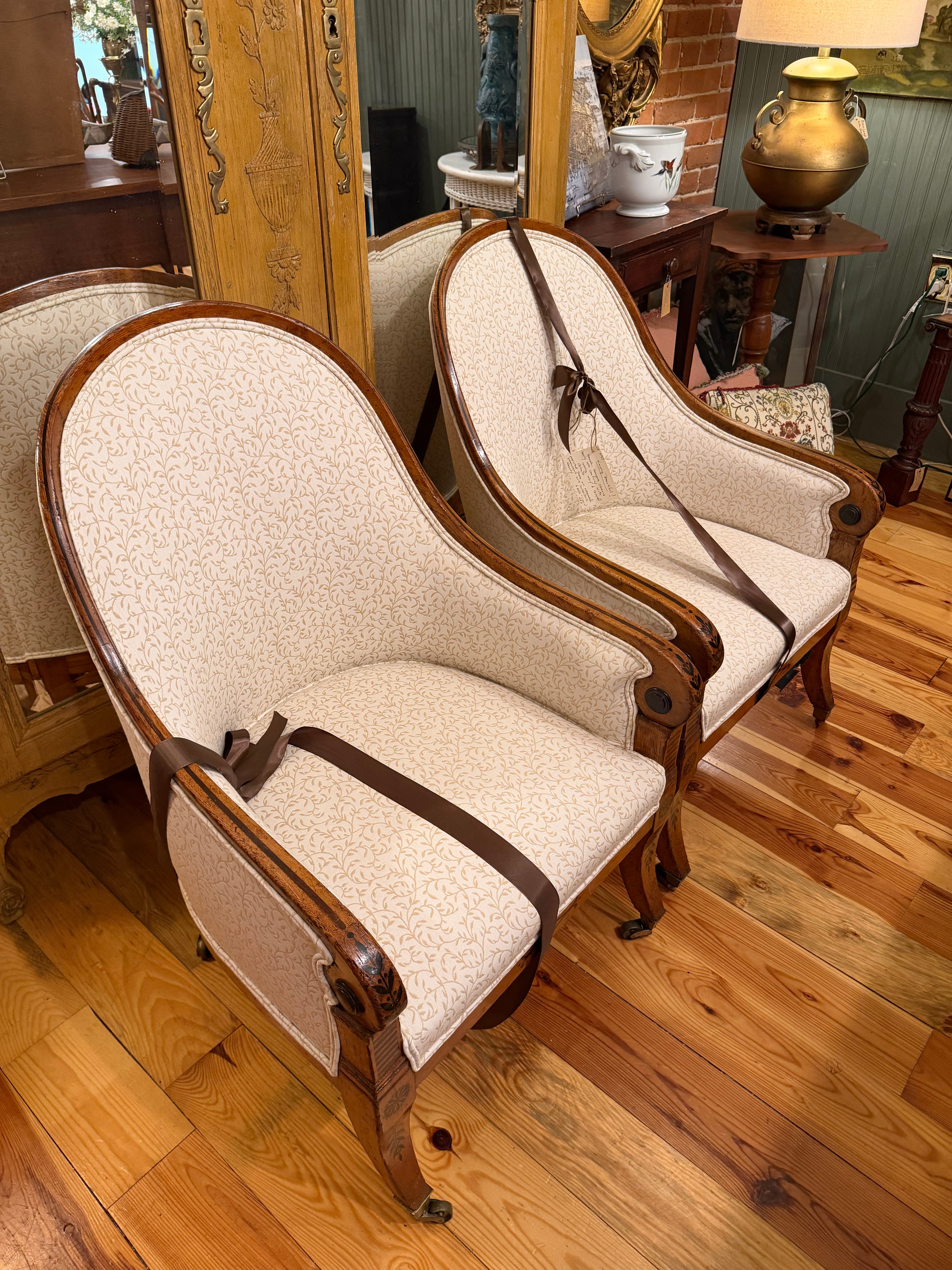
My general rule of thumb is, it’s totally fine to mix wood tones but I limit myself to 2-3. I can’t even say it’s intentional, it’s just happened that way because I personally am attracted to an array of dark and medium finishes- lighter wood is lovely too but it’s just not my personal style I guess. Now, in the medium and dark families, there will obviously be some variation- this is where undertone comes into play! In order to feel cohesive in a room, no matter the shade intensity, woods should share the same undertone. Personally, I go for a warm undertone-ashy tones are just not my cuppa.
One thing I will say I think is very important when it comes to mixing wood tones, is to make sure you have more than one of each. So, for example, if you have all white-washed beige-y wood, and you want to incorporate a honey-colored vintage chest you’ve inherited, just make sure you have something else in that honey family. It doesn’t have to big and there doesn’t have to be a lot of it, maybe it could be a few frames in a gallery wall, baskets, a stool, some wooden wall shelves, even some art or textiles with similar tones if you really need to improvise. Just find a way to tie that piece in so it’s not alone!
When in doubt, look at the bones of your home for inspo! For me, in this house, the floors and staircase are both a similar warm medium wood tone, so adding more of that same tone through furniture was a no-brainer. It anchors the home, while the darker wood pieces are accents. Now, I know a lot of you might not love the color of your floors or woodwork, but perhaps the undertone can give you a starting point, then you can counterbalance with darker and/or lighter tones around it?
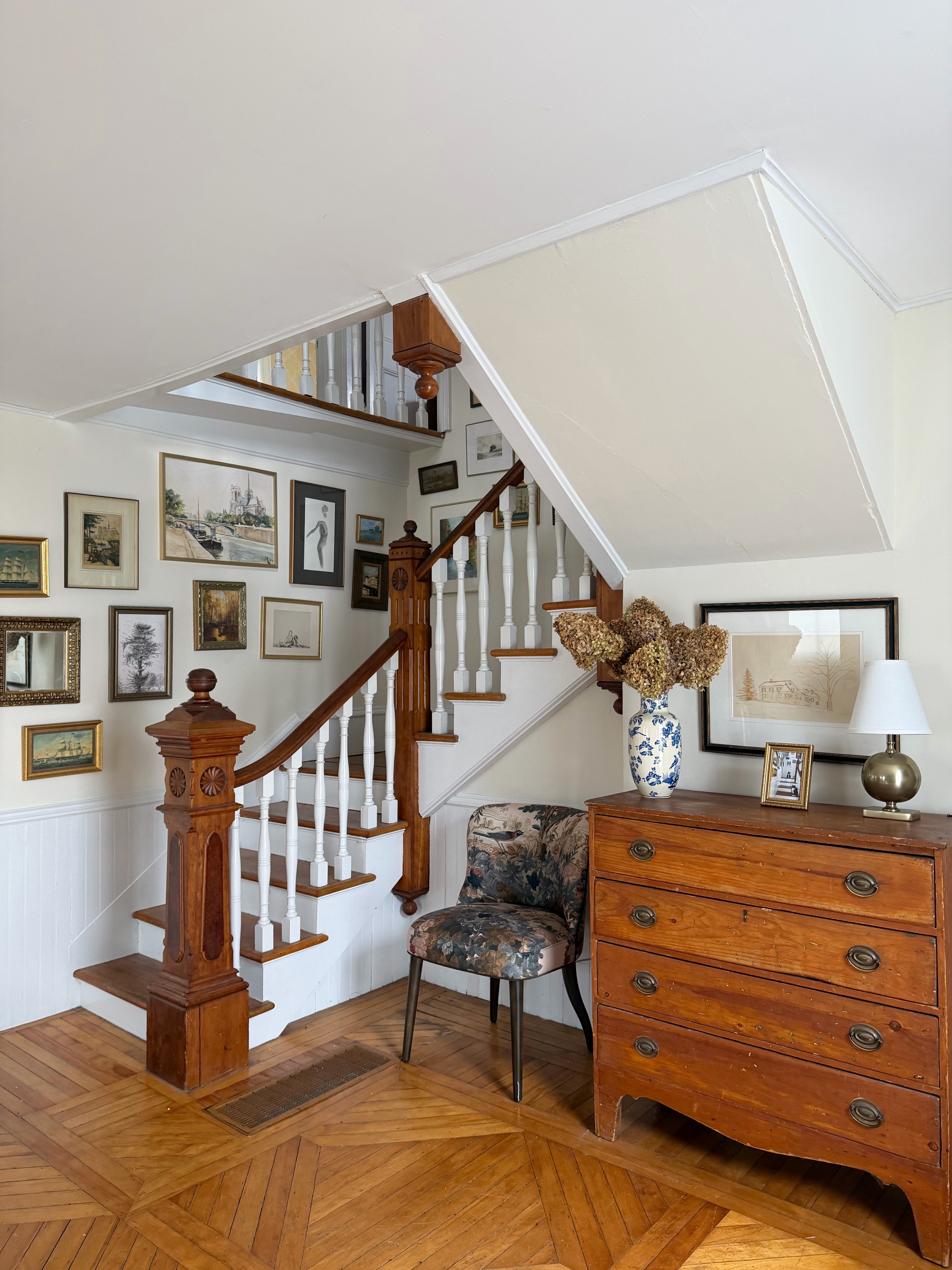
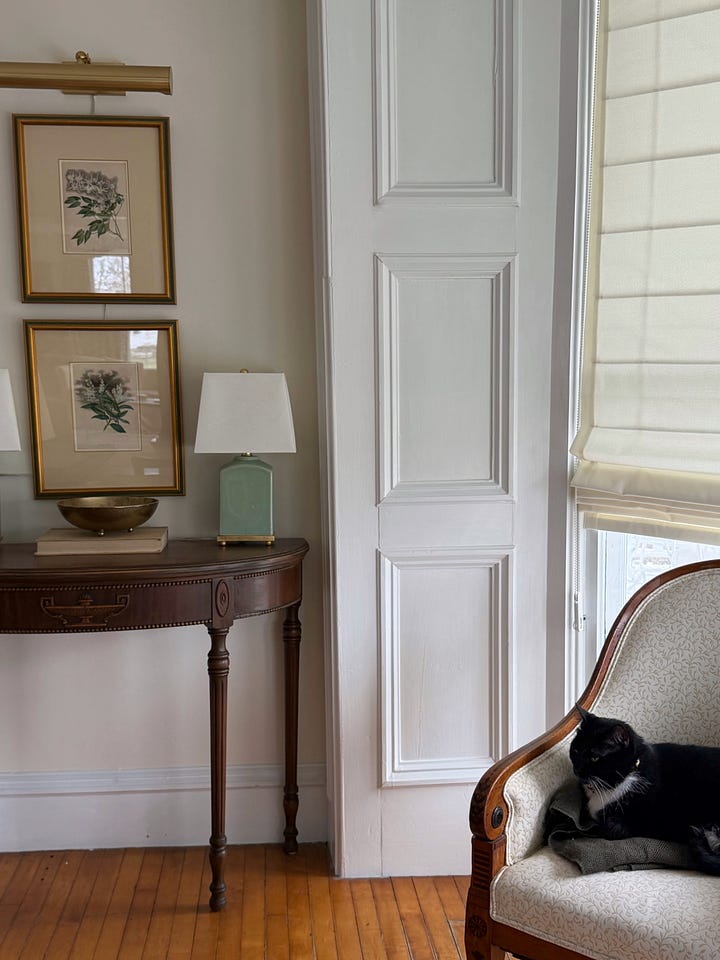
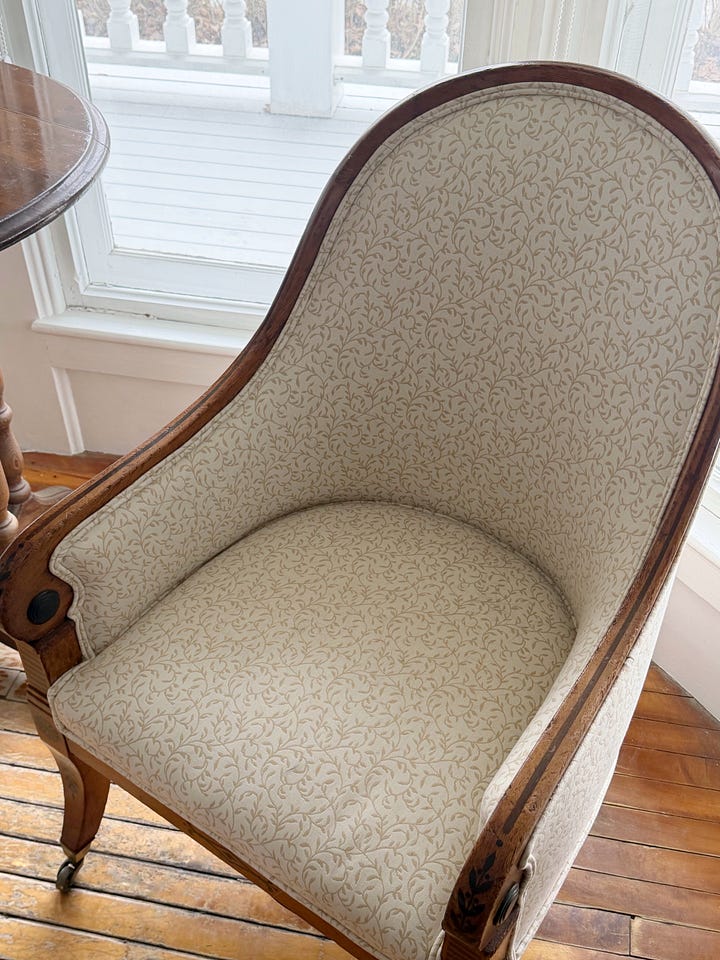
Back to my new chairs! They’re a very similar tone to the staircase, so of course they fit in my home! And yes, the surrounding is a darker wood, look closely at the details in the chairs. Darker wood! It kinda all ties together. One thing that I’m waiting on for this room is a rug under the dining table! What’s bothering me now is the harsh contrast between the lighter floor and darker furniture, with nothing breaking it up. I think the vintage rug I have coming will help with that, so another thing to keep in mind when dealing with mixing wood tones is to break them up with other decor and textiles.
In summary:
2-3 shades of wood
undertone is most important
your flooring/woodwork (undertone) should be your “anchor”
make sure you have more than one of each tone
break up woods with textiles
Hope that was helpful! Happy wood mixing!
No posts
Comments
Nothing yet. Say the first thing.
Sign in to join the conversation.