
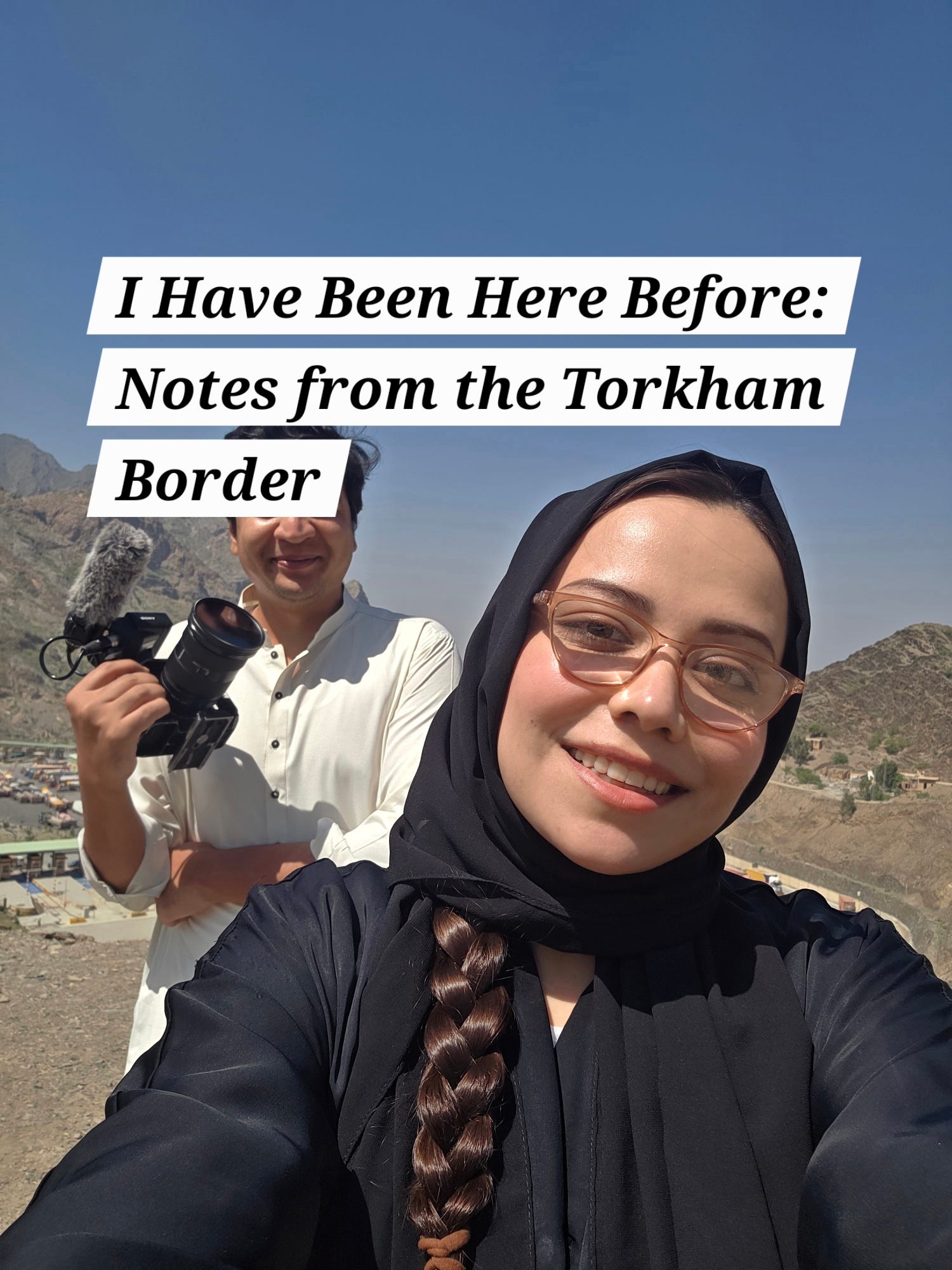
December was truly overwhelming. Even now, on the 19th, as I write in the middle of all this mental noise, I don’t know how it passed. I didn’t even find a few minutes to sit down and properly process what had happened. Last night, I made a promise to myself that, no matter what, I had to come and write, because I might forget the details. As the memories of Torkham slowly resurfaced, they became unsettling and uncomfortable, as if something inside me was shaking its head side to side, saying: no, don’t take me back there.
Since arriving in Pakistan, over these nearly three years, it was the first time I was leaving Islamabad. Between lacking legal documents, negotiating with fixers, preparing for several online events where I was supposed to speak, and the start of a new university term, a call from my journalist colleague led to a plan to go to Torkham to film a documentary about a woman crossing from Afghanistan into Pakistan. In the middle of all this, I only had one free day, my family’s visas were suddenly ready as well, and it was decided that we would also go to Torkham for paperwork and stamping documents, though the exact date was unclear.
I had been away from traveling for a long time, too long. It weighed heavily on me. The fear of encountering the Taliban at the border was even heavier. I felt like an octopus, pulled in different directions by responsibilities and anxieties, each one tugging at me. This time, I tried to deal with everything as an observer. I had to skip several events just to be able to organize myself for the trip.
In the midst of all this, even before everything officially started, I still had a few other field reports to do inside Islamabad. One day before leaving, I had to record two videos at home for events I couldn’t physically be present at, at the very moments they were happening.
I remember waking up at three in the morning, memorizing a text I had drafted earlier from a few bullet points, trying to be quick. Each video had to be around five minutes long. With a nose irritated by my usual allergies and aching eyes, I did my best to memorize the lines, repeating to myself over and over: you don’t have to be perfect. Don’t be obsessive.
We got ready. I put on my clothes and allowed myself to enjoy my sense of femininity. I started recording at four in the morning, and by ten, I was done, editing the videos and sending them out. You might ask, why did it take so long? During the recording, the call to prayer echoed several times from different mosques around the house. The police patrol passed through our alley two or three times, shouting through loudspeakers, something quite normal in Pakistan, usually meant to scare off thieves. (Haha.) Then the school bus arrived, honking nonstop, and the upstairs neighbor made noise several times. It became… a lot. I complained a lot. But eventually, it got done. I was about 70% satisfied with the result, and I’m trying to learn how to see life as beautiful even at 70%.
I still had to teach one class and attend one online meeting, then go to a park in Pakistan where Afghan families, evicted from their homes due to lack of legal documents, were gathered, accompanying a journalist as an interpreter.
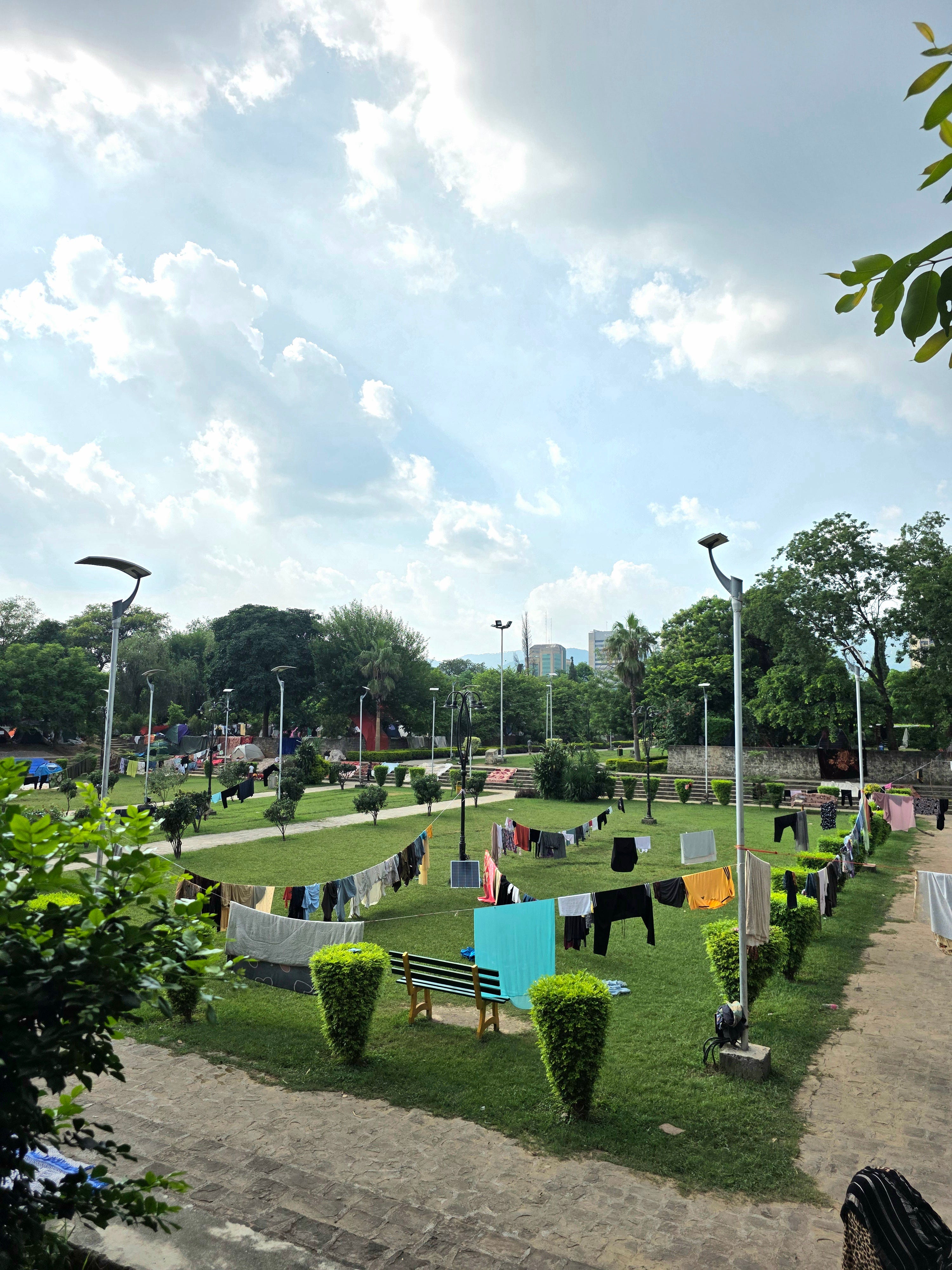
When I returned from there, I felt heavy. I’ve gotten used to that feeling. Witnessing people’s suffering hasn’t become normal for me, and I don’t want to describe what I saw over those two days, it’s an ocean of its own.
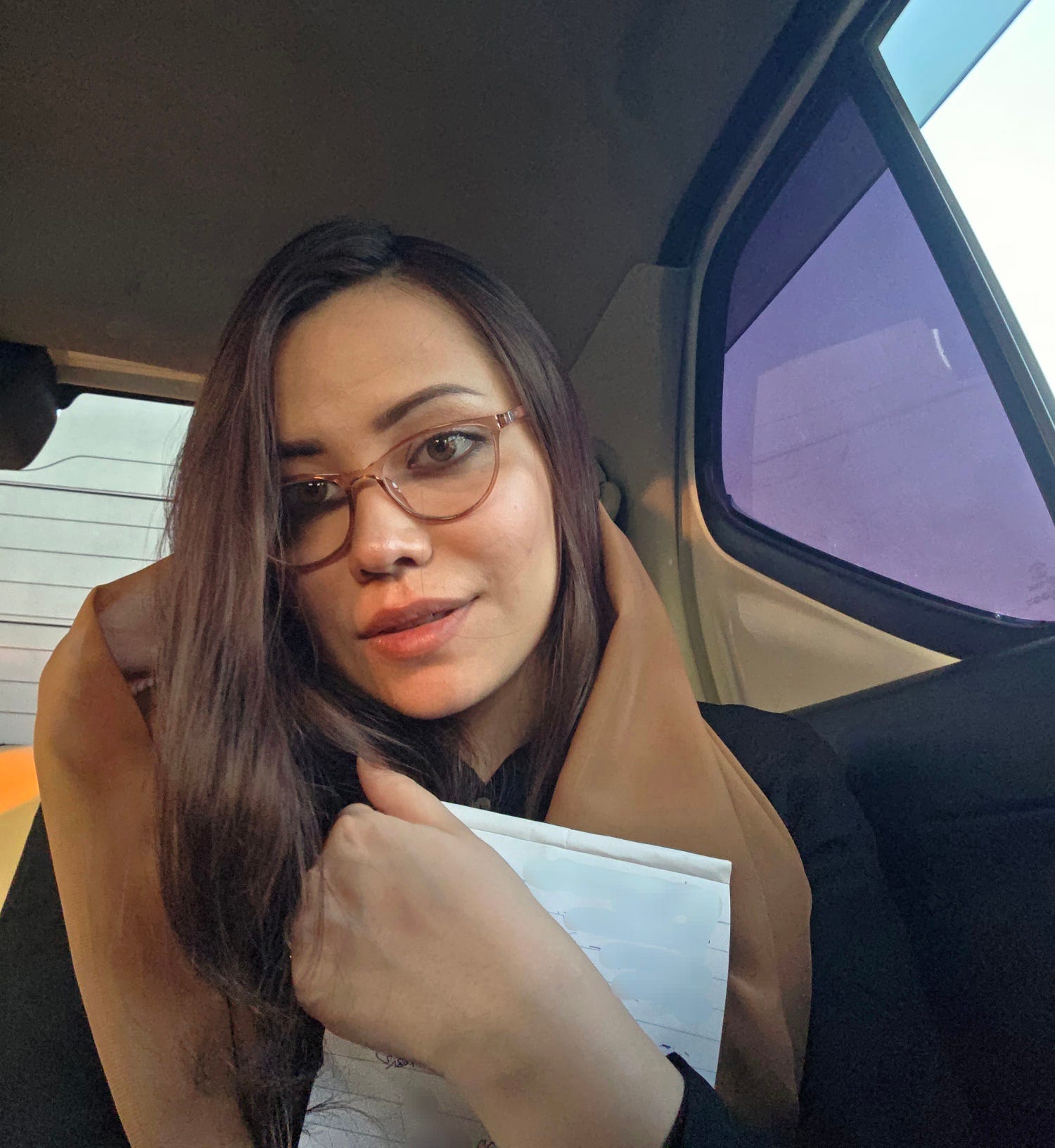
When I got home, I took a handful of salt and, while showering, rubbed it over my head and shoulders. Am I superstitious? I don’t think so. I was asking nature to take away whatever negative energy I couldn’t transform into something positive. I felt a little lighter afterward.
The next day, I was supposed to go to Peshawar and then Torkham with the team to film the documentary. I didn’t tell my family. There were too many possibilities, and they would worry, especially my mother, even if she didn’t openly object. Their worries would later take away my focus. I’m glad none of my family members will ever read what I’m writing now:) I’m not even sure how I feel about what I’ve said, but I must not censor myself.
Ah. I absolutely had to wear an abaya, a very long, loose garment that shouldn’t show the shape of a woman’s body. It also had to be dark and unremarkable. When I first arrived in Pakistan, I wore a black abaya. At some point, when I was decluttering and my style and taste had changed, I wanted to throw it away, along with black headscarf tucked into a bag in the deepest corner of my closet, mixed in with many other things. But something inside me, logic, intuition, said: don’t. You’ll need it later.
Because my belongings had become so few, thanks to refugee life, which kindly teaches you not to buy too much, not to settle too deeply, not to assume you’ll still be there next month, I knew exactly what I owned and where everything was. I found the bag quickly, at the bottom of the closet next to the shoes. I washed the abaya and prepared it for the next day.
Then I remembered, I didn’t have proper shoes. Shoes I could actually move in. Shoes I could walk fast in, run if I had to, keep my balance on uneven ground.
I called the driver who’s usually around our area and whom I use for short trips, asking him to take me somewhere to buy shoes. Oh no, here we go again with the shoe story... I pay so much attention to details that even when I’m living, I see every moment like a scene. But I promise to keep it short (haha). First, we went to a nearby store, the color I wanted wasn’t there.(actually it was too expensive there) The driver suggested going to another area where I’d definitely find something. I said I only had half an hour. We went, and after about three stores, I finally compromised and bought something that would at least let me walk fast, and not hurt my feet the next day. When I got home, I realized I’d been out for about an hour, when it was supposed to take only fifteen minutes at the nearby store.
By the way, when I’m in spaces where local Pakistanis are more present, I realize how much more comfortable I feel, not sharp or hyper-alert, but as if my body opens up, ready to feel more, taste more, absorb different sensations and vibes.
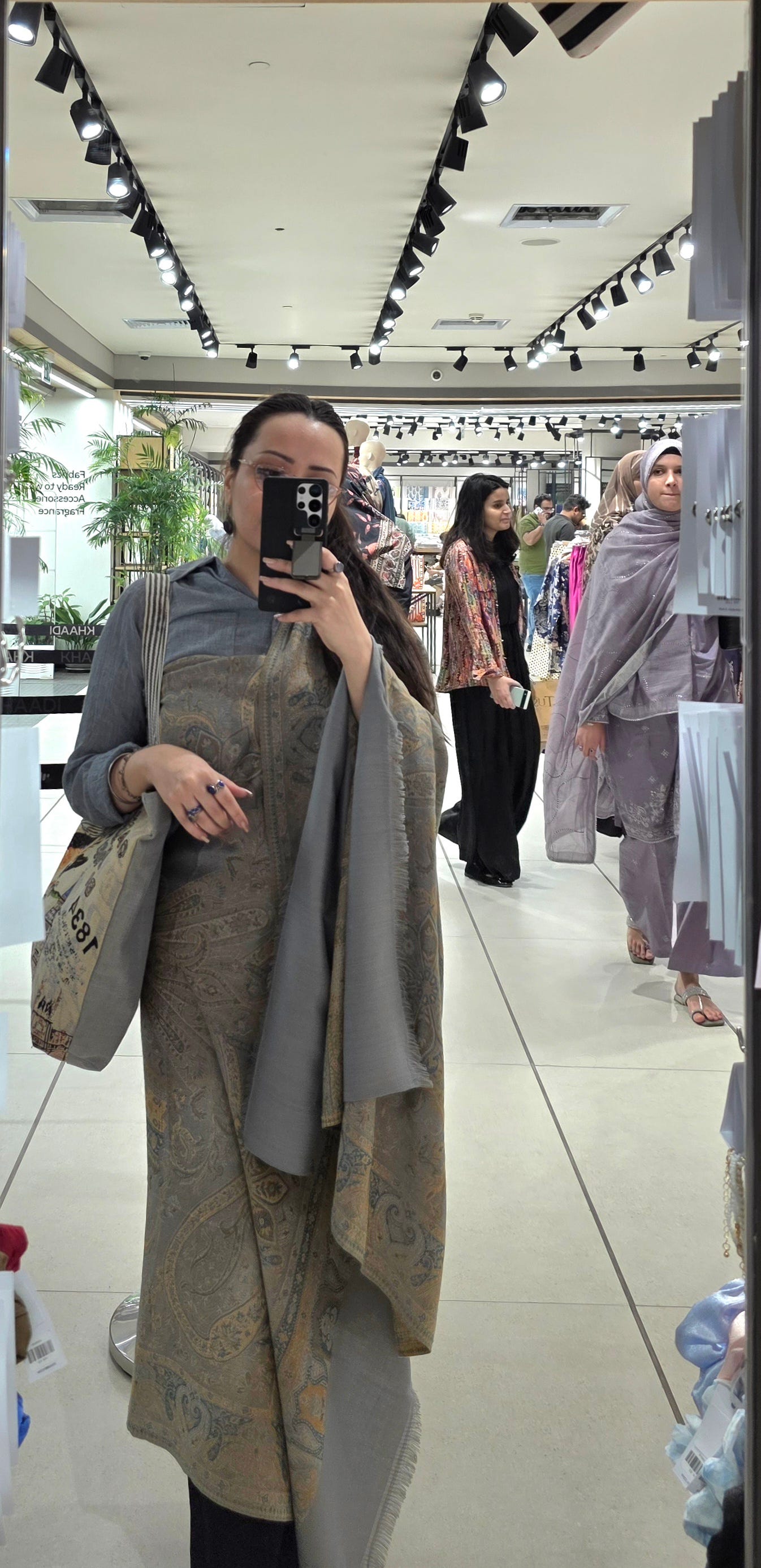
When I speak Urdu, I like myself. I become a different vibe, a grounded woman. People here are kind. I feel they’re kinder to me, I admit it, more so with me. They like talking to me. Once, while speaking with a Pakistani friend, probably around my mother’s age, who had invited me for breakfast, I told her that interacting with men here feels easier than in Afghanistan. Maybe that’s why I remember conversations better. In Afghanistan, I rarely even looked shopkeepers in the eye. I was afraid, of many things I might one day find the courage to process and name.
A few years ago, I used to say that I must not have been human in a past life, because in a human body, nothing in this world feels ordinary to me. I mean, I’ve never taken anything for granted or as casual. It’s as if something magnetic constantly asks me to pay attention. Sometimes it feels like my eyes zoom in, noticing details and analyzing things others might not. Because of this, it feels like life happens more intensely inside me, as if more of it passes through me. I feel things deeply. I understand emotions, sadness and joy alike, very well. But I have control over the others: anger, hatred, jealousy. I know how not to let them overflow or become harmful.
I wanted to prepare for the next day.
I couldn’t be beautiful or freely expressive. My colleague’s voice echoed from my phone: you must wear an abaya. The environment there is sensitive.
I was very stressed, and at the same time excited about going to Peshawar, the city where I was born. I took care of other things: classes, online meetings, writing, and piled-up emails. I only managed to answer some of them.
I laid out my outfit: nothing form-fitting, a black scarf, a black mask, my bag with sunglasses, a small notebook and pen, allergy pills, hand sanitizer, and a bottle of water. I slept maybe three hours. They were supposed to pick me up around six-thirty or seven. I woke up at four-thirty in pain. I had to drink a lot of boiled water and herbal tea. And I worried my weak bladder wouldn’t trouble me during the journey.
I got a call saying they’d pick me up later than planned, which gave me a good opportunity to write a little. I continued working on letters I’d started back in early August, magical letters that somehow guided my inner path toward something new… until eight o’clock, when my colleagues arrived. When I finally got into the car, I still wasn’t wearing my abaya. I had on a thin white cotton blouse and black pants, my hair braided. I joked with my teammate, trying to scare him: how do you like my outfit for Torkham? (Haha.) Then I showed him the small folded piece of the abaya.
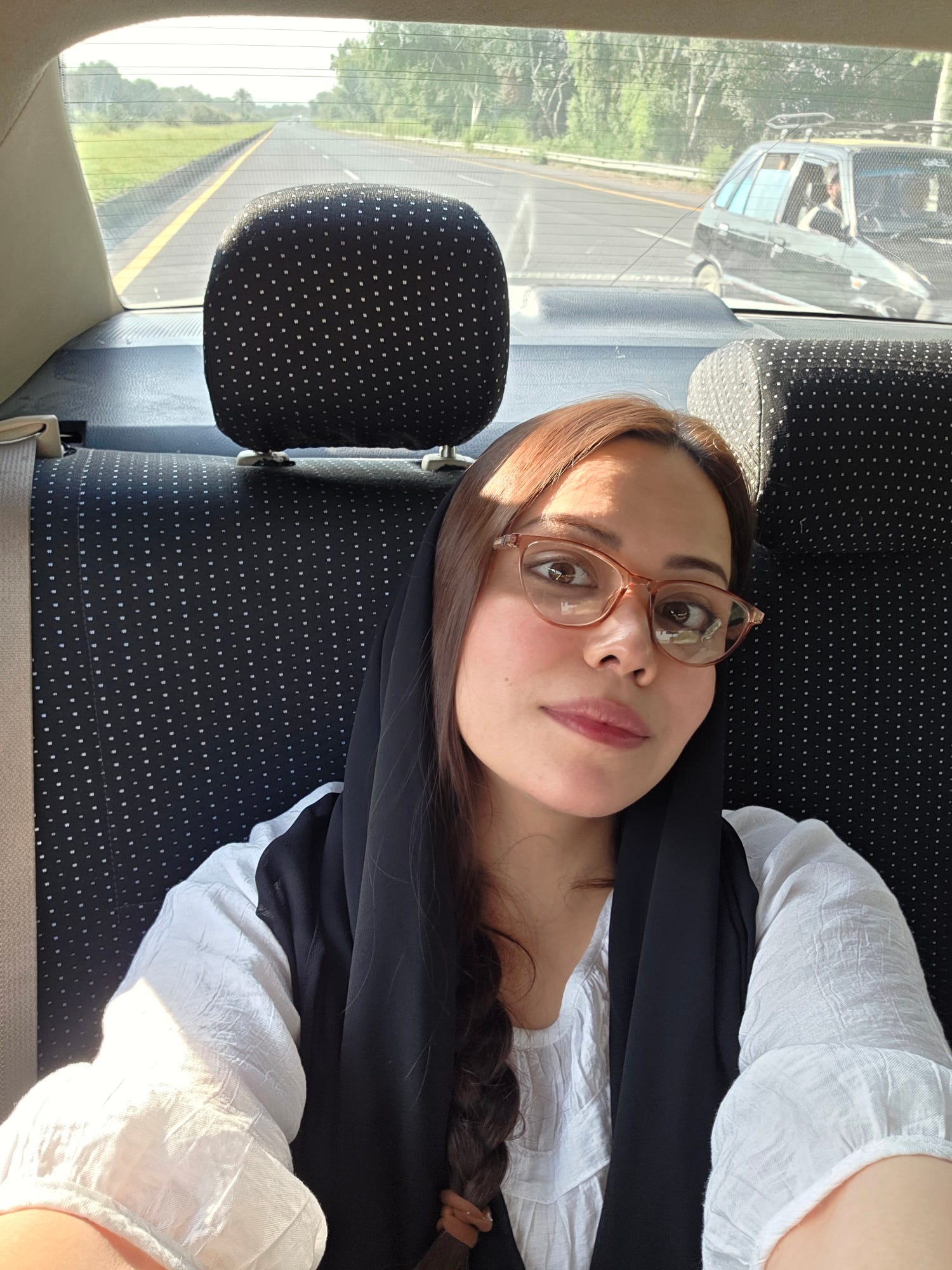
On the road, we talked for a while. I could tell I seemed strange to my colleague, from the questions he asked, and the answers he received. Maybe my way of thinking, my philosophy of life, wasn’t something he could fully grasp. But to be honest, I wasn’t certain of many things myself either, not of who I was becoming, not even of the person I am as I write this now. I only knew that I had no choice but to keep going, even without clarity, even without answers.
We both quietly agreed on one thing: we were different, and that was okay. We didn’t need to fully understand each other to accept that difference. He put on his eye mask and fell asleep.
As we got closer to Peshawar, the atmosphere began to change. On both sides of the road, agricultural fields stretched out, rectangles and squares, some green and alive, others harvested, dry, and resting.
The first bird that crossed in front of the car was white. The second was black. The third was a mix of both. I take these signs seriously. I try to find meaning in them, while also criticizing myself, so that I don’t drown more in either the inner world or the outer one.
My Japanese friend once told me, one late Sunday in August, over breakfast, that it is possible to have different versions of yourself. Different versions in different places, in different situations, without your core self being deeply altered.
I think about that often, because I recognize myself in it. I adapt a lot. Sometimes out of necessity, sometimes out of survival. I bend, I adjust, I become many versions, yet somewhere inside, something essential stays untouched, quietly watching, learning, continuing.
Oh, right. I needed to use the bathroom.
I asked the driver to stop at a gas station; there’s usually a restroom there. When I came back and practically drowned myself in sanitizer, my colleague said, “That must have been the dirtiest bathroom you’ve ever seen.” I said, “My eyes were mostly closed.”
I think one of the most deeply disappointing things, again, something that mostly affects women, is the lack of proper public and roadside bathrooms. It’s as if this need is never considered at all. Or as if, when writing the script of everyday life, the need to use the bathroom is treated as a behind-the-scenes detail.
I remember when we were living in Afghanistan. Because our house was in the heart of the city, surrounded by shops, hospitals, and government offices, sometimes women would knock on our door and ask if they could come in and use the restroom. We, the younger ones, had been warned not to let strangers into the house because frightening incidents like that had happened before (because sometimes it turned out to be a setup, someone coming in to steal, abduct, or simply observe the house). But inside my head there was always turmoil and conflict, I kept thinking, what if she really needs it?
The last time this happened, I was seventeen, just back from school. I was wearing a black uniform and a white scarf; not a single strand of my hair was visible. I also had glasses that made me look very studious, of course, not that I wasn’t smart. (Yes, that’s sarcasm.)
A middle-aged woman with a neat appearance looked at me helplessly when I opened the door, saying she wasn’t feeling well and asking to use our bathroom. I didn’t know what to do. With every passing second, my hesitation grew. I trusted her. I even imagined all the possible scenarios afterward.
I opened the door to the first floor and said, “The bathroom is here, but please go quickly and come back.” At that moment my mother called from the third floor:
“Hasina, is that you? What are you doing?”
I said, “Nothing, wait, I’m coming.”
Maybe the woman was inside for three minutes. Before she came back, I was pacing quickly, trying to control my anxiety. When she returned, she thanked me with a smile and genuine gratitude. She even prayed for me, can you believe that? Then she left quickly.
I gently closed the main door. After that, I went and checked everything, making sure nothing had been planted or hidden, just like the stories I had heard… Everything was fine. What I had done, though, had been necessary.
My mother called me again during all this.
She is one of the strictest mothers I have ever known, not strict out of principle, but the kind of strictness that comes from anxiety. I think I inherited some of my rigid moral codes from her.
I ran upstairs, and when I reached the third floor she said, “Why did you take so long?”
I replied, “I used the downstairs bathroom.”
When I got to my room, my body was still in a sympathetic state. I let out a long exhale, as if I had just completed a major mission.
It stings when I think about other women, those living in similar conditions, in countries like Afghanistan or Pakistan. In Afghanistan, even before the Taliban, public bathrooms were only for men. And now, after the Taliban’s return, women are not even considered human.
Let’s go back.
When I arrived in Peshawar, I felt the energy shift immediately. I put my scarf back on. We were supposed to go to an old neighborhood first, so we went to Hashtnagar market. People around us were staring strangely into the car as my colleague set up the camera and tripod to capture shots of the old bazaar.
I remembered how, as children, when we made a mess at my grandmother’s house or scattered toys everywhere with my cousin, she would say, “You’ve turned the place into Hashtnagar market.” And there I was now, seeing that market up close, and yes, it really was just as crowded, loud, and overwhelming as she had always meant.
I took the long black dress out of the bag and thought, oh no, how wrinkled it was. I put it on, pulled my face mask up, and tightened my scarf. I forgot to tuck my braided hair into the abaya before we stepped out.
At first, I tried to remain an observer. After a long time, being back in such a deeply traditional environment made me uncomfortable. But slowly I became more conscious again. I reminded myself that I was no longer that teenage girl. My eyes opened wider, my shoulders pulled back, my steps grew firm.
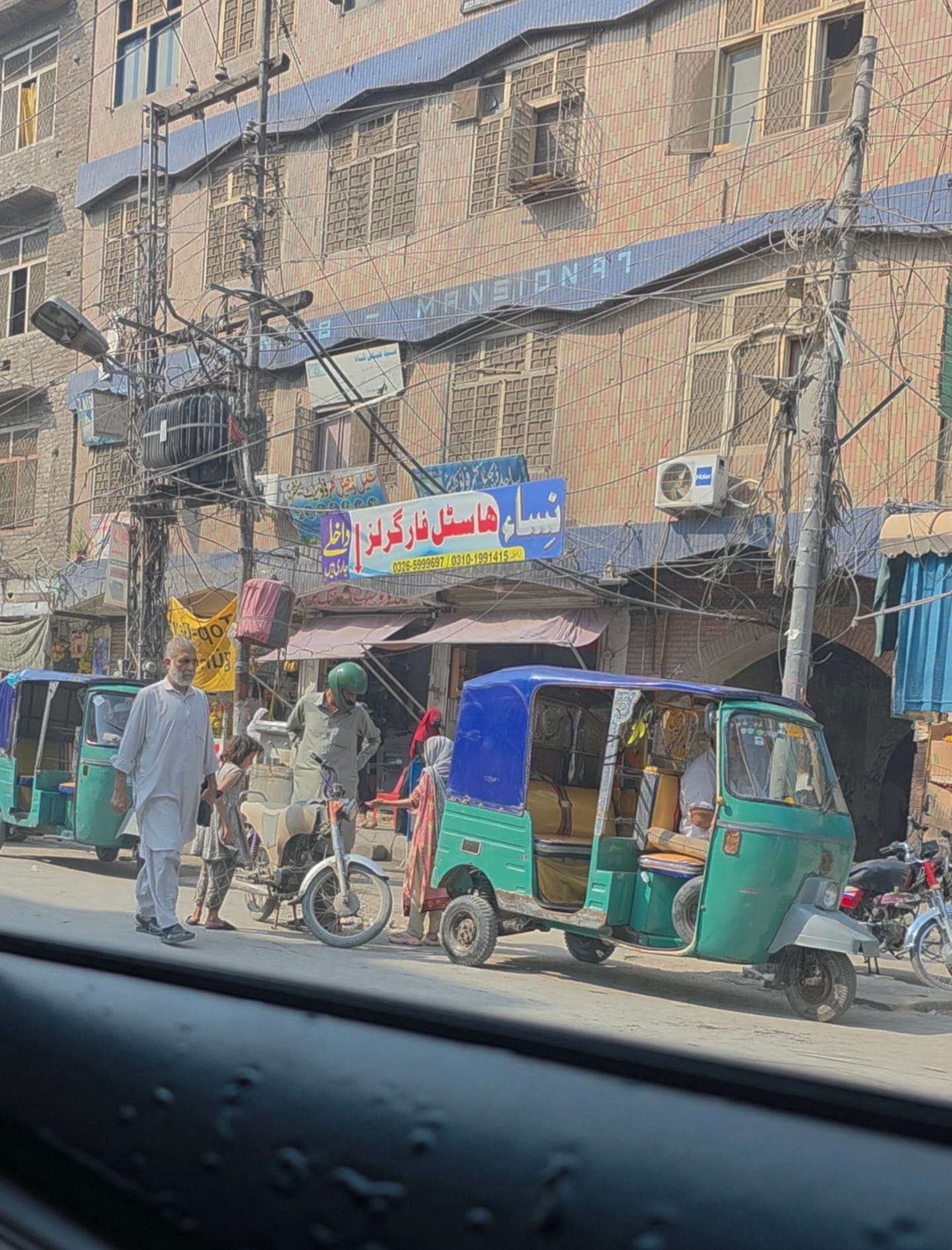
We stopped at one point and started filming. And since, as they say, knowledge must sometimes be stolen, I tried to learn the technical aspects of working with the camera, small things, like how to hold it, or even how to carry the tripod. I noticed people around us slowing down their movements, working more slowly, whispering to each other, watching us. As a woman raised in Afghanistan, these looks were very familiar to me.
I lifted the tripod, it was heavy, and followed my colleague. His steps were fast. I, who had been trying for a while to reconnect with my femininity, was half-running, probably looking more like a duck than a professional journalist. I kept stopping in different places: old alleys filled with the smell of spices, fried snacks, raw meat, and the exposed parts and organs of goats and cows, while chickens waited silently in cages for slaughter. And handmade perfumes whose combined scent was truly strange and disorienting. It was hot, and I could feel sweat soaking my forehead and back.
Everyone stared at us with curious looks, sometimes whispering among themselves. But I had made a promise to myself: no matter what happens, I will keep my head up and remain receptive. Each time I reminded myself of this, my body seemed to grow a little steadier, perhaps because there was no familiar voice from childhood nearby telling me how to behave or what I should be…
Every few meters, my colleague stopped to capture different shots, houses, people, objects. I tried to focus on the small camera screen, to understand how it worked. Sometimes, like when I was a student, my attention drifted toward people instead. I looked into their eyes, trying to sense their moment, their mood, the atmosphere of that instant.
Their stares didn’t bother me. I’m not sure why, perhaps because we were there with a purpose. In contrast to Kabul, where walking through old or even new neighborhoods meant my shoulders were often hunched and my gaze lowered. That was something I had learned: to be modest. And in my culture, modesty for a woman often means being separate from the world.
One shopkeeper said to my colleague, “Wait, let me tidy my shop a bit, then film.” Under my mask, I smiled widely. My colleague replied that we just wanted to capture things as they were.
Some people asked why we were filming, not to stop us, just out of curiosity. When the camera turned toward them, they tried to appear busy, avoiding direct eye contact with the lens. It was fascinating to me, yet unfamiliar.
In the videos I’ve seen since 2001, especially around 2006, when my memories are clearer, I remember that when people were interviewed outside cities in Kabul or the provinces, crowds would gather around them. Back then, my family would comment critically, saying how unworldly people were. Seeing yourself on television felt like being launched into space. Over time, especially around 2014, I saw less of this. But after the Taliban’s return, I noticed again on TV how crowds formed around interviewees. To me, it felt like a sign of social regression.
Anyway.
I was still like that duck, curious, trying to look normal, trying to show that I wasn’t afraid of anything.
We got back into the car. On the way, my colleague and I talked about how to greet people, how local Pakistanis say hello, and which greeting would make us sound local. Shortening and softening “Assalam alaikum.” I suggested “Slalikum,” something I had heard from Benazir Bhutto. My colleague got excited and said, “Oh yes, that’s the best and most local one.”
Under the curious gazes of shopkeepers and passersby, men and women, we got into the car and continued. We left Hashtnagar behind and drove on.
It was as if, just as borders divide land and soil, the atmosphere itself changes between them.
It didn’t take long before we were on roads where houses gave way to open, empty plains. Every so often, small, scattered villages appeared, brief and quiet, as if they were just passing through the landscape.
My colleague kept filming out the window, constantly hunting for shots. I tried, as much as I could, to understand how he framed the world, how he chose his borders inside the borderlands. The houses were small and compact, with only a few people around them. Like anyone else, my first thought was the obvious one: how do they live without “city things”? Without internet, without a supermarket? When someone gets sick, how do they reach a hospital fast?
But beyond my questions and their imaginary answers, they had found their way of living. They knew how to live. And I was watching them from my own small world. The mountains and plains began to widen; people became fewer; nature became more. The air felt clearer.
The lines, those border-lines, those invisible pressures, hurt less. The suffocation I used to feel in the center of the city loosened. There were fewer police cars, fewer reminders that authority was always nearby. I, a young refugee woman whose refugee card the Pakistani government no longer renewed, whose normal tourist visa was no longer extended, whose legal paths to simply exist had been sealed off, felt like a criminal lifting her head out of a cave for a brief, stolen breath.
On the road, the big cargo trucks, kept appearing, loaded with people’s scattered belongings. Women and children sat perched on top, on heights that didn’t feel safe at all on those winding roads. But scenes like this in this region keep reminding you of one brutal truth: human life is cheap here.
When we got very close to the border, we saw a few women and children sitting on a hill-like edge. Outside the car, even with the AC inside, the air was hot. The moment they noticed us approaching the ridge, they moved away.
I kept thinking: what are they thinking about? How do the rules and conditions around them shape the way they see the world?
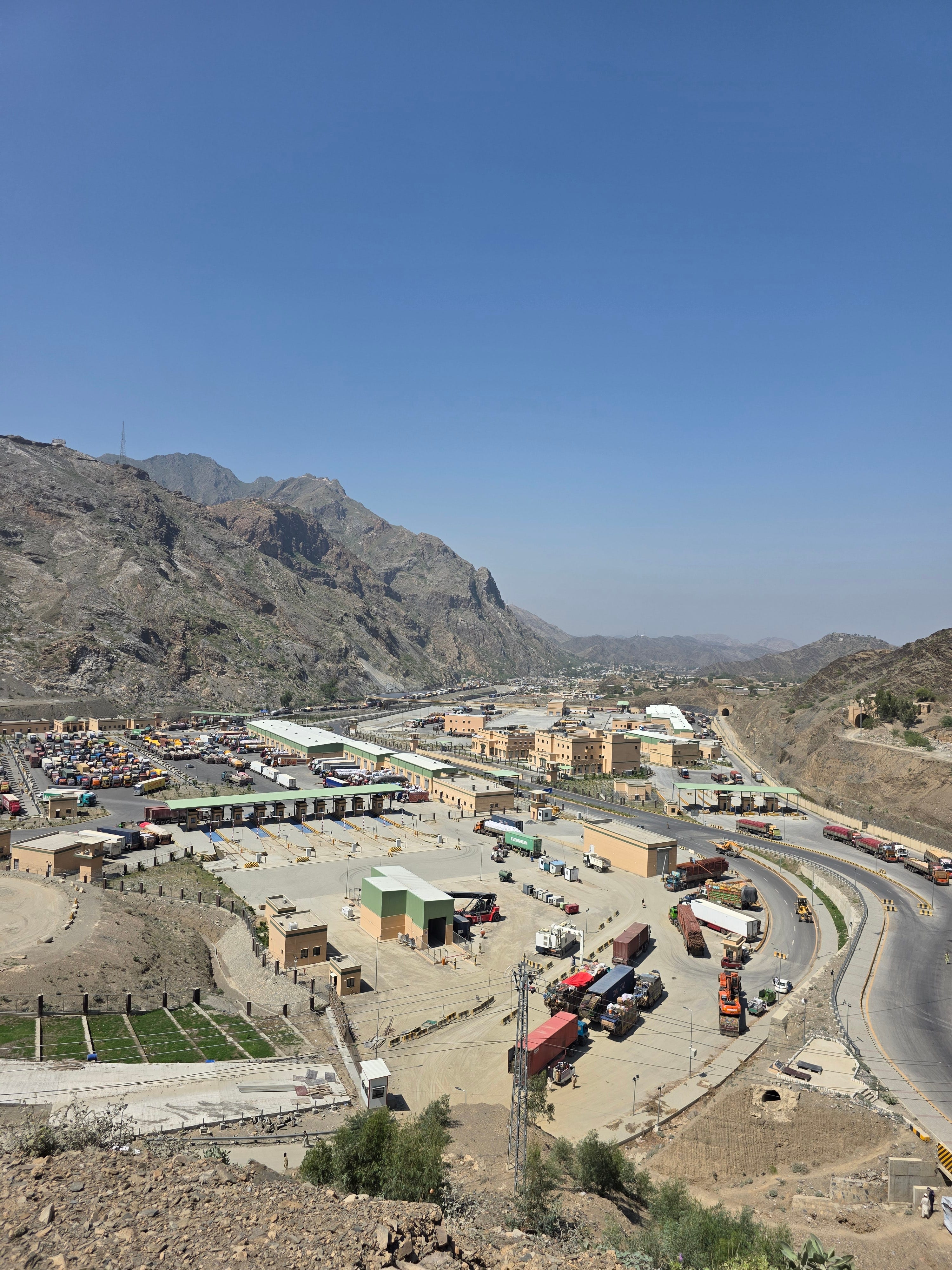
My colleague and I got out of the car. He started taking photos; I recorded video on my phone. I was looking at the mountains that stand between Afghanistan and Pakistan. On that side, a place where the feminine identity of women and girls was being erased, more and more, day by day, from society. On this side, women and people like me, who had run so we wouldn’t lose ourselves… and yet even here, in Pakistan, there wasn’t much space to breathe.
At least the sky was shared, wasn’t it? At least the sky had no border. I thought of our house, our street, my room in Kabul, under the same enormous dome. I thought of myself at different ages, in the days I grew up with stress and pain in Afghanistan.
I carry a ridiculous philosophy in my head: I think the versions of me at different ages haven’t merged into the “me” of today, each one is still living, in her own time and place. Of course, when I’m in the market searching for juicier tomatoes, I don’t take this idea seriously. But when it’s three in the morning and I’m listening to music? Oh, then I do. Of course I do.
When we got back into the car, we were only a short distance from the parking area. My colleague stepped out with the camera and said, “You stay here with the driver. I’ll go, when the woman whose story we were filming crosses to this side, I’ll call you to join me and film her entrance.” She was supposed to arrive within half an hour.
Throughout the entire journey, my colleague and I were in constant online contact with everyone involved in the documentary. As the translator, I was also part of those ongoing updates, tracking movements, relaying messages, and making sure nothing was lost between languages, and borders.
But then I said, no. I tightened my black scarf around my head and pulled my mask up. As I stepped out, my colleague, armed with years of field experience, with places and people, looked at me and said, “Are you sure? People get sunstruck under this heat. They faint.”
I wasn’t entirely sure. But I was sure about my own thick skin. My resistance. My ability to endure.
We walked together. People stared at us, because of the camera and the equipment. Even the drivers, the ones who usually swarm new arrivals, pulling them toward their cars with loud insistence, paused to watch these two people with a camera. At the Torkham border, this was rare.
I mean… why would journalists come to cover a pain that has already become old news? Right?
We moved along rough sidewalks that twisted and dipped. The ground was littered with empty snack wrappers, water bottles, fruit peels. A large open drain of stagnant, rotting water ran there too, and I had to cross it with one big, spider-like leap, carefully, while constantly checking that my clothes hadn’t shifted, because heaven forbid a woman’s body accidentally exist in public.
We reached the “zero point” a narrow path with iron fencing on both sides, scraps of fabric and worn cloth hanging around it. A Pakistani soldier stopped us. Without taking me seriously, he asked my colleague what we were doing. My colleague explained. The soldier said we weren’t allowed to go forward, and even told us to move back. We stepped a little farther away, near a small shop where people came to buy water, and men came for cigarettes.
We stood there. The shopkeepers and a few people nearby, without addressing me at all, kept asking my colleague: “Are you filming?” “Is this woman, her, foreigner?”
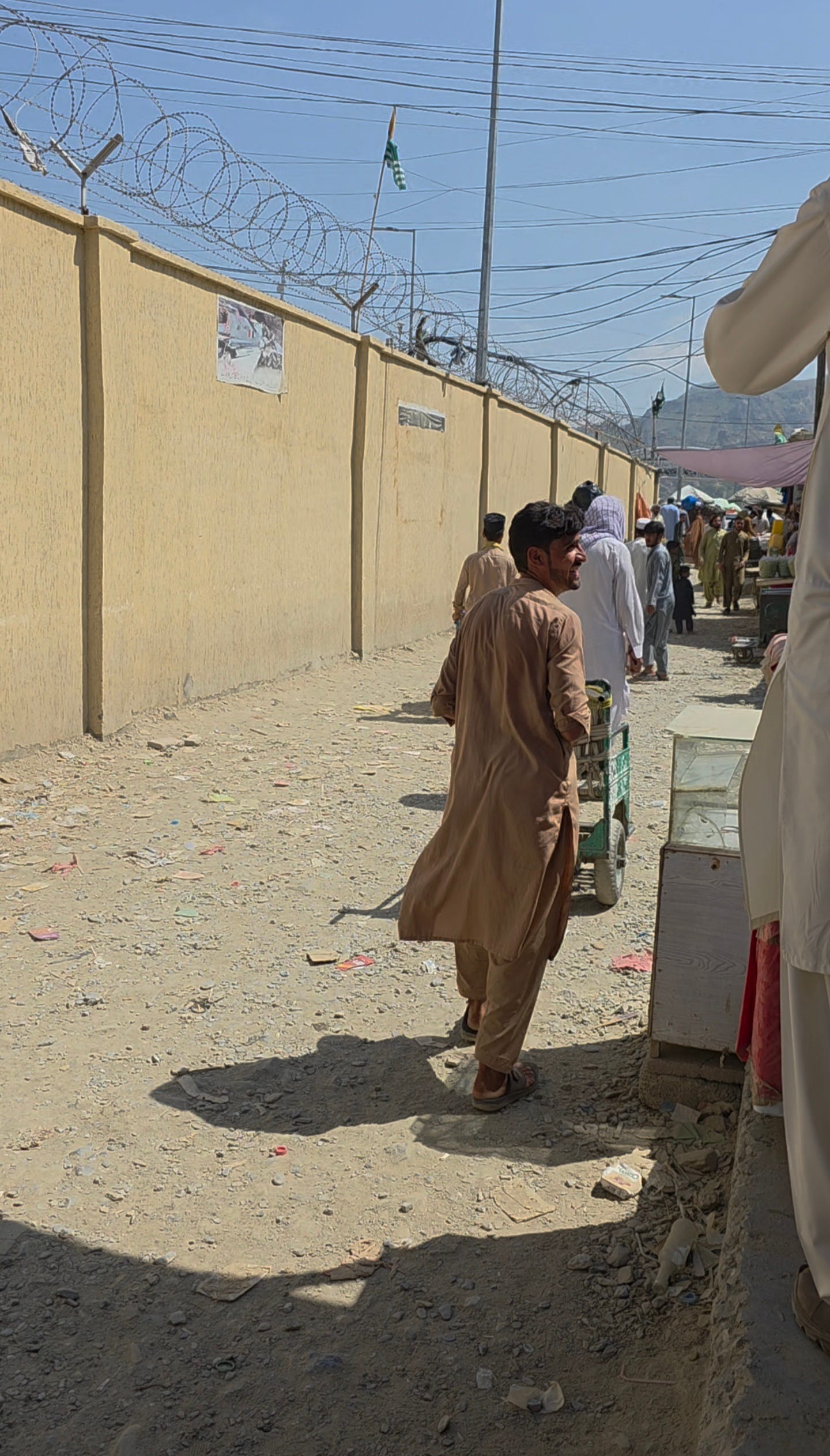
My colleague said, “No. She’s Pakistani.” He had to say it. Otherwise there were a thousand ways for this to turn into trouble. And the truth was: in the middle of it all, I was neither white, nor Pakistani, only Afghan.
People passing by kept throwing strange looks at us. I wasn’t bothered. My memories are familiar with this kind of thing. I sat on the small platform, two steps up to enter the shop, resting the camera on my knees, while my colleague stood facing me. He said, “Better not speak English. We don’t want to draw attention.”
I asked him a few questions. I’m thirsty for people’s experiences. I asked, “What’s been one of your most tense fieldwork moments, where and when?” He said, “Probably… right now,” and we both laughed.
Oh God. For a second I forgot where we were. I might have laughed a little too loudly. The way people looked, my bones turned cold. I was in a place where even a woman’s voice shouldn’t rise, let alone laughter. I gathered myself. I shrank back into caution.
My colleague was stressed, smoking. More than half an hour passed and there was still no sign of the person we were waiting for. Group messages went back and forth. And then I understood: Pakistani police weren’t allowing her to come to this side. They were demanding an astronomical amount, in dollars, an amount she couldn’t pay.
We were all stuck, not knowing what to do. Over the next two hours, sitting there, going back to the car and returning, translating messages, making calls, more than once we thought: maybe this won’t happen. Maybe they won’t let her through.
The border police, at the very last point of the administrative process, had cornered her and her two small children. For no reason. Or for a manufactured reason, only to extract money, bribes, only to sink deeper into wealth built from dirty cash.
The pressure from every direction was so intense I thought I was losing my clarity.
Then my colleague stepped in. “I’ll go inside myself,” he said, because there was no hope, and they were about to send her back.
He showed his press card to the border police, proved he was a Pakistani citizen, and went in to negotiate. At the same time, I was in contact with the main filmmaker, on another continent, and with our subject, whose internet was painfully slow. I kept giving updates, moment by moment, hoping my colleague would return and things would somehow be fixed.
The heat, the layers of clothing, the mask, the thirst, everything was wearing me down. My whole body felt like it was generating heat from the inside. At some point, I looked up and realized I was pacing, a few centimeters left and right, like the ground wouldn’t accept me standing still.
I could hear people’s murmurs. They didn’t believe I was Pakistani, though I don’t know what gave me away. One of the vendors told another, “Go tell her to film us.” The other one said, “Should I go talk to her now? Would she even understand?”
At the peak of my impatience, I started laughing slowly under my face musk.
I watched people passing by, coming and going, without a trace of happiness on their faces. Yes. This is how it is here.
And there was the fruit seller’s boy in front of me, trying to connect his small world, piece by piece. When he finished arranging things, he stood for a moment and stared at me. I don’t know if he could see my gaze through my glasses and the reflection of light on them…
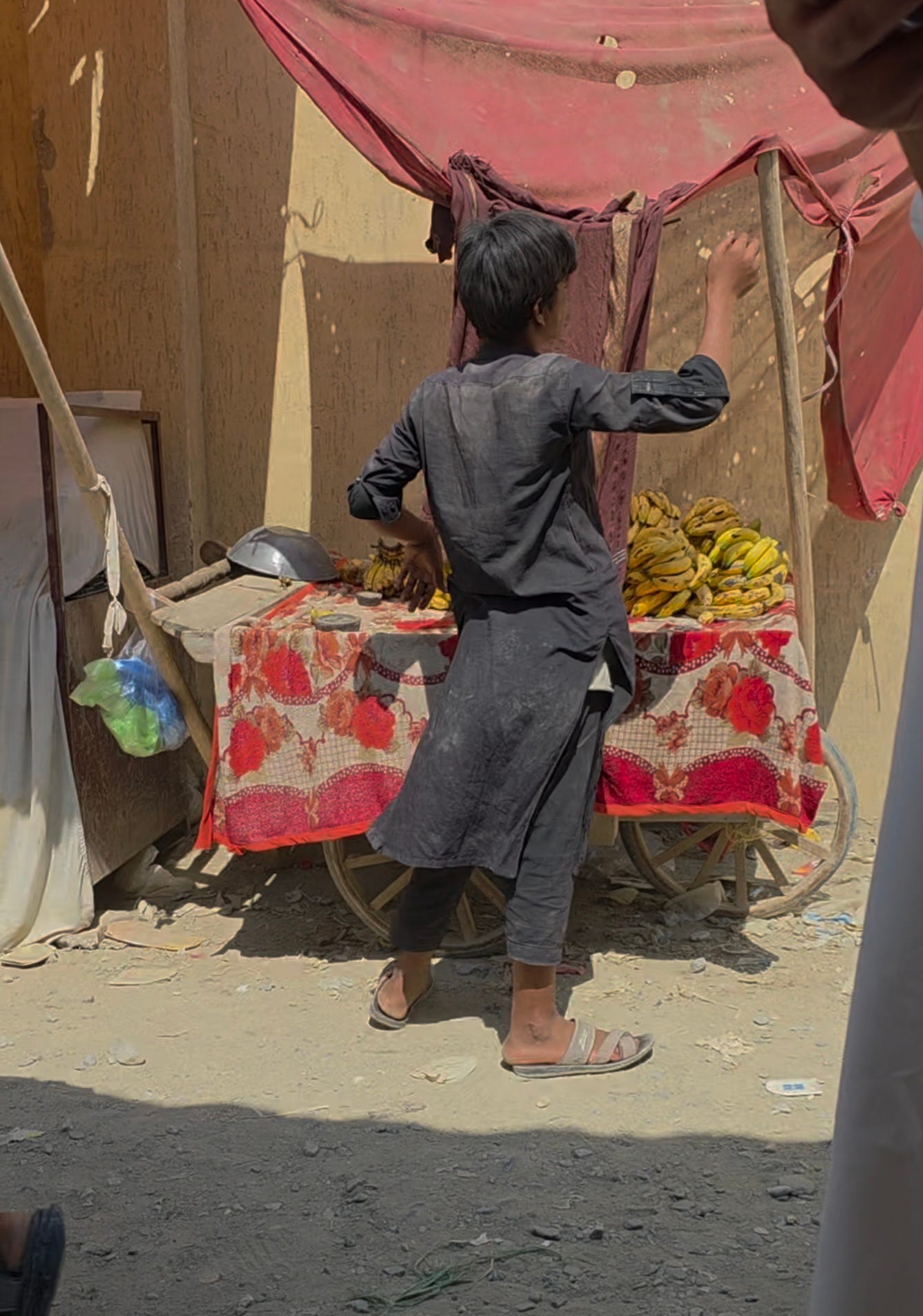
He was playing with a knife in his hand, weaving it between his fingers. I got a little worried.
Where the sun hits harder, life also feels more intense, whether that intensity is positive or negative.
We were supposed to be there for half an hour. But now it had been three hours.
My colleague was taking too long. I went back to the car, I needed water. On the way back, I moved like a horse, rushing along the path we had come from. I ignored the men’s comments, men who were bolder now because I was walking without a male escort. When I reached the car, the driver wasn’t there. I don’t had his number…
I leaned against the car. I was afraid I’d fall asleep. How unprofessional.
And then I saw the driver, chacha (which means “uncle” in Urdu), arrive like a rescuer.
I got into the car, my attention on my phone as I typed. First I lowered my mask, and in that trapped, stale air I tried to take one deep breath. I drank water that had turned lukewarm. I asked chacha to turn the AC up.
My clothes were sticking to my body. I set my bag down and, not a little, but a lot, sprayed disinfectant all over myself, even on my face.
I felt better. I swear I was on the edge of sleep. It didn’t matter that my hands and feet still worked, lately, under the pressure of work, I hadn’t been sleeping enough. Days had turned into that.
I wanted to pour a whole bottle of water over myself, or slap myself awake. (Haha.)
Then my colleague’s call saved me. He said he had managed to get the woman we were filming away from the border police. “Come quickly with the camera.”
I wrapped my scarf around my head again, no hair showing, pulled my mask back up, made sure my clothes were in place, grabbed the camera and tripod, and ran that path again with my ears closed to everything. I reached the spot. From the “zero point” I saw my colleague running toward me; I ran too, handed him the equipment, and stayed behind him, as always.
Maryam (a pseudonym) arrived with two little ones, five and seven years old. They looked like they had come back from war. Disheveled. Shaken.
Filming began.
From different angles, different takes, in that sensitive space, where I was praying, praying, praying that, as always, the officials would be absent, or careless, or simply not where they were supposed to be. (Which is to say: they’re never where they should be.)
When we got into the car, five adults and two children, oh.
My mind kept insisting I was going to be crushed in there.
We put two or three of their suitcases into the trunk. I don’t like suitcases. They always remind me of limitation, of the fact that you’re supposed to pack your entire life into one or two containers, under a fixed weight.
I thought of Maryam: her 30-something years of life, how, and with what hard choices, she had squeezed it into those two suitcases.
But the whole team had finally stepped out of panic: she had made it into Pakistan.
And then, after all the shifting and settling, the real work began.
First, I tried to calm Maryam down. She was a gynecologist in west Kabul. A woman who had run a hidden school in Kabul, teaching midwifery to girls.
I told her, “I know you’re exhausted. You’ve been through one of the worst experiences.” I even said out loud, “I don’t know why Pakistani police are like this, this corrupt.” Maybe it was anger, maybe it was fatigue. My colleague said, “For the same reason Afghanistan’s government used to be.”
I had nothing to say.
I didn’t have the strength for debate.
My brain wasn’t working.
I took Maryam’s hand and told her, “We’ll start now. Try to be natural, tell it as if you’re telling a story to a friend.”
About a kilometer away from the border, several men in semi-official clothing, carrying guns, stopped us and said we had to pay a toll.
They were speaking Urdu with a Pashto accent. My colleague tried to explain that we had already been there since the morning and had paid once. The argument escalated. For my colleague, being spoken to with force and intimidation was difficult, unlike me, for whom it had almost become familiar. After a few minutes, he realized that these men’s heads recognized nothing but money. He paid, and we passed.
In the eyes of Maryam, that woman, who reminded me of Qargha Dam in Kabul, I could see years of patience, struggle, and exhaustion.
This was where my role as translator and coordinator truly began.
I can’t share the details of the conversations.
But filming from Torkham to Peshawar, and recording her account of this journey, how she had to find a mahram (Male chaperone), how she paid an acquaintance in Kabul to pose as her guardian and accompany her to Pakistan, took time.
At some point, Maryam and the children needed to use the restroom, but there was nothing appropriate anywhere nearby. Eventually, out of sheer necessity, we stopped near a cluster of small local restaurants. Only men were sitting outside, stretched out on charpoys, talking, eating, existing in a way that felt entirely closed to us.
When I asked about a restroom, they pointed vaguely somewhere far behind the restaurants, past trees, rocks, and uneven ground.
I asked Maryam if she wanted me to go with her. She said no, that she would go on her own with the children. And she did.
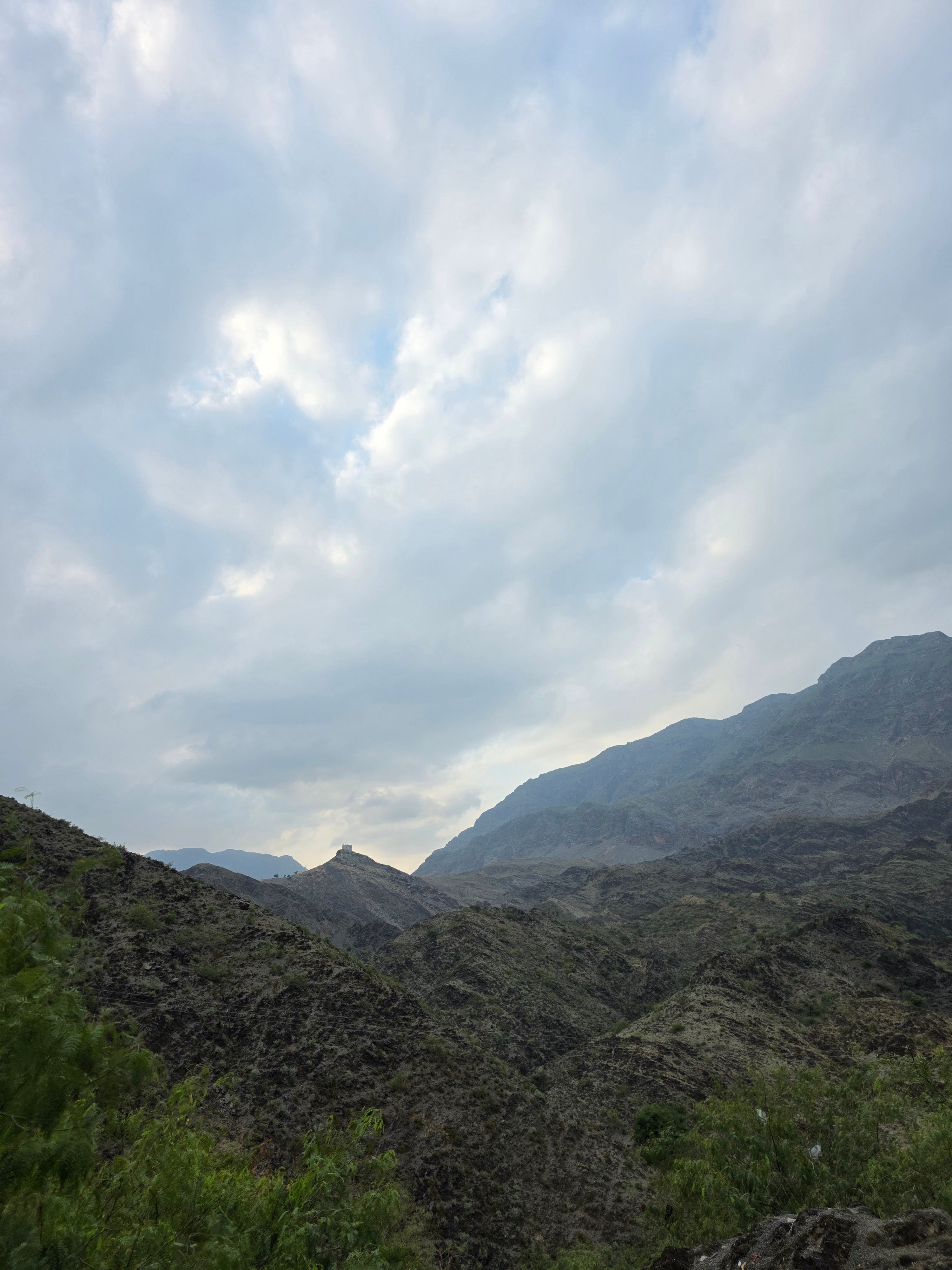
My colleague and I stayed back for a while. I stood there and looked at the mountains up close, their scale, their quiet authority. Dark, deep valleys carved into them, still and watchful. Nature, in that moment, felt like a strange blend of beauty and threat, calm and intimidation at once.
There was something grounding about standing there, doing nothing, just looking. After the chaos of the border, the noise, the control, the humiliation, these mountains felt indifferent in the most honest way. They didn’t ask questions. They didn’t demand documents. They simply existed.
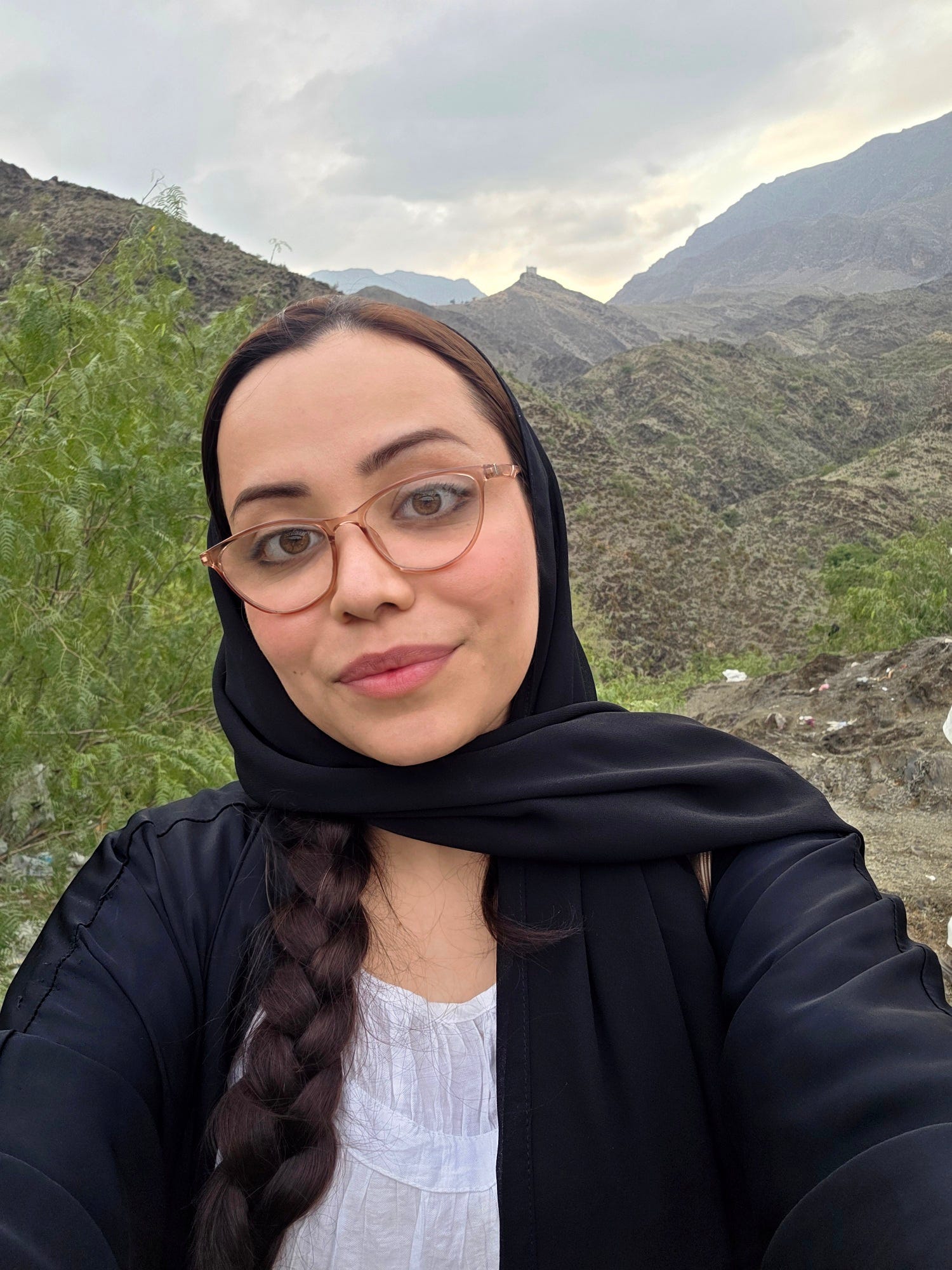
And for a brief moment, that was enough. Tired, dusty, and sunburnt, but today’s documentary shoot was finally kind of done.
The moment I saw the mountains, all the exhaustion melted away. I’ve spent most of my life in a city surrounded by mountains, and every time I see them again, it feels like I can finally breathe.
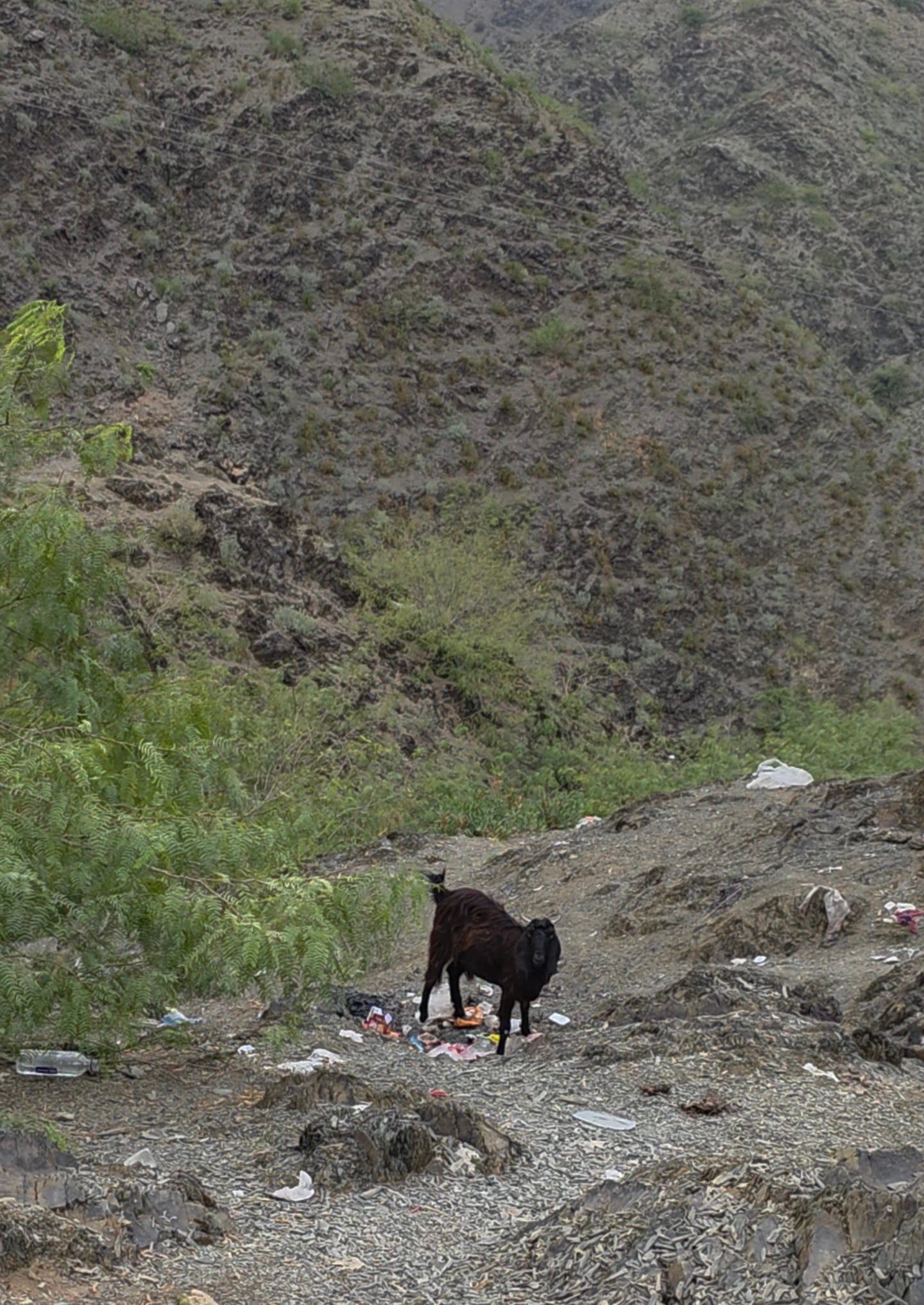
At first, when I noticed a black goat nearby, I wondered what it was doing there. Then I realized it belonged to a small local restaurant, waiting to become someone’s meal. I wished it could escape, but either way, it would still end up in human hands. And to be honest, I’m not fully vegetarian. Life, for all of us, seems to be a constant mix of struggle and survival…
When we reached the city, Peshawar, it was close to sunset. The city was crowded, alive. I looked up and saw kites in the sky, one of the things that had been banned during the Taliban’s first regime.
My small mind, my few grams of brain, had far too little space for this volume of memories.
We stopped somewhere and had both lunch and dinner together with Maryam and the children. I asked them questions and learned that the older daughter loved drawing. She spoke very little. I worried about what she was feeling, she had experienced too much. She said she had seen border police whipping women and children, and it had terrified her.
Her mother said that with every lash that came down on the women there, both she and her younger daughter would curl their bodies inward. because the crowd was enormous and the border police were so busy taking bribes that they had no time left to actually do their jobs, to manage things.
Maryam said that from the moment they entered Pakistani soil, at the very first checkpoint, a female police officer who searched their bodies demanded money, right up until the final point.
Despite having electronic scanners, they opened the suitcases by hand and threw belongings around indiscriminately.
My mind wasn’t clear. But I felt like a fisherman who’s been told that for a limited time the sea will be full of fish, so catch as much as you can, while you can.
I tried, as much as possible, to give this woman and her two children my empathy and my care. When we got into the car toward Islamabad, the mother, still looking out the window, said to her children, those two sweet girls:
“Here, you won’t worry about the Taliban anymore. You won’t worry about your clothing or your education. Your mother won’t wake up at night in fear anymore. You can go outside again. You can play. We got out. Your mother succeeded.”
The children fell asleep, their bodies exhausted, their minds filled with images of Taliban terror and Pakistani border police. Imagine having to pay an enormous amount of money to the black market just to do something that should be routine, like getting a visa, and then still being asked for bribes at the border. How suffocating that is.
I wish my circumstances and my mental capacity had allowed me to write about every point I saw and felt, each one had its own story.
I was drifting into sleep from exhaustion. But I had to stay awake.
We stopped somewhere along the road between Peshawar and Islamabad. Maryam spoke on the phone with her sister, and the children drank some water.
My colleague and I stepped out of the car. In the humid air, somewhere between darkness and the constant passing of vehicles, I watched him calm his thoughts by smoking a cigarette.
He said, “You were really good today. I didn’t expect you to be this strong. You handled it so well, well done.”
At ten-thirty at night, we arrived in Islamabad. After the Maryam was settled, my colleagues dropped me home.
I could only shower and sleep, because early the next morning I had to go to another interview with a different journalist, to a region between Peshawar and Islamabad called Attock.
I’ll pause this section here. All of this activity kept me from remembering that I was about to return to the border myself. When I went to Peshawar and Torkham, I was constantly worried about returning with my family… We, too, had obtained our only legal option to stay in Pakistan, a medical visa, by paying large sums to the black market, and every two months we had to go to the border to get it stamped.
This was my first visa of that kind, after two months of living undocumented, because they had shut down ordinary visit visas extensions, for everyone. Everyone. (Afghans)
For me, my mother, and my sister, they had fabricated strong medical documents. Each of us had a different illness, kidneys, heart… For me, they had written breast cancer. And the next day, I had to go to the border.
When I got home, I had two work meetings. My third call was with a friend.
I explained everything to him. Because of the stress, my movements had become sharp and rushed. I asked him, “Do I look sick?” We both laughed. I am forced to lie. The police lie. And the government knows that both of us are lying.
After the call ended, throughout dinner, packing my things for the next day, filling my water bottle, putting a biscuit and a few almonds into my bag, I was anxious.
Anxious about going to the border again . About facing the Taliban. About what might go wrong.
I received a message from the organizer of an exhibition where a short film I had made, One Day in Exile, about how someone like me lives under conditions in Pakistan, was going to be screened. They said: “Your film will be shown tomorrow as well. Are you sure you can’t join us by video and share your reflection?”
I said I was sure, unfortunately I couldn’t, even though I had been waiting for it for some time. Tomorrow I would be at the border. Tell the audience how much I wished I could, but the bitter reality was that I would be caught in that struggle that day.
I tried to sleep. I had four hours until four in the morning. Two hours passed in thought. One hour was spent turning restlessly in bed. And only one hour, I think, I actually slept.
I woke up before my mother and sister. While brushing my teeth, I suddenly noticed, oh no, my nails were long, with a pretty pink polish. Perfect. I was about to go to the border, where beauty for women in the presence of the Taliban is forbidden, isn’t it?
I quickly removed the polish with acetone and cut my nails short.
I’ll stop here. There is more to tell in the second part.
Comments
Nothing yet. Say the first thing.
Sign in to join the conversation.