
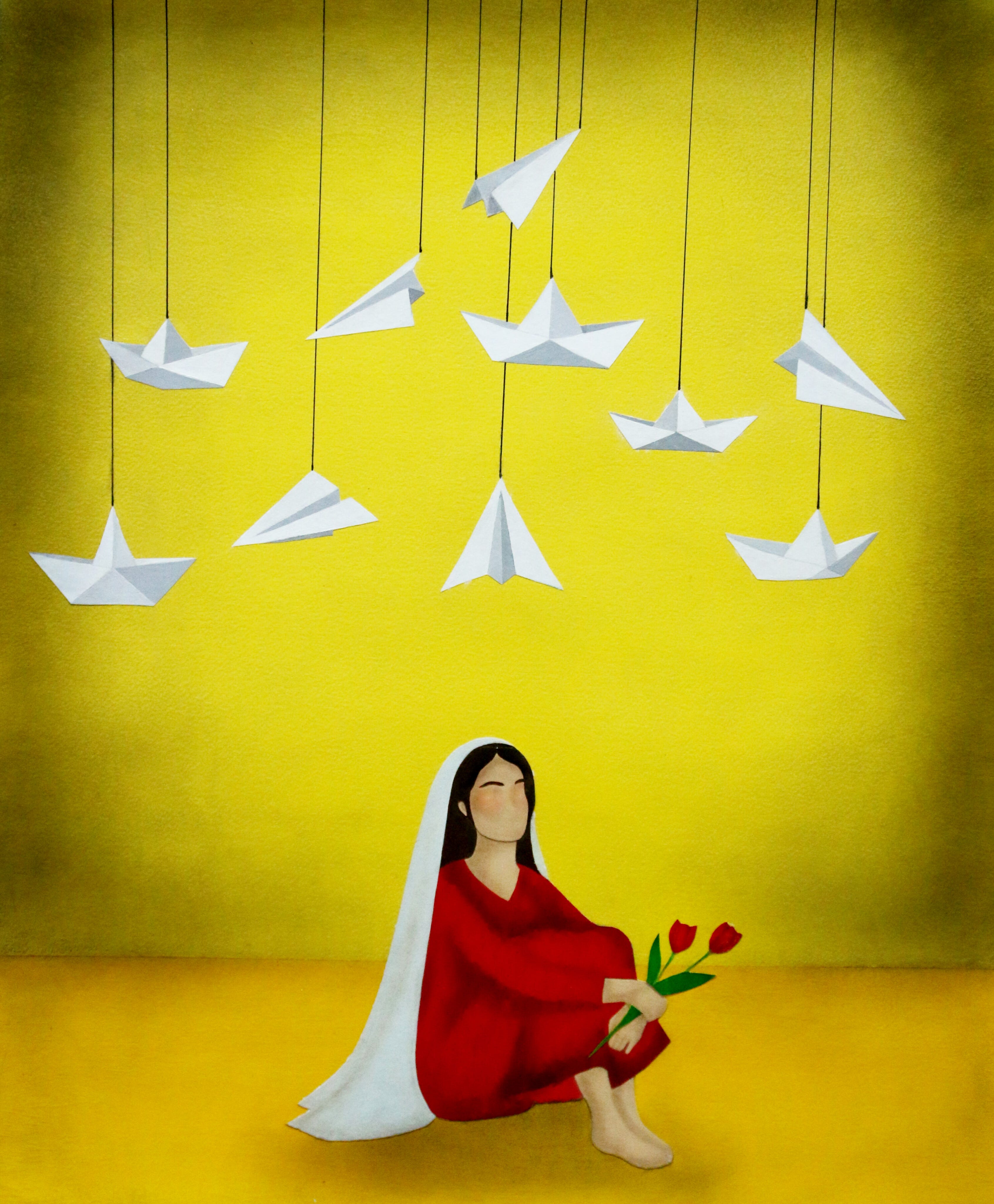
As an Afghan refugee living in Pakistan, I find myself sitting in a small café in Islamabad, watching the world pass by as I try to hide the storm inside me. It is the last day of my legal visa, and I want to take one last breath of freedom before being imprisoned again inside my home. With each minute that passes, I slip further into illegality—not by choice, but by circumstance.
This article is a reflection on what it means to be an Afghan refugee today, especially as a young woman. It is an attempt to document, to feel, and to resist. While governments debate policies and borders, our lives are quietly unraveling under the weight of fear and uncertainty. I write this not just to share my story, but to amplify the unheard voices of thousands who live in hiding in the hills surrounding the city, sleep in parks, and carry the pain of displacement in silence.
We are not just statistics. We are stories—of loss, of hope, of survival.
1. A Day in the Life: Fear as a Constant Companion
My phone buzzes. A friend whispers in panic, “The police raided a house last night in our neighborhood—eight families taken, including two children.” I close my eyes. I knew them. My heart races, not because it’s new, but because it could be me next. I know people who have gone days without eating, people who’ve been evicted and now sleep in parks, or wander the streets and bazaars for hours, hoping not to be arrested if the police showed up at their homes. Mothers who cover their children with plastic sheets when it rains, or huddle under trees in the burning sun of Pakistan.
And then, there are young women like me—educated, hopeful, once full of dreams—now hiding behind curtains, terrified to step outside, fearing arrest or harassment. My refugee card, once a symbol of protection, now offers no security; presenting it during a police inspection could just as easily serve as my deportation notice.
I write all my feelings and rage at night, teach art therapy online to Afghan girls in secret, and sell my paintings to buy internet data for them and food for my family. But all of this can vanish with a single knock at the door.
2. The Larger Picture: Policy, Prejudice, and Powerlessness
In October 2023, the Pakistani government announced its plan to deport undocumented Afghan nationals. Despite calls from international organizations to halt forced returns, mass arrests and deportations began. Reports by Amnesty International and Human Rights Watch highlight the inhumane treatment many face: unlawful detentions, harassment, separation of families, and even extortion. Deportations carried out despite the fact that many of these refugees face torture, imprisonment, poverty, and hunger upon return.
What is worse is the silence. Global attention has shifted elsewhere. Since January 2025, the Pakistani government announced plans to deport 3 million Afghan refugees by the end of the year. Refugees with Afghan Citizen Cards must leave Islamabad and other areas of Pakistan, while only visa holders can stay, but they must pay a high fee every month for visa extensions, which was previously done every six months through the black market.
And women, as always, suffer more. Without legal status, they cannot access healthcare, education, or even report abuse. Afghan girls born here are treated as if they don’t exist. Their only “crime” is being born stateless.
3. Resisting Through Care, Creativity, and Community
Yet, in the midst of all this, we resist. Not with protest signs—because we’d be arrested—but through care. Through teaching each other. Through community kitchens, underground classrooms, sewing sisterhood circles, online poetry circles. I have seen women offer the only piece of bread they have to another family. I’ve seen girls paint the sorrow in their hearts with colors brighter than any flag.
We are not victims. We are survivors. And our resistance is quiet, but powerful.
Conclusion
This piece is more than just my story—it is the story of thousands of Afghan refugees who live each day between fear and hope. We ask the world not for pity, but for recognition. For the right to exist without fear.
Our voices have been silenced too often. Through this article, I hope to break that silence—to speak not only for myself, but for every Afghan woman forced into the shadows.
To those who read this: don’t look away. Let our stories live in your memory, your actions, your advocacy. Because every human deserves to be seen…
I pick up my bag and step out of the café. The loud laughter of boys and girls fills the room behind me—a sound that has become unfamiliar to me, like peace.
Hasina Akbari(Darya)
April 6, 2025
Comments
Nothing yet. Say the first thing.
Sign in to join the conversation.