
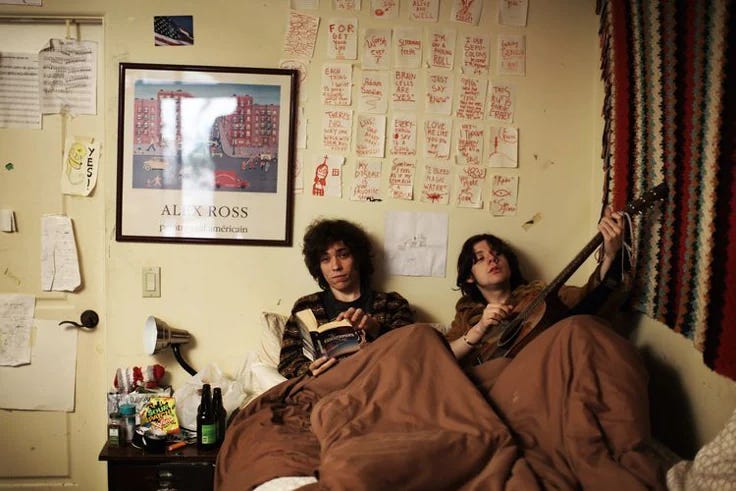
There are people I still love with every honest part of me, yet I no longer know how to stand beside them.
I used to believe love was enough to keep two people walking in the same direction. I thought if I cared deeply enough, if I remembered enough birthdays, replied to enough messages, forgave enough disappointments, then distance would eventually grow tired of trying. I spent years treating love like a rope that could pull anyone back. I never stopped to wonder whether I was also tying myself to versions of people who had already left.
I spent years believing I missed people.
Then one evening I sat alone with every memory I refused to let go of, and I noticed something that frightened me. Every person I claimed to miss existed inside a moment that no longer existed either. I did not miss my friend sitting across from me today. I missed the one who sat beside me in classrooms with unfinished assignments, impossible dreams, and enough free afternoons to believe life would always make room for us. I did not miss the conversations we were having now. I missed the ones that happened before we knew how expensive time would become.
Maybe I was never grieving people.
Maybe I was grieving entire versions of myself.
I kept asking myself whether I was the one who had changed too much or whether I had finally become honest enough to admit that I had been growing for years. I searched for an answer inside old photographs, old chats, old playlists, believing memory would settle the argument for me. It never did. Memory has never cared about truth. It only knows how to preserve feelings with impossible generosity.
For a long time I blamed myself.
I thought I had become difficult to love. I wondered whether I had forgotten how to be present, whether work had changed me, whether growing older had stolen something gentle from me. I carried guilt for friendships that no longer felt effortless. I kept asking myself how many more messages I should send before accepting that effort cannot revive something that no longer breathes the same way.
The answer never came.
Instead, another question found me.
Who was I becoming whenever I forced myself to remain where I had already outgrown?
I hated that question because I already knew the answer.
I became quieter.
I laughed at things that no longer amused me. I swallowed opinions because I wanted peace more than honesty. I accepted conversations that left me emptier. I mistook familiarity for belonging and convinced myself they were the same thing.
They are not.
Some people know every chapter of my story and still cannot meet the person writing the next one.
One of my subscribers actually wrote about this same feeling recently. They shared how they kept confusing emotional history with emotional destiny, and how painful it is to accept that not every meaningful connection is meant to keep evolving with us. Reading their words made me pause because it felt like they had put into sentences something I had only ever carried as a feeling. It reminded me that this experience is not rare or personal in the way we think it is it is something many of us quietly go through while pretending we are the only ones who feel it this deeply.
MAIMONA IFTIKHAR’S ESSAY:
Lately, I’ve entered an era in life where making friends or keeping friendships is not as easy as it used to be.
Not because people disappear, but because the versions of ourselves that once held those friendships together slowly begin to change.
Sure I have a lot of people that I could maybe hang out with, or even call on a whim, but after graduating from medical school, and then residency, I have only been united with those past versions of myself through hanging out with friends that were family at those points in time.
Nostalgia is a strange, strange thing.
It has a strong magnetic force to pull you back, a desire to meet your old version, but at the same time realising that once you do meet that version, nothing feels the exact same anymore. So you realise a sad truth — you have come too far in life to be able to relive what once was your daily journey. Like a public transport bus that once passes its bus stop, life doesn’t seem to have a reverse button to go backwards.
You might be able to meet old friends and share laughter, relive the crazy mischief and the stories of your crushes, feel a part of yourself come alive that is deadened by the daily cycle of work, rinse, repeat — but it tastes like the flavor of a dessert that you remembered in your head to be too good than when you actually tried it. In reality it somehow is unsatisfying, incomplete. It leaves you wanting more, just as drinking the salty ocean water when one is thirsty. You can continue to drink, but it won’t quench your thirst, but only add to it.
I often travel to the cities I once lived in, in search for myself that existed before. I hold a wistful longing for the eras that are bygone. Coming from a retrophiliac and a romantic, I view everything from the past with a warm fuzzy glow that blurs out imperfections, and collect things that no longer belong in the Gen Z present — old music records, vintage jewelry, handwritten letters, notes passed in classrooms, postcards from friends, mementos from all my past lives.
As you can imagine, it is a conflicting struggle to exist between a warm past, with the future anxieties and the stressful present in the horizon. However it does act like a coping mechanism; our mind escapes to a more comforting experience with golden glow at its edges, reverting to “simpler times”, reminding us of our resilience and the strong connections we once held.
And yet the present asks something different of us.
I have realised that this era has higher standards , current demand is better friends - friends who are less absorbed in their own lives busy with daily work, and who consistently actually take out time to lend an ear or check in with you to see how you’re doing. Friendship, I’m beginning to realise, evolves just as much as we do.
I have noticed a shift in my own perspective regarding friendships too. I used to be a person who relied heavily on friends - if I had a bad day at work, bad interaction, a stressful time in life, I would want a friend to vent to and emotionally regulate. I now have become more emotionally independent, and want to analyse things on my own, and regulate myself, and hence I don’t ‘need’ people for that purpose anymore.
Which is great, because I never enjoyed being dependant on others anyway - sometimes them being busy, and sometimes lending a not so nonjudgmental ear because of their own limitations would actually weigh me down. The interactions I do have now are far more mindful: opening up only as much as I wish to, and sharing with intention, with different friends for different reasons.
Being on that end of the spectrum of being overly attached to my friends; when I used to be hurt by every text that was ignored, every party I wasn’t invited to, or that extreme desire I had to belong or fit in ; I no longer miss any of that and am glad I outgrew that.
Loss of common spaces to hang out ; common colleges or workplaces , means there are fewer in person interactions, and more digital communications. Currently 95% of my close friends are connected with me through FaceTime calls as they live in different cities of the world. People are increasingly unwilling to tolerate one-sided friendships and are ending relationships due to differing values, lack of reciprocity, lack of holding nonjudgmental spaces when one needs them.
I am also coming to terms with the realisation that my story is best understood by myself. No one else can completely comprehend my struggles, and my reasons for my choices and decisions. The validation that I seeked once is no longer a desire. I no longer wish to ‘act strong’ or ‘be strong’ for others. If I’m feeling sad, depressed or anxious, I’m going to let myself feel that fully, not caring what others think - and being at a certain distance from others is a privilege, as it allows me to do so without judgement.
The new age of friendships values quality over quantity, and normalises outgrowing friendships when they no longer fit you. It is okay to grow out of friendships. It is okay to feel out of place or constrained where you once felt safe, and step out to make more space for yourself.
It just means you’re a plant that’s growing at a faster rate than your pot can contain. And probably, as long as your conscience is alive and you’re doing the right things - not stepping over other people’s rights, or hurting others, or avoiding self-analysis and correction where it’s needed - it’s okay.
It’s okay to not be on the one sided transaction of giving and moulding yourself to be accepted and wanted.
As Khalil Gibran says in The Prophet:
“Let there be spaces in your togetherness, and let the winds of the heavens dance between you. Love one another but make not a bond of love: let it rather be a moving sea between the shores of your souls.”
Growth makes you lose people, sure
- it aligns you with better people too.
Friends in the Sufi world were meant to be mirrors to ourselves. Rumi said, “The one who has a good friend doesn’t need any mirror.” He taught that, like a mirror, a true friend reflects one’s essence; faults and values, aiding in self-reflection and purification.
In the modern age that is heavily focused on self-actualisation and growth, a good friend would therefore be an extraordinary companion in one’s healing and improvement. Only, few remember how large a responsibility that is, and how carefully it must be carried - with mindfulness, gentleness, compassion and grace.
Perhaps that is why friendships feel rarer now, and more precious when they do appear. Because to truly be a mirror for another soul is not an easy task. It requires courage, honesty, and kindness in equal measure.
And so as we move through the many eras of our lives, what we search for is not crowds of people, but a few rare mirrors ; the kind that reflect us truthfully and allow us the quiet space to keep growing, like a plant that has finally found a pot wide enough for its roots. As Ralph Waldo Emerson famously wrote, “The only way to have a friend is to be one.” The quiet work of adulthood is learning to become that mirror for someone else.
I finished reading her words with a heaviness that felt strangely familiar because she gave language to something I had spent years carrying without a name. While reading, I did not feel as though I was learning something new. I felt as though I was meeting a thought that had been waiting for me long before I opened the page. Her reflection reminded me that grief does not always arrive after people leave. Sometimes it arrives when they remain in my life while no longer fitting inside it the way they once did.
I used to feel guilty every time I noticed myself becoming quieter around someone I once could never stop talking to. I mistook that silence for failure. I blamed myself for every conversation that refused to feel effortless. I believed I owed every meaningful relationship an endless attempt at saving it. I carried that responsibility until it became heavier than the friendship itself.
There came a night when I stopped asking why everything felt different and asked something far more painful instead. I asked whether I still recognized myself whenever I returned from seeing certain people. I did not like the answer because I realized I had been shrinking pieces of myself just to make old spaces feel comfortable again. I laughed where I no longer found things funny. I apologized for opinions that deserved to exist. I made myself smaller because I believed familiarity deserved more loyalty than honesty.
I cried over that realization more than I cried over losing anyone. I mourned every version of myself that believed acceptance had to be earned through sacrifice. I mourned the person who thought staying was always more beautiful than leaving. I mourned every evening I spent wondering why I felt lonely beside people who genuinely cared about me. Love had never disappeared. Alignment had.
I have learned that affection and closeness are not the same language. I can love someone without wanting to return to the life we shared. I can wish them peace without wishing to walk beside them again. I can carry gratitude without carrying obligation. None of those things erase the years we gave each other. They simply refuse to imprison me inside them.
I still revisit memories because I am human. There are afternoons when an old song reaches into my chest and reminds me of conversations that no longer exist anywhere except inside me. I smile before the sadness arrives because memory always lets joy enter first. The grief follows after it has made itself comfortable. I let both stay. I no longer argue with either of them.
I think growing up has less to do with finding people who never leave and more to do with accepting that every relationship asks a different version of me to exist. Some versions survive. Others quietly finish their work. I no longer chase them through old streets or unanswered messages because I have finally understood that my life cannot move forward while my heart insists on living inside rooms that have already become museums.
I still love many people I no longer belong beside. That truth used to break me because I believed love was supposed to conquer distance, change, and time. Now it only makes me cry for a different reason. I finally understand that love does not fail every time it lets go. Sometimes it simply bows its head with gratitude, thanks another soul for the chapter it carried, and leaves without asking either of us to become someone we are not.
Co-Author Substack ID: Maimona Iftikhar
Comments
Nothing yet. Say the first thing.
Sign in to join the conversation.