
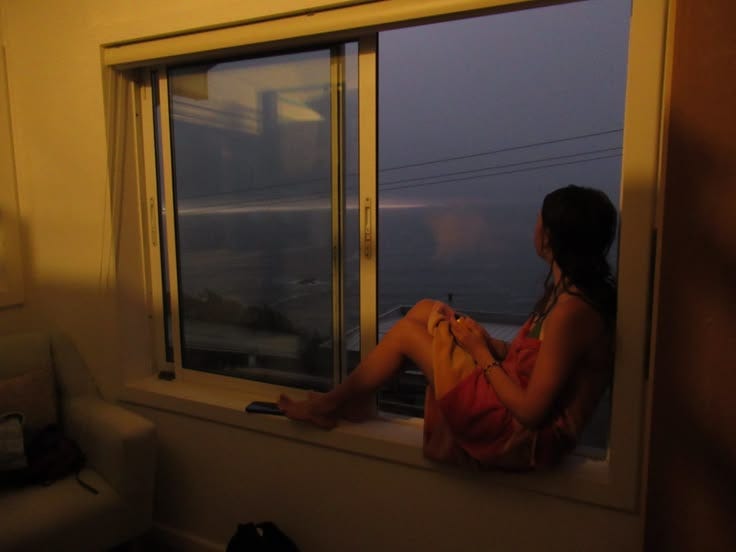
We have become very good at making people understandable to ourselves. Give us a few details about someone and our minds begin filling in everything that is missing. We decide what kind of person they are, what they must have meant, why they behaved the way they did, what probably happened before we entered the room and what will probably happen after we leave it. We do this with strangers, friends, parents, lovers, coworkers, and sometimes with people we have known for years. A person can give us one piece of their life and somehow we walk away believing we have seen the entire picture.
There is a comfort in that. Knowing what to think feels safer than admitting that we do not know enough to think anything at all. Uncertainty asks us to sit with an unfinished story, and most of us would rather finish it ourselves than leave the last page blank. So we make assumptions. We connect details. We choose explanations that make the world feel coherent. We tell ourselves that someone’s silence means they do not care, that someone’s anger means they are cruel, that someone’s confidence means they have never struggled, that someone’s decision means they must have had a particular intention behind it.
The trouble begins when the story we created becomes more real to us than the person who inspired it.
Think about how often this happens in ordinary life. You see someone sitting alone at a restaurant and imagine they are lonely. You see someone laughing with a group of friends and assume they are happy. You hear that someone left their job and immediately begin wondering what went wrong. A friend tells you that another friend did something hurtful, and before you ever hear the other side, you have already formed an opinion. Someone disappears from your life without explaining themselves, and because there is an empty space where an explanation should be, your mind gives you one.
We are uncomfortable with empty spaces, especially when they concern people we care about. If someone leaves without telling us why, we would rather believe they stopped loving us than accept that we may never know. If a relationship ends without one person being entirely at fault, we search for someone to blame because a clean villain makes a painful ending easier to understand. If someone hurts us and we cannot understand what made them do it, we keep returning to the memory as though there must be one missing sentence that will finally make everything fall into place.
Sometimes there is no such sentence.
Sometimes you simply did not have enough information.
Amina sent me a submission that made me think about this in a way I had not expected. Her story begins with a completely ordinary morning that does not go according to plan. A canceled photoshoot leaves her with nowhere particular to be, so she decides to spend the morning by herself. Then a stranger approaches her with something to sell, and what seems like a small interaction becomes much more complicated once he leaves.
What makes her story interesting to me is that she never receives the answer she is looking for. She cannot establish exactly who this man was, where the perfume came from, whether his story was true, whether he was being exploited, whether he was exploiting someone else, or what her own decision ultimately meant. She is left with an action she has already taken and a set of questions that cannot be settled.
Here is Amina’s submission:
June 3rd went wrong from the very beginning.
I woke ten minutes before nine and rushed through makeup, clothes, and hair to make it to a photoshoot I had volunteered to help with. Forty minutes later I was ready to leave, only to discover a message from the photographer explaining, in dramatic detail, his food poisoning. Without him, the shoot was canceled. Already dressed and with nowhere to be, I decided on a solitary breakfast and a walk through the neighborhood. I had recently left my first dull job and, for the first time in my life, carried savings in my bag. Money reserved for “just in case.” The neighborhood greeted me with modern apartment blocks, quiet ponds, and dog walkers. It felt like a perfect morning.
I bought an iced tea and settled beside a nearly pond. An audiobook played in my headphones while sunlight warmed the back of my neck. I should have been working, but the water held my attention. Eventually its reflection was interrupted by a yellow scooter. A young man stood over me. He looked about my age, maybe a year older, but streaks of gray in his dark hair made him seem older than he was. He said something. I lowered my headphones.
“Sorry to bother you,” he said. “Would you happen to need perfume?”
“No,” I answered, maybe not confidently enough. He looked so disappointed that I immediately felt guilty.
“Maybe just take a look?” he asked. I sighed. “All right.”
He sat beside me with relief and began unpacking brand-new perfume boxes from a shopping bag. While he explained the brands, I noticed the dirt beneath the fingernails of his hand and wondered who exactly he was.
“This one sells for over fifty thousand,” he said.
“So how much are you asking?” I replied.
“Fifteen. Just take it.”
The desperation in his voice made every alarm bell ring in my head.
He told me a long story about warehouse workers, damaged inventory, and merchandise quietly disappearing before being resold. By the end, it was obvious enough that I told him I wanted nothing stolen.
Yet he kept talking to me as if we were old friends. He did not know my name. He did not know whether I worked for the police or whether my father did. His carelessness should have worried me less than it did. Instead, I felt sorry for him. In the end, I bought one bottle using the emergency money from my bag. Afterward he tried to recruit me into his little operation — offering to supply my friends with cosmetics, perfume, even hair dryers. To avoid an argument, I took his number on a scrap of paper and watched him disappear down the path.
Then I was alone with the unopened box. That was when the real problem began. Had I helped someone in need, or had I simply rewarded a dishonest system? Perhaps the young man was being exploited. Perhaps he was exploiting others. By buying from him, was I easing his burden or encouraging it?
My mother always warned me never to give money to organized begging schemes. Every act of sympathy, she said, feeds the machine that created the suffering in the first place. The perfume remained sealed. I was not afraid of the legal consequences, only of the ones bigger. Long after the young man was gone, I was wondering whether kindness can become a form of complicity and whether, somewhere beyond this life, good intentions will be enough of an excuse. The next day, I couldn’t find even a scrap of paper in my bag, as if the whole incident had never happened.
What stayed with me about Amina’s story is that there is no satisfying conclusion waiting for us at the end. We are not told that the man was secretly innocent. We are not told that he was part of some elaborate scheme. We are not given a final piece of information that allows us to look back at everything and say, “There. Now we know what really happened.”
We do not know.
And that is precisely what makes the story feel so familiar.
Most of the situations that occupy our minds do not come with that final piece of information either. We simply forget that because, when it comes to our own lives, we often behave as though an answer must exist somewhere. We believe that if we think about something enough, remember every detail, examine every possibility, perhaps ask the right person the right question, we will eventually understand it. We imagine there is a complete version of the story sitting somewhere outside our reach.
There are times when that is true. Sometimes a conversation clears things up. Sometimes someone comes back and explains themselves. Sometimes you learn something years later that changes how you understand an old memory. But there are also things you will never find out. There are people whose motives you will never understand. There are relationships where both people walk away with completely different interpretations of what happened. There are decisions made by strangers that affect your life without you ever knowing why they made them.
You can spend years trying to solve a question that was never yours to answer.
I think about how often we confuse explanation with closure. We tell ourselves that if someone could just explain why they hurt us, we would finally be able to move on. If they could tell us what they were thinking, why they changed, why they chose someone else, why they stopped trying, why they lied, why they left, perhaps the pain would become easier to carry. Sometimes it does. Understanding can be incredibly powerful. But there are situations where even the perfect explanation would not change what happened.
Someone can have a reason for leaving you and still have hurt you. Someone can have been struggling and still have treated you unfairly. Someone can love you and still be incapable of giving you what you need. Two people can both have good intentions and still cause each other pain.
Life becomes much harder to understand when we stop looking for one person to be completely right and the other to be completely wrong.
There are stories where everyone involved is telling the truth as they experienced it. One person remembers feeling abandoned. The other remembers feeling pushed away. One remembers trying their best. The other remembers receiving almost nothing. Neither person necessarily has to be lying for their stories to contradict each other. They were standing in different places, carrying different histories, noticing different things.
We forget that our perspective is not a window. It is a position.
We see the world from where we happen to be standing, with everything we have experienced before that moment shaping what we notice. The same sentence can sound cruel to one person and harmless to another. The same act can look generous from one angle and selfish from another. A person can be protecting themselves while another person experiences that protection as rejection.
This does not mean that truth does not exist. It means our access to it is limited.
There is something humbling about that realization. We want to believe we are good judges of character. We like to think we can tell when someone is sincere, when someone is lying, when someone deserves our trust, when someone deserves our distance. Sometimes we can. Intuition matters. Patterns matter. Actions matter. We should not ignore what someone consistently shows us simply because we want to imagine a nicer explanation.
But there is a difference between paying attention and pretending to know everything.
You can say, “I do not trust this person,” without saying, “I know exactly what kind of person they are.”
You can say, “What they did hurt me,” without saying, “I know everything that was happening inside their head.”
You can say, “I would never make that choice,” without saying, “I know why they made theirs.”
That little distinction leaves room for something we do not give each other enough of: complexity.
Because everyone becomes complicated when you know enough about them.
The person you once thought was selfish tells you about the years they spent taking care of everyone else. The friend you thought was fearless admits they are terrified of disappointing their parents. The person who seemed rude explains that they were so overwhelmed they did not know how to speak. Someone you believed had everything figured out tells you they have been questioning their entire life.
And then there are the opposite discoveries. Sometimes you learn the truth and realize your generous interpretation was wrong. Sometimes the person you defended really did hurt someone. Sometimes the explanation does not redeem the action. Sometimes there was no hidden pain, no misunderstood intention, no beautiful reason waiting underneath it all.
That is part of what makes uncertainty so difficult. It can lead us in either direction.
We may be too harsh with someone who needed understanding, or too understanding toward someone who needed accountability. We may judge a person for something we did not understand, or excuse something that should not have been excused. There is no perfect formula that guarantees we will always know which is which.
Perhaps that is why Amina’s story feels larger than the encounter itself. Her discomfort does not come from simply wondering whether she bought a bottle of stolen perfume. She is confronting a much more difficult question: what do we do when we have to make a moral decision without having the complete truth?
We do this constantly.
We decide whether to forgive someone without knowing whether they have truly changed. We decide whether to trust someone without knowing what they will do with that trust. We decide whether to leave a situation without knowing whether staying might have changed anything. We choose people without knowing whether they will remain in our lives. We let people go without knowing whether another conversation could have saved the relationship.
Every meaningful decision contains some amount of information we do not have.
We just become aware of it at different times.
There is also something painful about realizing that other people are living with incomplete versions of us too. Somewhere, there may be someone who remembers you for one conversation. Someone who thinks you were rude when you were exhausted. Someone who thinks you were distant when you were scared. Someone who remembers a mistake you made and has built an entire opinion of you around it.
You cannot correct every version of yourself that exists inside another person’s mind.
That is a strange thing to accept.
You can explain yourself to someone and still be misunderstood. You can apologize and still not be forgiven. You can have the best intentions and still cause harm. You can do everything you know how to do and still be remembered incorrectly by someone who only saw one chapter of your life.
At some point, you have to accept that being understood by everyone is impossible.
And perhaps being completely understood by anyone is rarer than we imagine.
Even the people who love us do not know every thought we have had, every fear we have hidden, every insecurity we have carried into a room, every reason behind every decision. They know us deeply, perhaps more deeply than most, but they still know us through what we choose to reveal and what they are capable of noticing.
There are rooms inside every person that nobody else gets to enter.
That is not necessarily tragic. In some ways, it is beautiful. It means a person can continue surprising you. It means we are not as fixed as the stories people tell about us. It means one bad day does not have to become our identity, and one good moment does not have to become our entire character.
We are always more complicated than the evidence someone has collected about us.
Maybe this is also why we should be careful with the stories we tell about people who are not there to tell their side. A single piece of information can travel very far from the truth when enough people begin adding their own interpretations to it. By the time it reaches the fifth person, nobody is really talking about the original event anymore. They are talking about what they think the event meant.
And this happens privately too.
We tell ourselves stories about our parents, our exes, our friends, our childhoods. We take memories and give them explanations. We decide what a particular event says about us. We decide that someone did not choose us because we were not enough. We decide that a friendship ended because we were difficult to love. We decide that a person left because they never cared.
Maybe those explanations are true.
Maybe they are not.
The frightening part is that we can build an entire life around an explanation that was never confirmed.
I think there is a particular kind of maturity in being able to say, “I do not know.”
Not as an excuse to avoid thinking. Not as a way of pretending that nothing matters. Not as an invitation to ignore evidence or abandon our judgment. I mean the genuine ability to recognize the boundary between what we know and what we have imagined.
I know what happened to me.
I do not always know why it happened.
I know what someone did.
I do not always know what they intended.
I know how something made me feel.
I do not always know how the other person experienced it.
There is freedom in those distinctions.
Because once you stop demanding an explanation for everything, you can finally stop making yourself responsible for finding one.
There are questions you may carry for a while and then realize you no longer need answered. There are people whose motives will remain unclear. There are endings that will never become perfectly understandable. There are memories that will always have a little fog around them.
You can still live.
You can still love people.
You can still make good decisions.
You can still become someone you are proud of.
You do not need every missing piece before you are allowed to continue.
Maybe that is what we are really being asked to learn when life refuses to give us the whole story. We are being asked to trust ourselves without having complete information. We are being asked to make choices without guarantees. We are being asked to hold compassion and discernment at the same time, to understand that another person’s story may be more complicated than what we can see without using that possibility to erase our own experience.
And perhaps most importantly, we are being asked to remember that the person standing in front of us is never only the moment we happen to witness.
A stranger is not just the strange thing they did.
A friend is not just the mistake they made.
A parent is not just the way they failed you.
You are not just the worst thing you have ever done.
There is always more context than the moment gives us, even when we never get to see it.
We never know the whole story.
Sometimes we get enough of it to make a decision. Sometimes we get enough to understand. Sometimes we get enough to forgive. Sometimes we get enough to leave. And sometimes, all we get is a question that has nowhere to go.
I think we spend too much of our lives believing that every question deserves an answer. Some do. Some should be asked. Some deserve conversations, honesty, accountability, and the courage to look at something from more than one side.
But some questions are simply part of being alive.
What would have happened if I had stayed?
What was that person really thinking?
Did they ever regret it?
Was I wrong about them?
Were they wrong about me?
Could things have been different?
We can ask these questions without letting them consume us.
Because sometimes the answer is not hidden somewhere waiting for us.
Sometimes we really will never know.
And perhaps that does not mean the story is incomplete.
Perhaps it simply means we were never meant to hold every page.
Co-Author Substack ID: Amina
Comments
Nothing yet. Say the first thing.
Sign in to join the conversation.