
Someone asks what you do.
You say…”I’m a lawyer…”
They nod. Say "oh, cool."
And the conversation is usually
over before it started.
But why?
It’s not your delivery.
It’s not your confidence.
But it is your title:
78% have negative views of lawyers
Only 16% rate lawyers as honest (Gallup)
So every time you lead with your title, you’re triggering a story they already believe about lawyers.
Fortunately, there’s a fix.
It’s one sentence.
It takes five seconds to say.
And it opens doors to more clients,
opportunities, and referrals.
The Attorney 5-Second Story System has 3 stacked stories:
5-second story
30-second story
1-minute story
Each story fits a different situation.
One-on-one, small group, or on stage.
And each story follows ONE universal truth.
It’s not about you.
It’s about them (your audience).
People care about themselves.
So all your stories start in their world.
Your audience’s needs, desires, and fears.
Let me show you how it works.
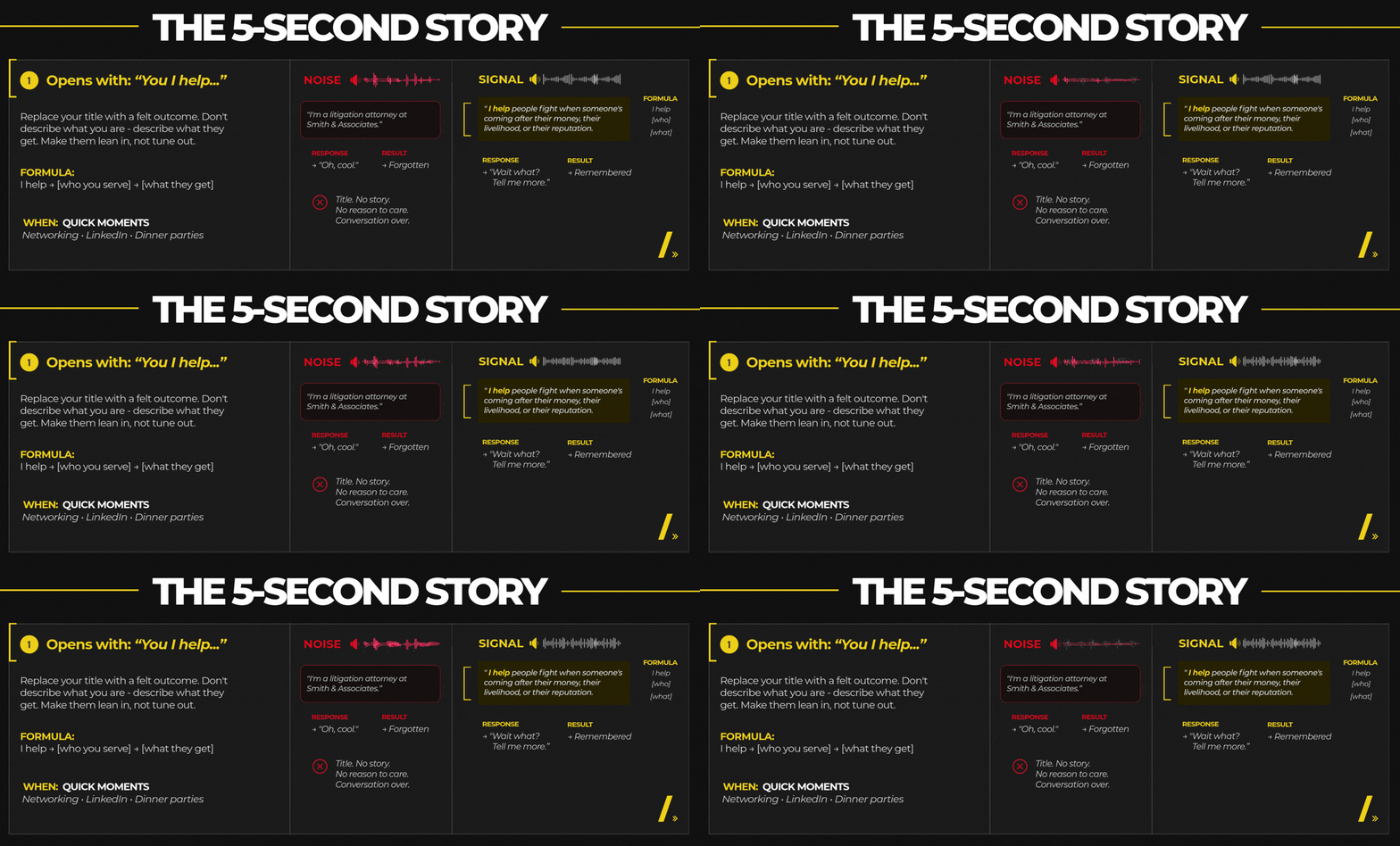
Someone asks: What do you do?
“I’m a lawyer.”
Response: “Oh, cool.”
Result → Forgotten
🔇NOISE: Any combination of title, company, or profession loses the signal.
Let’s try again with a
Litigation Attorney 5-Second Story
What do you do?
-
I help people fight when someone’s coming after their money, their livelihood, or their reputation.
-
Response: “Wait, what? Tell me more.”
Result → Remembered
🔊 SIGNAL: Same person. Completely different conversation. One sentence turned a dead end into a door.
⭐️ PRO TIP: This isn’t just a story you say to introduce yourself. It’s the quick story that answers the question “What do you do?” In person, on your website, LinkedIn, and social media content.
The Formula:
I help [who you serve] → [what they get].
I help [who you serve]:
Open with: “I help…” then insert who you serve (small businesses, accountants, leaders).[what they get]:
Highly desirable things that your audience wants and needs.
When to Use: Any time someone asks, “What do you do?” and you have one sentence to make them care.
Quick moments
Networking events
LinkedIn bios
Dinner parties
Zoom intros
5-Second Story Tips:
The word “help” does heavy lifting. It shifts the frame from you to them. That single shift is why it lands.
Who you serve: specific beats general. So, saying “I help accountants” is better than “I help people.”
⭐️ PRO TIP: After you say your 5-Second story, stick the landing and pause. Don’t explain further.
“I help people ____,” will cause the other person to ask a follow-up question.
That’s a door opening. Walk through it. Don’t kick it shut by explaining.
Fair warning: your first draft will probably still sound like noise. That’s normal. A good workable version usually comes on the second or third pass.
What do you do?
“I’m a litigation attorney and partner at Smith & Associates.”
Response: “That's nice.”
Result → Filed away but forgotten
🔇NOISE: Credential dumps are all about the speaker. So there’s nothing to “feel” or care about.
Let’s try again with a 30-Second Story
What do you do?
-
You know how sometimes good people get caught up in bad situations...
Someone threatens everything they’ve built, and suddenly everything is on the line?
You ever experienced that?
That’s where I step in.
** I help people fight when someone’s coming after their money, their livelihood, or their reputation. **
-
Response: “How do you do that?”
Result → Sparked Conversation
**Notice → How your 5-Second story stacks inside the 30-Second story.
🔊 SIGNAL: The credential dump gave them nothing to feel. But the 30-Second story puts them inside the problem first.
By the time you show up in the story, they’re already looking for you.
Here's how to build your 30-Second Story.
Formula: Paint the Picture + Invite + Solution Bridge + 5-Second Story.
Paint the Picture: open with: “You know how…” This pulls the listener into the problem before you position yourself as the solution.
Invite: Doubles down with another question that invites them deeper – “You ever experience that?”
Solution Bridge: Connect their pain to your expertise.
“That’s where I step in.”
“I fix that…”
“That’s what I do.”
5-Second Story: Transition right into your 5-Second Story
When to Use: You have 30 seconds, and the group/room is listening.
Smaller groups
Meeting introductions
Coffee conversations
Panel Q&As
30-Second Story Tips:
“You know how…” and “You ever experience that?” are tag questions. They bypass defenses and are some of the most disarming questions you can ask.
Try to paint a common yet strong emotionally compelling picture.
For example…
🛑 → You know how people get sued?
✅ → You know how sometimes good people get caught up in bad situations?
⭐️ PRO TIP: Don’t change your 5-Second Story. The system stacks for a reason. It helps you to be consistent and have a go-to story for every occasion.

When you have the stage, and it’s time to share your story.
“I graduated from Georgetown.
Worked in litigation for 15 years,
made partner at Smith & Associates…“Response: “Polite nods.”
Result → Audience checked out
🔇NOISE: Resume said out loud doesn’t work. They evoke zero emotion. So you miss the opportunity to move people from their heads to their hearts. Let's try again with a 1-Minute Story.
-
When I was eight years old, I came home from school and my mom was on the floor crying.
She said…I don’t know what we’re going to do!
We lost everything. And for six years she was dragged in and out of court —fighting for her life — and nobody had her back.
I promised myself: nobody in my life will ever fight alone.
Because the truth is…
** Sometimes good people get caught up in bad situations... Someone threatens everything they’ve built, and suddenly everything is on the line?
You ever experienced that?
That’s where I step in.
I help people fight when someone’s coming after their money, their livelihood, or their reputation. **
-
Response: “How do I work with you?”
Result → Relationship Opened
**Notice → How your 30-Second story stacks inside the 1-Minute story.
🔊 SIGNAL: A resume told the room where he'd been. The story told them who he is and why it matters. That's the difference between being impressive on paper and being unforgettable in person.
Here's how to build your 1-Minute Story.
Formula: Origin Story → Purpose/Promise → 30-Sec Story* → 5-Sec Story
Origin Story: This is where you move people from head to heart. It starts with the moment that shaped why you do what you do.
Purpose/Promise: This is your pivot from backstory to mission. Think, because of my story, I now have this conviction, belief, or mission.
30-Second Story*: transition to your 30-Second Story but with a twist. Instead of stating it as a question, “You know how…”, it’s stated as a new truth, “Because…”
5-Second Story: transition right into your 5-Second Story
When to Use: Any moment where depth matters and you have a captive audience.
On stage
Keynotes
Podcast interviews
Sales meetings
1-Minute Story Tips:
Finding your origin story isn’t a perfect science, so explore and feel free to try many until one stands out.
A trick I use to help people with their origin story is to start with their core beliefs. It’s often easier to then FIND the story that forged your beliefs.
Just be sure to choose a relevant belief that you want to stand by and communicate to people you meet. Think, am I comfortable with this belief/story being a prominent part of my brand?
⭐️ PRO TIP: Give yourself permission to not be a Basic Boring Bot.
Everyone has a title.
Everyone has credentials.
The 1-Minute story is your moment.
‼️ IMPORTANT: The 1-minute moment is NOT to inform. It’s to inspire and move people from their heads to their hearts.
Because while legal ability wins cases in the courtroom, stories that move people help you win cases called “first impressions.”
Winning these cases is the difference between closed and open doors. Being forgotten vs. standing out in a crowd.
The fact is, trust, belief, brand –it all begins and ends with your story (not how good you are as an attorney).

You don’t need a bigger personality or a louder voice. You just need a 5‑Second Story that makes people lean in instead of tune out.
Two Options to build your stories:
Option one: open a blank doc and start writing. It will take a while and several drafts. But if you stick with it and follow the formulas, you’ll land on something that's better than most.
Option two: let our AI Attorney Story Builder walk you through it.
I built it from hundreds of real coaching sessions. So I’ve studied what works. Found the stories that bring in clients. And mapped what fits each practice area.
Then ran thousands of AI tests to get it right.
You’ll get a coach who will:
Ask questions about your practice and who you serve
Pull out your beliefs, values, and authentic voice
And coach you through building all three stories
15 minutes. Your voice. Stories you can use tomorrow to stand out in any room, anywhere, anytime.
Comments
Nothing yet. Say the first thing.
Sign in to join the conversation.