
I'm staying at my friend's place in Boston. I got a new job in December, sublet my apartment starting February, and then the visa stuff started dragging. Start date keeps moving. So here I am, on his couch, with nowhere else to go. He's one of my best friends. He treats me like family. And I still keep calculating how long I can stay at his place before I need to move out. And in that calculation I use the variable of how many days he stayed at my place eighteen months ago, like that's a meaningful number, like friendship is an equation I can solve if I just get the inputs right. Which is insane. I know it's insane. But I can't stop running it. And I think most people would hear that and say it's pride or ego and maybe they're right but it also feels like something stranger than that, something I've been doing my whole life and I'm fully aware I'm doing it. This whole essay is me trying to figure out why.
I think the honest answer is I don’t know how to need things from people without feeling like I’m depositing my mess into their living room. Literally, in this case. I’ve been the guy who figures it out since I was a kid. I like being that guy. He’s low-maintenance, he’s portable, he takes up very little space. People don’t worry about him. And asking for help feels like blowing his cover. Like, hey, that person you thought could fit his entire life into a carry-on? He needs things. He’s causing inconvenience. The role he’s been playing for twenty-nine years is cracking and he doesn’t know what’s underneath it. I keep coming back to this question I can’t quite answer: if I’m not the person who handles everything, who am I? And there’s a younger version of me somewhere in there who learned very early that needing things was expensive. I think I’m still trying to protect him. I think he’s the one running the math.
I went to Mumbai with my mom when I was nine or ten. She was buying agarbatti to resell back in Dahanu, my hometown, which is what she did, buying things in the city and selling them at a small margin back home. On the train back a vendor walked through the compartment with vada pav. I remember him yelling, "vada pav, vada pav, vada pav, paach ka do, paach ka do" — two for five rupees. I remember the smell of it filling up the whole carriage and I remember being hungry and I remember looking at it the way only a kid who wants something he can't have looks at it. I think she saw me looking at it and I think she wanted to buy it for me. But I already knew we didn't have the money, or that if we did, it was supposed to go somewhere else. So I didn't ask. I just looked away and that was that.
My parents were barely making it work. I could see it in the way my mom calculated at the market, the way my dad's mood shifted around the end of the month. Nobody explained the math to me but I could feel it. There was an amount of money and it was never quite enough and every want I had was subtracted from a total that was already too small. So I stopped subtracting. I learned to not want things. I learned that wanting things was selfish. I learned to make do with what I had and be grateful for it. I learned to not complain because complaining meant you were ungrateful and ungrateful meant you didn't see how hard your parents were trying. I learned that if something broke you, figure out how to fix it yourself because asking someone to fix it cost money or time or both and those were things nobody had. I learned that being easy was a form of love. That the best thing I could do for the people raising me was to need as little as possible. And somewhere in there, I don't know exactly when, I stopped learning these things and started being them. Like the lessons fused into my skeleton and I forgot they were lessons at all.
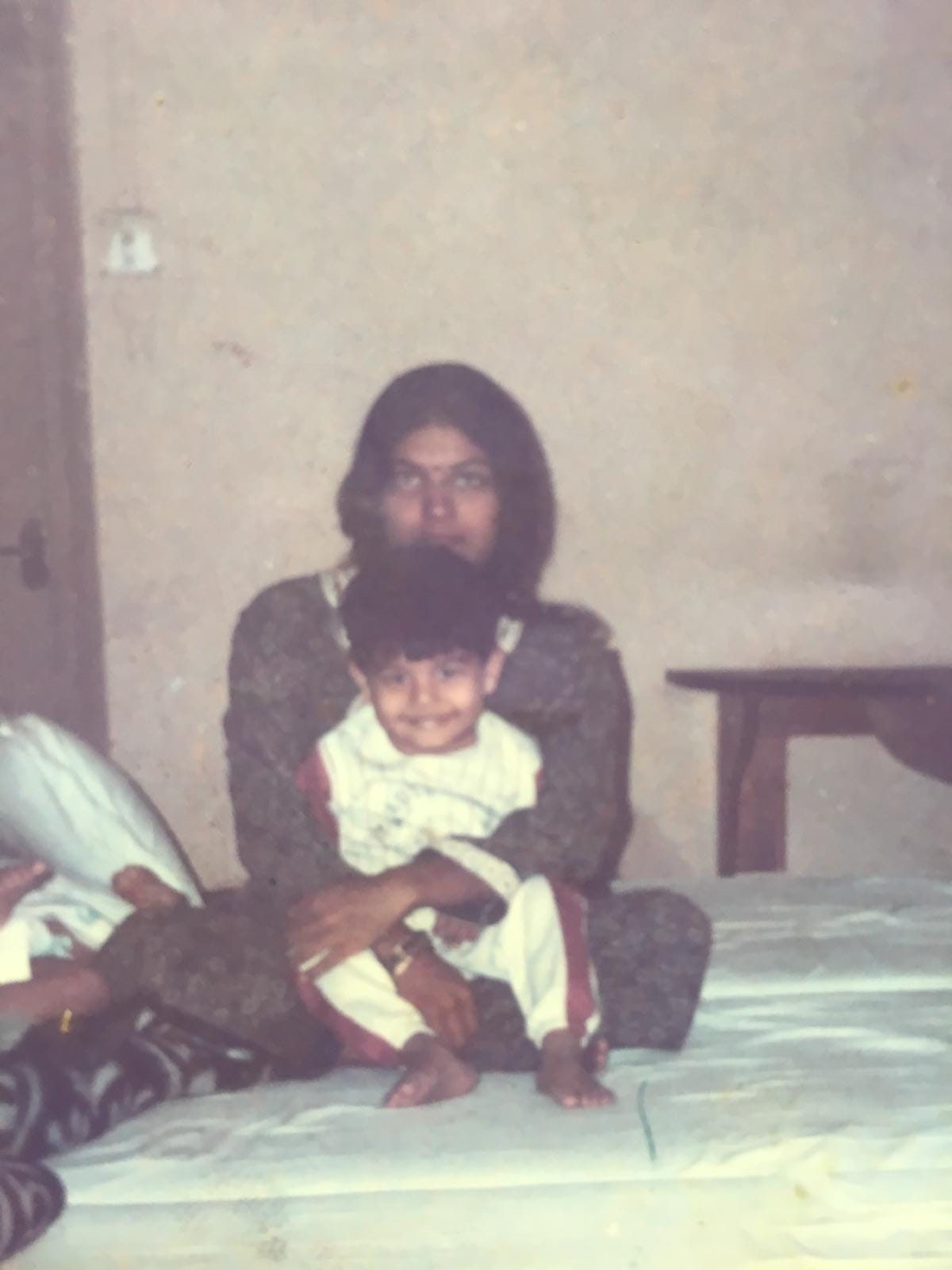
And it's not like those lessons only broke things. The same awareness that taught me to shrink also taught me to see. When you spend your childhood watching your parents struggle you build this empathy muscle almost by accident. You feel what they're feeling before they say it. You learn to read the room because reading the room is how you survived. And that muscle doesn't just disappear when you grow up, it finds other things to attach to. I use it for everything now. Breaking down how a business works, understanding why people behave the way they do, picking apart a problem until I can see all its moving pieces. I just don't know anymore where the skill ends and the damage begins.
I like helping people. Maybe too much. I genuinely do care, I know what it’s like to not have enough, I know not everyone starts from the same place, and when I see someone struggling I want to be useful. But I’ve been picking at this lately and I’m not sure how clean the generosity actually is. Because there’s something about helping that puts you in a very specific position. You’re the one who has enough. You’re the one who provides. And that position is safe. It’s familiar. It’s the opposite of the kid on the train.
And I keep wondering, is that what I’m really doing? Helping people so I never have to be the one who needs? Is it ego, like some part of me still needs to prove that I made it out, that I’m above the scarcity now? Or is it more of a strategy, where if I give enough first I build up credit and then asking doesn’t feel like asking anymore, it feels like withdrawing from an account I’ve already funded. I don’t know. I think it might be all of those things at the same time and I think that’s what makes it so hard to untangle. Havrilesky (Ask Polly) wrote that crushes are often misplaced ambition. I wonder if compulsive helping is misplaced need.
Underneath all of that there's the thing I keep trying not to look at. What if I ask and someone says no. Not in a practical way, not like sorry I'm busy, but in the way that confirms something I've been carrying around for a long time. That my needs are too much. That I'm too much. That asking itself is proof I'm not the person I've been pretending to be. I think for people who grew up the way I did, rejection doesn't register as rejection. It registers as information. See? You knew this would happen. You knew better than to ask. And the worst part is that it feels like relief almost, because at least now you can go back to handling everything yourself, which is uncomfortable but it's yours, it's the one thing nobody can take from you.
Humans have literally survived because they asked each other for things. The entire species is built on exchange, on needing, on the fact that no single person can do everything alone. Every civilization, every community, every friendship is just people saying I need this, can you help, and someone else saying yes. That’s not weakness. That’s the oldest thing there is. And I know this. I can reason my way to this. But knowing it doesn’t stop the flinch.
The thing that keeps messing with my logic is that my friend has not once made me feel like I’m a problem. I keep waiting for it. The slight shift in tone, the hint of impatience, some sign that I’ve overstayed. And it doesn’t come. He just lives his life and I’m in it and it’s fine. And I don’t know what to do with that. My whole system is built for the moment when someone gets tired of me and that moment isn’t happening and it’s honestly more disorienting than if it did.
I read somewhere, I think it was Rhaina Cohen, that causing inconvenience is actually how real closeness forms. That the willingness to be a burden and to let someone else be one is the whole mechanism of friendship. And I want to believe that. I’m trying to believe it in practice and not just in theory. I’m asking for things I would have handled alone six months ago. I’m letting people help me without immediately offering something back. I’m bad at it. I still flinch. I still catch myself running the numbers before I open my mouth.
I’m on the couch. It’s late. And the math is still going. I can feel it running underneath everything, this quiet hum of debt and obligation that I know is irrational and I know is mine and I still can’t turn off. Maybe I won’t ever fully turn it off. Maybe the best I can do is notice it running and choose not to listen. I don’t know. I’m trying to figure that out. I’ll let you know.
If this essay made you feel something, I could use your help too. Subscribe. Share it with someone who runs the same math. See? I'm practicing.
Comments
Nothing yet. Say the first thing.
Sign in to join the conversation.