
By Cliff Reece
As the Albanese government stumbles from one crisis to another trying to satisfy its obsessive drive to achieve net zero with just renewables and battery storage, many other nations are showing us how to develop cheap and reliable energy abundance.
Not long ago, Japan stood before the world pledging to become a paragon of decarbonization. Its newspapers were filled with talk of hydrogen corridors, offshore wind farms, EV subsidies and other supposed remedies to ‘save the planet’.
To satisfy international climate lobbyists, Japan planned for years to phase out coal.
Political leaders spoke of a “moral duty” to achieve “carbon neutrality” by 2050.
But as geopolitical reality intruded, this stance dissipated.
Japan is among the world’s top five oil importers, importing more than 94% of its crude oil from the Middle East. When transit through the Strait of Hormuz was interrupted, the impact was immediate.
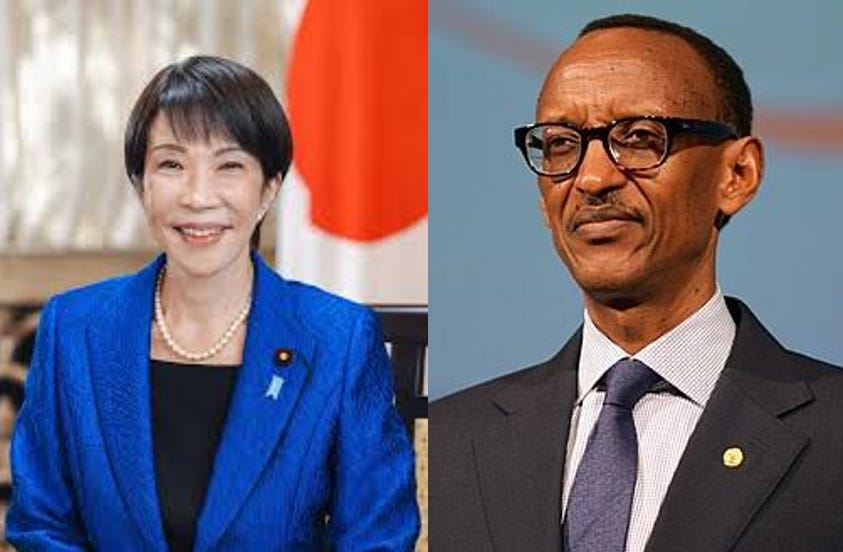
Prime Minister Sanae Takaichi (pictured above) quickly ordered the release of 80 million barrels from oil stockpiles, equivalent to about 45 days of domestic demand.
A fuel once portrayed as the ‘enemy’ in net zero rhetoric became critically important to prevent economic catastrophe.
Japan is also now preparing to formalize a new ‘energy‑first’ posture in a revised strategy.
Greater weight will be given to the security of fossil fuel supplies. Their Prime Minister anticipates avoiding altogether shipping through the Strait of Hormuz.
As part of that strategy - and for the first time - crude oil from the USA has arrived directly in Japan.
There’s a reason why Japan is investing in procuring crude oil – it is built into everything, as indicated in the image below.
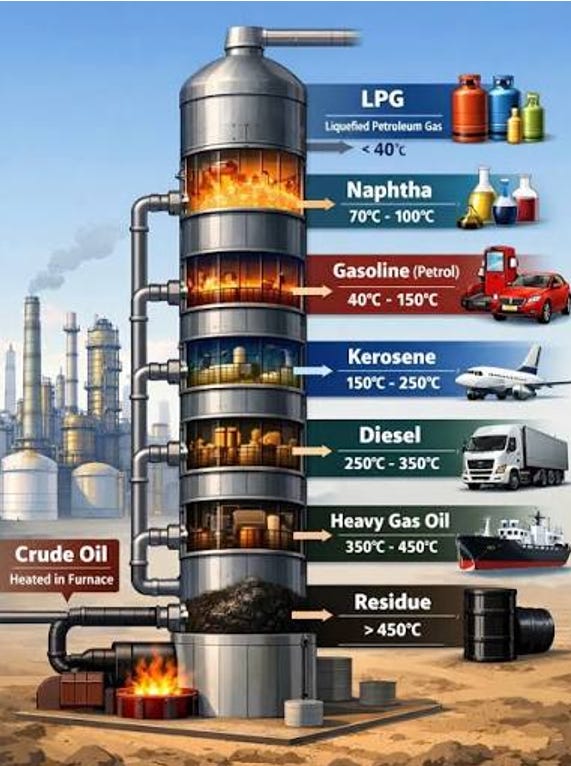
Oil is critical to all aspects of modern manufacturing.
Japan’s vast petrochemical industry converts crude oil into synthetic fibres, fertilizers, resins, paints, and electronic components.
Every smartphone, car dashboard, and solar panel relies on petrochemicals. Without them, Japan’s export engine would grind to a halt.
Substances much demonized by net zero enthusiasts are used to make semiconductors, ship coatings, and electric-vehicle batteries.
Japan, like its neighbour South Korea, is reopening coal-fired power plants once condemned as relics of a dirtier era. Energy officials cited “extraordinary supply uncertainty” as justification for using the same fuel they had promised to eliminate.
Representatives from Japan’s Ministry of Economy, Trade and Industry (METI) stated that increasing coal operations serves as an immediate solution.
Prime Minister Takaichi said expanded coal usage, combined with restarted nuclear plants, would offset about 40% of the LNG imports Japan previously received through the Strait of Hormuz.
By simply letting older coal plants operate without political handicaps, METI projects a massive savings of 500,000 tons of LNG over the fiscal year.
Japan’s thousands of factories, chemical plants, and data centres cannot pause for the cloudy or windless days that make solar and wind energy so unreliable, and dependency on imports leaves no margin for experimentation.
Taken together, the decisions supporting use of oil, gas, and coal exhibit an unwavering commitment to proven, reliable energy sources.
Japan is refusing to sacrifice security for climate diplomacy.
The Japanese people have a legacy of resilience, engineering brilliance, and industrial mastery. Today, the country stands firm against climate dogma to secure its industrial future with the hydrocarbons that built its greatness in the first place.
Meanwhile, when Rwandan President Paul Kagame (pictured in lead image) stood up at the Nuclear Energy Summit in Paris earlier this year, he didn’t talk like a leader hedging his bets on energy policy. He talked like a determined man in a hurry.
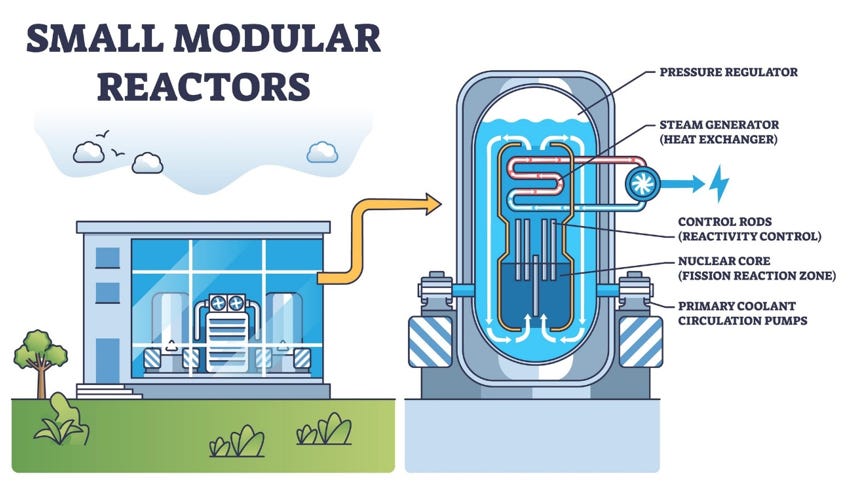
Kagame told the assembled audience that nuclear generated electricity technology “is evolving in ways that benefit countries with small grids, allowing Africa to be among the early adopters,” and that small modular reactors (SMRs) in particular are “especially suited to Africa’s requirements.”
This is a remarkable change in direction.
For decades, nuclear electricity was treated as the exclusive domain of wealthy, industrialized nations with deep pockets, massive grids, and decades of institutional experience.
Kagame’s message flips that script.
Small modular reactors are, in many ways, a good fit for the world that’s actually emerging in reality - one defined by distributed populations, smaller grids, off-grid industrial sites, and an insatiable new appetite for electricity driven by data centres and AI infrastructure.
That sounds very much like Australia.
Japan and Rwanda are just two countries out of many that are now increasing their use of fossil fuels and nuclear energy.
They are still committed to renewables such as solar and wind but on a much smaller scale than originally planned.
The reason is they have woken up to reality.
This was largely brought about by the war in the Middle East and the realisation that all countries – including Australia – depend on coal, gas, oil and, increasingly, nuclear energy, in order to cope with the huge new demands for cheap and reliable energy for data centres and AI.
Meanwhile, the Albanese government - spurred on by the likes of Chris Bowen and Matt Kean – continue to ignore all the evidence as they proceed with their insane crusade to achieve net zero despite the huge and growing cost to taxpayers.
Australia is the only G20 member with a legal ban on nuclear energy generation.
And all of this is despite the fact that nothing we do as a nation will do anything to reduce global emissions as our share is only a miniscule 1%.
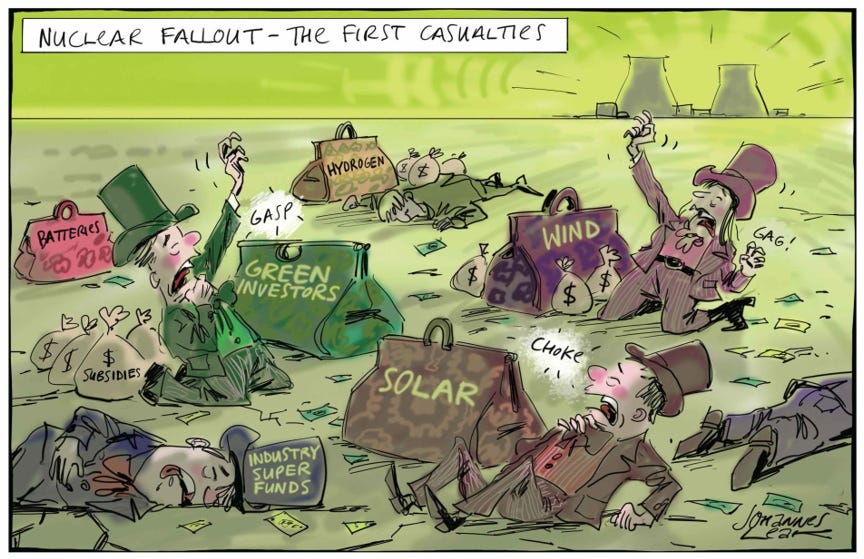
Thanks to Vijay Jayaraj at the CO2 Coalition (https://co2coalition.org) for much of the information relating to Japan and Ronald Stein, Olivia Vaughan and Steve Curtis also at CO2 Coalition for the information relating to Rwanda. Thanks also to Facebook and Johannes Leak for his cartoon.
No posts
Comments
Nothing yet. Say the first thing.
Sign in to join the conversation.