
I’m making a stab at answering this question because
I want to
I think writing it out will help me understand it better
I think approaching something with the right mindset and framework is more important than having a lifetime of experience and a library of prerequisite knowledge. For example, a physicist named Steve Hsu1 gives much better analyses of geopolitics than the clowns on The Rest is Politics and correctly predicted Trump winning in 2020 while TRiP were unanimous in their predictions that Kamala would win. I like to think I have this correct approach.
Please comment any disagreements you have.
The regime is corrupt and incompetent. The Venezuelan economy is a disaster, poverty is rife, and government officials get rich from kickbacks from drug cartels who use Venezuela freely as a drug transit hub. Colombia used to be the same but now Colombia cooperates with EU/US anti-drug squads. It has free and fair elections, an independent judiciary, and freedom of the press. The state functions well, provides good healthcare, education, and infrastructure by regional standards, and the economy grows steadily. Venezuela has none of these things. It is an authoritarian regime run by a dictator. The country experiences food rations, frequent electricity blackouts, hyperinflation, the state just doesn’t function.
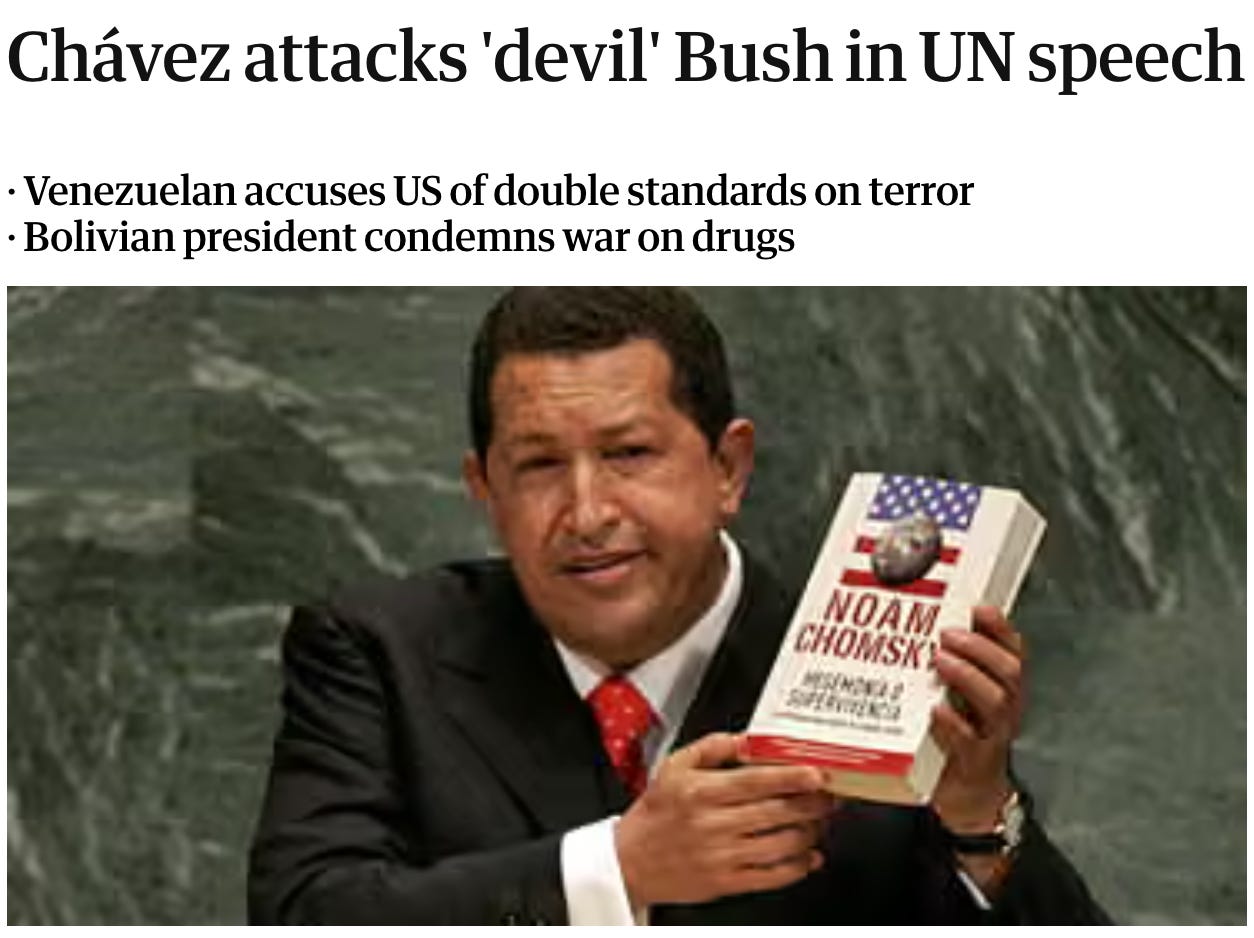
It wasn’t always like this. The 2 countries had a pretty boring relationship until Chavez took over. He was a communist, and was democratically elected after a failed coup on an anti-elite anti-austerity anti-corruption campaign. He centralized power and turned the country into the dictatorship it is now. He did not like America.
Russia and China, as rivals to the US, supported Chavez and bought oil from Venezuela. As the country and economy continued to descend into despair, and more and more Venezuelans emigrated, they relied more and more on this support, as well as the money coming from drug traffickers. As sanctions increased and the competency of the state declined, oil production fell, making this support even more important.
The US wants an ally in Venezuela, which has some of the largest energy reserves in the world, and has tried negotiating with Maduro for years, but it hasn’t really gotten them anywhere. They could’ve tried using more diplomacy, and there probably is a diplomatic solution available somewhere if you have good enough diplomats, but Trump decided to go for the big move and just take Maduro out of there.
Yes. Under UN law, an operation such as this requires either UN security council clearance, an armed attack to trigger self defence (e.g. Afghanistan/Taliban/September 11th), or consent of the invaded country. It didn’t have UN security council clearance, and the self defence claim is from drug trafficking, which is weak. However, this is not a massive departure from previous US foreign policy. The Iraq war was equally as unlawful, as that invasion hinged on an unfounded WMD claim, there were similar covert CIA interventions in Iran and Guatemala, as well as open interventions in Grenada, Dominican Republic, and Panama with a similarly dubious legal footing.
Only time will tell. The US now has to build a functional state, something they could never do in Afghanistan, but they will not face guerilla warfare from a resistant local population. Most Venezuelans are happy to be rid of Maduro, and if the US can set up some decent functional institutions and get Venezuela to where Colombia is now this will be a big foreign policy win.
I particularly recommend his episodes on Epstein, India/Pakistan, and Huawei.
No posts
Comments
Nothing yet. Say the first thing.
Sign in to join the conversation.