


This summer has seen left-wing candidates enjoy electoral victories over establishment Democrats—the latest being the progressive Abdul El-Sayed who won Michigan’s Democratic primary for the United States Senate. These victories call into question the relationship between the Democratic Party’s moderate and progressive contingents, a line of inquiry that has been pursued from varying historical periods and political situations in Harper’s Magazine. In this week’s From the Archive Newsletter: Marilynne Robinson on the relationship between American Puritans and liberalism; George Packer on the pitfalls of democratic socialism in the Nineties; Kevin Baker on the helplessness of liberals during Barack Obama’s first presidential term; and Garret Keizer on leftist politics beyond the democratic socialist Bernie Sanders. To read these articles and gain access to our fully digitized archive, subscribe to Harper’s Magazine today.
The religious origins of American liberalism

In her essay, published in August 2022, Marilynne Robinson follows American liberalism to its roots.
“Hugh Peters, most disparaged of Puritans, wanted to exclude poor artists from taxation. He proposed that there be peacemakers appointed to settle disputes before anyone could be arrested or imprisoned. Writing as someone who was forced to flee England under the threat of persecution, and whose fellow dissenters had experienced prison and worse, he does not call for any equivalent punishment or any punishment at all for his (temporarily) defeated persecutors, but instead for an alleviation of the punitive bent in the assertion of public authority.”
[Memoir]
Reflections of a lapsed socialist
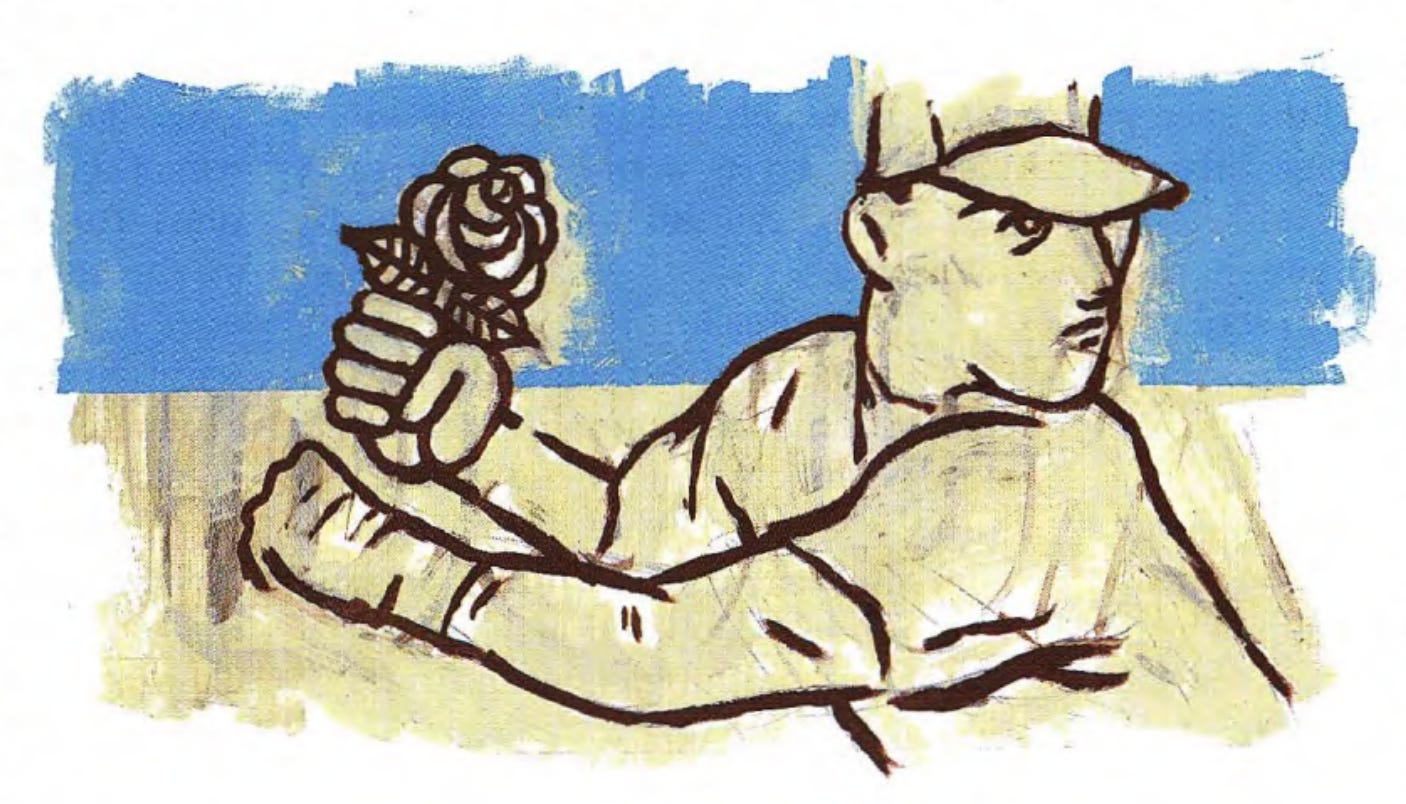
In a memoir, published in 1998, Packer recalls his time as a socialist.
“Nine years ago, I chose of my own accord to become a late-twentieth-century object of political ridicule: a card-carrying socialist, a comrade. The comic potential of this decision was not lost on me at the time. Joining the socialist movement in 1989 was like converting to Catholicism at the height of the Reformation, or coming out as a flat-earther during the Enlightenment. The whole world, from Poland to Ghana, was moving in the other direction, ridding themselves of outdated political fantasies and waking up to the wonders of market capitalism. Here at home, the century’s winning ideology was summed up best by Senator Phil Gramm. ‘If America is going to be saved,’ Gramm has said, ‘it’s going to be saved at a profit.’”

[Essay]
How the left learned to be helpless
By Kevin Baker

In December 2009, after President Barack Obama sent another 30,000 troops to Afghanistan, many of his supporters asked: “How could this be?” Baker’s essay details how the “psychological helplessness” of the Democrats came to pass.
“The fine words and able presentation of Obama, whether delivered at West Point or on Wall Street or in the well of the House of Representatives, obscure the fact that they are subtle parodies of a century of liberal argument. Whereas the Populists’ soapbox lecturers or the Progressives’ magazine exposés or FDR in his radio ‘fireside chats’ explained the way of the world to the people and argued for why and how that way must change, Obama—like most Democratic leaders—concedes that the way of the world is wrong but tells us why it must stay that way because, some time in the past, powerful interests decreed it so.”

You say you want a revolution

After attending a public dialogue hosted by the Revolutionary Communist Party, Garret Keizer examines his own revolutionary instincts.
“As one veteran leftist told me, meaning to deprecate no one but himself, to say that you’re a socialist and be in no party is something of a contradiction in terms. His remark made me queasy, as the word ‘party’ always does. The problem with socialism is not, as Oscar Wilde reportedly said, that it takes up too many evenings but rather that it attracts too many people who don’t know what to do with their evenings. They scare me to death. But if I’m truly serious in my anticapitalism, I need to affiliate myself with some group. I see no way around it.”

Comments
Nothing yet. Say the first thing.
Sign in to join the conversation.