
I was wondering if the ancient Greeks had this concept of the sell-out and this concern for the very thin border. — Anne Carson
Art is beholden to ritual even as the demigods and monsters who make it are paid in exposure and the sharp afterglow of their refusal of sacrament. It is rejection of its roots in ritual that turns creative output cold and barren, alienated but proud and made up of the incessant licking of self-inflicted wounds, trauma, true crime. So I basked in infinite fertility from within last night, in a car en route to Grauman’s Chinese Theater to see Christopher Nolan’s adaptation of The Odyssey with some of the people who did the edit of the film, I was surrendering to the rite of the impending Buck Moon. And another American ritual, a night out at the movies, IMAX even, the club fearlessly up on a Tuesday.
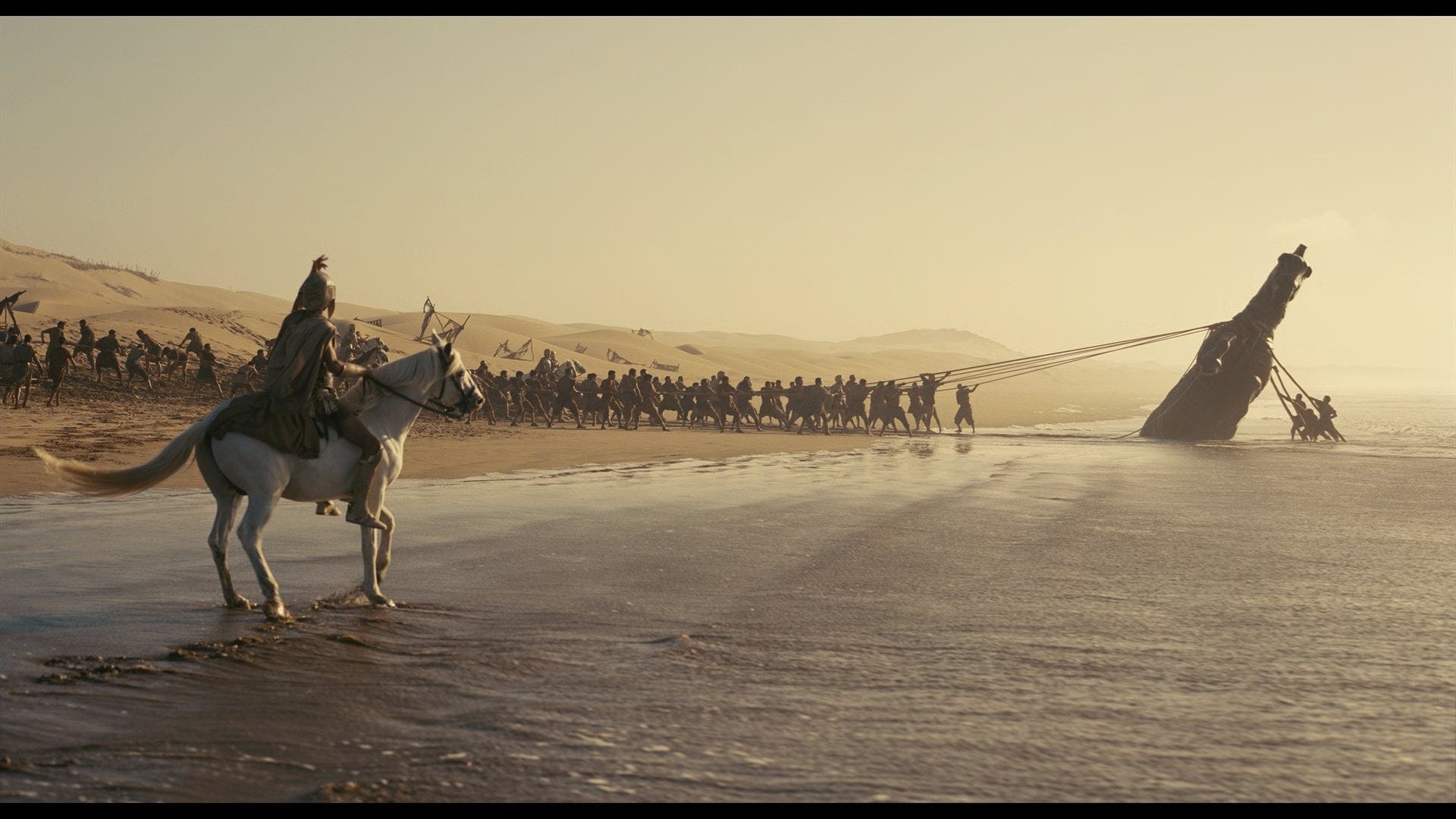
I didn’t know I’d be amidst the editors of the film, or that people I know had worked on it, until I’d arrived. I doesn’t matter, it’s one of the details that proves I live in Los Angeles, and walked over the dead star-names in my kitten-heeled jellies to reach the kitschy landmark movie house. On the one block-long walk from the car to the gate with an unruly line wrapped around it, I saw a woman exchange rough words with her husband, who was pushing a modest stroller with their maybe two year-old child in it sleeping, and then she hurried away from them with tears welling in her eyes and was standing beside me at the crosswalk by the time he steered the unconscious child into the novelty shop full of stuffed animals. My inverse Penelope; war is everywhere, mundane. It felt like a preamble to the film or to the wrong domestic ritual. Who wouldn’t crash-out and reconsider her life choices on the threshold of a memorabilia shop on Hollywood Blvd. at 10 PM on a Tuesday. Now we were in it together, reconsidering together. I spoke to her telepathically. Odysseus is alive a lie, alive.
The IMAX tickets are sold out every night through September, I learn, they sold out a year before the film’s release. It’s like an amusement park ride in there plus the familiar scent of butter and cavities, over-stimulating, soothing. My expectations grow higher. The ritual is so important it amplifies the art’s potentiality. Some rituals that sustain the epic itself: absentee fathers with adventure stories to validate their negligence, monastic women and children waiting for them to come home from their misadventures, covering for them at their own expenses, war, glorified or otherwise, remorse for war, fetishization of remorse for war, a mutual addiction to deferrals, edging, tradition, even bad tradition, being preferred to identity reconfiguration or indefinite rebellion, true or filial love as resistant to betrayals, death being a second, less selfish life where you become the shepherd, the last temptation, and selling out, or trying in vain to not sell yourself and others out.
I had no intention of writing about this film, but its entitlement to our time and attention, and our renewed identification with the myth of the war hero trying to get home, and the anti-sell-out demurely trading his soul for more time in delusion, and the James Blake song “When I’m Home” that comes on like a punchline as the credits roll… I’m leaving here with something, so now I’m writing beside it. Denzel would understand. He would be a great Odysseus. Matt Damon is okay too. Tom Holland makes a decent Telemachus, the lonely prince just wants his dad to come home and rule, goes out in search of him, is abandoned again upon his father’s triumphant return, but this time abandoned to power and inheritance so it’s ethical. Penelope (Anne Hathaway) is the ideal mix of severe and pliant in her role. Helen is not on screen enough; Athena is not on screen enough, neither have personalities here. Making them black women is like making them mouthpieces or marionettes for liberal idealism wherein the optics matter more than the substance in this context, but Lupita and Zendaya respectively, handle it well. They act like diplomats with a little bit of the agency called beauty and truth. When Odysseus and his men, lost at sea, visit Hades, and are told that the dead meet at its borders to grieve the living, that the underworld is more alive and robust than their most harrowing deeds on earth, they don’t grieve themselves enough, they don’t find any compensating ritual as meaningful, no epiphany comes. Instead, they long to die and never go home and create the conditions for that fate. An eternity of men meeting to lose themselves, to grieve themselves, the Western canon and its cannon fodder.
.
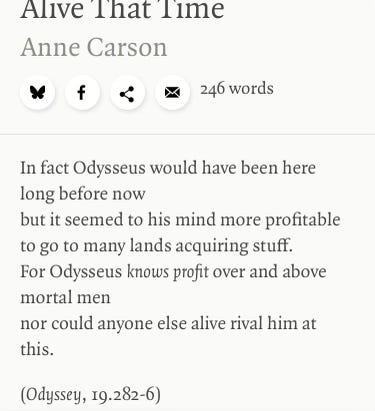
To that bitter end, in Nolan’s version of Homer’s tale, the soul’s greatest battle is with sublimated daddy issues, armored, enamored with themselves, cloaked in sentimentality and the forcing of circumstances that enable them. It’s elegant apologia for modern dysfunction— I didn’t want to get home, to show face, because I’d ruined the world when I thought I was defending Zeus’s law or nature’s law, I’d taken the win so far it became a loss, I lost myself on purpose and ate so much blue lotus I thought I’d forget those errors forever, the hero concludes, full of remorse and with one more battle in him before he sails off into the sunset with his girl. It’s real cinema, and it’s not Nolan’s fault entirely that it feels saccharine and antiquated, that the lines that hope for depth are smug, that sentimentality obstructs real feeling, that it ends declaring ‘songs are all they will have as a reminder of those who could write,’ missing its own irony.
This could have been, in fact it was, a nuance of song before borrowed and butchered to place on screens. The ritual that gave us access to this epic in the past, was reading, sitting in silence imagining these characters without grandiose fight scenes or any reduction of the protagonist’s misdeeds to total happy-ending pathos. I don’t want to dignify the adaptation’s vaguely didactic messages about peace or armistice, because they are so vague and self-congratulatory. I want us to survive our fathers and their mimic structures, even Homer, to perhaps stop genuflecting to plot and missing themes in adapting stories, and to stop making muses scapegoats, let Helen exceed her face, let Helen play the lead.
The film paces restlessly, and like rigor mortis is settling into the source material’s bones, like it’s afraid of its shadows. I return to my preface to all this in the psychical world, my impromptu Penelope on Hollywood Blvd. She would not like this film on this night when she’s grieving the living, being the one trying to stay away from home and remain anonymous in a crowd of lost souls a moment longer. I salute her anew. I think of all the fugitive women and children sitting still in the tradition, and Zeus, Odysseus’s spiritual father here, who abandons him when he takes glory-seeking many measures too far so that it descends into decadence and cannibalizes his kingdom from within. The so-called hero celebrates his exile, leaving his son to clean up his mess, turning back toward the Bible’s warning about the sins of the father being visited upon his luckless heir. Spectacular brooding does not absolve Odysseus, he leaves Ithaca arrogantly predicting a legacy of songs with no writers— cut to the trojan horse, then to James Blake’s tremolo curtained by pseudo-tone poems. The almost hero is still acting fatherless and like he hasn’t re-parented himself and become his own master yet. When he should have been doing that he was high on the lotus held captive by Calypso (Charlize Theron) and indulging her. Which is one way to hide.
I identify with every feminine energy in the story, including the Siren’s song, but most of all with the woman who stood beside me on the boulevard on the way into this portal as I energetically grabbed her hand and told her it would be alright soon enough. I’m sentimental too sometimes, often, about returns to love or chance encounters with strangers who I come to love. I think my main issue with the reinvented Odyssey as it plays out on screen, accommodating the modern ego, is personal, is that it can’t decide weather or not the women deserve speaking roles in their own torment, they become disclaimers, minor disasters, muses with no tongues, while the men talk too much, fight too much and in convoluted styles, and say very little of value, nor do their actions meet their words better than a song about them narrated by the siren might.
In the car afterwards with a great film editor friend, feeling sleepy and underwhelmed, we listened to Bobby Brown and discussed the gym, our obsessions with self-improvement, hobby addictions, and the South, where we’re really from. I suppose the film worked on us in that we want to get home and won’t stay long when we do.
An alternate adaptation of the Homer
No posts
Comments
Nothing yet. Say the first thing.
Sign in to join the conversation.