
I’m pretty sure a similar scenario has happened in many homes many times. You’ve tidied, dusted, hoovered, mopped, and wiped down all the work surfaces till they mystically shine. You stand back, inhale the fresh, zesty scent of cleanliness and exhale with a grin and a feeling of pure satisfaction. Your kitchen looks perfect.
Then someone, no names mentioned, walks in the door, shoes still on, puts their bag on top of the work surface and starts to make a sandwich. Your mouth drops open in disbelief. The zesty smell starts to fade and is replaced with the aroma of tinned tuna, and salt & vinegar crisps.
You look at their bag, which you are 99.9% sure has been on the floor in at least one public toilet today. You can sense the invisible germs dragging themselves from the bottom of it and face-planting onto your clean work surface.
You are fuming!!!! Rightly so, housework isn’t called work for nothing.
You lose your shit and start shouting, “TAKE OFF YOUR SHOES, TAKE THE BAG OFF THE SIDE, HANG IT UP. CAN’T YOU WAIT TILL DINNER? MAKE SURE YOU TIDY UP!!!”
The mood in the room is suddenly heavier than the smell of tuna, and the feeling of satisfaction is now a distant memory, replaced with frustration and hurt. You both stomp off to separate rooms, and the dazzling surfaces have lost their shine in every sense.
I see you, and I feel your pain.
The annoying thing is, it’s irrelevant whether the sandwich maker comes into the clean kitchen within five minutes or five hours. Homes are designed to be used; they need to be, and they will get dirty again and again. That’s just life, that’s just a home.
But we’re led to believe that a clean, clutter-free home is the goal. And when you’ve finished achieving it, that’s your moment to praise yourself, relax and feel a little smug. Which is why, when someone uses the kitchen, gets their toys out, goes to the bathroom, or sits on the sofa and throws all the cushions on the floor, your blood starts to boil. The moment to rejoice, fleeting.
If we could change our ingrained way of thinking, see the thing to rejoice in was the moment, not a clean version of home, homelife could be sweeter by avoiding those clashes.
Because the real goal for a home is for everyone to feel safe, physically and emotionally. If it looks good too, well, that’s a bonus.
Let’s start by asking two questions:
Why do you clean and tidy your home?
I’m guessing because you want your home to be clean and look nice.
Who do you clean and tidy your home for?
The answer is hopefully for you and the people you live with.
Most of us clean and tidy our homes for the people who live in them. But we can get annoyed when they do life in their home. This article isn’t about who does the cleaning or makes a mess in the first place, or putting systems in place to keep your home clean and tidy, but a way to catch your emotional reaction in those moments and see the positive in them instead. A reframe.
Reframing is a psychological technique that helps you see and change how you view a situation, event, or person to change its emotional impact. Rather than denying reality, reframing shifts your mental lens to look at the same facts from a more helpful perspective.
I love a reframe, and some of my favourites to help reduce the emotional reaction to someone using their home and making a mess within the process:
Initial thought: I just wiped the work surface down, and now there are crumbs all over it again.
Reframe: It’s doing its job; someone fed themselves. They’re just crumbs.
Initial thought: I spent all day cleaning, and no one noticed or even cared.
Reframe: Maybe they didn’t notice because it always looks nice. If I need validation for it, I can validate myself.
Initial thought: The living room is a tip, and I can’t relax until it’s sorted.
Reframe: Someone clearly enjoyed using the front room. This feeling is mine, not someone else’s to fix or blame.
Initial thought: The bathroom was left in a complete mess after their shower.
Reframe: At least they’re showering and taking care of themselves. They probably were in a rush or tired, and not a personal attack on me.
Initial thought: Shoes and bags get left on the floor by the front door, and everyone expects me to pick them up.
Reframe: They drop their bags and kick off their shoes because they’re happy to be home. Maybe they don’t expect me to pick the shoes up, as no one actually asks me to.
Initial thought: I’ve just tidied all the toys away, and now they're everywhere again.
Reframe: Toys being used mean my children are having fun and playing. They’re being creative and learning. They’re just toys.

When you can see things from a different perspective, you become more in control of your reactions. Here’s another way of looking at the sandwich scenario:
One. They’re not scared of you, otherwise they wouldn’t throw their bag on top of the work surface or keep their shoes on. This is a good thing, not a lack of respect. We shouldn’t be trying to control our partners, friends, or children through fear.
Two. They’re hungry; food is their focus. They’re not actively trying to piss you off; they just want to eat food in their home.
Three. It’s their home too; just because they’re using the kitchen differently from you doesn’t mean it’s wrong.
Four. They chose to come home. They could have gone somewhere else.
Let’s run the scenario again. You’ve finished cleaning, and someone walks into the kitchen. Dumps their bag and grabs ingredients for a sandwich.
You can see they’re tired and hungry. You might ask what they’re making and if you can help, but you give them the space to do what they need, with no negative commentary.
The atmosphere will feel lighter, and they might even stay for a chat once the sandwich is made. Either way, both parties will feel less hurt and frustrated.
If you do want to discuss the cleaning up afterwards and the bag on the side, now that they’ve eaten, is the time. Calmly ask them to tidy up and remind them you don’t like bags on the side.
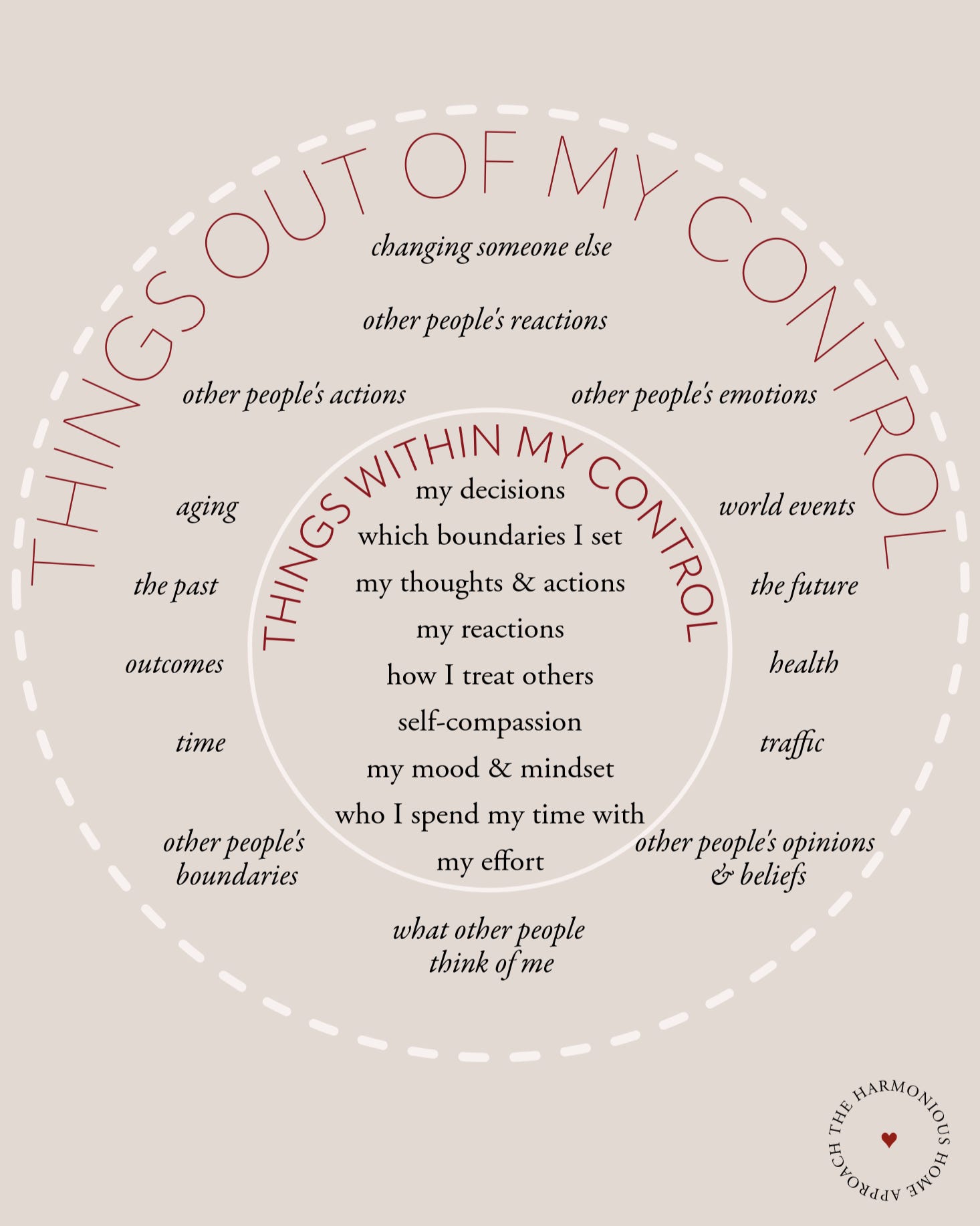
If keeping a home in some form of order is to the detriment of your emotional well-being or relationships, or the housework load feels unbalanced, it’s worth having a direct conversation and understanding what is within your control.
I heard Harry Styles say this at one of his recent Wembley concerts, which I think is beautiful:
Fill your cup and let everyone else fall in love with the overflow.
It made me think about our homes. If we fill our homes with love and happiness, any visitors will feel that and enjoy it too.
We think our guests want to see perfect homes, but what we all really prefer when we visit someone's home is to feel relaxed and feel good to spend time in. Not an edited version in the hope of your validation.
So next time, someone does things a little differently around the home, or they use their home as it’s intended, making a mess that annoys you, do a mental reframe. Can the moment be understood and seen from a more helpful and kind perspective instead?
Your relationships will be stronger, and your home will feel more like home for everyone. No walking on eggshells, no heated moments, no working to invisible rules.
Thank you for reading! I’d be so happy if you tapped the little ♥️, left a comment, or shared it with someone who might like it too. And don’t forget to subscribe if you haven’t already, so you don’t miss future posts.
Claire x
Comments
Nothing yet. Say the first thing.
Sign in to join the conversation.