
Note: This article has references to practices from astrology and Hindu temple practices. If this doesn’t interest you, feel free to skip! If you are curious, read on. :)
Ganesha is known as the remover of all obstacles (vighna vināshaka). Here is one personal story from my family history that epitomises this quality in action.
A Brief Family History
My mother's side of the family is part of the ancient royal lineage of the Pandya dyansty which ruled with their capital as Madurai in Tamil Nadu for many centuries. Few centuries back, following an invasion, the family moved from Madurai to the hills of Poonjar carrying with them the procession idols of Madurai Meenakshi and Sundareshwar as well as the treasury of Madurai Kingdom. They bought land from the Travancore Kingdom and thus was born the Kingdom of Poonjar. The Kingdom established many temples under its jurisdiction over time.
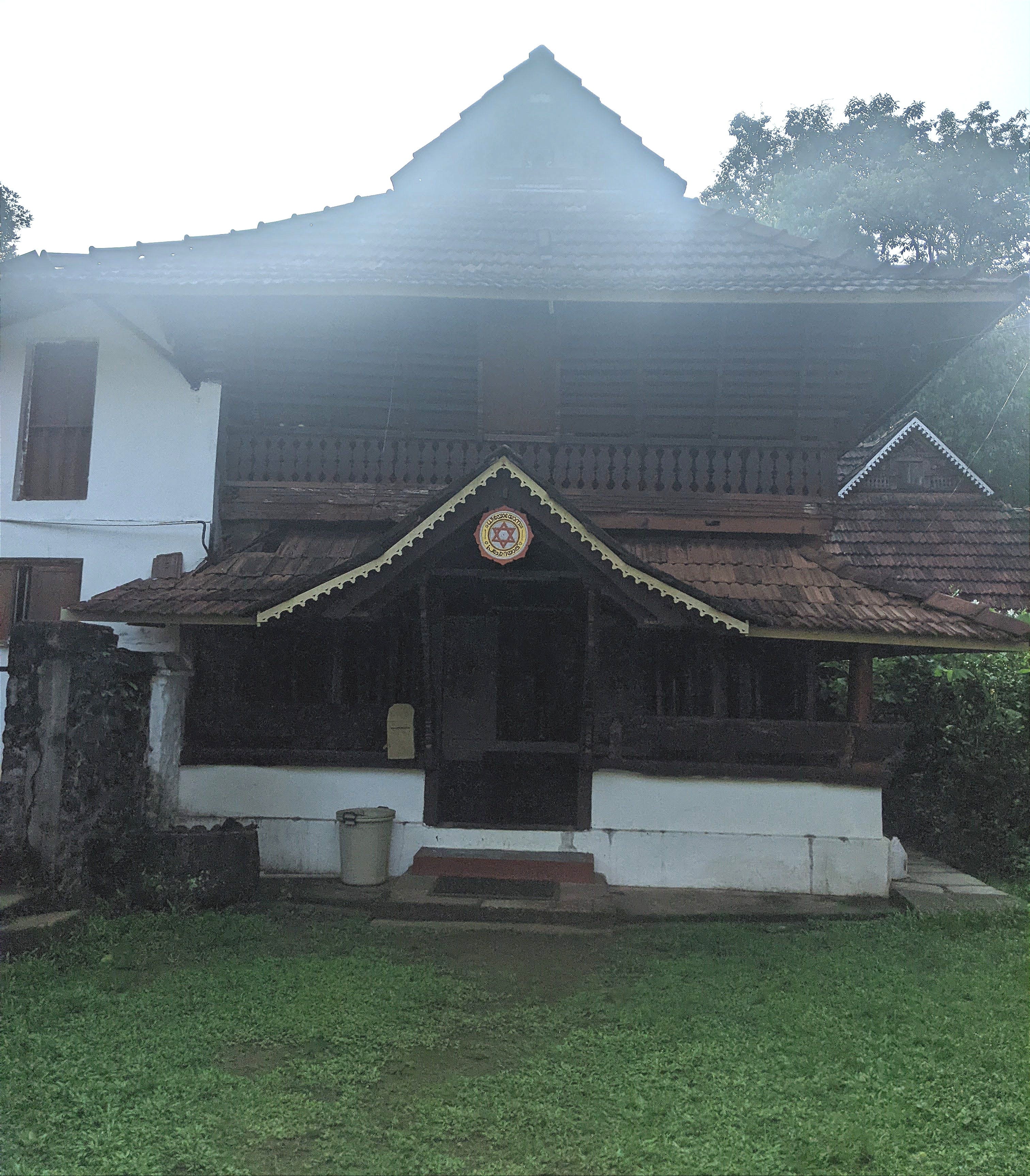
In 1956, with the formation of Kerala State and land reforms that were implemented, most of the lands of the Poonjal Koyikkal got redistributed to the intermediaries who were managing them. This led to an immense loss of revenue for the family and many temples went into a state of oblivion and dilapidation over time. Many temples were handed over to the local communities to manage locally.
Finding the Missing Ganesha Temple
In the early 2000s, I recall there was a very significant 'Ashtamangala Prashnam', a very sophisticated Kerala-style astrological practice that seeks answers to dilemmas or questions through the use of 8 auspicious objects - ghee lamps, mirror, gold, milk, yogurt, fruits, a book, and a white cloth. The Ashtamangala Prashnam was organised by the family to look into some of the causes for certain difficult situations within the larger family (over 500 members at that point). If you are curious to know more about this process, you may watch the video below before reading further.
This brought out the existence of an ancient Ganesha temple that belonged to the family which according to the astrologer was the root of all prosperity for the family. Strangely, most elders (some of them in their 80s) in the family could not recall any such temple in their memory. The astrologer gave broad coordinates of where this temple could be and it ended up in the vicinity of the area near where my grandmother had built her home, a small high range town called Kothamangalam.
As the family started looking up old partition records, they found an allocation of 8 acres of land for the maintenance of this particular temple. This was a surprise for everyone as such an important temple of the family was not in the memory of most family members. Many suggested that perhaps in the aftermath of the land reforms, the concern of most of the family members went into making a livelihood to support the daily concerns of their families.
Within a few months, my mother and uncle located remnants of this temple in East Kothamangalam. A broken vigraha (idol) of the Ganesha was found under a pāla tree (Scholar tree or Alstonia Scholaris). This was in a small plot of 25 cents. Vigrahas of Nāga Rāja, Nāga Yakshi, and Vana Durga were also recovered from the same plot. There was a big well and remnants of thidapally (place where naivedyam or offering is prepared in a temple) were also found here.
As they spoke to the locals around the plot, they said they have no memory of how this idol came to be there and they made it a practice to light a lamp near the idol every day. Some said they heard of a temple which was lost to fire many decades ago. We also got to hear stories of the many attempts that were made to encroach upon this land, even by government officers, but somehow or the other each attempt faced an obstacle by way of a health issue or a transfer posting of the person involved which foiled their plans.
Our family members shared the story of the Ashtamangala Prashnam and shared about the family history and the details of the temple that existed in that place to the locals and expressed interest to renovate this temple with their support. Local residents were very happy to hear this and expressed their support in our efforts.
This led to the organising of a Deva Prashnam, a set of astrological procedures to ascertain the will of the deity during a crisis in a temple. A tantri was requested to identify the form of Ganesha in the temple. There are 64 forms of Ganesha. He set up a tent in the plot and after a week-long meditation identified the form in this space as that of ‘Trailokya Mohana Ganapathy’, a symbol of prosperity.
In the Shree Yantra, trailokya mohana or bhūpura is the outer most āvaraṇa (enclosure) of the Shree Yantra. Our family has followed the tradition of Shree Viyā upāsana through generations. It is part of the Shākta tradition, influenced by Kashmir Shaivism, and focuses on Lalitā Tripurasundari (beautiful goddess of the three worlds) as the main form of Mahādevi. Gaṇapati is an important deity in this tradition.
The Deva Prashnam led to the establishment of a Bālālaya Prathishta (a temporary structure) in April 4-5, 2009 (1184 Meenam 21-22). Renovation works started under the guidance of Kaaranathumana Shri. K.P.Sreedharan Nampoothiri. Two small structures were built for Ganesha and Vana Durga for daily pooja. A temple committee was formed with local representatives and two members of the Poonjar royal family to oversee the renovation.
Ganesha in Action
This entire temple renovation proposal came up as an unplanned endeavour for my family. I recall numerous moments of crisis during this phase where none knew how resources for the next step will be arranged for the progress of the renovation. Once we begin an initiative like this there are certain steps we need to take in a time sensitive fashion. Each of the persons involved were already having their hands full with the commitments (both time and financial) of the life that they were already leading.
Still I remember the unshakeable shraddha (faith) and vīryam (courage) with which my mother and uncle led this renovation initiative firmly convinced that it was Ganesha who led us to find this place, and he himself will see us through each crisis. And each step of the way resources came together from known and unknown sources at the right moment in helping the renovation move forward seamlessly. Even in moments when there were some delays, it turned out the option that materialised was even better than the earlier one. My mother used to say in a light hearted way, “Our Gaṇapati loves only the best. So, whatever that materialises will be accordingly.” And it was true!
And so the renovation proceeded and completed successfully within few years. On this Vināyaka Chaturthi, which also coincided with my mother’s birthday, as I spoke to her she was on the way back from a pooja at the fully functioning Ganesha temple, now known as the ‘Edathil Mahā Gaṇapati’ temple in East Kothamangalam. Each time she recounts the experience of this temple renovation, I can feel the conviction in her that it was Ganesha who decided after 55 years of oblivion to come back to his glory.
One of the reflections of this conviction is her refusal to put her name on any part of the temple, which is a common practice these days in many temples. She believes whatever resources came together through her was part of Ganesha’s plan and she deserves no mention for it. And in her mind, Ganesha has blessed her with more than what she has wished or asked for. In a world that is craving for acknowledgements, I find her presence and attitude to this endeavour a true practice of īśvara praṇidhāna.
ईश्वरप्रणिधानाद्वा ॥
īshvara-praṇidhānād-vā (Yoga Sūtrās, 1.23)
Below is the video I took two years ago when I visited this temple, now fully functioning with daily pooja for Gaṇapati, Vana Durga, Nāga Yakshi, and Nāga Rāja.
There are countless of stories of family members and villagers around of how the deity has blessed through their difficulties in the past decade.
On this auspicious day of Vināyaka Chaturthi, I bow down to this divine intelligence that continue to inspire and bless us all.
Comments
Nothing yet. Say the first thing.
Sign in to join the conversation.