
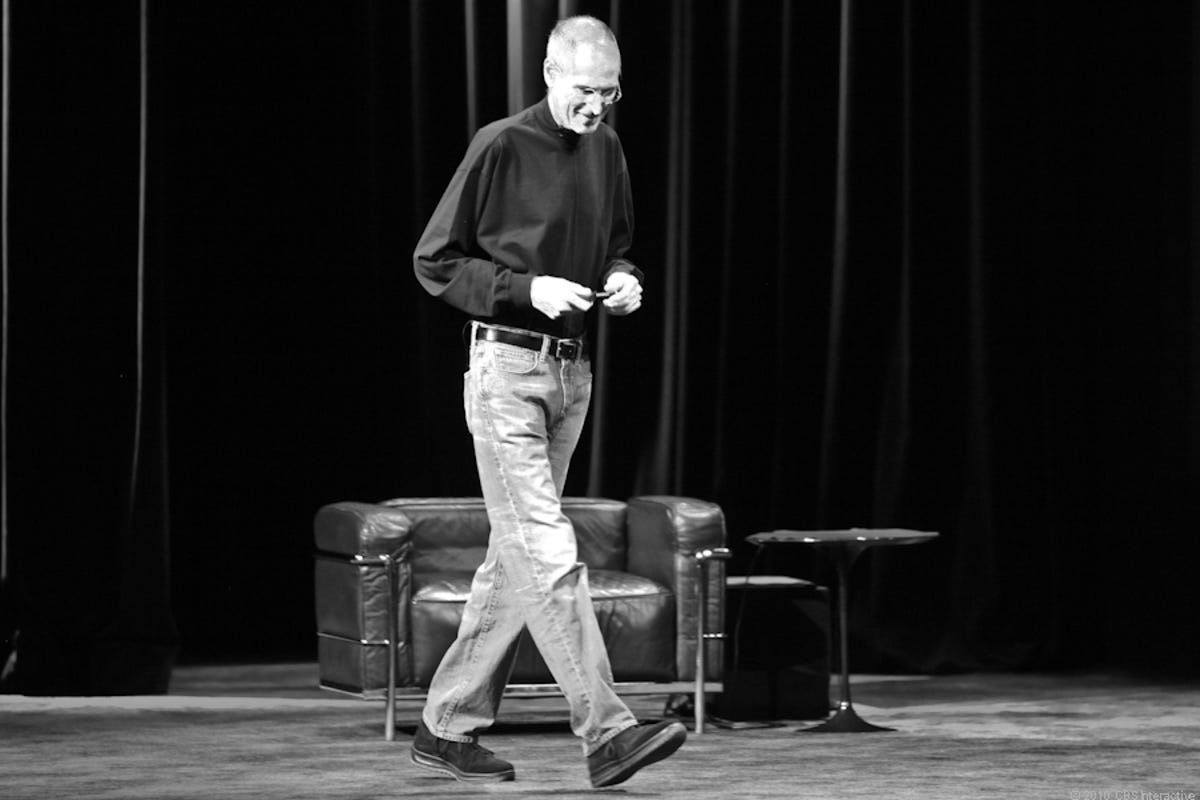
I had an epiphany once—one of those “shower thought” moments. Something clicked, and it hasn’t unclicked since.
I started thinking about Apple—not just as a company that builds products, but as one with a deep, almost philosophical commitment to shaping the future. It feels like a company with a stubborn kind of idealism. One that believes—quietly but clearly—that it has a role, maybe even a responsibility, to help move humanity forward.
And I started watching some old interviews with Steve Jobs.
In a 1990 interview, Steve Jobs recalled reading a Scientific American article that ranked animals by the efficiency of locomotion. The condor came out on top. Humans didn’t even make the top tier—until someone measured a human on a bicycle. Suddenly, we were the most efficient species. That insight stuck with Jobs. It led him to one of his most iconic metaphors: "What a computer is to me is the most remarkable tool that we’ve ever come up with, and it’s the equivalent of a bicycle for our minds."
One of my favorite quotes from Steve Jobs is this: "Humans are tool builders. We build tools that can dramatically amplify our innate human abilities." He returned to this idea often—in keynotes, interviews, and internal meetings—because for him, it wasn’t just metaphorical. It was foundational.
What separates humans from every other species isn’t our strength, speed, or instinct. It’s our ability to build tools—tools that extend our hands, our senses, and our thinking. From the Stone Age to the Digital Age, human progress has always been tied to our tools. Fire, which gave us warmth, protection, and the ability to cook and gather; the wheel, which unlocked transportation and trade; the compass, which opened up navigation and exploration; the telescope, which expanded our understanding of the cosmos; the printing press, which spread knowledge and literacy at scale; the microchip, which ushered in the computing age; the internet, which connected humanity in real time; and now artificial intelligence, which promises to revolutionize how we learn, create, and make decisions—each of these tools has radically redefined how we live, think, and collaborate. They’re not just inventions. They’re extensions of ourselves. Tools are our evolutionary advantage—our superpower.
Jobs saw the computer—and later, the iPhone—not as gadgets, but as revolutionary tools. The computer amplified our thinking. The iPhone extended our reach. These devices didn't just let us do more—they helped us become more. More capable in our work, more connected in our relationships, more expressive in how we create and communicate.
And our story—our human story—is the story of learning to build and wield those tools wisely. That’s what I think Jobs saw. And from where I stand, that’s what Apple has always tried to build toward: technology as a tool for human progress.
And to me, nowhere is that clearer than in Apple’s approach to accessibility.
I don’t think Apple just builds for the mainstream, the tech-savvy, or the early adopters. It feels like they build for everyone—especially for those who’ve historically been left out, overlooked, or underestimated. That might not be a stated mission, but it sure looks like a moral stance.
In my view, accessibility at Apple isn’t a checkbox, a legal obligation, or an afterthought. It seems to be woven into the DNA of their products—from the very first line of code to the final user interaction. It’s treated with the same level of care, rigor, and ambition as the camera or the processor. Because I believe that in Apple’s worldview, technology isn’t truly innovative unless it’s inclusive.
VoiceOver, introduced in 2005, is a gesture-based screen reader that gives blind or visually impaired users full access to their Apple devices through spoken feedback—making it possible to navigate an iPhone or Mac entirely by sound.
Switch Control allows users with limited mobility to operate their devices using external adaptive switches, enabling them to type, browse, and edit without needing to touch the screen.
AssistiveTouch is designed for those with motor challenges, offering customized gestures and simplified touch interactions to reduce physical strain.
Magnifier transforms the iPhone or iPad camera into a powerful digital magnifying glass, helping users with low vision see fine detail more clearly.
Eye Tracking provides hands-free control, letting users navigate their device just by moving their eyes—something that once felt like science fiction.
Real-time captions deliver live, on-screen transcriptions of speech, making conversations and media accessible to Deaf or hard-of-hearing users in the moment.
Haptic alerts replace sounds with subtle vibrations—an intuitive, private way for users who are Deaf or hard of hearing to receive notifications.
Personalized synthesized voice empowers users at risk of losing their natural speech to preserve a version of their own voice, using AI to generate speech that still sounds like them.
Vehicle motion cues adjust screen dynamics to help reduce motion sickness for passengers using their devices on the move.
Each of these features isn’t just thoughtfully engineered—they’re deeply human. They anticipate needs most of us never think about, and they meet people where they are, helping them move through the world with more ease, confidence, and dignity.
This isn't just nice-to-have. For over 2.5 billion people globally who live with some form of disability, these tools are often the difference between being excluded from the digital world and having a voice in it.
One of the most moving examples, in my opinion, was Apple’s 2016 ad for Global Accessibility Awareness Day. It was titled “Designed for Everyone”, and it showcased how people with disabilities use Apple devices in their daily lives. But the real magic? The ad was edited by Sady Paulson, a filmmaker with cerebral palsy who uses Switch Control and other accessibility features to do her work. She didn’t just appear in the ad—she helped create it. Apple didn’t just tell a story. They handed over the tools and let her tell it herself. For me, it remains one of the most deeply human and emotionally resonant tech ads I’ve ever come across.
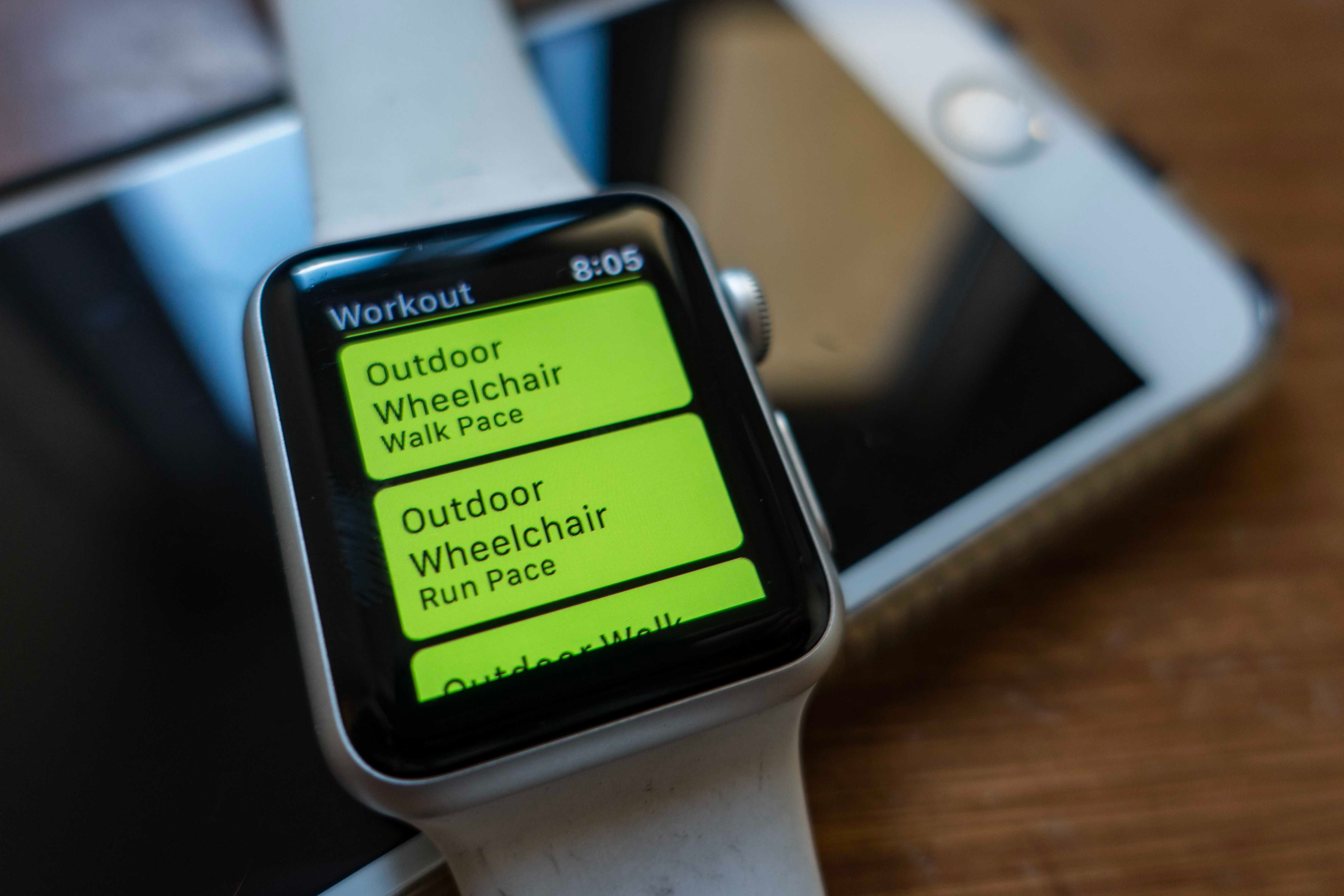
Another example that really stood out to me is the 2024 Paralympics spot—a beautifully shot commercial where athletes with and without disabilities pass a baton across a racetrack. It’s a simple image, but incredibly powerful. It represents how Apple designs products that unite, not divide. One subtle but powerful moment in the ad: an athlete is shown using the wheelchair fitness mode on their Apple Watch. The fact that such a feature exists—designed specifically for wheelchair users to track their workouts—says so much about Apple’s values.
And then there’s The Greatest, a short film that follows a group of disabled creators as they go about their everyday lives—texting, editing videos, making music, staying connected. It’s set to a stirring narration that doesn’t focus on disability, but on possibility. What struck me most is that it doesn’t show what could be done—it shows what is being done. It ends with the line: “Accessibility is a human right.” And when you watch it, you really feel it.
Tim Cook has consistently made it clear that accessibility isn’t just a feature at Apple—it’s a core principle. “Accessibility rights are human rights,” he’s said, and he means it. In a conversation with accessibility advocates back in 2017, he put it plainly: “We don’t make products for a particular group of people. We make products for everybody.” That line really captures the whole spirit of Apple’s approach.
Sarah Herrlinger, who leads Apple’s accessibility efforts, echoes that same mindset. She once explained that instead of asking, “Why would you make a camera accessible to the blind?”, the real Apple question is always, “How can we do it?” That shift in perspective—defaulting to possibility, not limitation—is exactly what drives the way they build. It’s not an afterthought. It’s the design brief.
And honestly, that’s what gives me hope. Yes, it was an epiphany—but it made me realize how Apple’s choices create ripple effects far beyond their own ecosystem. When Apple introduces something for accessibility, Android—another major operating system—often follows suit to keep pace. Microsoft, too, has done meaningful work—its Surface Adaptive Kit and Xbox Adaptive Controller are both great examples of how inclusive design can empower people. It’s not just competition; it’s momentum that lifts the whole industry.
And the truth is, accessibility features don’t just help the people they were originally designed for. They often end up helping everyone. Think about text-to-speech—originally built for the visually impaired, now embraced by millions for audiobooks, hands-free reading, or just giving their eyes a break. Or Live Captions, which benefit people in noisy environments just as much as those who are hard of hearing. Or the Apple Watch’s double-pinch gesture—created for motor accessibility, but incredibly useful when your other hand is carrying groceries or walking the dog. These tools begin with inclusion and ripple outward.
I sometimes wonder how small we are in the timeline of human progress, what kind of tools we’ll have in 100 or 1,000 years. Maybe one day, no one will be “left out” because technology will have caught up to everyone’s needs. And who knows—maybe I’ll still be here, living longer thanks to some new tool I never imagined. A tool that, like so many before it, began with the simple goal of helping someone else.
Thanks for reading,
Hardcover
No posts
Comments
Nothing yet. Say the first thing.
Sign in to join the conversation.