
This photographer needs an introduction. I on purpose did not include a ‘no’ in the previous sentence, because unfortunately Pierre Jahan (1909 - 2003) is not well known. And even less so outside of France.
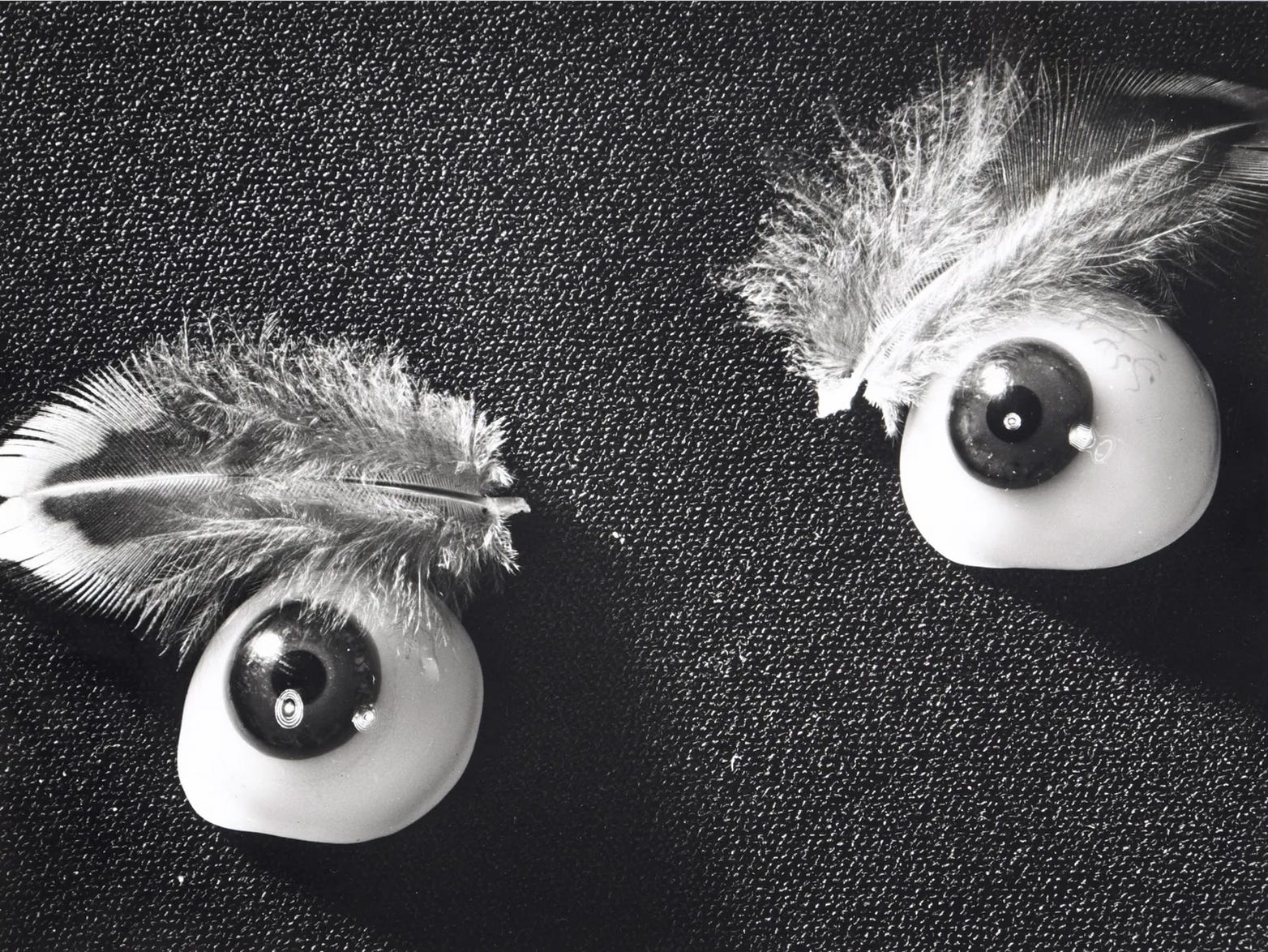
[Pierre Jahan: Portrait of an Angel - 1948]
In the heyday of photography in France - in the 1930s - there was a slew of illustrated publications. There was also a double bonus for photographers. Not only stories required pictures, but also advertising, which until that time had been drawn or painted. The list of publications was long, very long, as it was across most of Europe. Germany and France led the change from drawn illustrations to photographs.
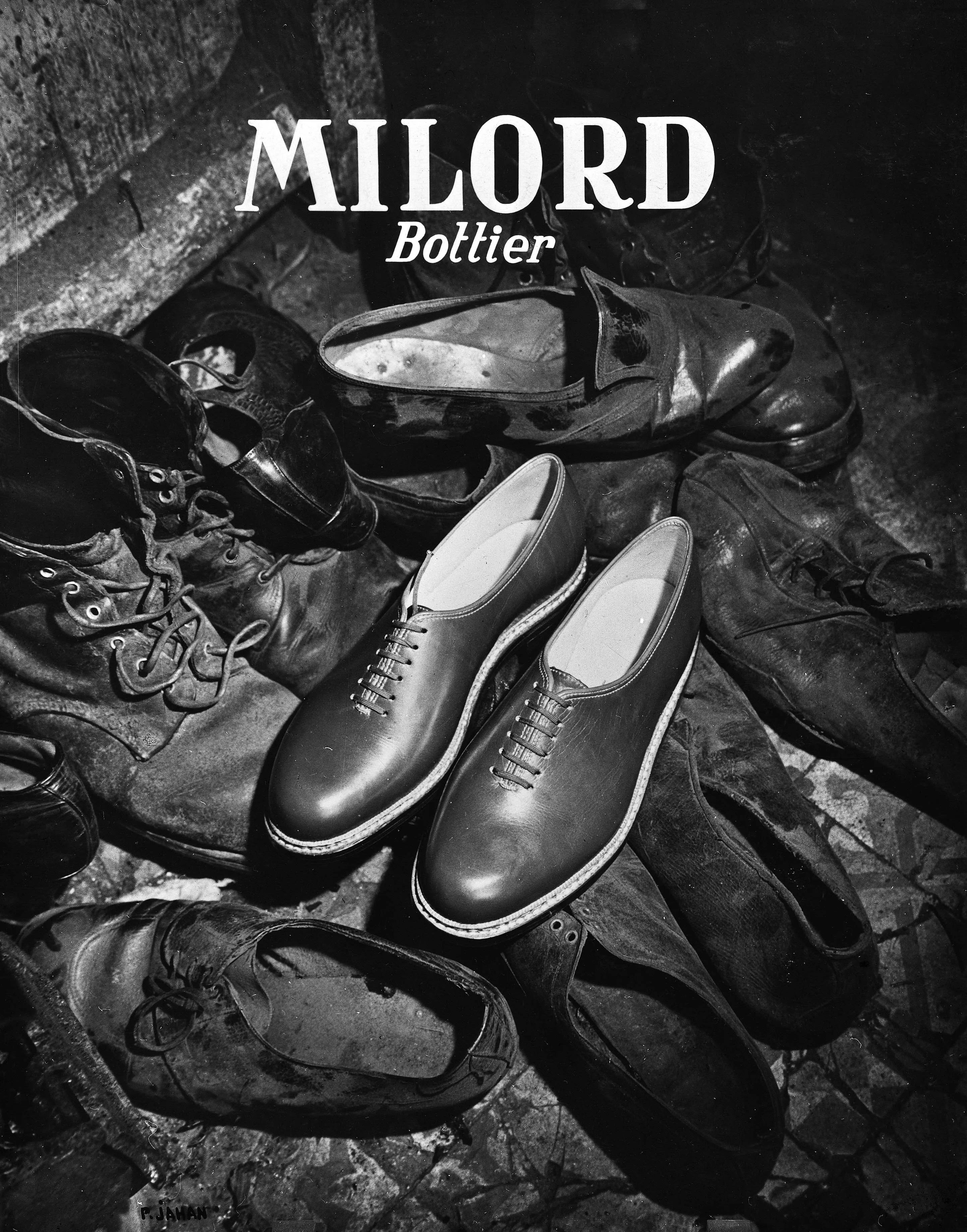
[Pierre Jahan: Advertisement - 1950]
There were many practitioners. Some good, some better, and some truly great. Pierre Jahan was in the latter category. He came to Paris as a young man and was encouraged to join a merry band of professional photographers, who photographed both advertising and provided photographs for stories and articles published in the many magazines, which dominated the newsstands.
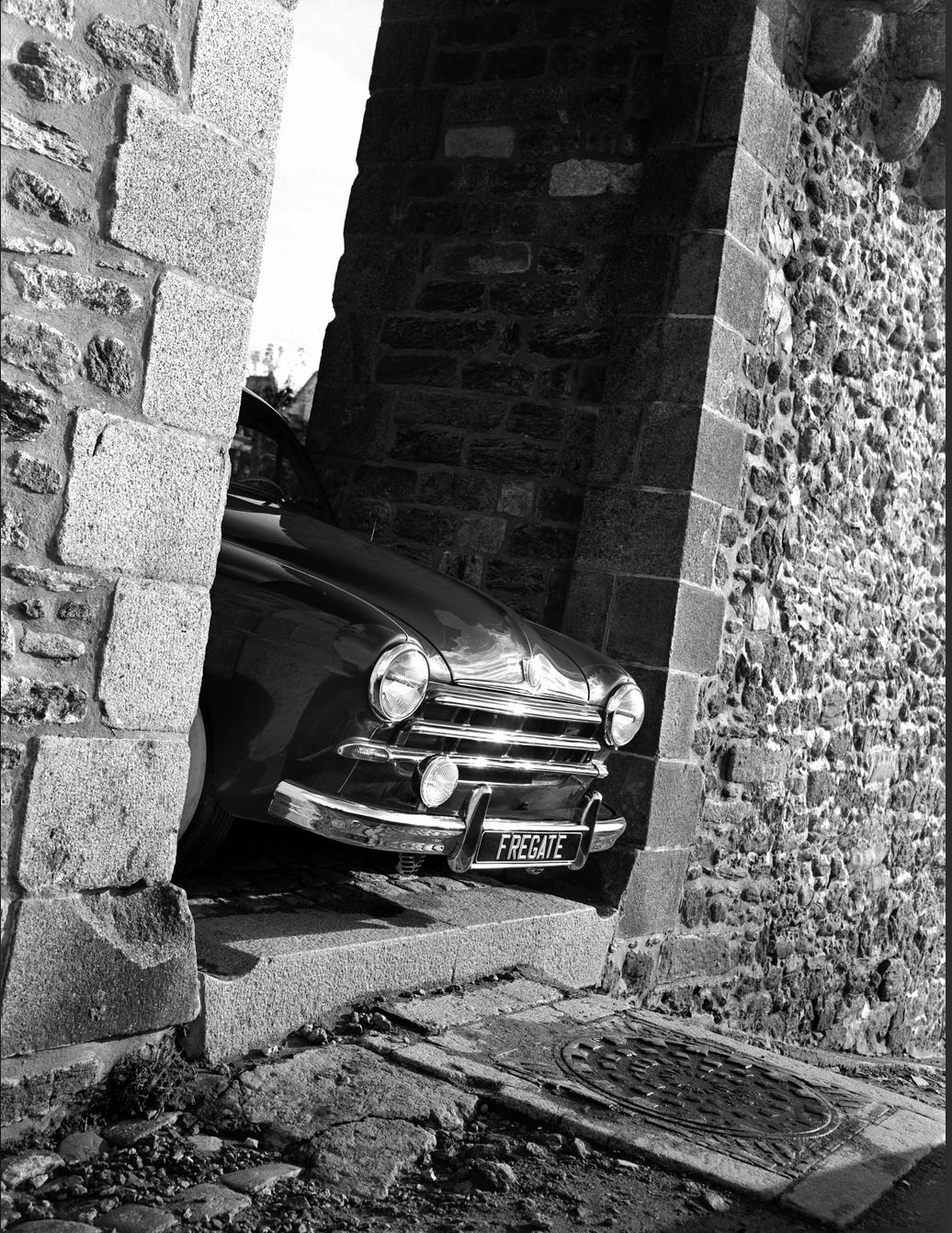
[Pierre Jahan: Advertisement for the Renault Fregate - 1950]
Mr. Jahan joined a group called Le Rectangle in 1937, encouraged by his new friend Emmanuel Sougez (1889 - 1972). More about M. Sougez another time. The group was serious for about a decade and had its own manifesto, as well as a very patriotic perspective on the world. They were French.
The manifesto, first published in 1938 reads in part (excuse the translation):
Le Rectangle brings together, in a sought-after eclecticism, the best professional elements of French photography in all its branches and forms. Driven by a rare fraternal solidarity, this group of independent members presents itself as a cohesive block, who with meetings and demonstrations provoke a renewal of the spirit of creation. This new organisation forestalls exploitation by amateur photographers.
If this sounds familiar, it is of course the same debate we are having today, when the amateur-phone-shooters are clogging up the outlets with AI enhanced slop. But this is for someone else to write about!
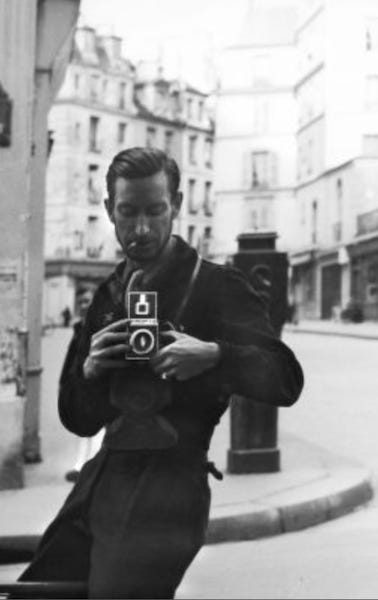
[Pierre Jahan: Self-portrait, ca. 1935]
Pierre Jahan went on to have an amazing and very long career. He photographed well into old age and passed away in his 90s.
I had all but forgotten about Pierre Jahan, until I was reminded when walking through a gallery in Paris last year. There was a show of newly discovered photograms and rayographs from the 1940s and 1950s. I found them intriguing. The prints were fantastic. There had been a fire. Some of the prints were crispy on the edges, but I actually think they made them even more interesting. Here are three.
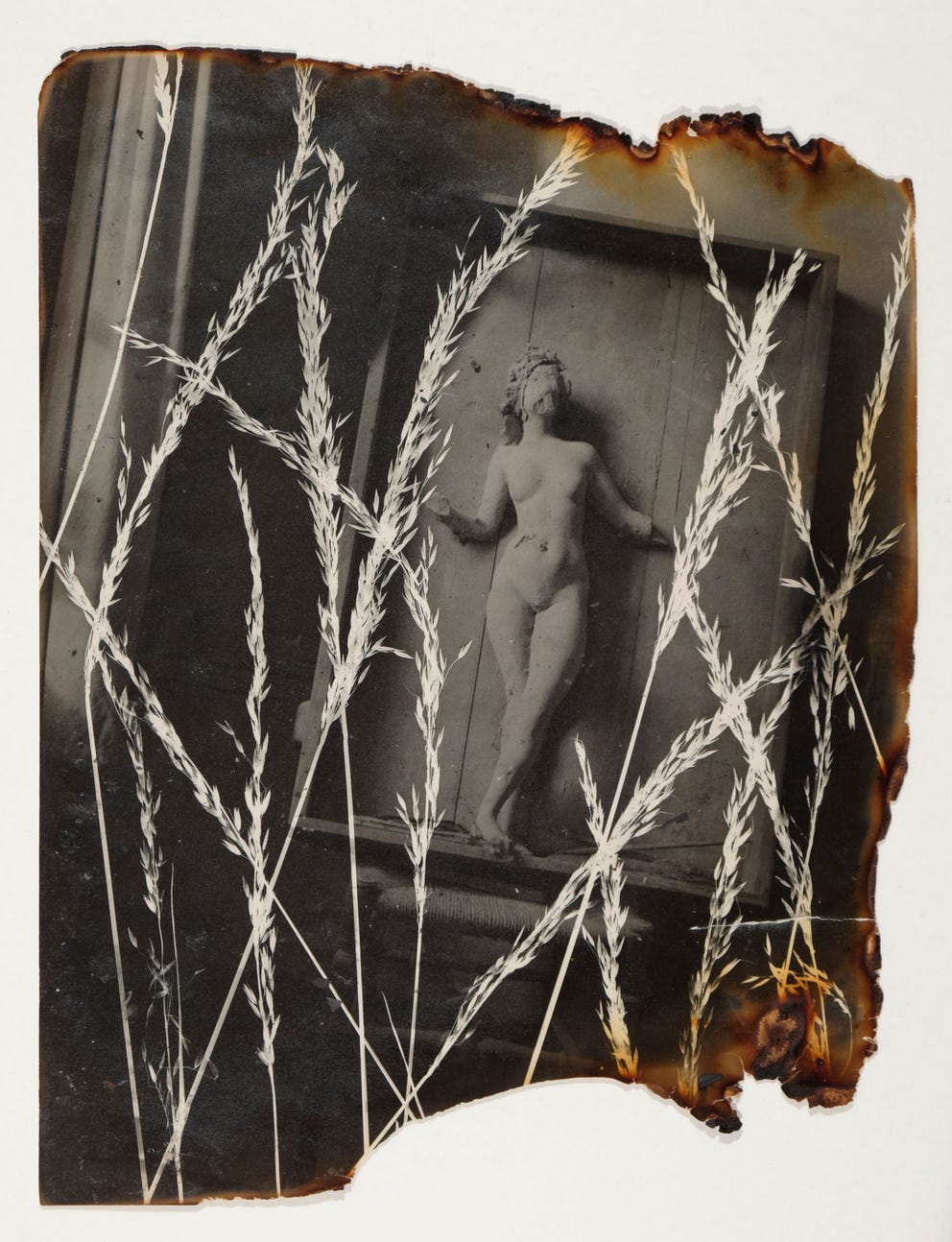
[Pierre Jahan: Photogram - 1940s]
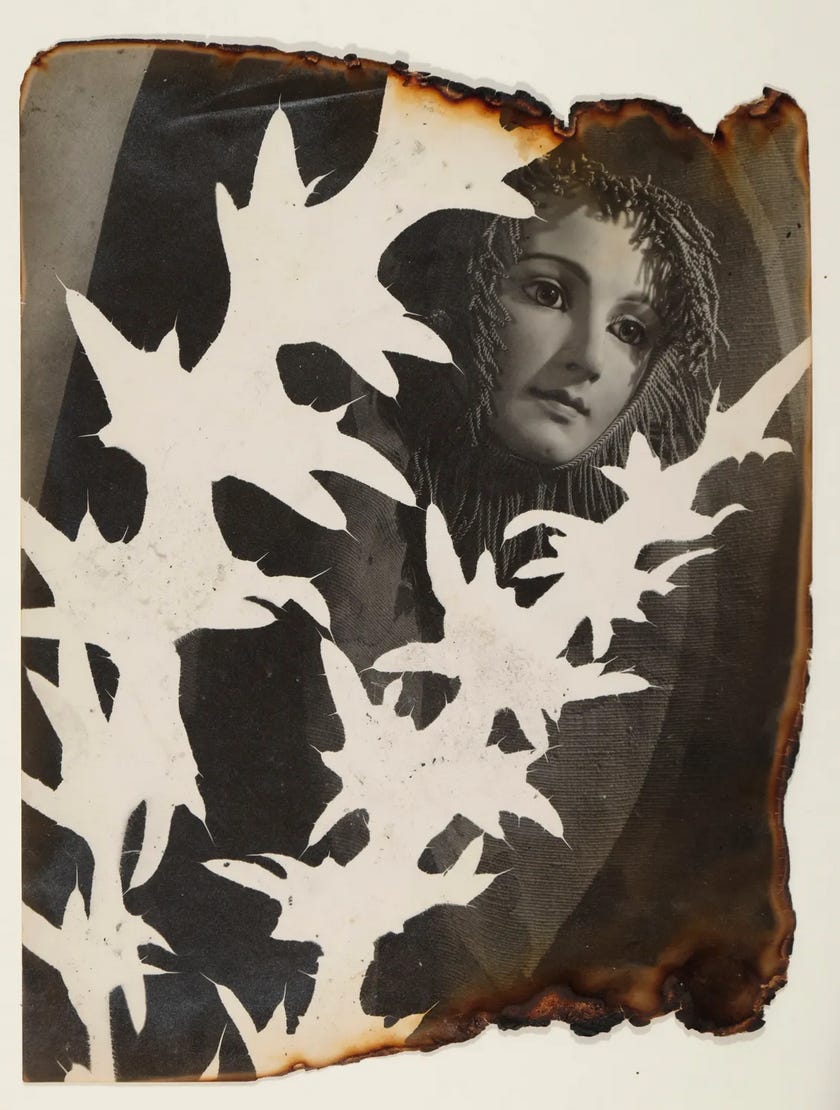
[Pierre Jahan: Photogram - 1940s]
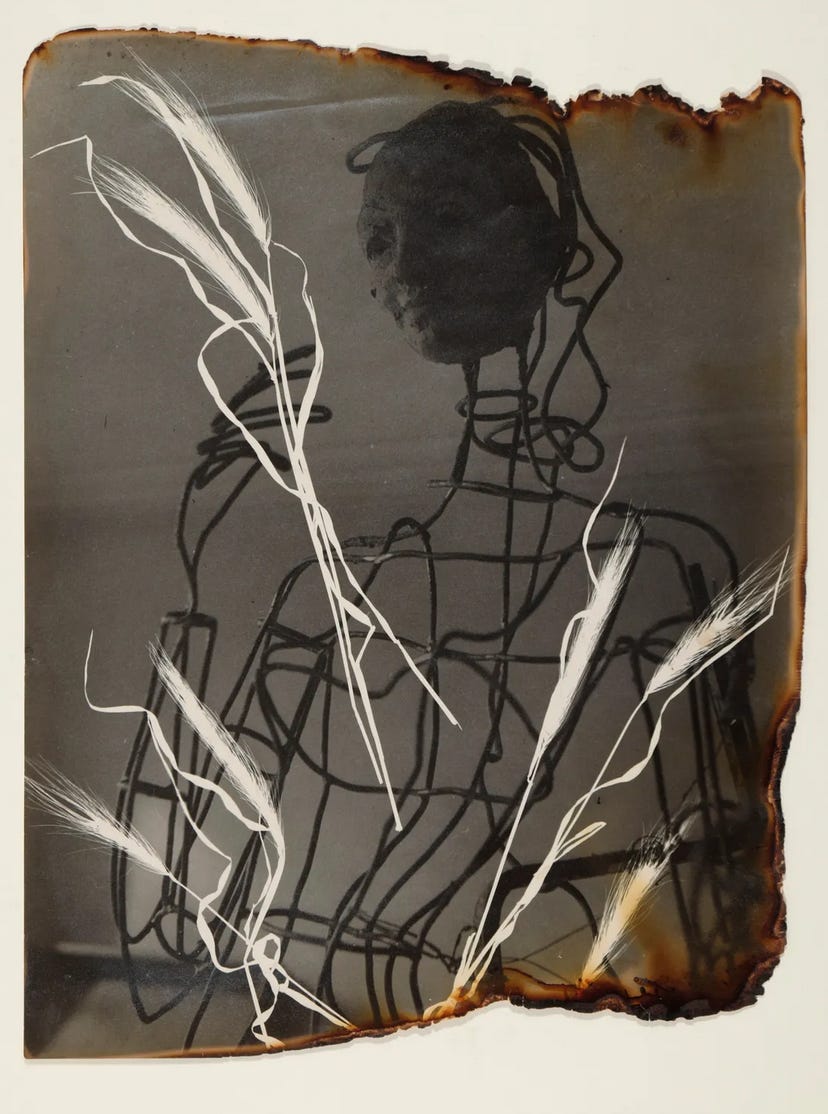
[Pierre Jahan: Photogram - 1940s]
However, the Jahan story for me does not stop, or start at the small gallery in Paris in 2025. My story starts with my chance purchase of a small photograph from the Louvre back around 2010.
As WWII was approaching, the Louvre did what all sensible museums do, and dismantled their exhibits and brought the great works to safety. As a matter of space management, this was done chiefly without frames. Frames were heavy, bulky and took up valuable space.
After the war, Pierre Jahan had the wonderful idea that he was going to document for all to see, the return of the treasures to the Louvre. I bought a small, 10cm x 15cm photograph, below. Once I got back from the gallery in Paris, I decided to have a closer look at Pierre Jahan. I went down the rabbit hole.
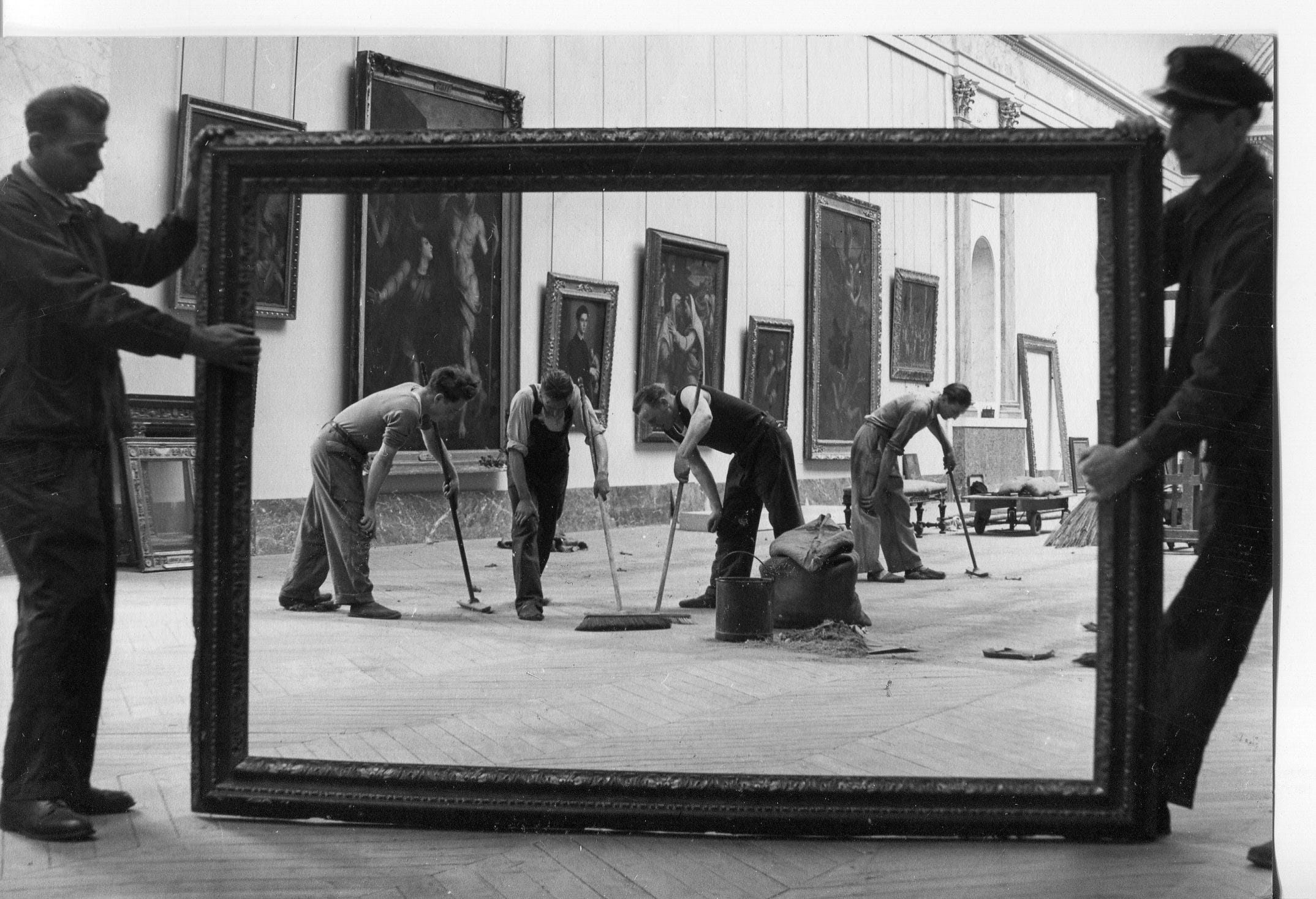
[Pierre Jahan: My print from the Louvre - 1945 - a scan of my photograph]
The Louvre story is a miracle. The Nazis had decided that they were going to take the greatest art treasures across Europe and place them in a massive new museum, planned for Austria. To that end, prior to the invasion of France, the Germans sent Count Franz von Wolff-Metternich to Paris. He was supposed to scout and make recommendations of what art to loot. The Count was an art historian with a specialism in the Renaissance.
The Deputy Director of the Louvre, Jacques Jaujard is the principal hero in our story. he had started, before the invasion of France, to quietly move artwork out of the Louvre. Jaujard had learned the ropes from being involved in securing the safety of the Prado Museum from Francisco Franco. He was part of a network of European museums and governments, which helped move the contents of the Prado to safety in Switzerland.
On the 25th of August, 1939, the Louvre closed for three days… for ‘renovations’. Hundreds of people heeded the call and came to the Louvre clandestinely and helped box up paintings, sculptures, tapestries, porcelain, and much more. The core of the collection was moved during those three days. Transported by truck into hiding, first in a château in the Loire, and later moved several times to keep them out of the hands of the Nazis. They were never discovered, which is the miracle, given the sheer volume of art being moved around. More than 200 trucks carried the collection to safety.
When the senior Nazis rolled into Paris and went to the Louvre, they greatly admired the Venus de Milo, by then a mere plaster copy.
Count Franz von Wolff-Metternich was not a party member, but an old aristocrat. He knew full well what was happening, but said nothing. After the war, President de Gaulle awarded him a Légion d’Honneur for doing nothing! Well almost nothing. His commendation read in part: “ … he protected our art treasures from the appetite of the Nazis, and Göring in particular. In those difficult circumstances, sometimes alerted in the middle of the night by our curators, Count Metternich always intervened in the most courageous and efficient way. It is in great part thanks to him that many artworks escaped the occupant’s greediness.”
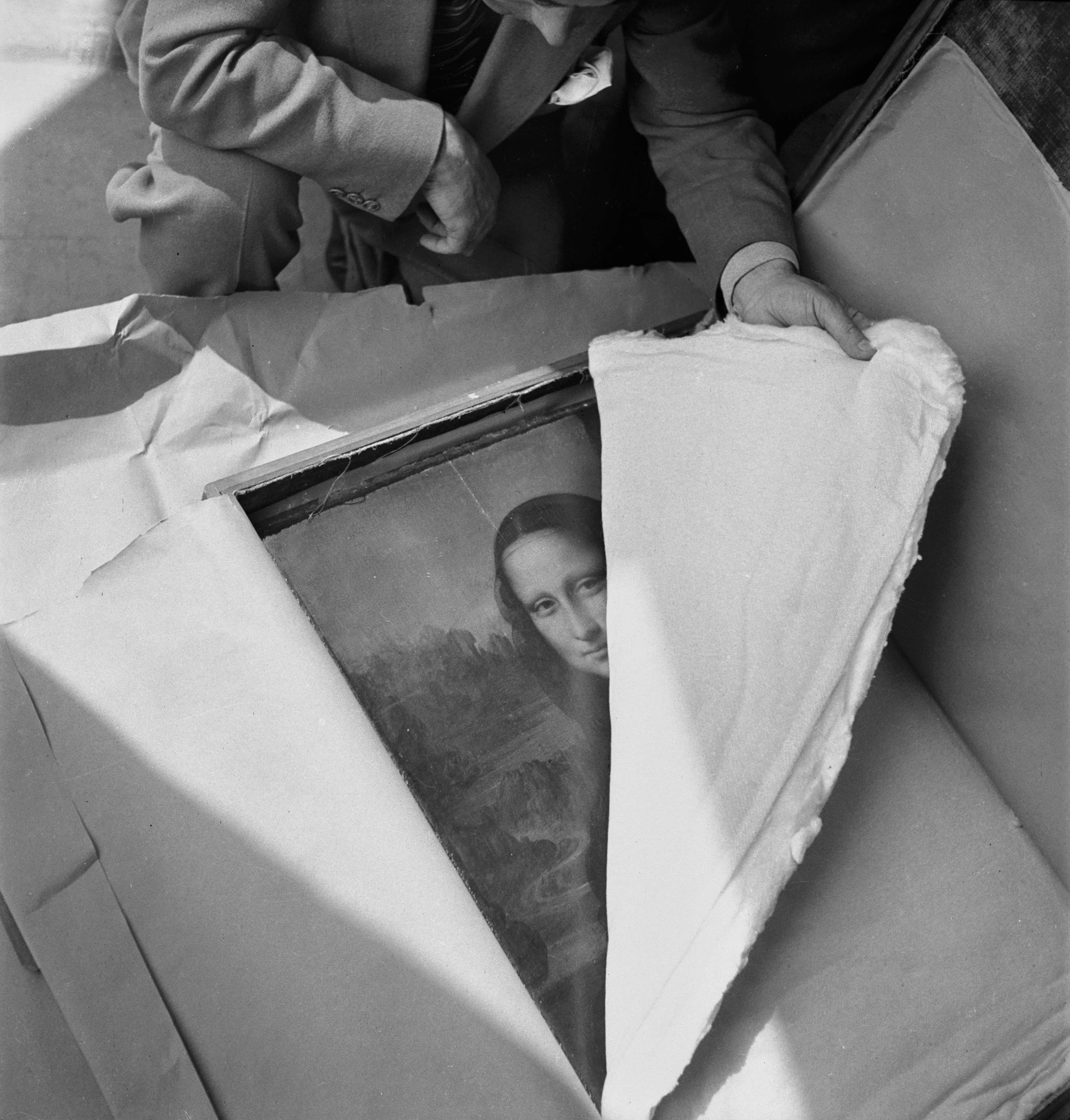
[Pierre Jahan: Unpacking the Mona Lisa, the Louvre - 1945 - contact sheet below]
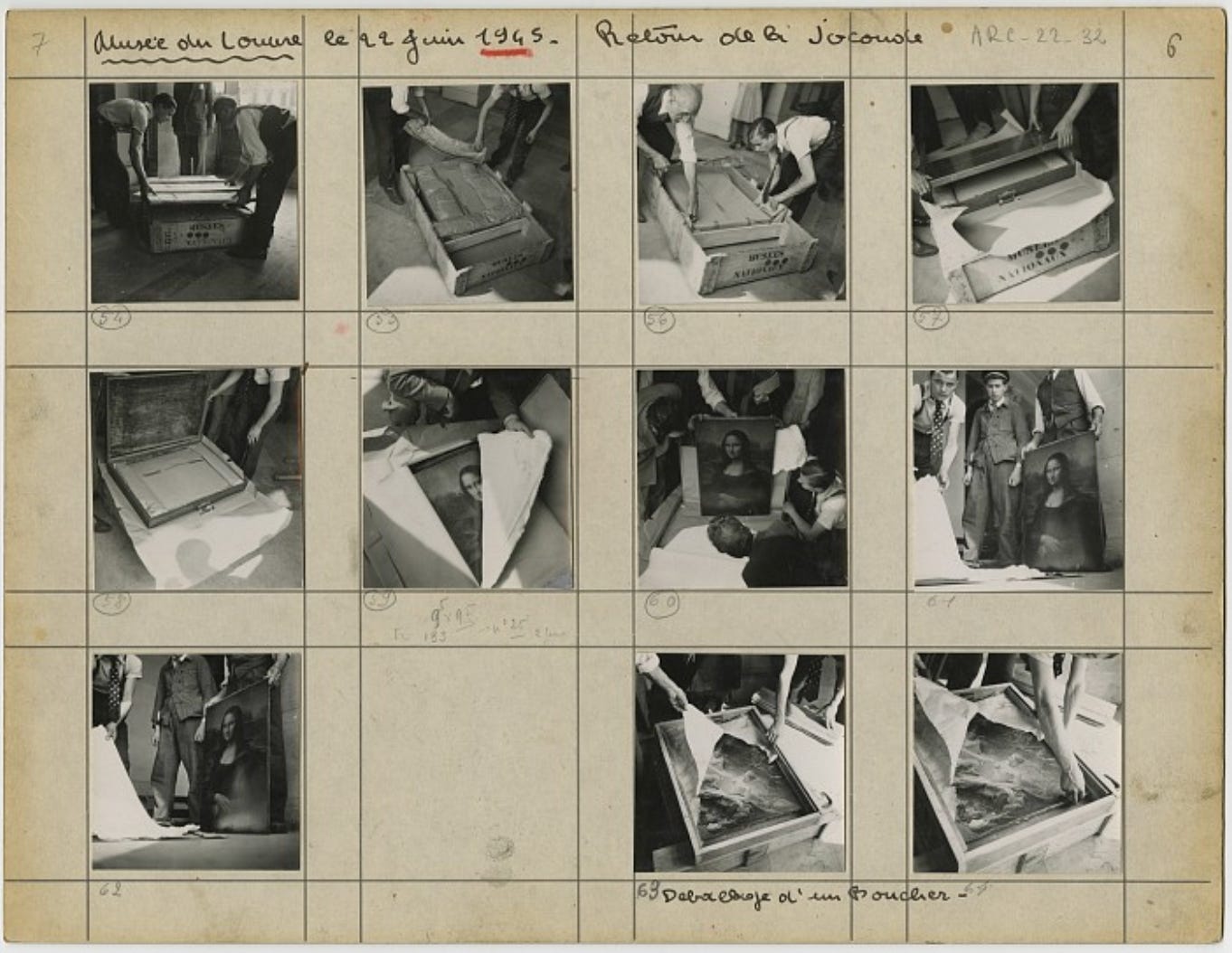
Jahan and his friend and colleague Raymond Gid (1905 - 2000) made photographs of the return of the great collection to the Louvre. In 1945 there was a rare photography exhibition of the photographs at the Louvre. Celebrating the return.
There are so many great photographs from the Louvre series. So many wonderful, heartwarming photographs. Here are a few celebrating the return to Paris, and some semblance of normalcy. The Louvre, 1945.
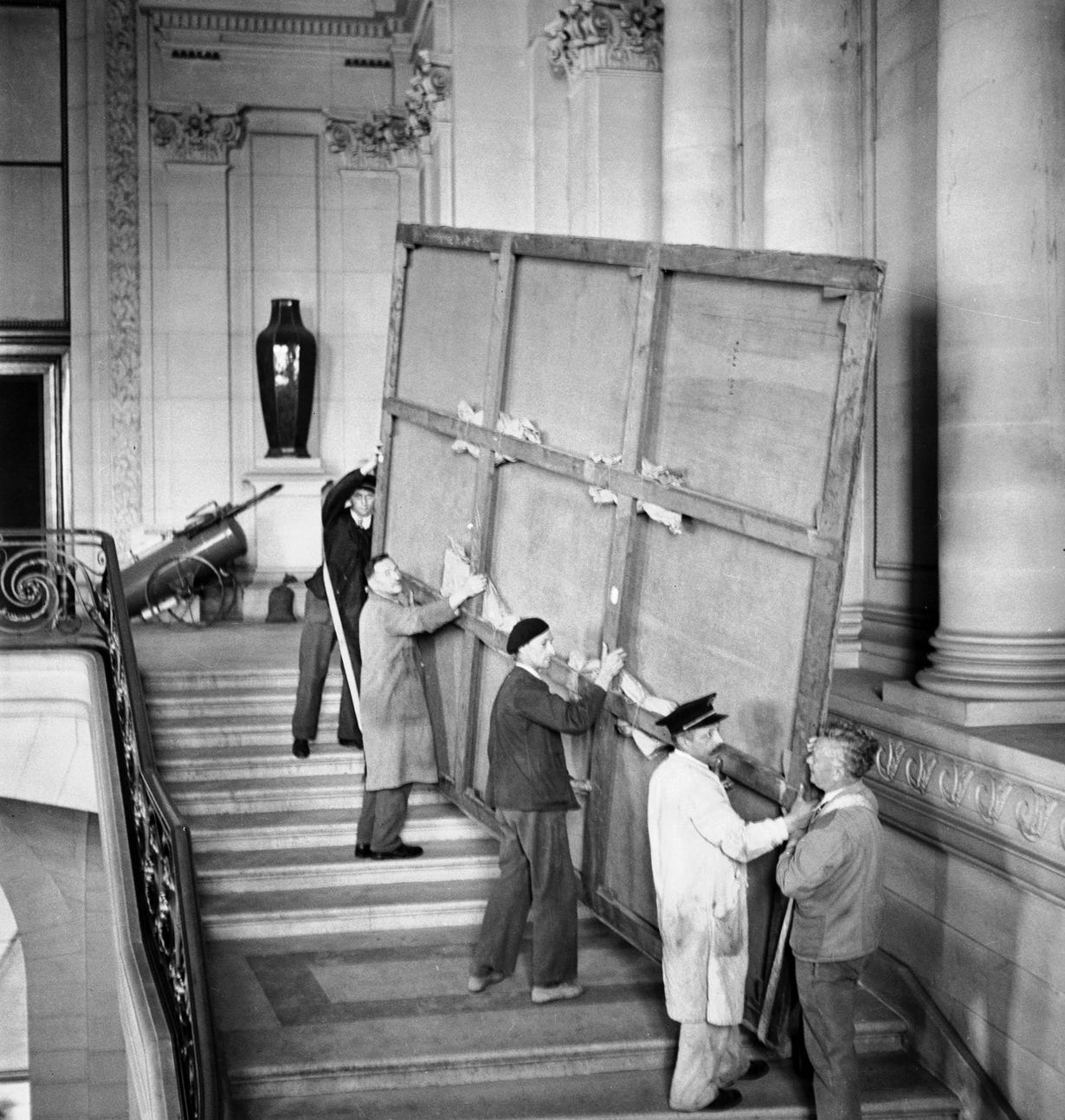
[Pierre Jahan: Returning treasures to the Louvre - 1945]
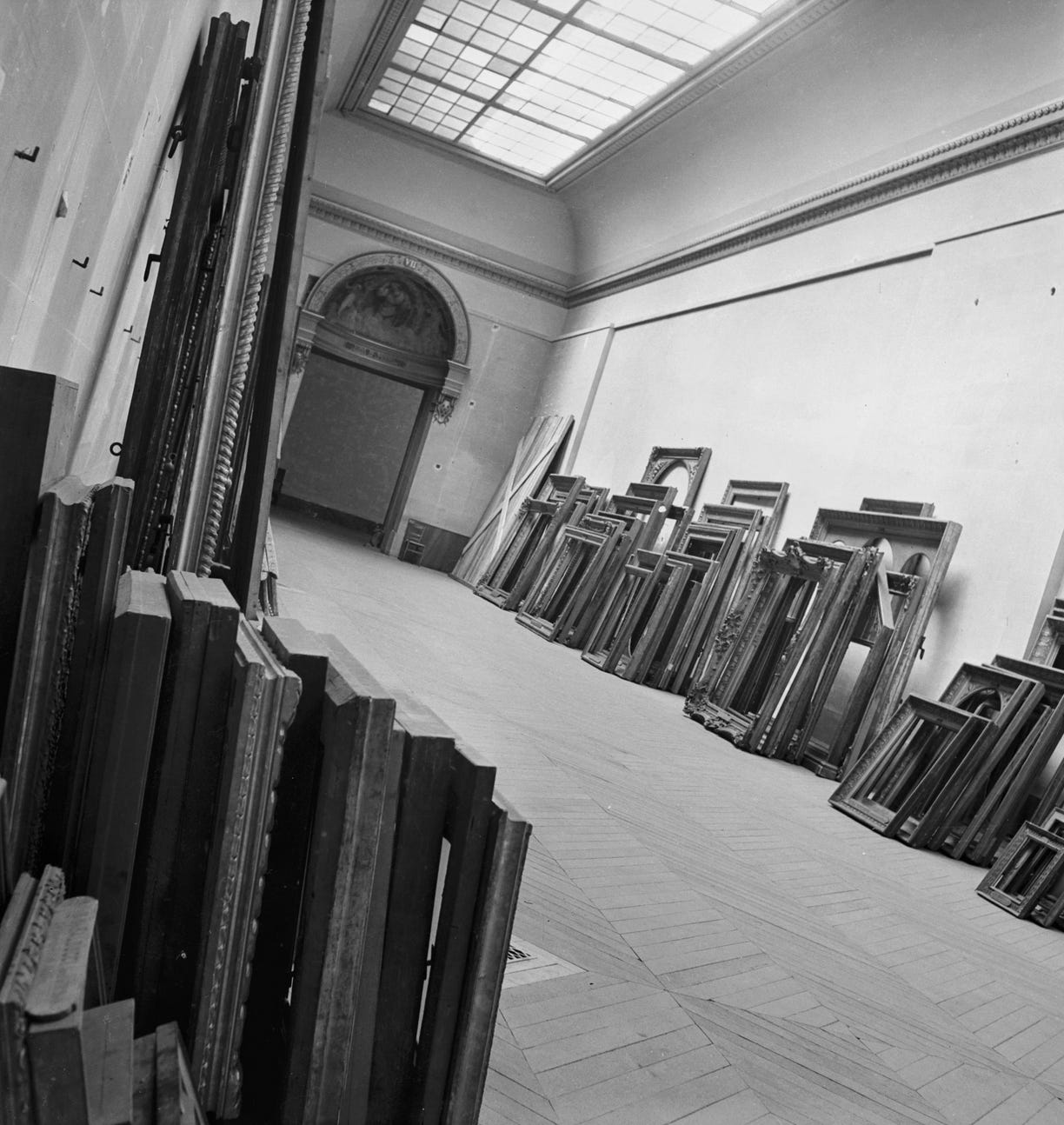
[Pierre Jahan: Empty frames at the Louvre - 1945]
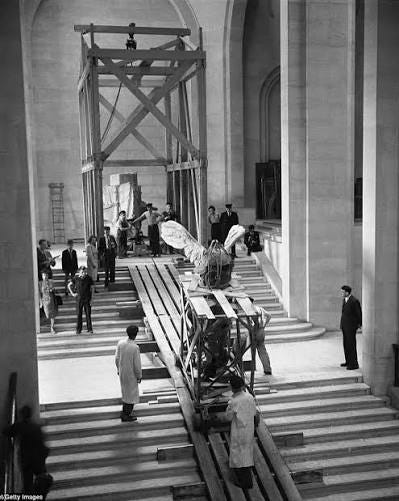
[Pierre Jahan: The winged Victory of Samothrace returns - 1945]
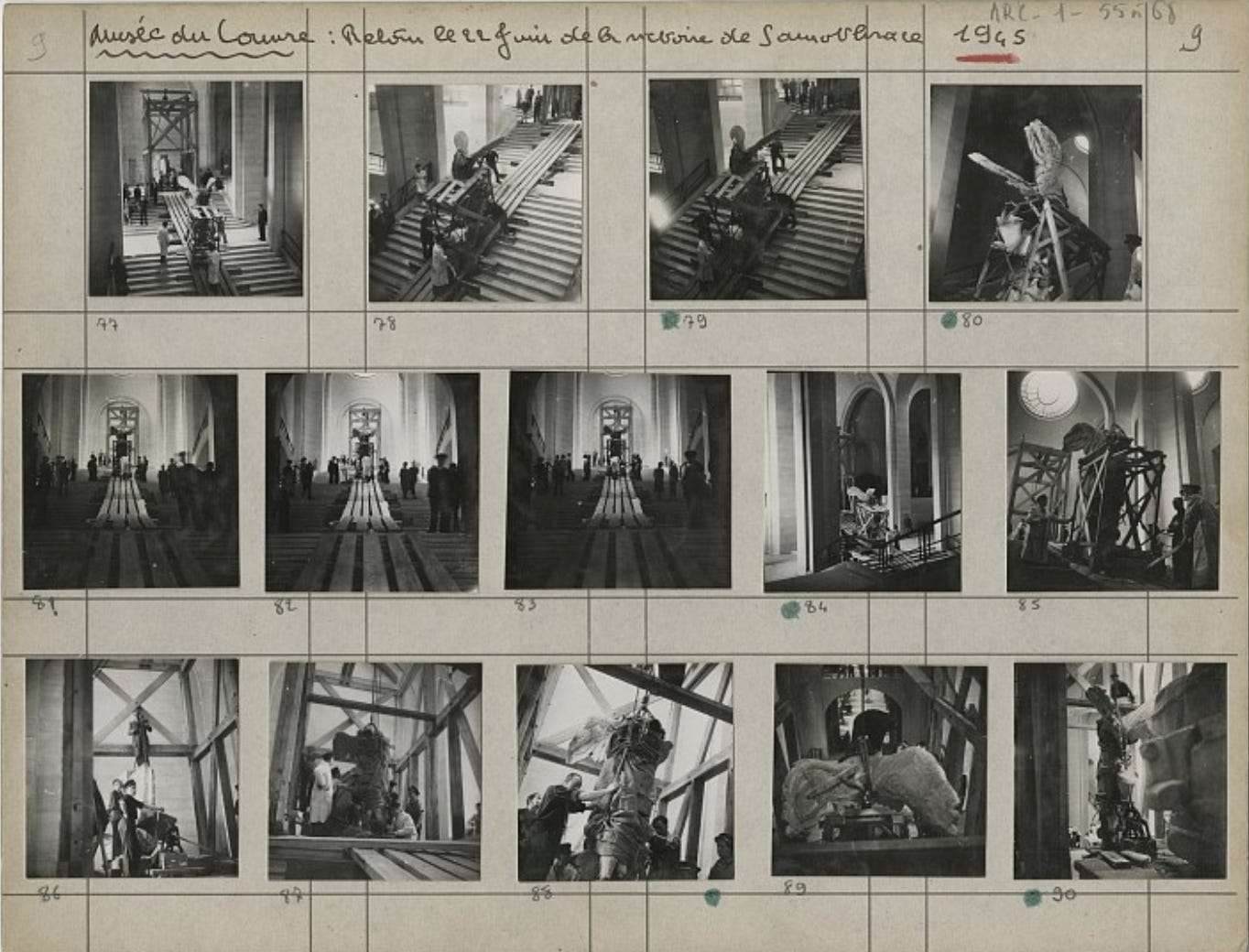
[Pierre Jahan: The Winged Victory returns to her place in the Louvre - Contact sheet - 1945]
I would encourage you to take a look at Pierre Jahan’s work. He was a humanist photographer, an advertising photographer, a story teller in pictures, and so much more. He should be remembered as a great French 20th century photographer. With a long and productive career.
Until next time….
No posts
Comments
Nothing yet. Say the first thing.
Sign in to join the conversation.