
As you read this post, pay close attention to how each painting is framed. Think of what appeals to you, what you like, and why…
I was in Venice last week. I had an opportunity to see some great work by Horst, Eisenstadt, Scianna, Man Ray, and several others, but that is not what this post is about. Because ever since I bought my first photograph, I have thought about how best to frame photographs.
[Søren’s phone - Giorgio Morandi: Still Life]
The convention is pretty straight forward: A not too overwhelming black frame. A profile, which is right angled and narrow. A mat a few inches wide. White, of course. Archival. Museum glass. Once framed, the photograph is to be hung in a place where it is easily seen, but never a place where the sun passes during the day. Never near a direct source of heat, such as a radiator. But, what if some of this convention is wrong?
[Søren’s phone - Giorgio Morandi: Still Life]
Some of you will recall the interview with Elton John back when he had his show at the Tate Modern called The Radical Eye. I clearly remember reading an interview in The Guardian. It read in part: “One surprise in The Radical Eye show is the framing of the images, which is, well, a bit bling – gold and silver gilt rather than, as he [Elton John] puts it, ‘boring bloody black’. That will, I say, almost certainly annoy the purists. ‘Oh, they can fuck off… All I am saying is, look at them in a different way – as magnificent works of art that should be magnificently framed.’”
[Søren’s phone - Giorgio Morandi: Still Life]
I have for a long time liked the idea of going against convention. I love a found frame, paired with great photographs. I look for old frames that have had a bit of patina. Frames that have been gilded, and where a bit of the gild may have been rubbed off, or where there are a few nicks. A lovingly cared for walnut frame, where the smell of old polish lingers.
[Søren’s phone - Giorgio Morandi: Still Life]
But, back to Venice. One of the great shows of this visit, which surpassed anything I saw at the Biennale, was the show of still-lifes at the Istituzione Fondazione Bevilacqua La Masa tucked in the corner of Saint Mark’s Square. The show is called: Picasso, Morandi, Parmiggiani - Still Lifes. It sadly only runs till the 25th of July. It is a beautiful exhibition, the works of the three painters play off each other exceptionally well. While it is a small show, is is most definitely worth the price of admission.
[Søren’s phone - Giorgio Morandi: Still Life]
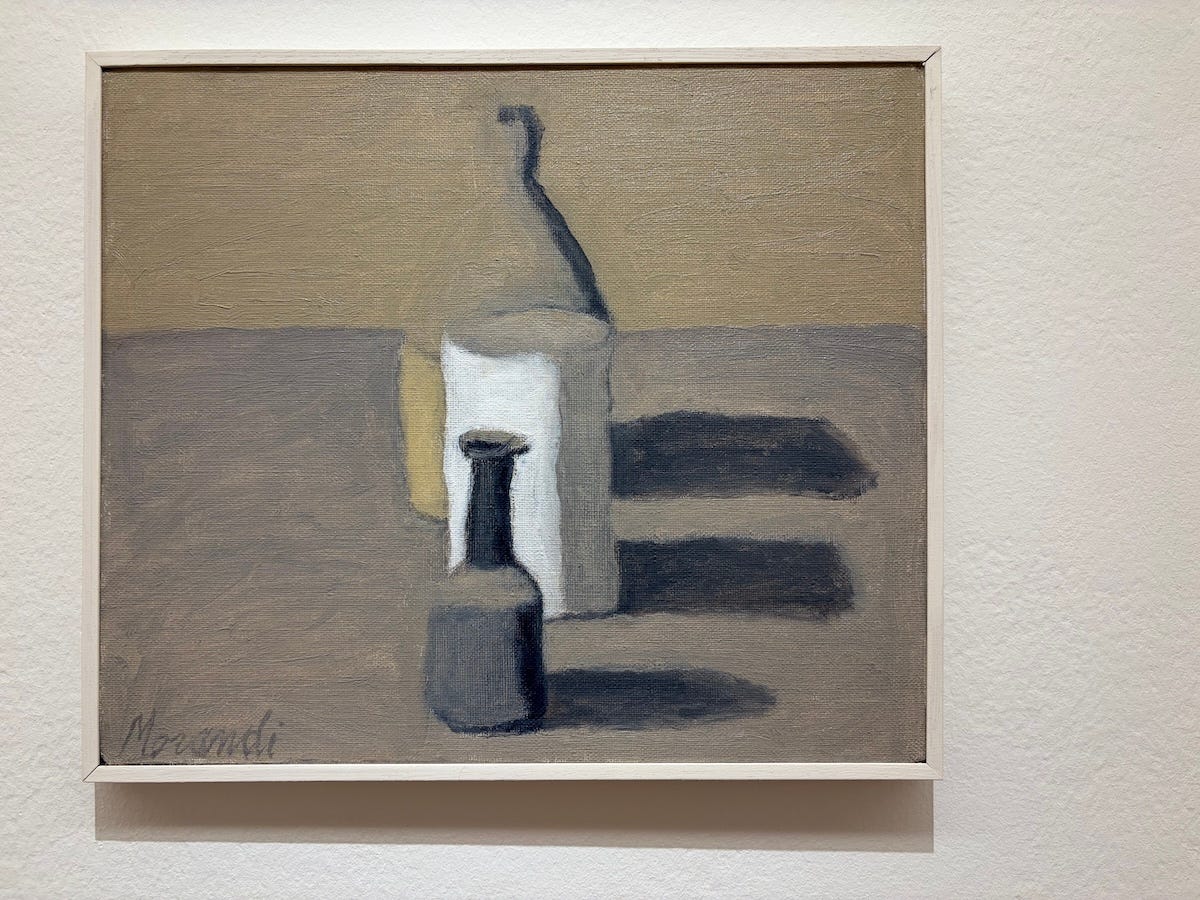
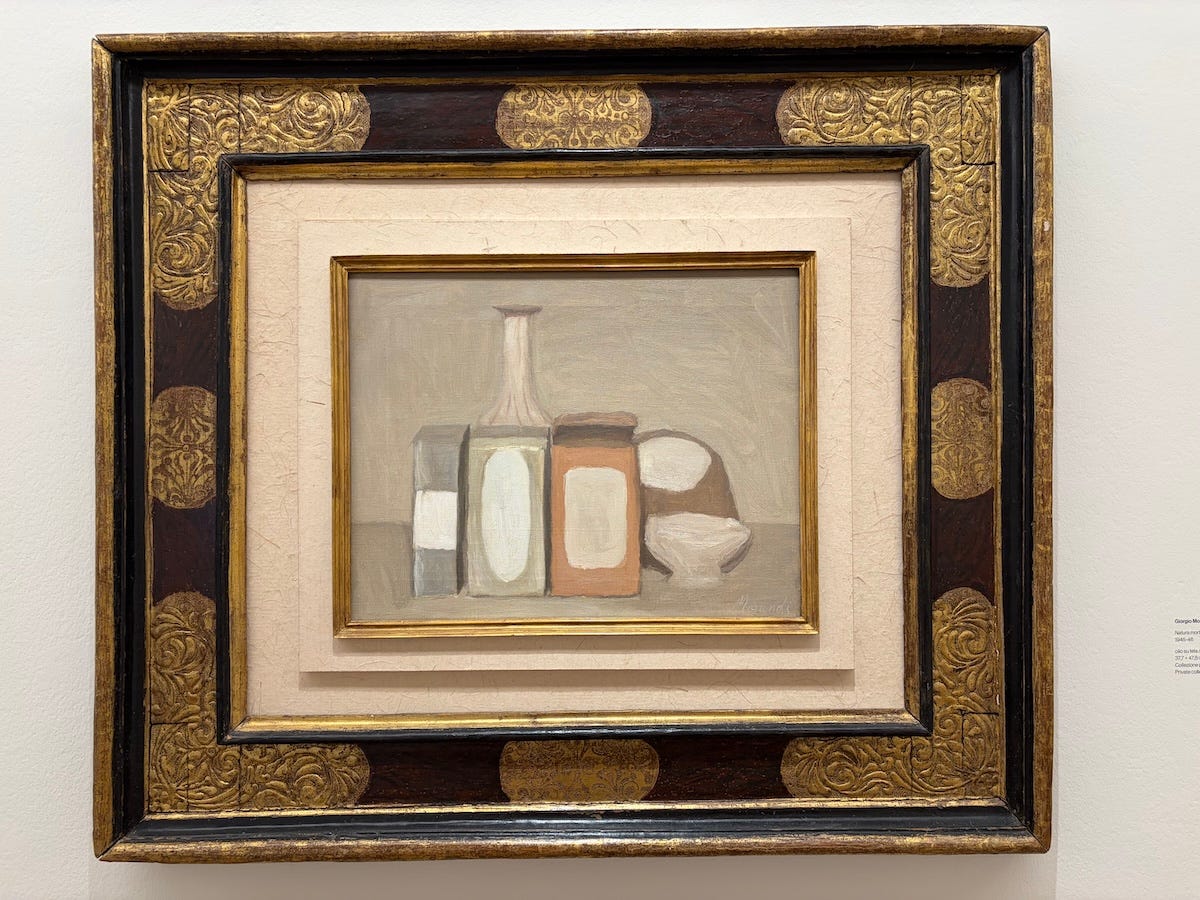
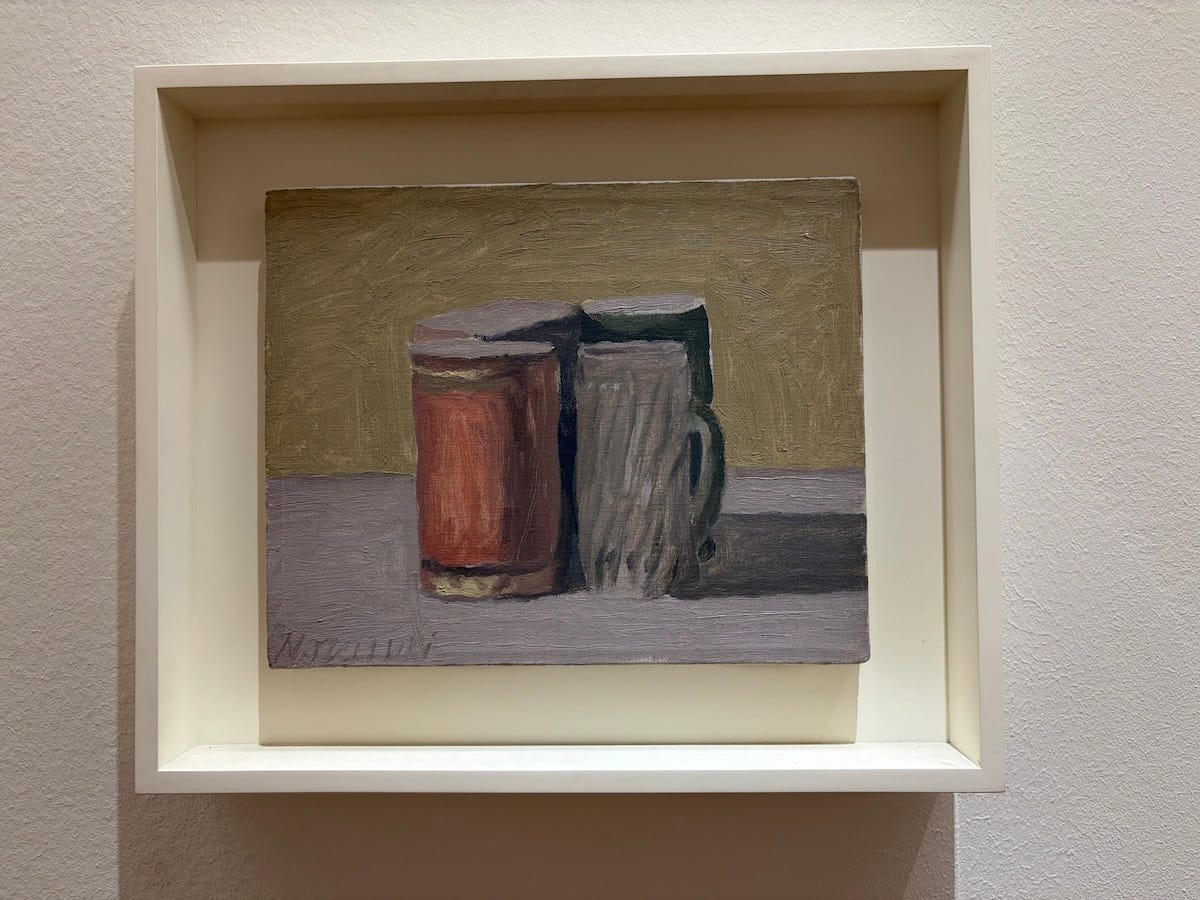
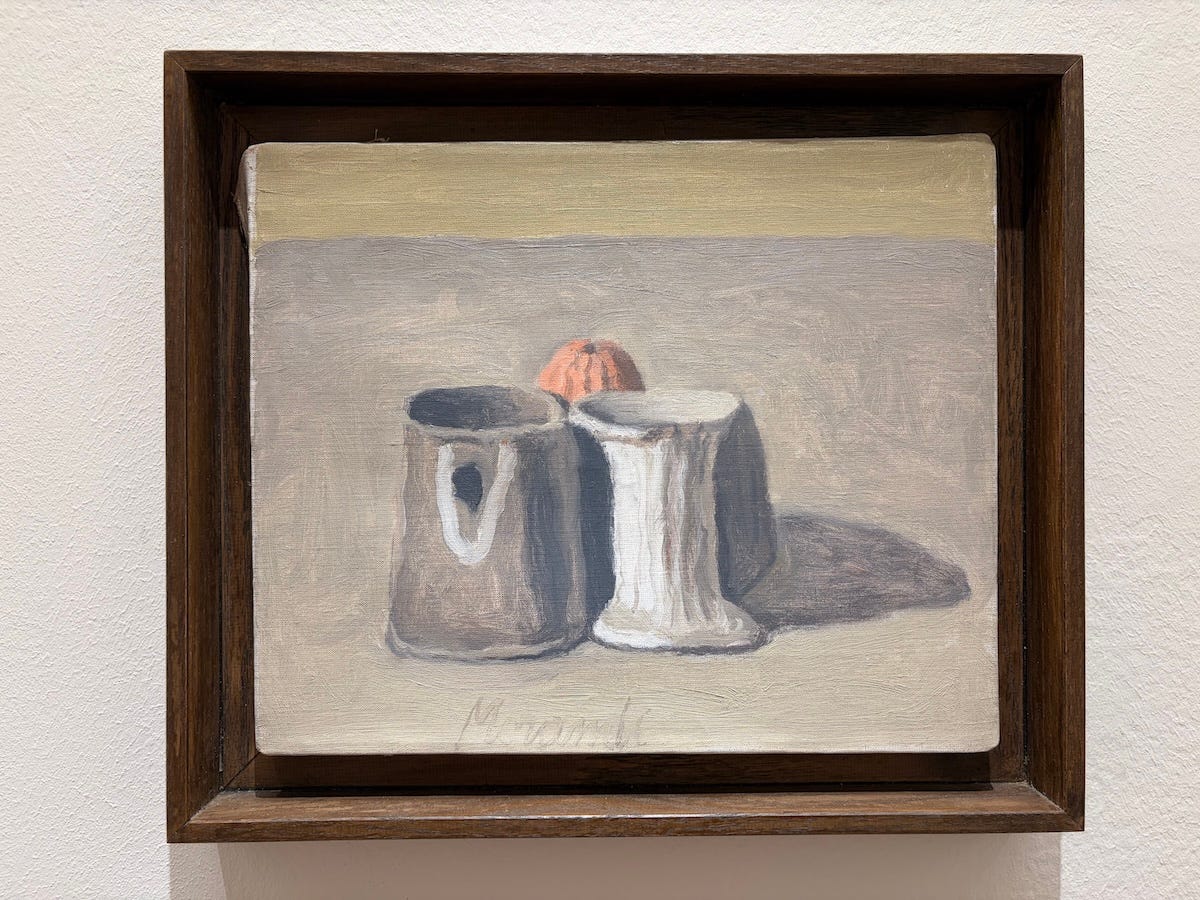
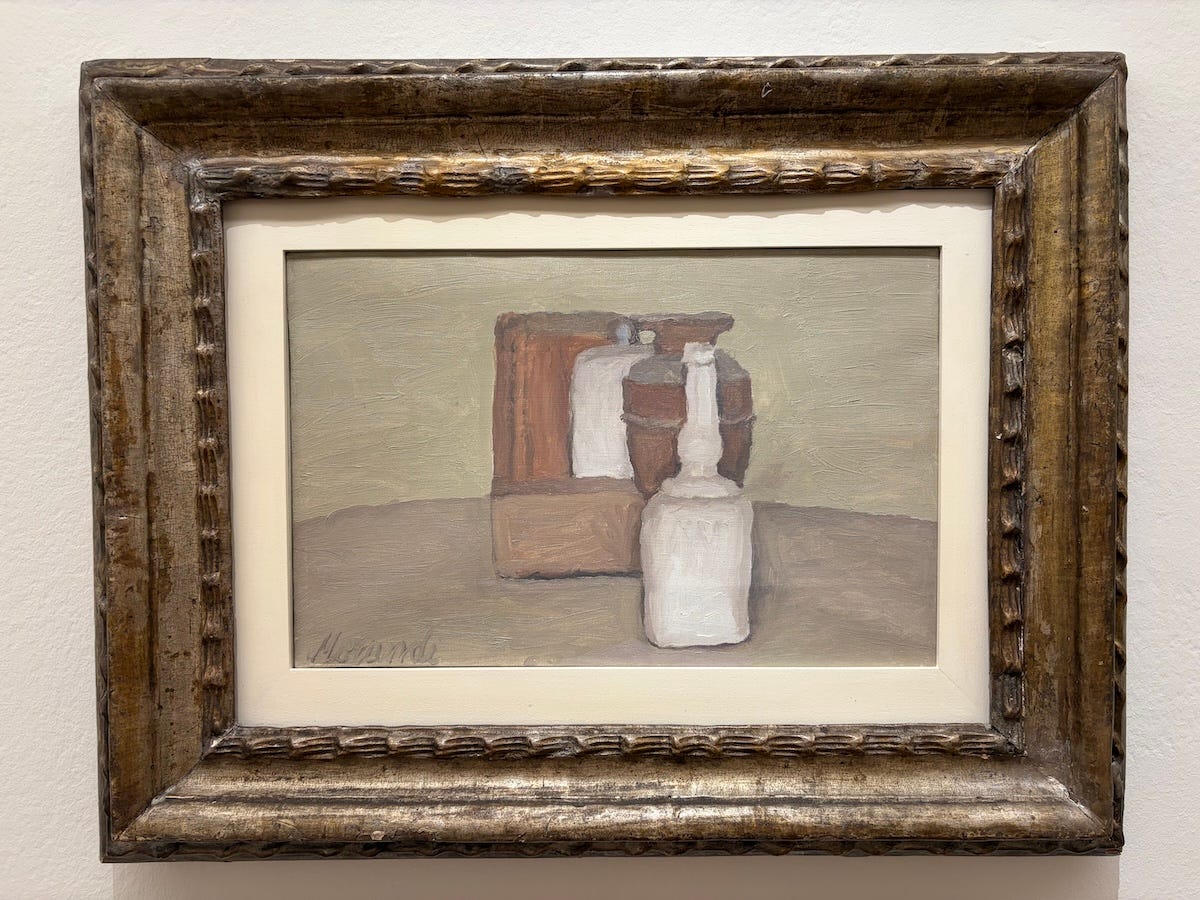
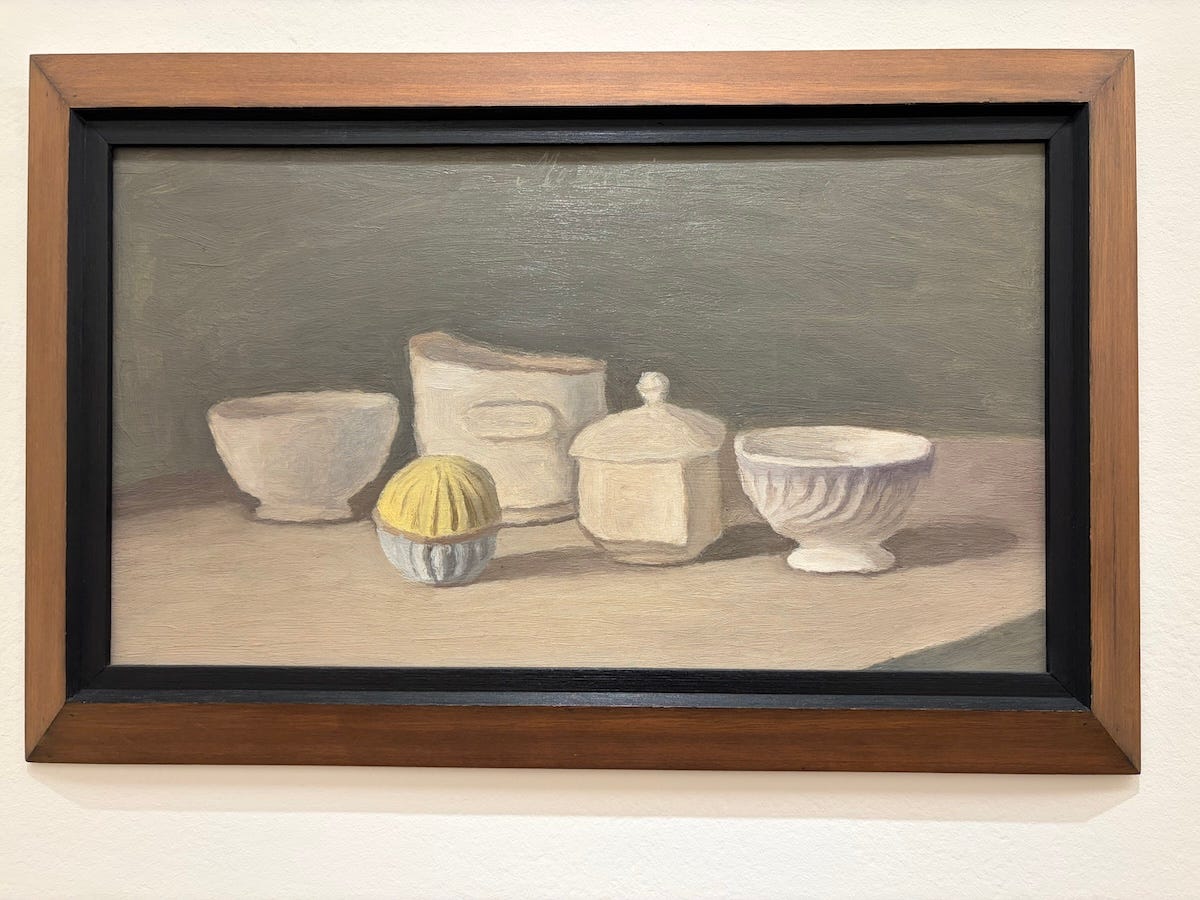
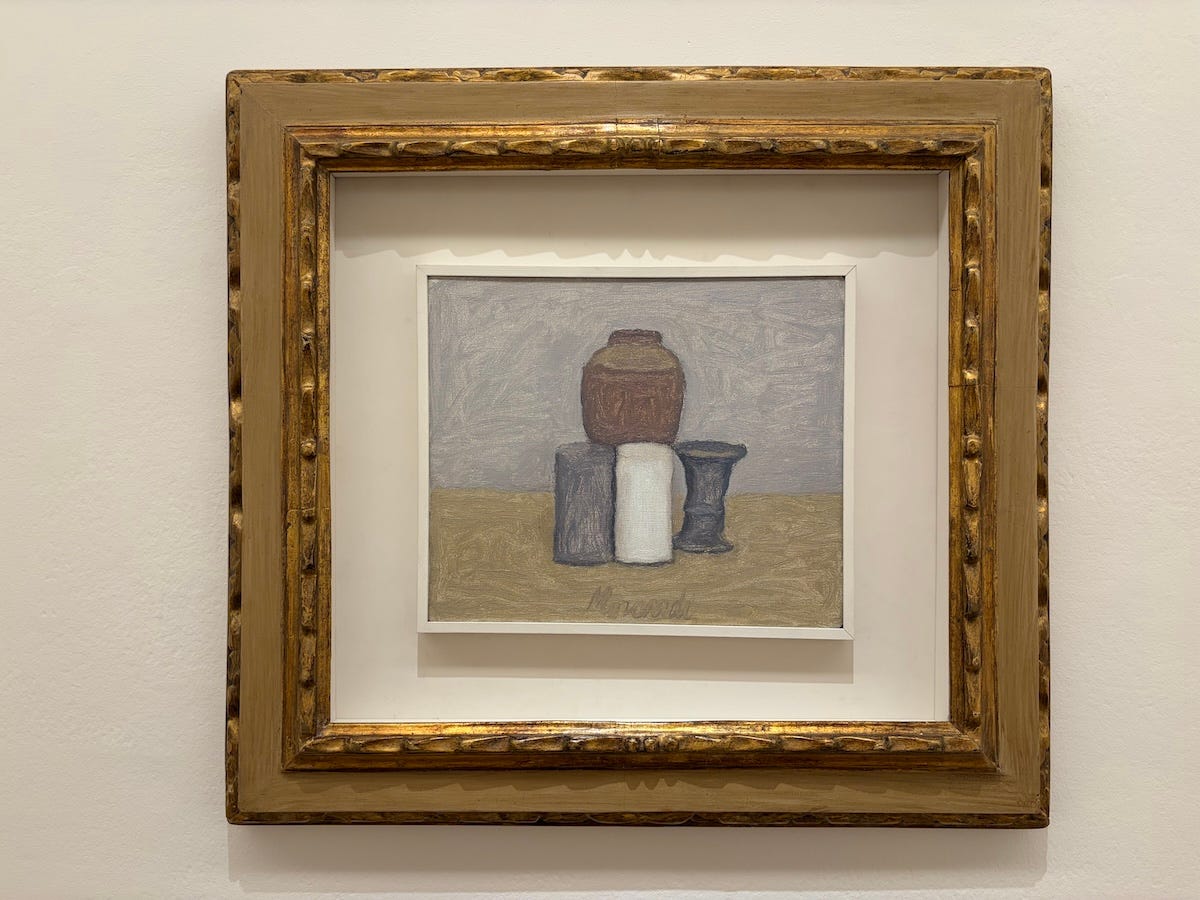
One of the reasons I found the show particularly interesting are the paintings by Giorgio Morandi (1890 - 1964). Those who have read along will know Morandi is one of my favourite artists. The exhibition pulled together maybe 15 paintings by Morandi. They have been borrowed from a number of different institutions, as well as various private owners. Those who know Morandi’s work will know that they tend to be small in size. They tend to be of bottles, jars and vases neatly arranged on a small surface in his apartment, where he painted most of his life. His images are muted and soft. The objects dance, I think. They are not steady, but have movement, despite being inanimate objects. Most are maybe 15 inches / 40 cm wide and 12 inches /30 cm tall, or something like that. Because the paintings come from different owners, they are framed very differently.
[Søren’s phone - Giorgio Morandi: Still Life]
However, Morandi is also not the reason I am writing this post. Though there is every reason to write a great Morandi post. No, the reason is the phone photographs I made. The lighting was good with minimal reflections. I could photograph pretty well straight on and capture nothing aside from the painting and frame.
[Søren’s phone - Giorgio Morandi: Still Life]
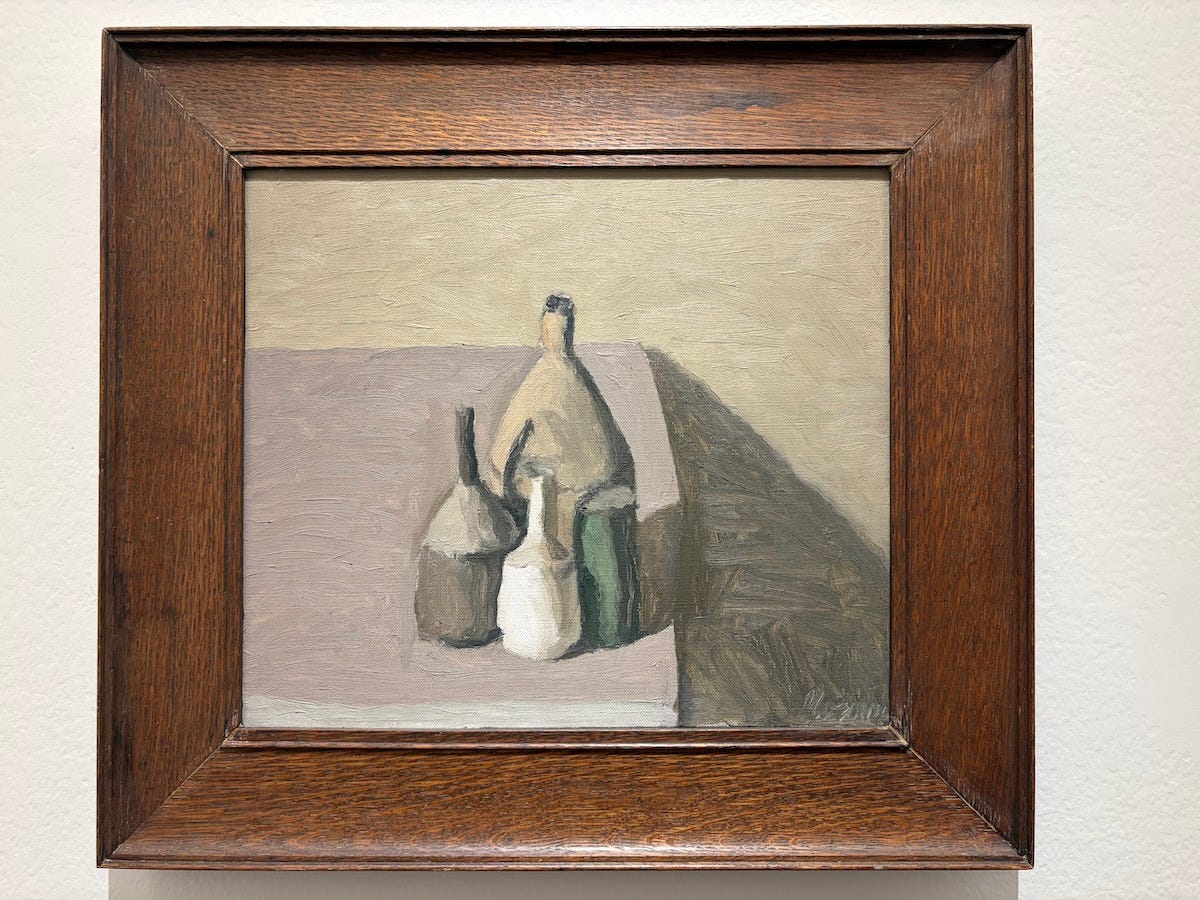
As you can see from the images in this post, the paintings by Morandi come across very, very differently. The paintings - as in the painted canvas - are very similar in size, but check out what happens when they are framed. I tend to like wood frames, such as walnut, or stained oak. I like to see the grain. I tend to like a nice profile, but sometimes a more ornate frame really works. Be it gold leaf, silver leaf, or beautifully carved wood! For Morandi, I like the one below.
[Søren’s phone - Giorgio Morandi: Still Life]
I invite you to consider how you frame your photographs. Look for great frames. You can often find a disaster of a painting - once loved - in a great frame. In a flea-market, or elsewhere the painting is EUR 20, or US $25, but it is in a beautiful, carved frame everyone has forgotten about. If you were to go and buy a frame like that at the framers, it will set you back 250 bucks, or multiples of that! But, because nobody likes the paint-by-numbers, or whatever the frame might hold, the cost reflects the painting, not the frame! Pick it up. Go home. Find one of your favourites photographs. Print your own photograph, or find one you have collected that is roughly the right size. Take it to the framers with your newly discovered frame, and all you are going to pay for is a mat and a bit of glass!!
Next time you are out there looking for your next treasure…. Take a look at what can only be called a terrible painting, but is in fact a bit of canvas in a beautiful frame. A frame that will work wonders at your house, as well as for the photograph itself! While the photograph below of Elton John and a bit of his collection may be a little much for some, I find it brave, and in many cases find the framing very suitable to the photographs he has assembled over the years. A black frame does not always work with a photograph, which is warm toned and printed on the paper often used in the 1950s. An off-white, or cream mat with a gold frame? Might do the trick.
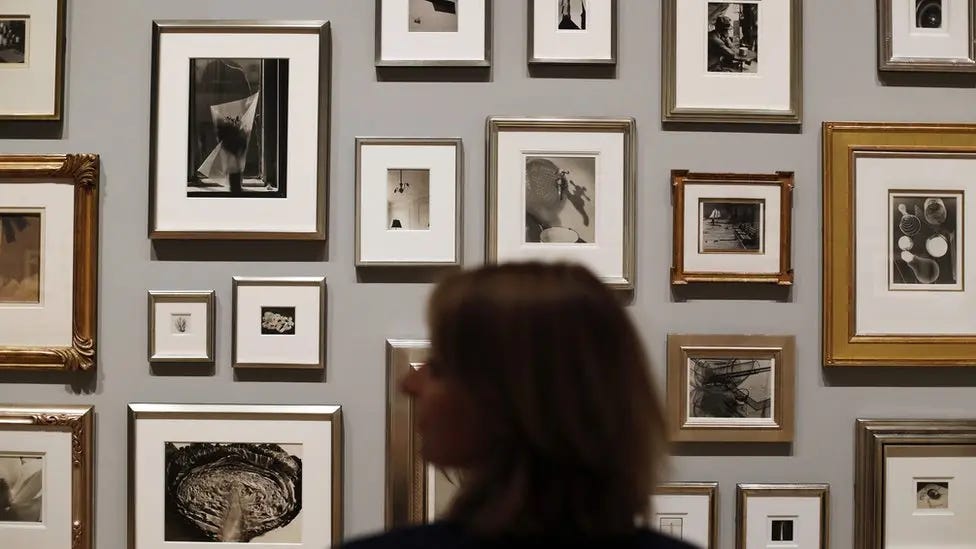
[AFP: Sir Elton John’s photographs in various frame styles]
In 2006 Joel-Peter Witkin (b. 1939) was commissioned by the New York Times Magazine to make photographs on the theme of hats. The series was called The History of Hats in Art. One of the photographs is an Alexander McQueen designed feather hat placed on a model referring to the Manet painting. It is a fairly large photograph. Approximately 17” x 24” - 43 cm x 60 cm. After six months in a box, it was time.
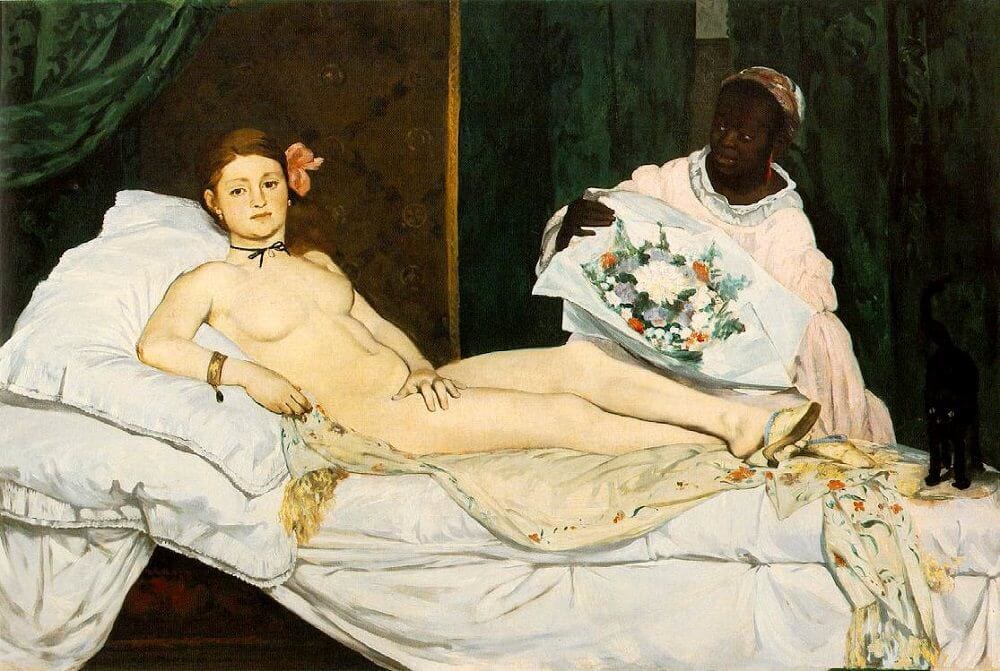
[Édouard Manet: Olympia - 1856]
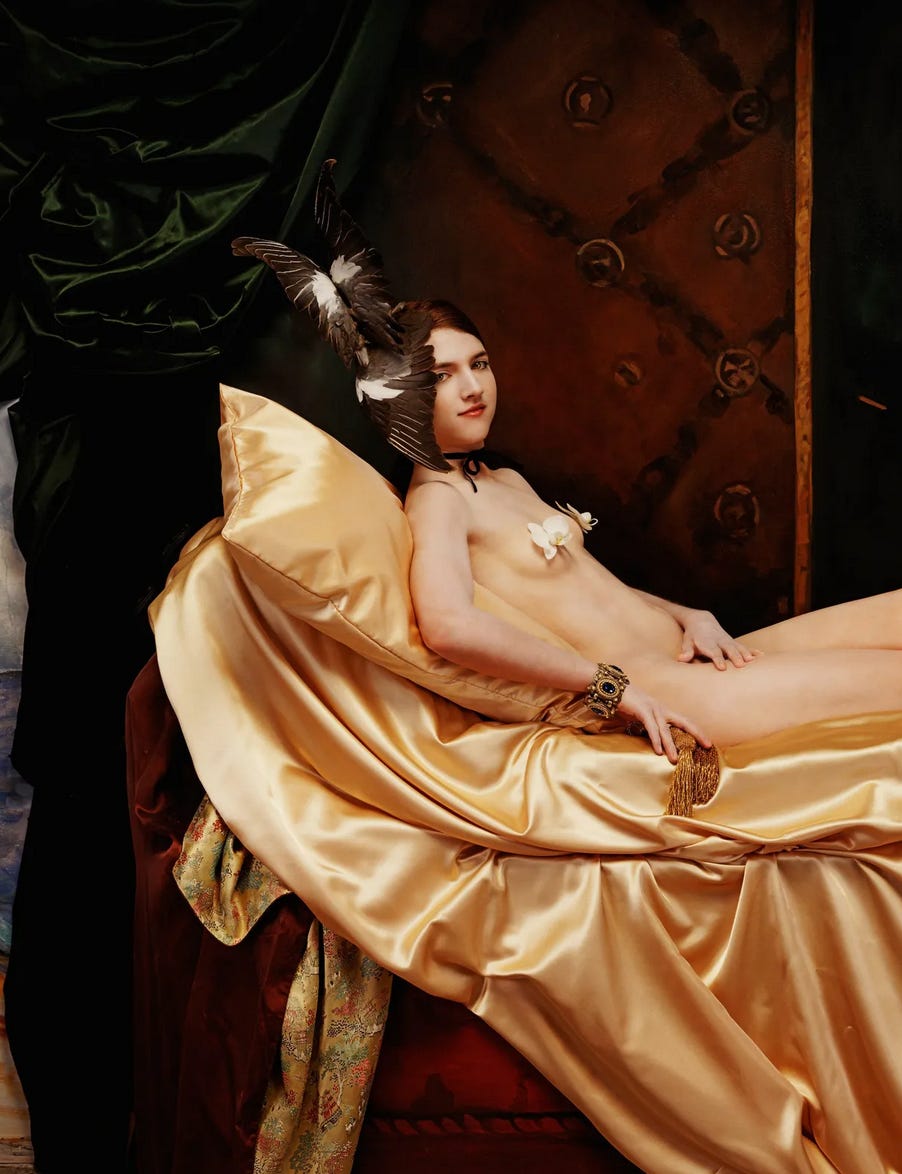
[Joel Peter Witkin (b. 1939): The History of Hats in Art, Manet, Alexander McQueen Feather Hat, 2006 - 23 5/8” x 17” - 60 cm x 43.2 cm]
I went out looking for a frame and found a horizontal landscape by an amateur painter, which was no doubt much loved during the time the painting was exhibited at home. When I bought it, it was in a stack of paintings, leaning against a wall in a cross between a junk-shop and an antique shop. There were things, which were expensive, but equally a lot was dirt cheap. a bit of masking tape, with a magic marker number, said the paintings were anywhere from €20.00 to €35.00. Mine was €25.00. It was a big frame. It was mostly in great condition, but after a bit of touching up and a bit of varnish, it was almost as nice as when it was first made. I cut the mat myself, but could as easily have ordered one at my local framers. I had a piece of regular glass cut. I didn’t bother with museum glass, as the photograph is hanging in a hallway with little natural light, or glare. I gave the painting - minus frame - to a charity shop to sell.
I like the result. I like it a lot!
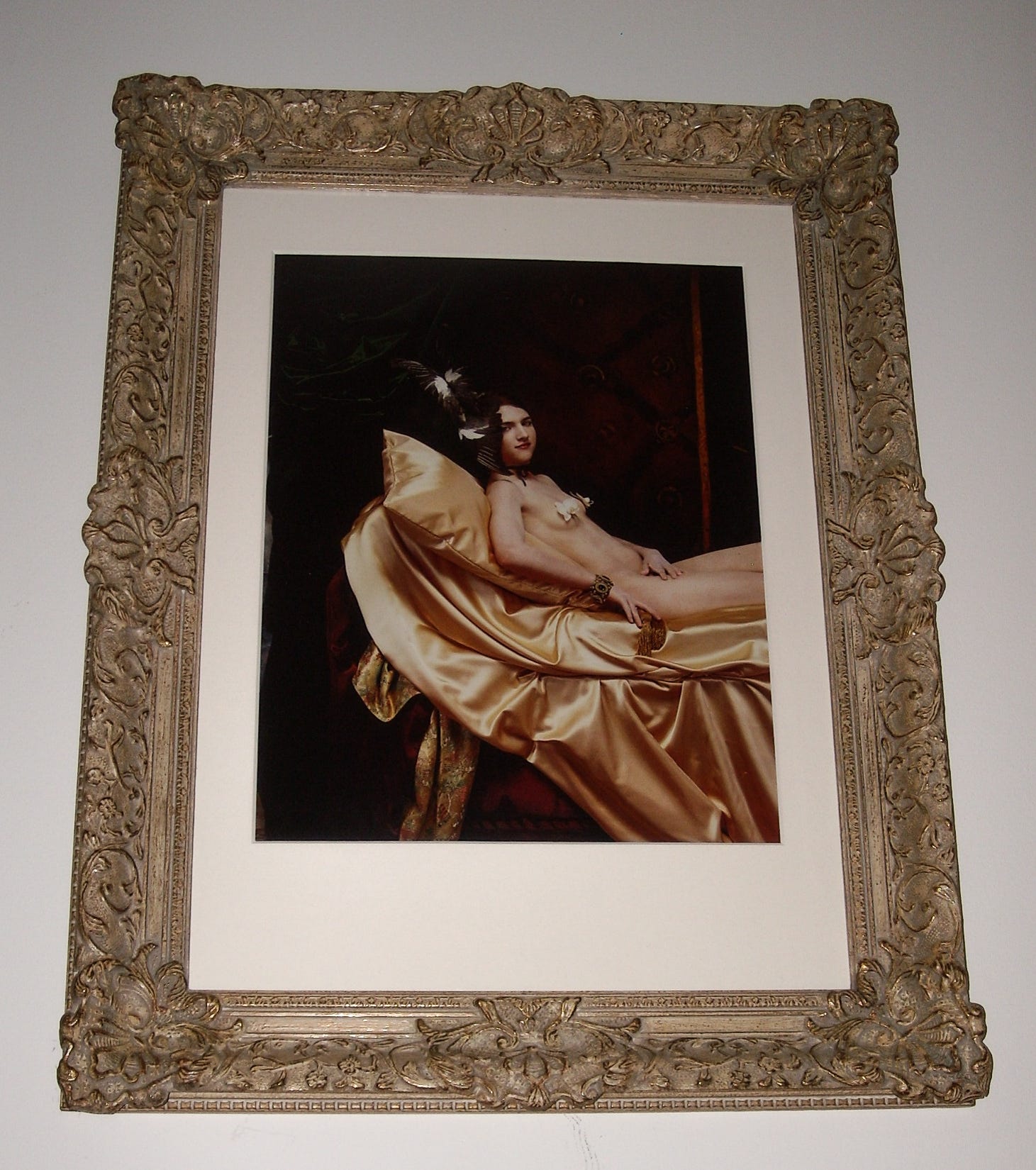
[Joel Peter Witkin (b. 1939): The History of Hats in Art, Manet, Alexander McQueen Feather Hat, 2006 - framed]
When you are out there roaming the flea-markets…. remember to also look at the frames. The right one, may work wonders with one of your own photographs, or one you have collected. Move to the advanced level and keep a little list on your phone of the sizes of your favourite photographs and bring a measuring tape, or borrow one in the shop. Your perfect frame is out there waiting for you!
Until next time…..
No posts
Comments
Nothing yet. Say the first thing.
Sign in to join the conversation.