
Welcome to The Happy Theologian.
Grace and peace to you from God our Father and the Lord Jesus Christ.
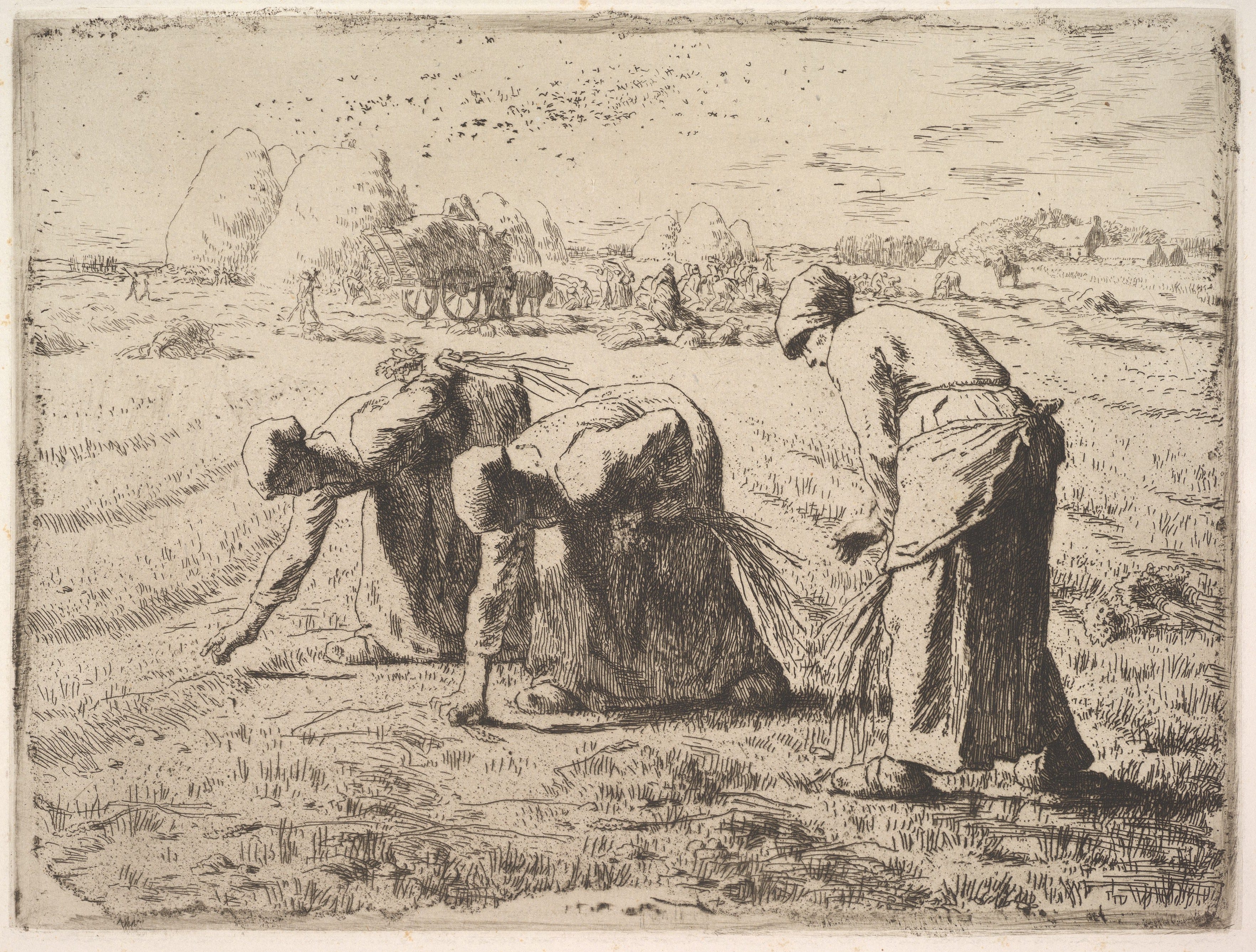
We live in a land of abundance. We have more food than we know what to do with, so much so that the USDA estimates 30–40% of the U.S. food supply goes to waste. In 2010, that represented approximately $161 billion worth of food. We also have enormous wealth. According to the Federal Reserve, household wealth in this country hit $169 trillion at the end of 2024.
Another Federal Reserve study found that Americans earning $150,000 or more were more anxious about paying bills than those in almost every lower-income bracket. Something doesn’t seem right. Many of us will lie awake tonight counting numbers instead of sheep. We’ll play the game of “what-if,” wondering whether we have done enough or forgotten something.
Then Jesus says, “Do not worry about your life.” He names food and clothing, and later, tomorrow itself (Matt 6:25, 34). For someone already worried about those things, simply being told not to worry isn’t comforting.
Barbara Essex points out that telling someone not to be anxious doesn’t work. She compares it to telling someone not to think of an elephant. The instruction itself can make us think about the very thing we’re not supposed to. So if you feel guilty for the anxiety you have, you’re not alone. Be assured, that’s not the response Jesus was after. It’s not a passage meant to produce guilt but to challenge us to consider what we place our trust in.
It’s easy to hear Jesus talking about food and clothing and picture who we think he is talking about. Essex reminds us that wealth doesn’t prevent worry. Rich and poor may have very different reasons to be anxious, but neither is immune.
America’s culture of consumerism sells the idea that the more stuff we have, the less we will worry. But Matthew 6 shows us that worry isn’t confined to any particular income bracket. John Stott once described looking through a magazine at glossy ads for champagne, cosmetics, and luxurious vacations. He noticed that every page made the same basic promise in different ways: what will we eat, what will we drink, and what will we wear. Worry isn’t a modern problem. We’ve been doing it for a very long time.
There’s a reason Jesus starts this section with “therefore.” Just before the birds and lilies, he talks about storing up treasures on earth and the impossibility of serving both God and wealth (Matt 6:19–24). Then comes, “Therefore I tell you, do not worry” (Matt 6:25). Matthew 6 puts possessions and worry side by side. What we think our possessions can do for us is part of the problem.
Jesus doesn’t tell us about the birds to make us do nothing (Matt 6:26–30). Birds aren’t idle. The point isn’t to stop working; it’s to stop trying to secure a future that was never ours to secure in the first place.
Trying to give up that control sounds hard when you’re following a five-year plan, fully funding your retirement, or believing that with enough foresight you can eliminate risk from your life. Jesus isn’t condemning planning, saving, or hard work. The problem comes when planning becomes an attempt to make tomorrow safe. He turns the assumption feeding our anxiety upside down: that God’s care for us isn’t quite enough without our micromanagement layered on top of it. Planning can prepare us for tomorrow. It just can’t guarantee tomorrow.
Biblical scholar Sakari Häkkinen once read this same passage to villagers in a poor farming community in Tanzania, people who sometimes had no food at all. The passage landed differently than it often does for readers like us. One woman said that if someone told her not to worry about food, she’d assume the person was being dishonest. Other villagers said a person who didn’t worry about tomorrow would be considered out of their mind. Häkkinen later makes an observation that brings the contrast closer to home: Jesus says it is “the Gentiles,” those outside Israel, who “seek after these things” (Matt 6:32). In that setting, Häkkinen suggests, those words could be heard as referring to the rich. Häkkinen also notes that, as a foreign visitor, he himself was perceived as rich.
That should humble us. We take comfort in “consider the lilies.” For people who are struggling to have enough, the words don’t necessarily sound like good news at all. Not because Jesus was wrong, but because he intends for us to participate in God’s provision. Stott puts it this way: the real problem “is not an inadequate divine provision, but an inequitable human distribution.”
So what does trust look like when we have more than enough? If God really is our Father, and if we really trust him with tomorrow, then our hands don’t need to stay clenched around everything we have. We can open them. And with open hands, we can become part of the answer to someone else’s prayer for “daily bread” (Matt 6:11).
Comfort, security, status—we spend a lot of energy trying to get them, and even more worrying that we might lose them. Jesus points somewhere else: “seek first his kingdom and his righteousness” (Matt 6:33). He’s describing God’s rule and the kind of life that reflects it. That’s not a promise that everything will work out or that we’ll end up with more. It changes what we’re after in the first place, and what we feel the need to protect.
The German pastor Helmut Thielicke, just a year or two after World War II ended, preached on this passage in a church still surrounded by rubble, with the memory of air-raid sirens fresh in his mind. His listeners had lived through the destruction of their cities and the loss of nearly everything that once seemed secure. Thielicke wasn’t offering them naive optimism. He was pointing out that trusting the Father never depended on trouble staying away.
It would be easy to stop here with “do not worry about tomorrow” (Matt 6:34) and hear Jesus saying, “Relax. God will take care of you.” But do we stop there? Or can we go further? If we don’t have to spend today trying to guarantee our own tomorrow, we have room to notice someone worried about getting through today.
What would it cost us today to believe God has already provided enough?
Not just for you, but through you?
Your Father isn’t asking you to secure your tomorrow. He’s asking you to trust him with it. And that trust should lead us to loosen our grip on the things we have and open our hands to share what we’ve been holding onto.
NOTES:
Akana, Tom. “Labor, Income, Finances, and Expectations (LIFE) Survey Report — July 2024.” Federal Reserve Bank of Philadelphia, June 2024, www.philadelphiafed.org/-/media/FRBP/Assets/Consumer-Finance/Reports/LIFE-Survey/cfi-life-report-july-2024.pdf.
American Psychiatric Association. “American Adults Express Increasing Anxiousness in Annual Poll; Stress and Sleep Are Key Factors Impacting Mental Health.” Psychiatry.org, 1 May 2024, www.psychiatry.org/news-room/news-releases/annual-poll-adults-express-increasing-anxiousness. Accessed 28 July 2026.
American Psychological Association. “Stress in America 2022: Concerned for the Future, Beset by Inflation.” APA, Oct. 2022, www.apa.org/news/press/releases/stress/2022/concerned-future-inflation. Accessed 28 July 2026.
Blomberg, Craig L. “On Wealth and Worry: Matthew 6:19–34—Meaning and Significance.” Criswell Theological Review, vol. 6, no. 1, 1992, pp. 73–89.
Board of Governors of the Federal Reserve System. “Financial Accounts of the United States — Z.1, Fourth Quarter 2024.” Federal Reserve, 13 Mar. 2025, www.federalreserve.gov/releases/z1/20250313/html/recent_developments.htm.
Carey, Greg. “Exegetical Perspective on Matthew 6:24–34.” Feasting on the Word: Preaching the Revised Common Lectionary, Year A, vol. 1, edited by David L. Bartlett and Barbara Brown Taylor, Westminster John Knox Press, 2010, pp. 405–409.
Essex, Barbara J. “Pastoral Perspective on Matthew 6:24–34.” Feasting on the Word: Preaching the Revised Common Lectionary, Year A, vol. 1, edited by David L. Bartlett and Barbara Brown Taylor, Westminster John Knox Press, 2010, pp. 404–408.
Goodwin, Renee D., et al. “Trends in Anxiety Among Adults in the United States, 2008–2018: Rapid Increases Among Young Adults.” Journal of Psychiatric Research, vol. 130, 2020, pp. 441–446, doi:10.1016/j.jpsychires.2020.08.014.
Häkkinen, Sakari. “Do Not Worry in Kinywang’anga: Reading Matthew 6:25–34 in a Tanzanian Village.” HTS Theological Studies, vol. 67, no. 1, 2011, pp. 1–7, doi:10.4102/hts.v67i1.840.
Macrotrends. “U.S. GDP Per Capita 1960–2023.” Macrotrends, www.macrotrends.net/global-metrics/countries/usa/united-states/gdp-per-capita. Accessed 28 July 2026.
Ng, Amanda E., et al. “Short Sleep Duration and Sleep Difficulties Among Adults: United States, 2024.” NCHS Data Brief, no. 559, National Center for Health Statistics, Apr. 2026, doi:10.15620/cdc/252438.
Pew Research Center. “How the Geography of U.S. Poverty Has Shifted Since 1960.” Pew Research Center, 10 Sept. 2015, www.pewresearch.org/short-reads/2015/09/10/how-the-geography-of-u-s-poverty-has-shifted-since-1960/. Accessed 28 July 2026.
Sawhill, Isabel V. “Poverty in America.” The Concise Encyclopedia of Economics, Library of Economics and Liberty, www.econlib.org/library/Enc/PovertyinAmerica.html. Accessed 28 July 2026.
Stott, John R. W. The Message of the Sermon on the Mount (Matthew 5–7): Christian Counter-Culture. The Bible Speaks Today, InterVarsity Press, 1985, pp. 159–173.
Thielicke, Helmut. Life Can Begin Again: Sermons on the Sermon on the Mount. Translated by John W. Doberstein, Fortress Press, 1963.
United States Department of Agriculture. “Food Waste FAQs.” USDA, www.usda.gov/about-food/food-safety/food-loss-and-waste/food-waste-faqs. Accessed 28 July 2026.
“Use of Sleep Aids Among Adults Age 18 and Older: United States, 2024.” NCHS Health E-Stats, no. 116, National Center for Health Statistics, 29 Apr. 2026, www.cdc.gov/nchs/data/hestat/hestat116.htm.
Thanks for reading The Happy Theologian! This post is public so feel free to share it.
Comments
Nothing yet. Say the first thing.
Sign in to join the conversation.