
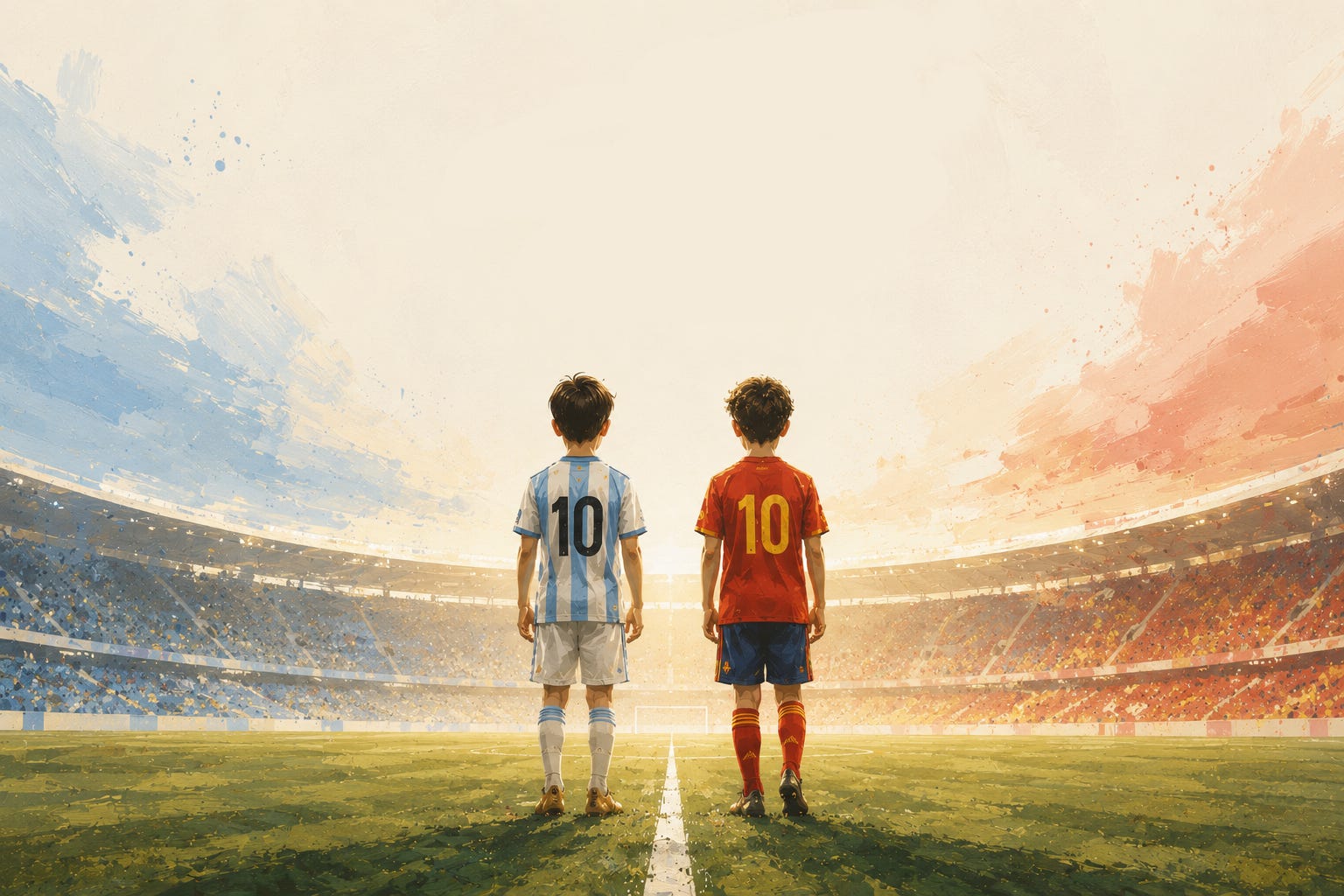
If there’s one thing people around the world have been talking about this weekend, it’s Messi and Yamal.
On one side is Lionel Messi, widely regarded as the greatest football player of all time, preparing for what could be his final World Cup. On the other is Lamine Yamal, one of the brightest young talents in the game, stepping onto football’s biggest stage for the very first time.
Like millions of others, I found myself watching highlight reels, reading about their childhoods, and wondering how two boys from different generations could become two of football’s biggest names.
It brought me back to a question I’ve often wondered:
We all know what it takes to become great — years of discipline, sacrifices no one sees, and countless hours spent mastering a craft. But perhaps the most important piece of the puzzle comes much earlier.
Long before the world notices, someone believes in them first:
A parent who believed in you before you knew how to believe in yourself.
A scout who took a chance on possibility instead of certainty.
A coach who believed before there was proof.
A mentor who opened a door at exactly the right moment.
Messi’s story is a perfect example.
As a child, he was diagnosed with a growth hormone deficiency. His family couldn’t afford the treatment he needed, and the future that now seems inevitable was anything but.
Then Barcelona took a chance.
It made me wonder…
How many extraordinary children never had their own Barcelona?
How many gifted musicians, athletes, artists, scientists, or entrepreneurs quietly disappeared — not because they lacked talent, but because no one around them could see what they might become?
Or perhaps they could see it, but the risk simply felt too great.
….
That question stayed with me because, in a much smaller way, it reminded me of my own childhood.
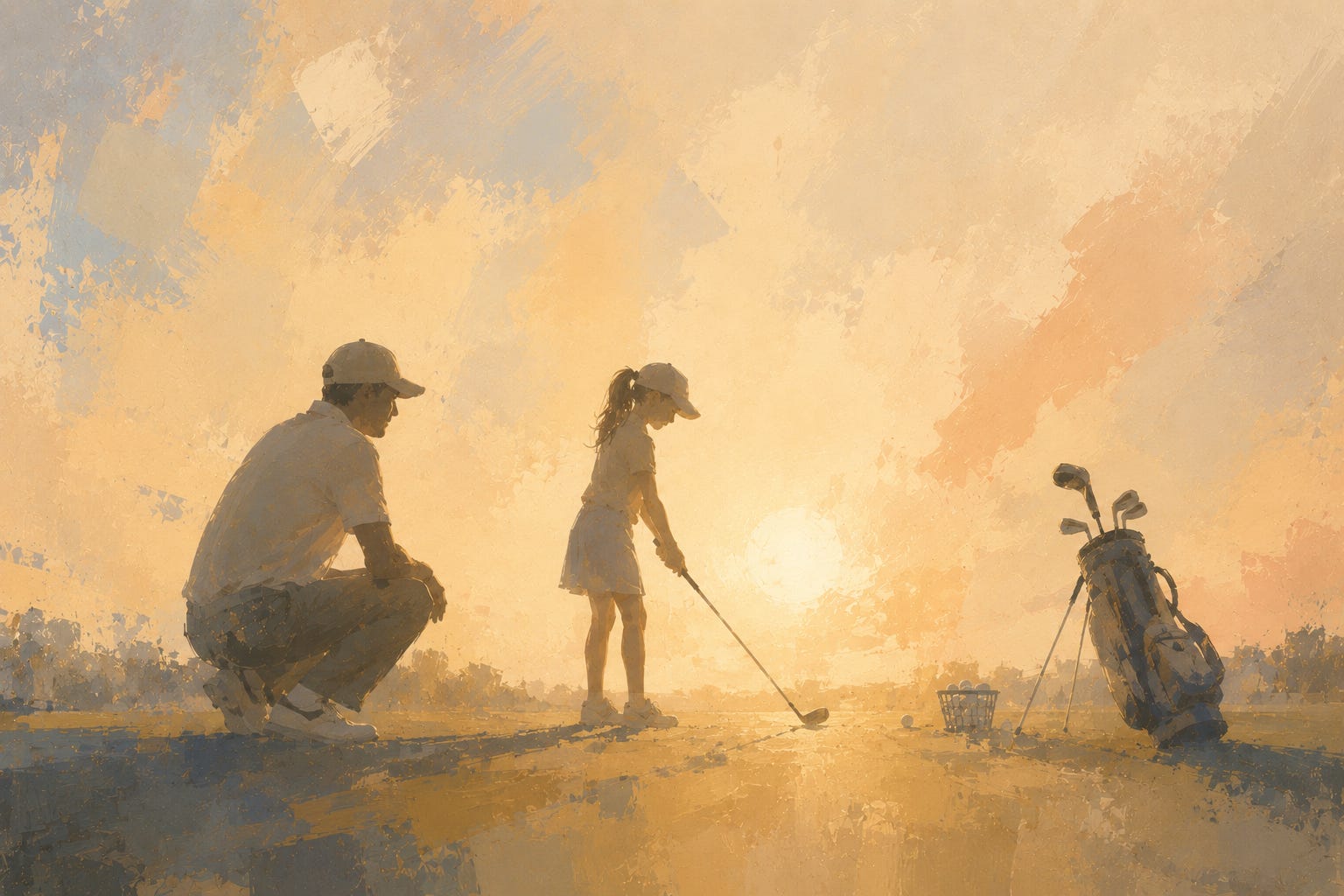
My dad had been a national athlete himself.
When I was young, he genuinely believed I could become a professional golfer.
He didn’t just encourage me. He invested in that possibility.
He paid for coaching, bought me clubs and equipment, drove me to practice, and even wanted me to leave mainstream school to attend a golf academy so I could train full-time.
To him, it wasn’t a crazy dream. It was a future he could genuinely imagine.
My mom saw the world differently.
To her, becoming a professional athlete wasn’t simply difficult. It was a one-in-a-million chance. She didn’t agree with the path my dad had planned for me. My mom wanted me to focus on school. My dad wanted me to spend as much time as possible at the driving range. I still remember them arguing about it.
My mom wasn’t trying to limit my dreams. She was just trying to protect me from building my life around a future with no guarantees. And education felt like the safer path.
As a child, I couldn’t possibly imagine the highest potential each path might lead to. I simply followed the future the adults around me believed was possible.
What I understand now is that, as children, we don’t need certainty. We need someone who believes in us before we know how to believe in ourselves — someone who nurtures that belief, encourages it, and helps it grow until, one day, it becomes our own.
Looking back now, I don’t think either of them was wrong.
My dad saw possibility. My mom saw probability.
Both were acting out of love. Both wanted the best for me. But they imagined two very different futures.
Sometimes I wonder who I might have become if I’d followed the path my dad imagined.
Would I have become a professional golfer? Maybe.
My dad certainly believed I could.
I was pretty good, and I was already on a path that might have led somewhere extraordinary.
Of course, there are no guarantees. Elite sport is brutally competitive.
But the thing about the roads we never take is that we’ll never know how far they might have led.
That realization made me think about something I’d never quite put into words before.
Children don’t just inherit their parents’ genes. They inherit the size of the future their parents can imagine for them.
Some children grow up believing they could play for Barcelona. Others grow up believing people like them don’t do things like that.
Some children are encouraged to dream globally. Others are encouraged to stay safe.
Neither child chooses those beliefs. They simply inherit them.
Perhaps that’s why the people who shape our lives matter so much — parents, teachers, coaches, mentors.
Before confidence becomes our own, it usually belongs to someone else first.
Someone believes in us before we’ve achieved anything. Someone sees a future we can’t yet see ourselves. Of course, not everyone is lucky enough to have that person.
Sometimes the people who love us most unintentionally make our world smaller because they’re trying to protect us.
They’re not choosing between right and wrong. They’re choosing between possibility and security. And that’s one of the hardest decisions any parent will ever make.
The beautiful thing is that our story doesn’t end with the beliefs we inherited. At some point, we become old enough to ask ourselves a different question.
What if the future I inherited isn’t the only future available to me?
Maybe growing up isn’t about becoming fearless. Maybe it’s about replacing the beliefs we inherited with beliefs we’ve chosen for ourselves.
Perhaps that’s what Barcelona really represents — not just a football club, but an environment where potential is recognized before it has proof.
An environment that says, “Let’s find out what you’re capable of.”
We have to become the person who believes first. Because while we can’t rewrite our childhood, we can decide what we believe about our future.
And perhaps that’s where the next version of ourselves truly begins.
If this essay made you reflect on the beliefs you inherited, the dreams you let go of, or the future you still want to create, our Self-Belief Journal was designed to help you explore those questions more deeply.
Become a paid member and enjoy unlimited access to our digital library of 100+ journals, planners, printables, and new releases all year round.
Comments
Nothing yet. Say the first thing.
Sign in to join the conversation.