
The start of the year disappears without a trace. For me, in a blur of illness and travelling, busy marketplaces, vast deserts, but also the familiarity of my own bed, my partner’s sofa, endless Strepsils and mugs of Lemsip, uncomfortable nights and an unending daisy-chain of symptoms. From here I am thinking about the possible trajectories of the year ahead, and what it means to make a map.
Maps give us a way of finding certainty in unknown landscapes; they also give us ways of showing others where we’ve been and what we’ve found out, or to indicate a direction of travel or an intention towards progress or movement.
Let me tell you about some of my maps.
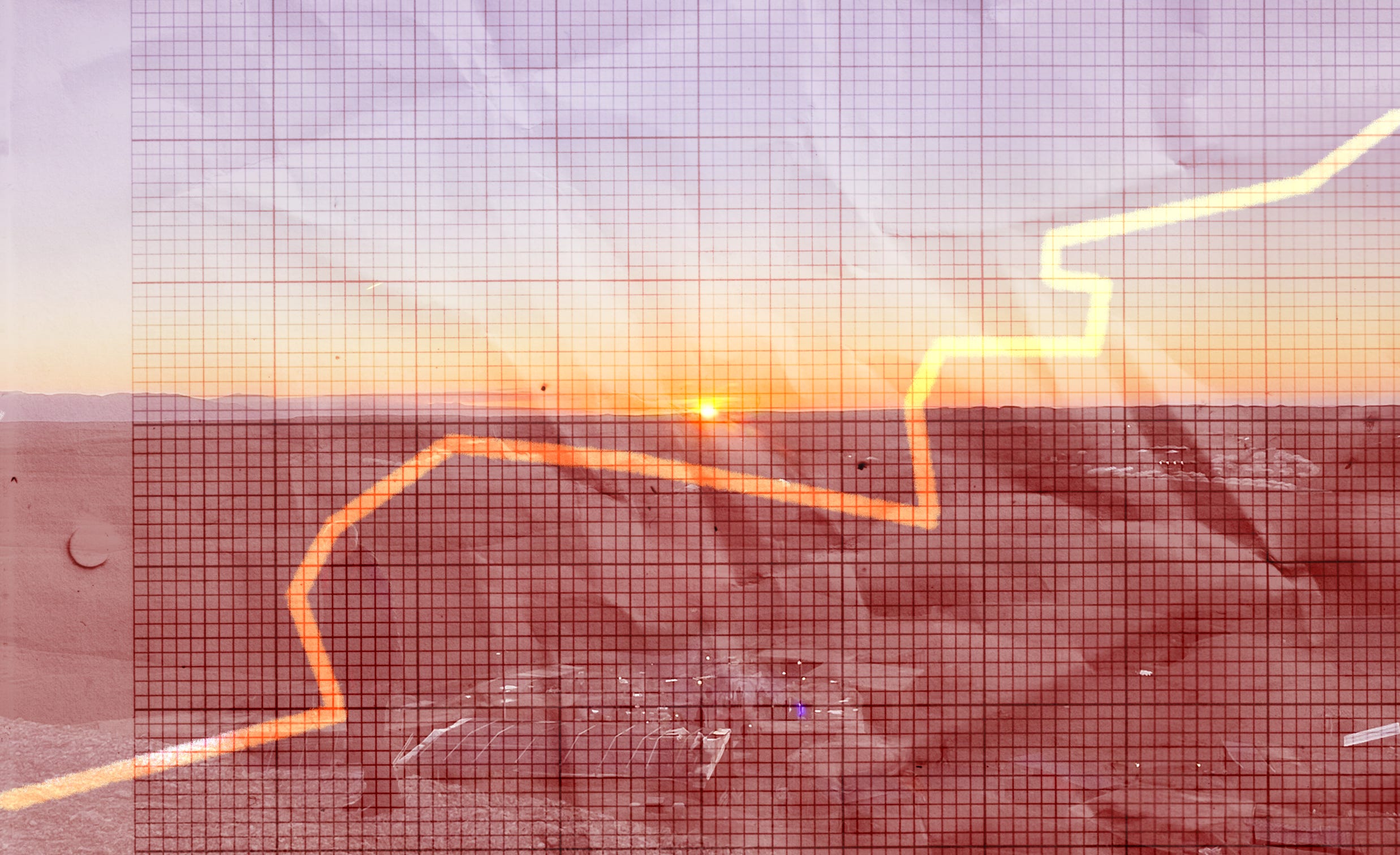
I have hundreds of moles on my body. Sometimes I think about connecting them together with lines to form constellations. It’s my responsibility to keep track of them in case they become troublesome and need removing. I had my moles mapped by the NHS - a series of photos of me in my underwear, some of my whole body, some looking closely at the gap between my toes. The photos are my map. Every so often a new mole appears, and I wonder if it happens to mark an event or a feeling or a change - an inky blot on my paper skin to make a note of something. Every so often one needs taking off, and so the map is constantly being adjusted.
One of the things I have spoken often about to my therapist is the feeling of living life without a roadmap. The consequences of living a life that doesn’t follow a standard template are twofold: exposure to uncertainty (and the discomfort and vulnerability this brings), and the gift of freedom (and the expanse and possibility that this opens out).
I seem to carry a deeply held assumption that someone might make a road map and give it to me; someone might explain what I should do in the next few years of my life, and point out the choices I should make. I have felt the lack of this as an empty space, gaping and diffuse and scary - an abyss where the uncertainty becomes paralysing. At the same time, I have no desire to copy someone else’s map; I just often long for someone to take my fear away.
One day it dawned on me that I could sit down with the help of trusted others and make a map for myself. Not one that is based on certainty, but that is a gesture towards directions I’d like to travel. Sometimes a map isn’t fixed, definite and prescriptive, it can be more about laying down an intention: seeing the shape of your desires so that you can begin to consider how you might make them into a journey that you can travel along, with agency.
A few weeks ago when I was in Marrakech with my partner, we were picked up in a minibus for what was expected to be a sunny hike in the mountains. As we drove higher, what emerged were flurries of snow, rockfalls in the road, and a singsong in a damp and smokey roadside restaurant, the windows steamed up, our clothes all wet at the edges. There was even a chocolate mousse. My partner pointed out that our driver never once put his satnav on. I am usually a nervous passenger who flinches overtaking a lorry on the M5 motorway, but driving up this unknown mountain, sitting up front as the minibus swerved to avoid boulders and cars, as I helped to clear the fogged up windscreen with a tissue, I felt unexpectedly safe and unafraid.
I’ve been ill for the last five weeks. During this time there have been overlapping symptoms - a relay race of viruses and food poisoning and emergent symptoms that have needed investigating. There have been internet searches and requests to doctors to try and make sense of this experience and map it. There have been appeals to my partner, parents and friends to ‘sense check’ how worried I need to be, and what medicine I should buy. The maps of this illness have been about trajectories, lengths, frequencies: How long will it take to get better and what should I expect along the way? Going to the doctor and reporting what’s happened to you is a little bit like laying out a map of yourself - pointing to areas of the body where things are occurring, telling the story of how you’ve been feeling, when it started and how long it’s lasted, what state you’re in now that you’re here. A doctor is like a specialist navigator within radio frequency who is charting your progress from a distance - you can check in with them, they can triangulate your coordinates, see if you’re going off-track, call in support if you need it.
As an artist/illustrator/facilitator, I am often working alongside others to make maps. I am lucky that I tend to spend a lot of my working life with researchers, and mapping seems to be a creative mode that is useful in this context to help record, translate and share knowledge. I’d like to share with you some of the maps I’ve made for and with my clients, and the needs that they arose out of:
Even though research in certain disciplines can tend towards making sense, achieving a sense of order and clarity, or finding mastery, sometimes it’s necessary to show how messy the terrain of emerging knowledge can be. We might think of maps as being rationalising by nature, but what if the subject matter is chaotic and full of overlapping connections? I worked with food researchers to create a ‘Messy Map’ which seeks to show how complicated co-production within the UK food system can be.
There are instances when you want to create a map that others can follow, so that they can learn from your findings and replicate your journey. Here, bold, simple guides can come in handy, like this illustrated checklist on practical considerations for transformative food research.
Mapping can be about signposting, and helping others find opportunities, work and support, in a terrain that is unclear and often not well signposted, so an interactive diagram that maps and signposts support can be helpful, like this Creative Freelancers’ Resource Map.
And the act of mapping itself can be a process that helps people share their knowledge and experience in a language or format that uniquely communicates their story. This is what we focused on when I co-designed and facilitated a project on Creatively Mapping Flood Risk with a local community whose homes were at risk of flooding. Residents mapped their lived experience, knowledge, fears and memories relating to flooding, in maps that were incredibly diverse and creative: a clock made from bike wheels; a knitted sculpture that replicated a tidal surge; a charcoal memory of a walk…
It turns out a map can be just about anything, and perhaps that’s why we’re drawn to them. They can be fixed and certain, or they can be emergent and living, changing as we learn about new internal and external worlds.
Thank you for reading - this is my first newsletter in a long while and I hope to write much more often in 2026! I’d also love to hear about your maps - send me an email or a Substack message in the app!
Hannah
No posts
Comments
Nothing yet. Say the first thing.
Sign in to join the conversation.