
Anyone who has wandered the edge of Istanbul’s Spice Bazaar, or followed the tramway inland from Kadıköy port, will have caught the rich scent of Kurukahveci (coffee roaster) Mehmet Efendi’s wares. These two outlets draw queues of customers who come not so much for the quality of Mehmet Efendi’s coffee, but for the theatre with which it is dispatched. Behind the counters, rows of workers toil like Santa’s elves, weighing out the coffee, packing it in paper and selling it, all within seconds. At the original store you can see the huge Heath Robinson-esque machine in the background, still thumping and grinding out the coffee.
I am not a regular coffee drinker myself, much less a Turkish coffee drinker - the sludge at the bottom is a step too far for me. Those who are inform me that Mehmet Efendi’s coffee is mediocre (although the smell, even for a non-coffee drinker, is enchanting). Its branding, however, is exemplary, from the rustic charm of these two Istanbul outlets, to the logo that is stamped onto each packet. Designed in 1932 by the legendary Turkish graphic artist İhap Hulusi Görey, and updated in 1993 by Bülent Erkmen, it is a truly iconic piece of branding which manages to look both retro, and bang up to date. The Spice Bazaar store, too, is a triumph of branding, with its art deco styling by the architect Zühtü Basar.
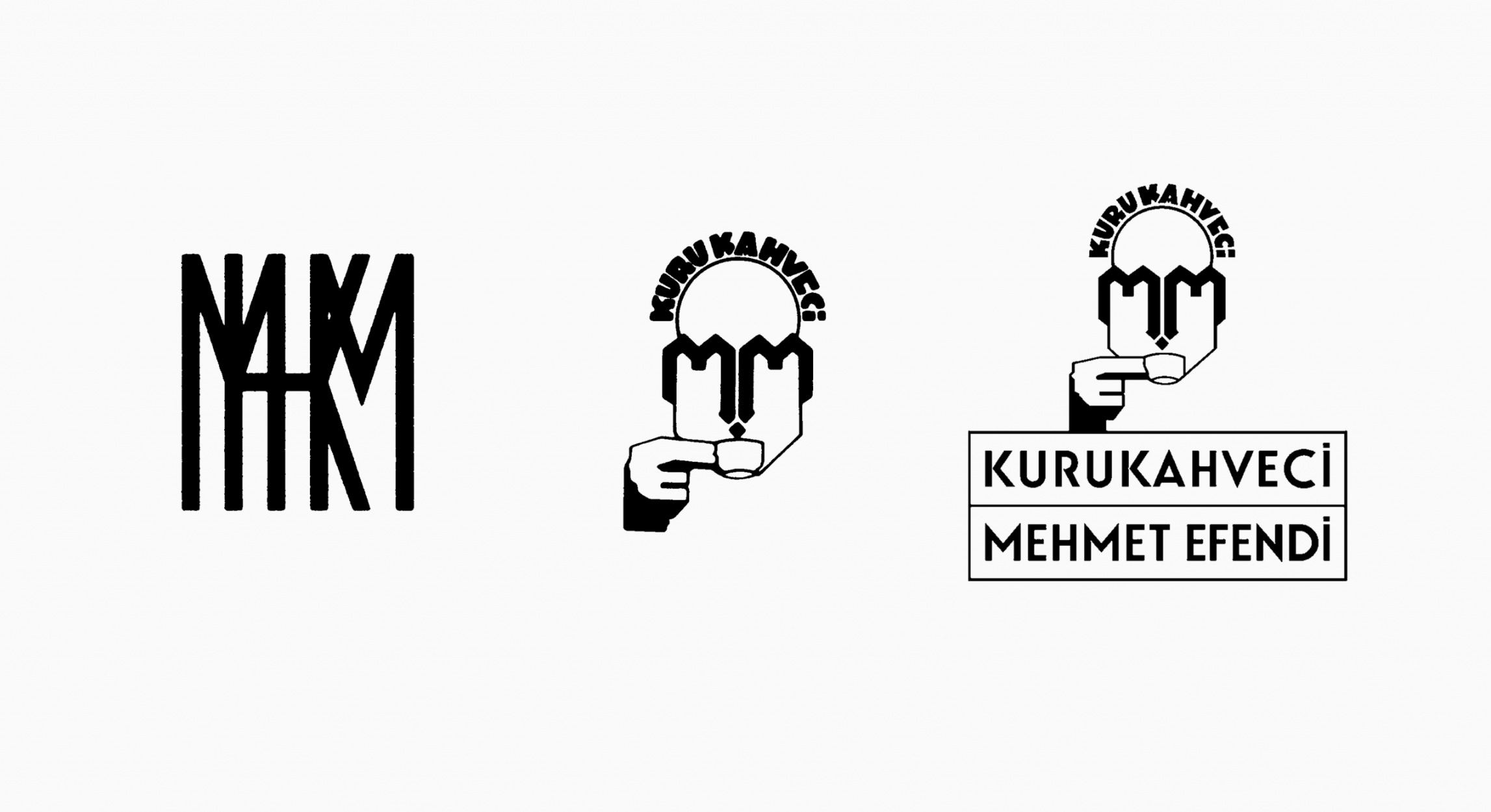
Part of Kurukahveci Mehmet Efendi’s charm is that it is nearly impossible to find it outside Turkey. You can buy it pre-packaged in Turkish supermarkets or come to one of these two shops to buy it from source, and otherwise that is it. But you’d be forgiven for thinking otherwise if you were to happen upon these cafes in London’s Edgware Road and Whitechapel districts.
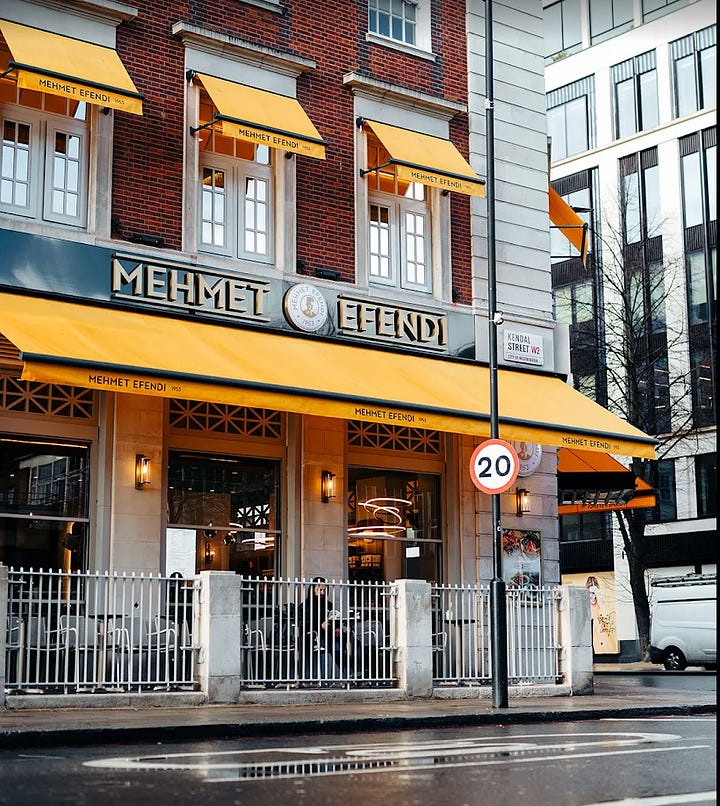
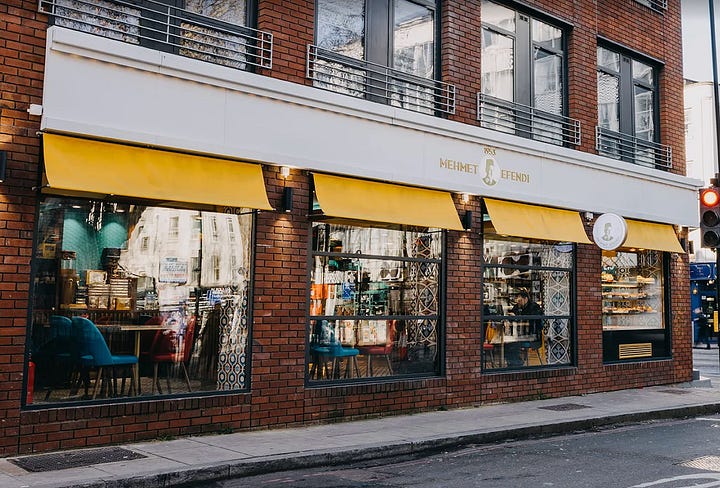
These are the London outlets of Mehmet Efendi 1953, an entirely different brand which claims links back to the southern Turkish city of Gaziantep, but is in fact a British company registered to an address in Green Lanes - London’s most Turkish mahalle. This version of Mehmet Efendi focuses on desserts, although it also sells coffee, and while its logo is different, its font is strikingly similar. Similar enough that Kurukahveci Mehmet Efendi has opened a trademark infringement case at the UK’s High Court, arguing that it is using its brand identity to mislead British customers.
Mehmet Efendi 1953’s defence rests on the assertion that ‘Mehmet’ and ‘Efendi’ are a common Turkish name and honorific respectively, and therefore cannot be taken as a brand signifier. The case, which was opened in May 2025, is still ongoing. But this is not the first time that Kurukahveci Mehmet Efendi has been embroiled in a legal case in Europe. Last August, it won in Germany’s Federal Court of Justice, against a wholesaler who was buying its coffee in Turkey and reselling it on the German market. In that case, Mehmet Efendi won on a technicality in Turkey’s customs agreement with the EU, under which Turkey is not part of the bloc’s common internal market but merely cooperates with it. That case set a precedent for any European importer bringing branded Turkish goods into the bloc, stipulating that they must gain the consent of the trademark holder to market them there.
That technicality could yet change if the long-discussed update to the customs agreement comes to fruition (Turkish manufacturers hoping that they may one day be able to mark their goods as ‘Made in EU’, which would almost certainly mean they would lose some control over their trademark exports). Meanwhile, the London lawyers’ lengthy and costly debate over whether a word that roughly translates as ‘Sir’ is trademark-able is likely to drag on for many months more.
Thanks for reading Turklish! This post is public so feel free to share it.
Comments
Nothing yet. Say the first thing.
Sign in to join the conversation.