
Andy Burnham, the renegade former Mayor of Manchester, is set to become Britain’s seventh prime minister in a decade. He swept down from the north in a Labour Party coup so swift and clinical that nobody has had much time to question it. Bar a major upset, he is likely to take office by the middle of this month.
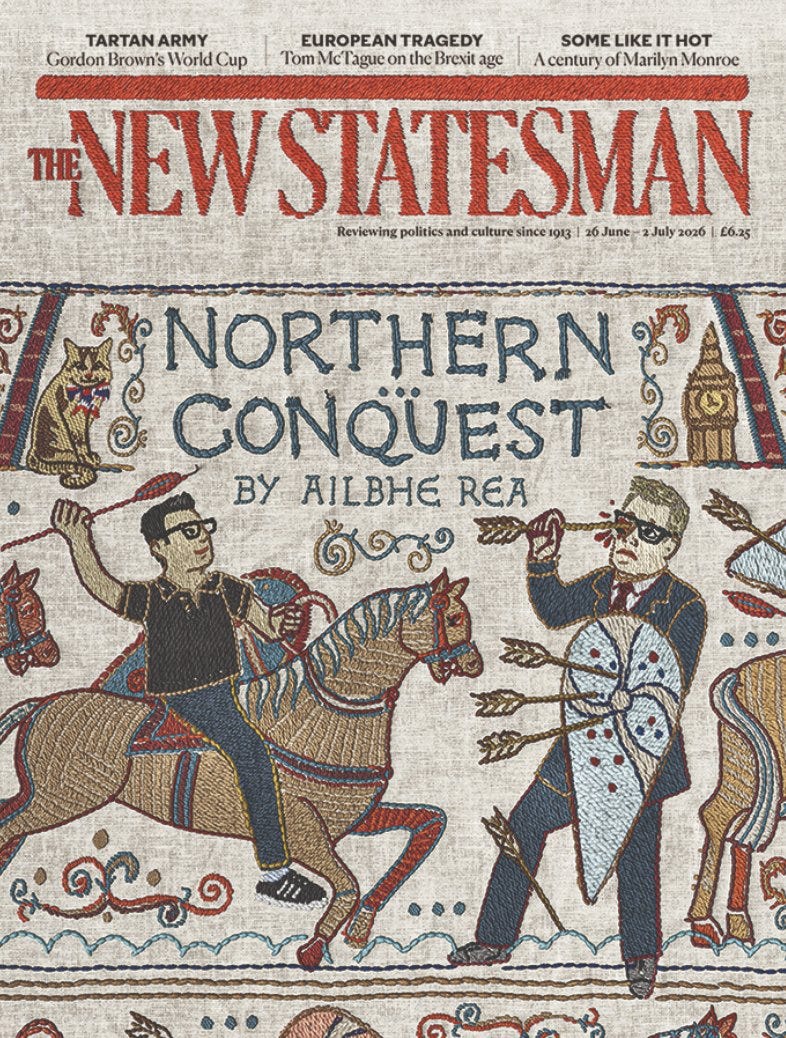
On Monday, Burnham gave a landmark speech in Manchester, more like a new prime minister’s address than the maiden speech of a backbencher. The striking thing was not his policy ideas - they were light on the ground - but his focus on municipal-style politics, and the city as the centre and building block of national political life. He has termed it ‘Manchesterism’, an amorphous philosophy with one clear stated aim: to devolve more power to the cities.
But Manchesterism is a political trend goes far beyond than Manchester and the UK. Across Europe, local mayors are using their often limited municipal powers and personal charisma either to fight back against their populist national leaders, or to pull away from the centre of their own party. In Istanbul, Ekrem İmamoğlu, the most popular figure in the opposition CHP, came from nowhere in the 2019 local elections to beat Erdoğan's candidate, overcame the president’s attempts to cancel his victory, and went on to win another term in 2024. He has used the city, Turkey’s biggest metropolis, both to win over a large cross section of the country; Istanbul is home to millions of internal migrants, including Kurds and conservative Turks, and they have benefitted from his investment in public spaces and transport. He also used his platform to position himself as the country’s most outspoken critic of Erdogan - a sting for the strongman, since he himself had been mayor of Istanbul in the 1990s. İmamoğlu was set to stand against Erdoğan in the next presidential elections in 2028, but last March he was arrested and remains in prison, now barred from running for office.
In Hungary there is a happier tale. Under Viktor Orban, the mayor of Budapest, Gergely Karacsony, led the fightback from the city. He won against Orban’s incumbent candidate in the 2019 local elections, and set about turning the capital into an ‘island of freedom’, seeking direct EU funding and pushing back against restrictions from the centre. He then set up the Pact of Free Cities with the mayors of Prague, Warsaw and Bratislava, all in office in opposition to populist national governments. The Pact has now expanded to 49 cities, including 10 in the US that joined this year. It promotes and supports progressive values and open society. And it can work: in Hungary, Karacsony’s pushback led, finally, to the ousting of Orban earlier this year.
Burnham is far from the underdog in Westminster, given that he is the all-but-anointed heir of the party mandated to rule for another three years. But he is carrying the spirit of an opposition upstart as he moves towards office, having trounced Reform in Makerfield, where only 6 weeks earlier Farage’s candidates had taken all of the council seats up for election in the same area. Burnham’s fight isn’t against the centre of power but against the fringes, and the forces that are working there.
In 2024, exactly one month after Starmer took office, small-town England exploded in destructive fury stoked by rumours and half truths spread on social media about a fatal stabbing attack in Southport. Memorial gatherings turned into anti-Muslim and anti-migrant riots across England and the police struggled to keep control. It is clear that the misinformation push was organised and malignant, and it is known that one of principal propagators, Stephen Yaxley-Lennon, or Tommy Robinson as he calls himself, has links with the Kremlin. It knocked the new prime minister off balance and he never fully recovered.
If the same was to happen to Andy Burnham while he is still steadying himself in his suddenly gained promotion, it could set him off course, too. And if he is as unsteady and unsuccessful as PM as his predecessors, then the UK could be set up for more instability and pain. It doesn’t take much: an already polarised society, a few inflammatory tweets, a few bots promoting them, a flash-bang of violence on the streets and British politics is reeling. The hard truth is, domestic politics, foreign relations and national defence are fully intertwined in 2026; Burnham cannot address any one without the other two.
Can Mayoralism be an answer to that challenge? It can certainly start to address Britain’s social issues, the tinder that hostile forces can ignite so easily. Everywhere in the country people feel like they’re getting poorer, but people outside London also feel like they’re on the peripheries, ignored economically and culturally by national elites. The dumping of asylum seekers in cheap housing in poor towns in the Midlands and North is a shockingly short-sighted policy, bound to erode trust in politicians further. When people feel like their lives are controlled by an opaque centre, social anomie sets in. Devolving power to cities, if done right, rebuilds a sense of civic belonging that cuts through class and ethnicity. It works in Manchester because that is a place that has always had a strong civic glue; the test for Burnham and his political philosophy is whether it can be projected out to the smaller towns too.
Crucially, though, the centre still needs to hold. National defence and security are unlikely to be policy areas that come naturally to Burnham, but if his Manchesterism experiment is to see success, he needs to take office with a plan in place to tackle the threats facing Britain from outside, as well as the problems within.
Thanks for reading Turklish! This post is public so feel free to share it.
Comments
Nothing yet. Say the first thing.
Sign in to join the conversation.