
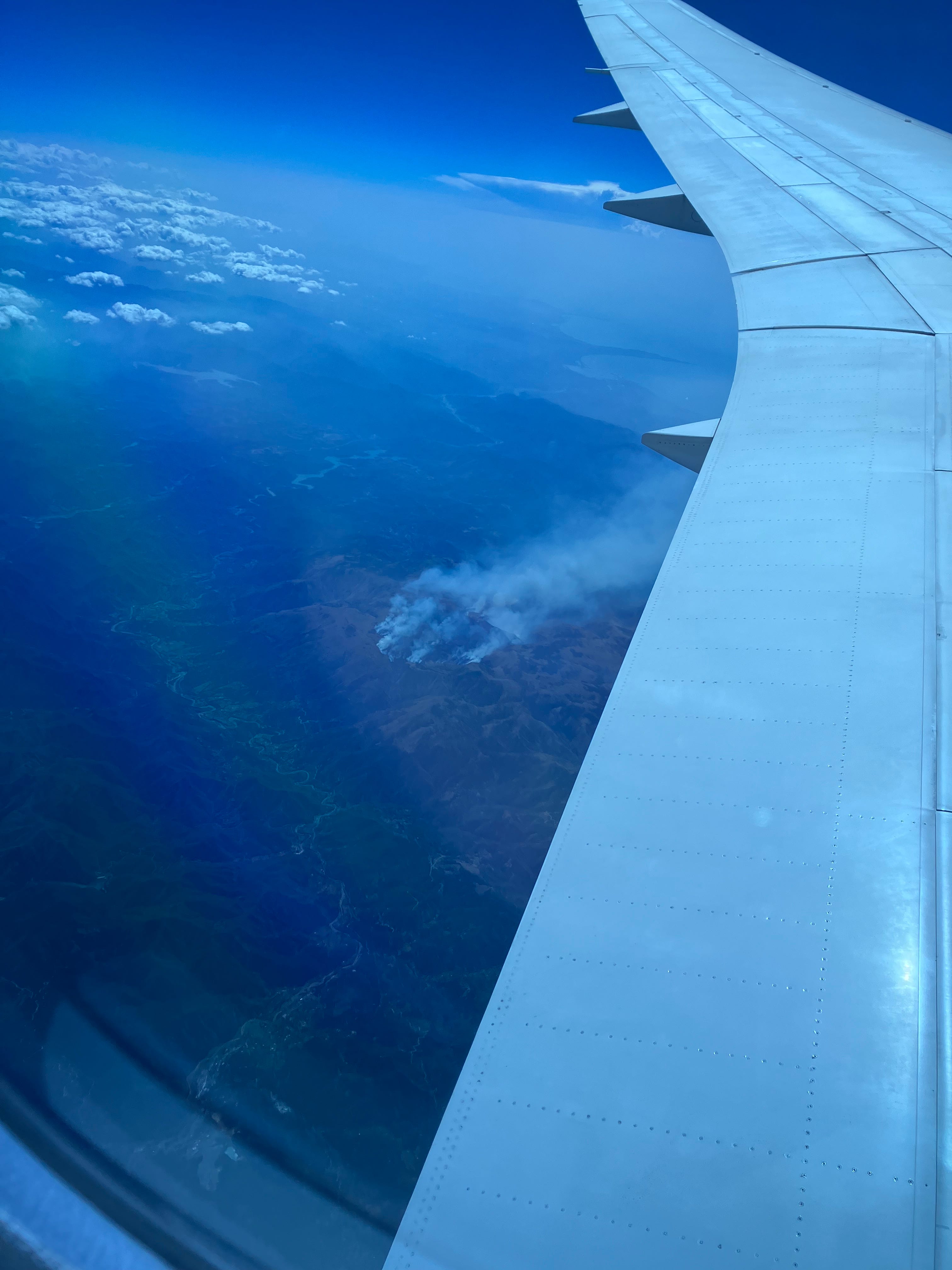
I have just returned to London from an assignment in the Gulf, and on the way home the plane flew across some of the parts of Europe that have been worst hit by wildfires. From my window seat I noticed the first one close to Tirana, the Albanian capital. It was a crescent of fire on the summit of a mountain, the licking orange of the flames visible even from 12,000 metres up, and a massive trail of white smoke reaching towards the Adriatic coast. As the plane flew north, over Montenegro and then Croatia, I spotted many more blazes, some of them huge and others thin plumes, looking like the smoke signals of Vatican cardinals.
Between the fires I could see the toll that months of drought has exacted on this corner of Europe. It’s a region I know well - I’ve been travelled and reporting in the Balkans for twenty years, and its geography has always enchanted me. It’s a place of green mountains, turquoise rivers and charming old cities, fringed by the crystal waters of the Adriatic. Although it gets hot in the summertime, the higher climes were always cooler, and the winter rains and snow soaked the earth to fuel the new greenery that pushed up in the spring.
Now, large parts of those mountains look like sandpits from above, patches of uniform beige rippled with what looked like sand dunes. The rivers and lakes had shrunk back from their banks, turning into thin trickles rather than the gushing waterways I know. (The Danube, one of the region’s major rivers, has dried up so much that Nazi shipwrecks on its bed have broken through its surface.) Further north, where the mountains give way to flatter plains, the land has taken on the hues and patterns of desert camouflage. Close to Banja Luka, in northern Bosnia, I saw a fire coming dangerously close to a village, the smoke drifting right over the houses.
The irony is clear: I was watching all of this from the comfort of an air-conditioned tube hurtling through the sky kilometres above, and pumping out the very fumes that are warming our planet. Yet the climate emergency is one of those things that we need to be confronted with in order to fully understand; like smoking cigarettes, the effects of our lifestyles on the environment take root so gradually that it is impossible to imagine the causal link until it is there, staring us in the face.
I saw it for myself first in 2021, when I was dispatched to cover forest fires in the Turkish resort of Marmaris. That summer was brutal. Blazes broke out across the Mediterranean, and the Turkish news channels speculated that saboteurs were at work. But the causes seemed to be more prosaic: weeks of scorching temperatures and no rain had dried the forests to tinderboxes, and then, during Bayram week, holidaymakers had flooded in leaving glass detritus behind. The concentration of scorching solar rays through a single shard could start a fire that would set the whole hillside alight in minutes. With hotels in the centre of Marmaris booked out - the town is a favourite with British holidaymakers - I was staying in the smaller resort of Turunç, a little further down the peninsula, accessible by a sole road that winds through the forest.
The fires announced themselves in Turunç suddenly. The electricity cut out in the mid afternoon, and when it hadn’t come back an hour later I went downstair, where the receptionist told me that a fire further along the peninsula had brought the power lines down. It was unbearable to stay inside, so I sat on the beach, but soon ash started dropping from the sky. Then an orange glow rose behind the mountains as the fire reached the outskirts of town. I didn’t sleep that night: the electricity never came back and the heat and smell of the smoke pressed down on me as I tried to keep cool by taking cold showers and then laying on the tiled floor. I left the next morning by boat - the road was engulfed by flames - and saw that mile upon mile of the peninsula was on fire.
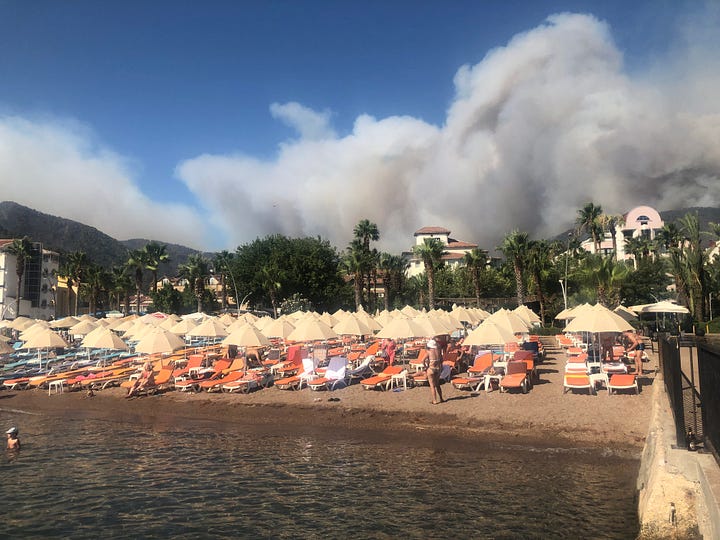
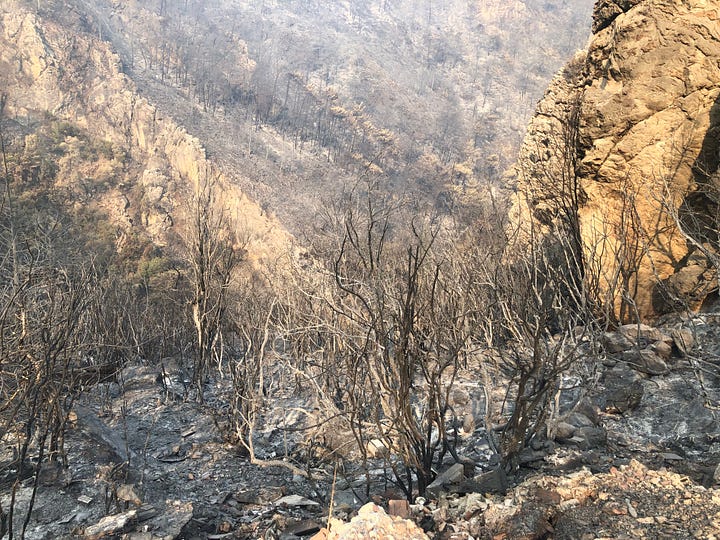
A week later, after the fires had consumed everything and burnt out, I returned to Marmaris to report on the aftermath. The landscape that had once been so verdant had turned to a washed out sepia, bleached rock stripped bald of its adornments. The blazes had ripped through villages and farms, and all but destroyed the local pine honey industry. It will take decades for the forests to grow back.
After that, I noticed that the summers were getting hotter year by year, although I can’t be sure whether the warming actually started in 2021 or whether I was jolted awake to it by the fires. The increasingly unbearable summers were among the reasons why I finally left Istanbul, and I was looking forward to one of London’s cool, rainy summers. But the climate crisis has reached here, too. The UK has suffered back to back heatwaves and a drought that has turned its parks into scrubby yellow patches of the kind I’d got used to seeing in the Middle East. As I took off from Heathrow a week ago, I could have fooled myself that I was in the Gulf already. (Ironically, when I actually was in the Gulf, the green of the well-watered hotel gardens stunned me - another ecological disaster in the making.)
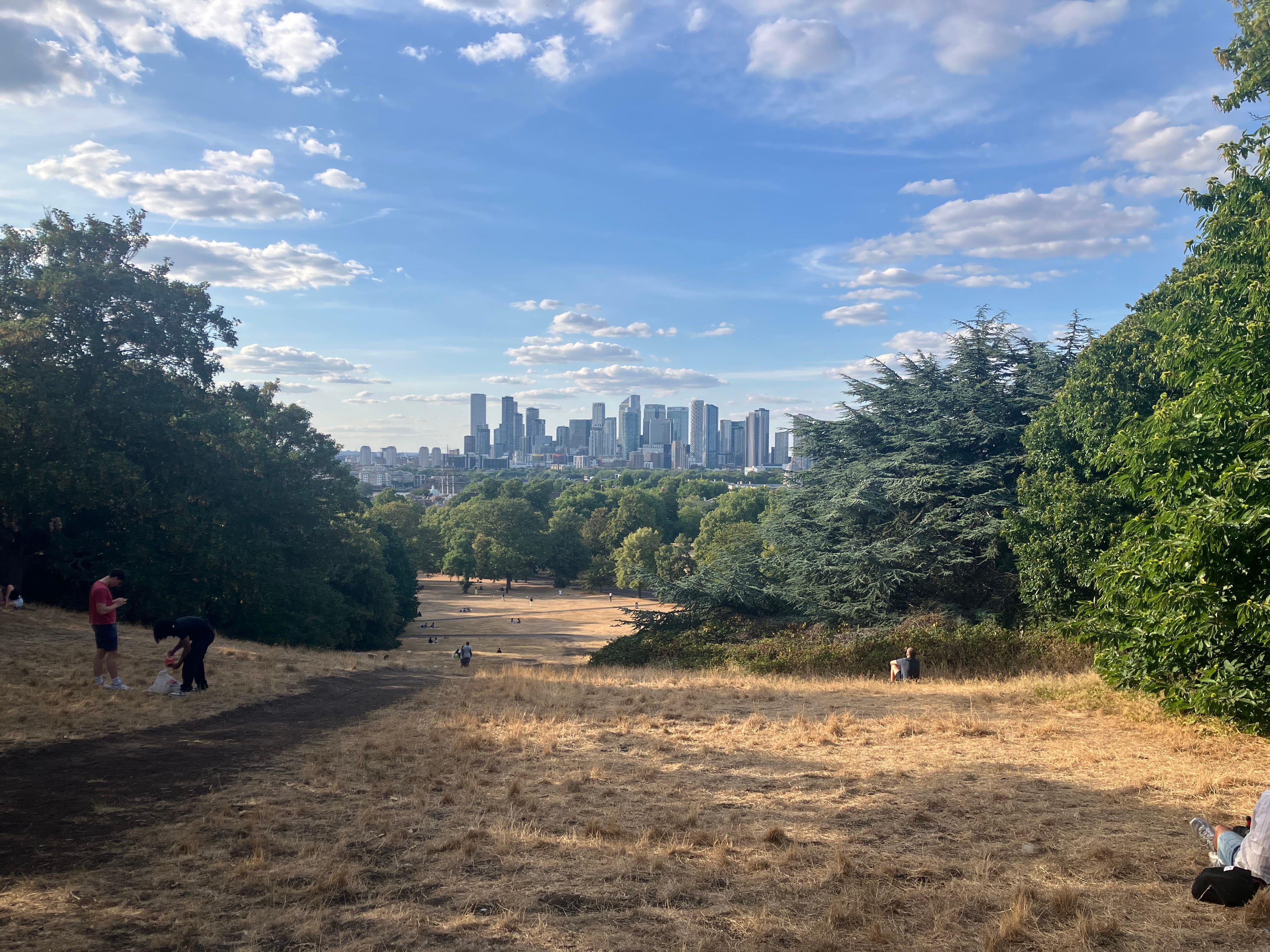
Out in the Gulf I met a couple from Paris, and we compared notes on this summer. I showed them my photos of the parched London parks, and they described the hell of living in a small Parisian flat as temperatures edge towards 40 degrees. For several years now, the southern edge of Europe has been face to face with the climate crisis. Now, northern Europe is meeting it, too.
Thanks for reading Turklish! This post is public so feel free to share it.
Comments
Nothing yet. Say the first thing.
Sign in to join the conversation.