
The leaves cling so tenderly to the trees these days that even a gentle breeze will nudge them off. They float to the ground with the same sort of resistance that I have when I consider facing the coming winter months. A trembling motion, their curled and burnt edges land on still lush grass without a sound. They’ll stay here all winter and feed the swamp below until spring beckons her open again, and their little skeletal twig remains will have completed their job. Bud, bloom, breath, burial.
I think the last of the geese have fled to their winter homes, somewhere far south of here by now. But I can hear turkey vultures and robins yet, and just behind the first wall of forest in my backyard I can see the shadows of young whitetail antlers bending to search the ground for sustenance. He uses his damp, black snout to gently overturn a pile of brush. Through a break in the tree line I can see the shine in his beady black eyes. He moves cautiously, hungry, listening for predators. I hold my breath when I watch him. I think I am soothing him in this way.
When we move through this world so acutely aware of our fear and shame, what little grace is left for the rest of our days? Not much at all. When I was learning the teachings of Ram Dass in 2019, I was struck by this quote:
“One way to get free of attachment is to cultivate the witness consciousness, to become a neutral observer of your own life. The witness place inside you is simple awareness, the part of you that is aware of everything — just noticing, watching, not judging, just being present, being here now.”
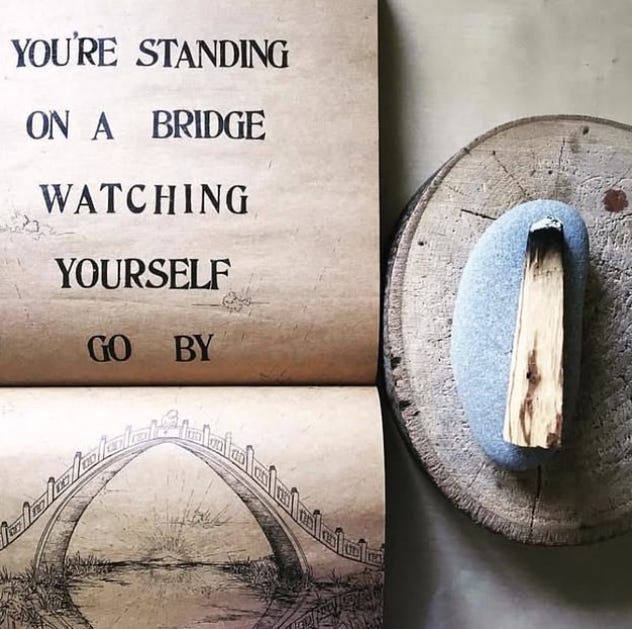
There have been times in my life where this mindset has brought me great peace. The idea of detachment via neutrality felt appealing. But I don’t know that I am capable of complete neutrality. Perhaps when I am feeling particularly pleasant or lighthearted, yes. It is markedly more difficult when I am in the trenches.
If I were to get on the bridge right now and watch my life float by, what would I observe? Have I observed all of this before, and will I observe all of this again? Almost certainly. What do I see when I am neutral and witnessing?
Pain, perhaps. Fatigue, of course. Anxiety, worry, uncertainty. Wishful thinking. The most radical of acceptance - just to get through the day. The bridge is a mountain. The bridge is a quarry.
In The Brothers Karamazov, Dostoevsky writes about young Alyosha witnessing his beloved elder and mentor on his deathbed. The mentor Zosima, in his final hours, says to Alyosha:
“You will behold great sorrow, and in this sorrow you will be happy. Here is a commandment for you: seek happiness in sorrow. Work, work tirelessly. Remember my words from now on, for although I shall still talk with you, not only my days but even my hours are numbered.”
The bridge is still a way across and it has been provided to me. And so, I cross it anyway.
With love,
Hannah
No posts
Comments
Nothing yet. Say the first thing.
Sign in to join the conversation.