
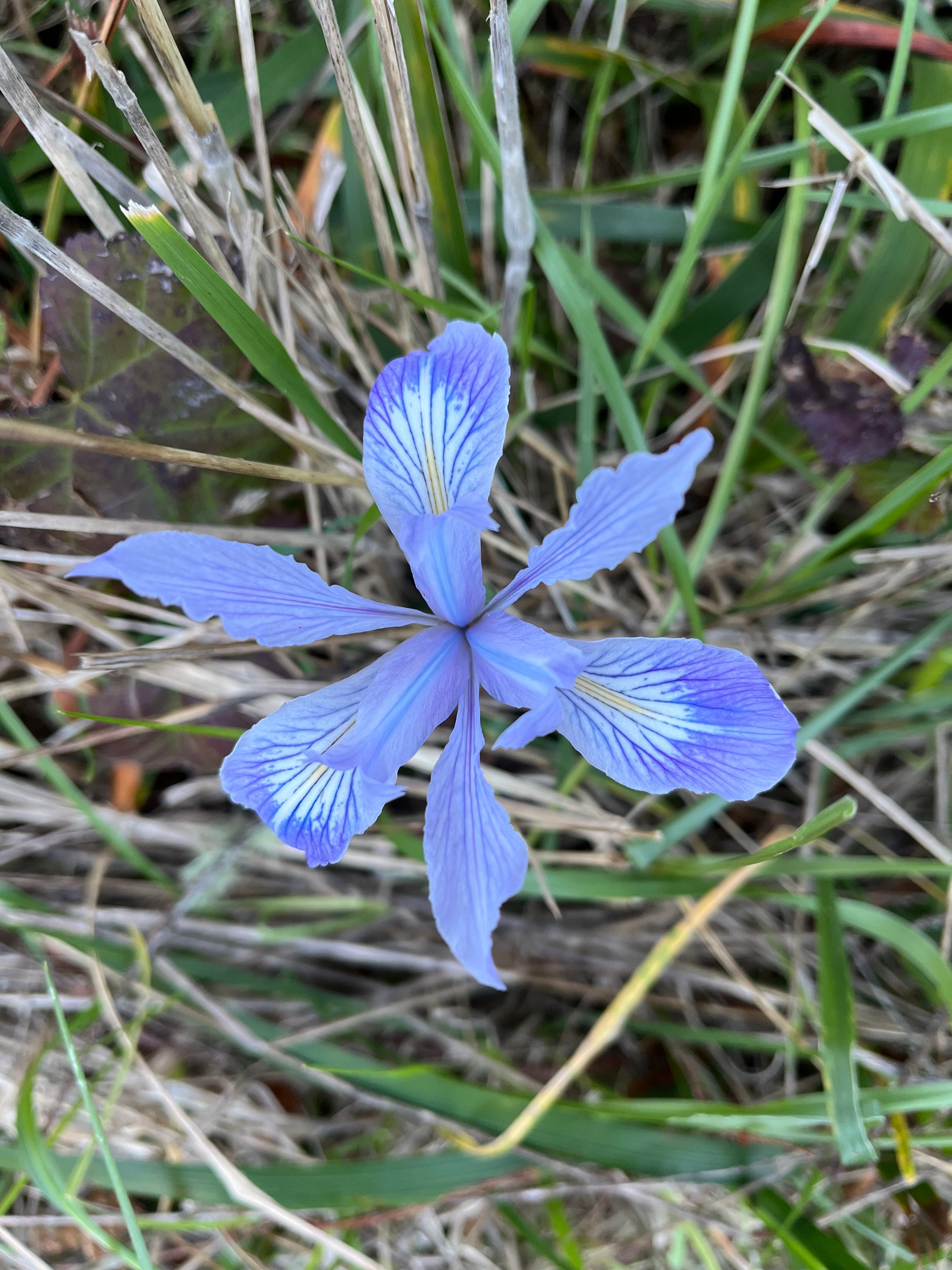
Handfuls of spring flowers have given way to armfuls in the past weeks here on the Marin coast. In the dance of bright blue skies and heavy rainfall, Spring starts up a song. Seeds shoot forth into the next evolution of their nature, given the right conditions. I love the patches of daisies in particular. I find them tender, generous, dutiful.
We humans can follow their lead, certainly. I attended the Bioneers conference in Berkeley on Friday, which was a joyful experience of being in the environment of many dedicated and wise people who have been working at the intersection of art, ecology, relationship, and healing for many decades. Among those who impacted me most were the words and work of Joy Harjo, Pat McCabe, Doria Robinson, Kazu Haga, and West Marin-based artist Ernesto Sanchez. I was also deeply moved by the film made by Palestinian and Israeli filmmakers, No Other Land, which documents the horrors of the treatment and erasure of Palestinians living in Masafer Yatta in the West Bank by the Israeli government, and many of the attendant injustices and devastations wrought by cultural repression, displacement, and bureaucracy.
More than any particular content, it was just good to be among the vibes, and inspiring to be among peoples practiced in the work of committing unflinchingly to the true things. In my day to day morning moments, sitting on the porch breathing into the day before the “world work” of my life begins, I find 2 questions continuing to gather at my inner gate. The first: “How can I live in enhanced connection with all of creation?” The second: “What is my own particular way of sustaining the universe?”
Thank you to Kazu, who offered some thoughts on the wisdom of questions : “There is such a liberation in accepting the complexity of the world and asking questions, and just being with the questions. The point is to ask ourselves: what does it mean to be fully alive and human right now? What do I need to do to create beauty and affirm life? If I’m asking questions I can figure out the answers to, then I’m not asking questions big enough for these times.” In spontaneous moments - eating breakfast, on a walk, late at night - I find myself involuntarily shaking my head in disbelief at the immensity of the task of our times, of the recognition that accepting our responsibility is the only avenue to any sort of individual or collective salvation. And I don’t mean salvation from the on-high be-good-or-bust BS. I mean it as the salve, the balm, the life-affirming inhabiting of each day in which we live our belonging on this earth.
It would appear life is largely characterized by continuing to wake up and open to new questions, new understandings, new connections, and then to spend years, if not lifetimes, living into them. It’s Spring, and I feel like I’m 5 years old again, turning simple sentences around my tongue, realizing they have a richness I’d somehow been unwilling to see. I am watching that thing my elders insinuated would happen: complexity starts to give way to earnestness, walls separating the interior chambers start to crack and crumble, hinting at one wide room in which to…? I really can’t say, but the experiences is tied to a process in which I appear to have little say, in which trying to be smart gives way to being honest, in which attempting to understand gives way to a different way of knowing.
As I wrote the prior paragraph, a type of insect that I have literally never seen or knew existed landed on my arm for about 5 seconds before flitting off. The existence of other worlds is always here. Have I eyes, and slowness, to see? Looking up, I see a turkey vulture circle low over the reach of the trees 25 yards or so to the East, her shadow smooth sailing on the spring-green long grasses. She’s circling on thermals against a backdrop of hazy blue, no need to flap her wings. There’s currents, spiraling up, invisible to me, but guide to her since the first wing flap. It’s Spring, and it’s back to basics in my heart. I used to be afraid of being a cliché of any kind, under some illusion they were possible to avoid . But, as my dad has always said, “clichés are clichés for a reason.” Perhaps it’s all about which clichés we accept as ours to live into, how we might reclaim them, how we might expand them, and how we might love them into the fullness of their holy archetype.
Truth is, I’m tending to profound amounts of energy coursing through my body these days - significant amounts of anger and grief that are both personal but are also obviously far more universal, connected to ancestral lineages, historical ruptures, and the pain of the distrust sown in our systems and the pockets of my own heart that still cling fierce to their protectors. The collective howl runs hot. I’m finding tremendous refuge - TREMENDOUS - in being largely off my phone, as offline as possible, and in prioritization of the plants and the birdsong over human relationship. I don’t know how long that “awayness” will last, but it feels necessary to calibrate to the true nature in me as the ground from which to re/connect in the human song, howl, and shared silence.
I’m revisiting why I’m even writing this weekly Substack. The current answer is that doing so is a small but meaningful practice of being in the discipline of turning to what is true, and spending a few intentional moments each week with whatever wants some light. Sharing this is my attempt to be in collaboration/witnessing with my community about the experience of growing up, of a commitment to see clearly. Perhaps there’s an apt metaphor here of making a soup and iterating on the recipe, each week trying out a different tang. Or, it’s my version of sitting around a campfire with trusted people and saying “hey, I wrote this tune the other day, and it’s not even half-formed, but I’d like to play it for you.”
Seems to me the whole life-show is about that campfire ethos. About a month ago, I shared something along the lines of “take care everyone, we are each astounding works of art.” If we are to have any, and I mean any, hope in revitalizing a broad-scale cultural/ecological balance and nourishment for generations 7 hence, much less in our own lifetime, it seems to me to have everything to do with tending to our own artistry, and cultivating and celebrating the artistry of others, knowing that all of our art is interdependent (and can take many forms). A friend told me of a daily morning practice shared by an artist and activist she respects: before getting out of bed, start the day by sensing into, with gratitude, the multitudes of people you will never, ever meet or even know about directly, who are doing the work of love and regeneration. Allow yourself to be held in the camaraderie of others going about their lives in devotion to that to which you are also devoted.
I take refuge in that village and vision. Daisies are known as a pioneer species, early inhabitants of disturbed areas to prepare the soil for more plant growth and diversity. I give gratitude for the many, many humans out there nurturing their own patch of earth. Though (and because) his prognosis isn’t exactly shiny, I so appreciate this recent Bill Plotkin interview, in which there’s a deep acknowledgement of the way that our current society is in a terminal situation of profound psycho-spiritual decay, full of inadequate structures for a broad-scale proliferation of health and ecological consciousness, but that doesn’t mean there aren’t ways to joyfully, dynamically grow seeds for future healthy societies.
Perhaps another way of framing the questions I posed at the onset of this post include: How to love reality? To paraphrase Rumi (even though doing so really tugs at my cliché-avoidance antennae, but damn the sentiment is good): How to seek and find all the barriers we’ve built against love? To paraphrase hundreds of others: How to walk this path, our path?
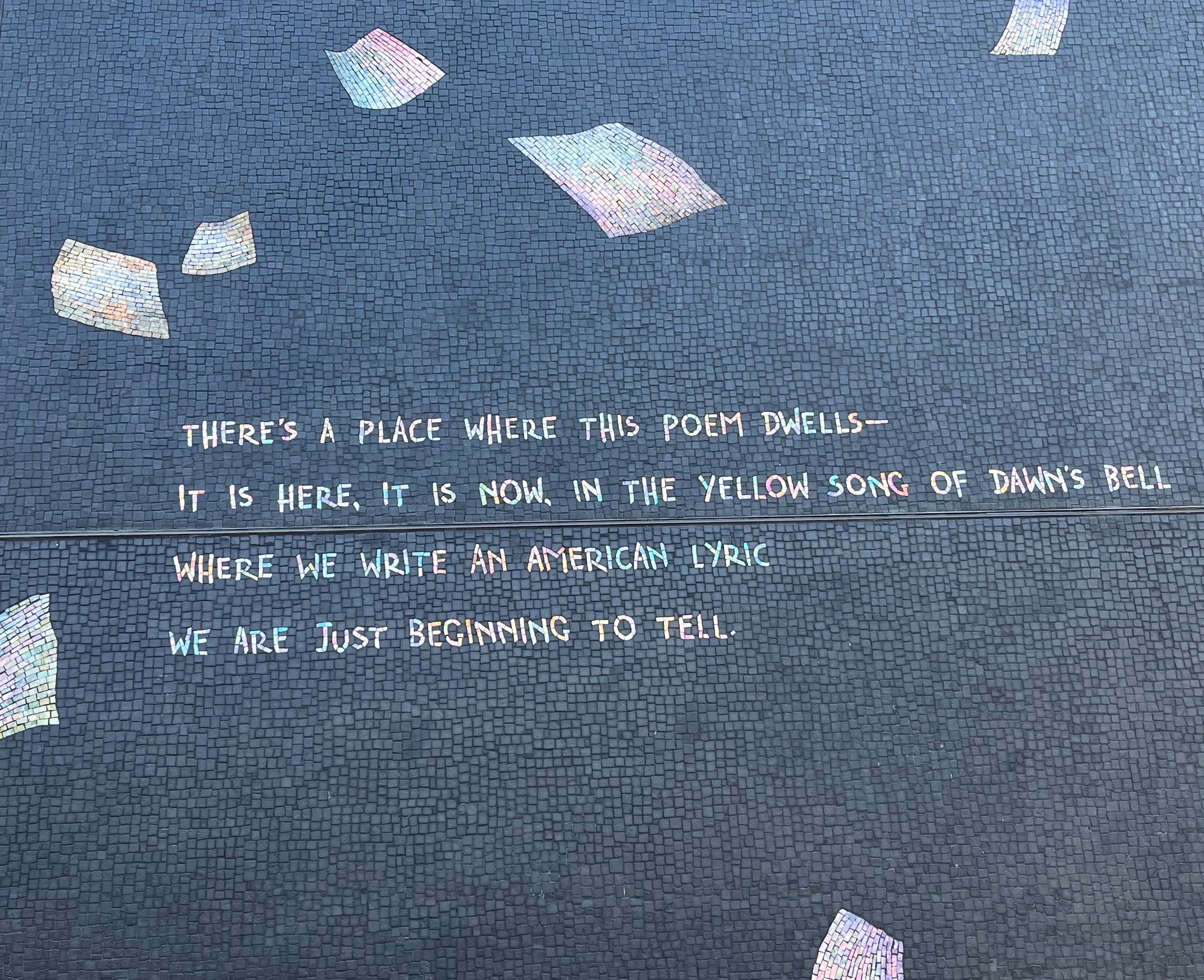
Joy Harjo said this weekend: “When you go off your path, you know it. When you go off your path, bad things happen. In our culture [the Muskogee (Creek) Nation], there’s all sorts of stories about what happens when you go off your path. The path is something here beyond knowing. Don’t go off your path.
It is impossible to speak to the whole of “it all,” nor is it necessary. What is necessary, whisper the winds and the poets and the freshly sun-exposed pistils and stamens, is to exclaim whatever version of “hallelujah” most reverberates the heart or throat, and get on with whatever the season calls for.
Text within this block will maintain its original spacing when published
Remember the hole of shame marking the act of abandoning our
tribal grounds.
We were never perfect.
Yet, the journey we make together is perfect on this earth who was
once a star and made the same mistakes as humans.
We might make them again, she said.
Crucial to finding the way is this: there is no beginning or end.
You must make your own map.
Joy Harjo, from A Map to the Next World
No posts
Comments
Nothing yet. Say the first thing.
Sign in to join the conversation.