
I was diagnosed with PCOS a couple months ago, after struggling with my hormones basically my entire life.
I’ve always had irregular cycles. And when I say irregular, I mean there were times when my cycle was 105 days long. For a big chunk of those cycles I felt like I was permanently stuck in this deep luteal-phase feeling of hell. I felt constantly tired, agitated, heavy, zero energy, zero motivation and everythingggg annoyed me. Imagine PMS, but instead of a couple days it just… doesn’t end lol. (It’s as fantastic as it sounds).
The weird thing was: I’ve always been pretty slim, historically had pretty good skin, my blood sugar markers looked good and my thyroid was functioning normally. I didn’t fit the picture I had in my head of someone with PCOS at all.
So naturally I thought: what the hell is actually going on with my body - and what can I do about it?
The last three years I’ve gone DEEP into the research hole around hormonal health, understanding my cycle and supporting my body as holistically and naturally as possible. I’ve learned sooo much, tried a lot of things and, most importantly, gave my body a lot of time to use what I was doing for healing.
And I’ve come incredibly far.
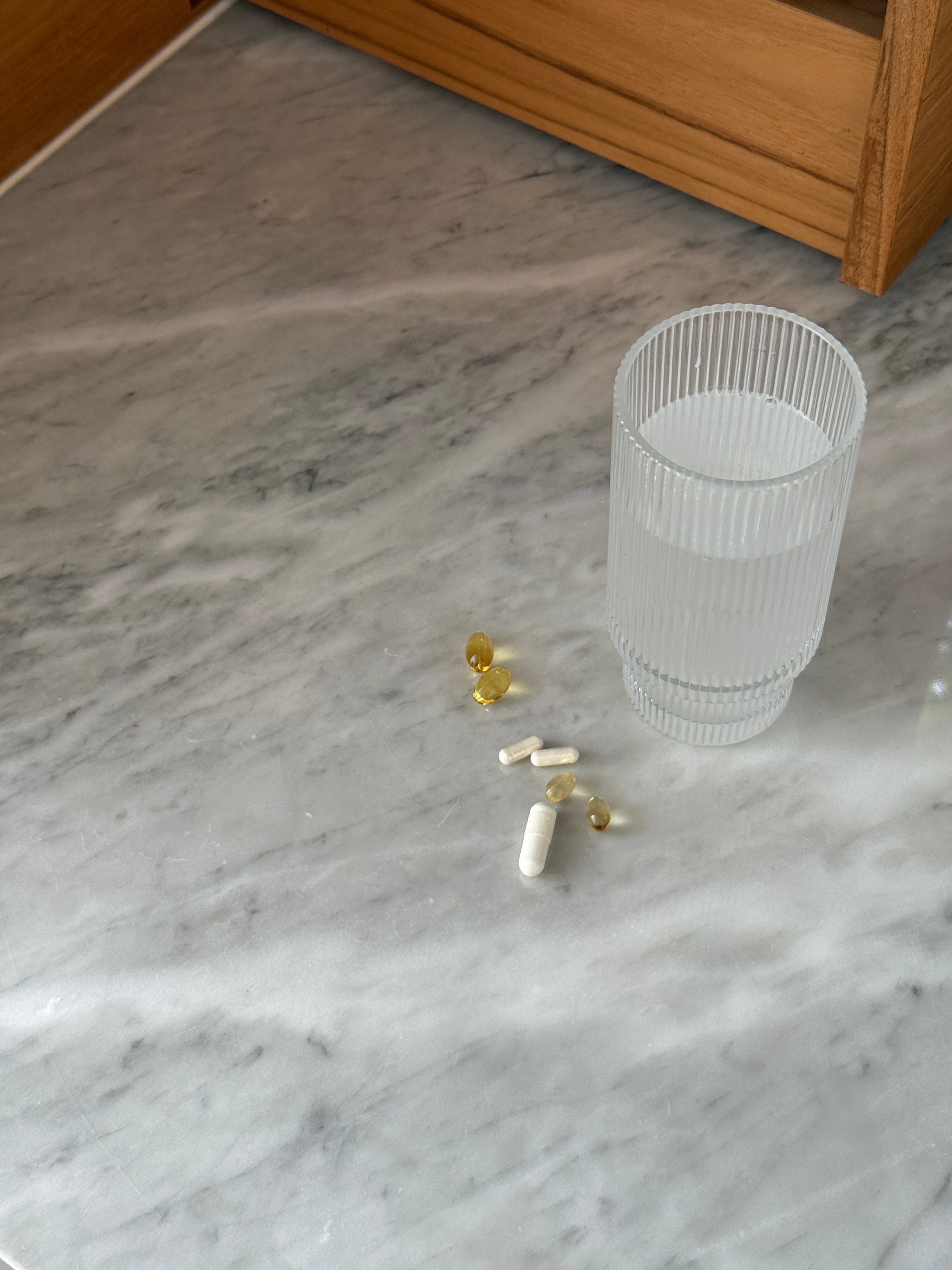
For the past 12 months my cycles have been roughly between 21–45 days instead of disappearing for months at a time. My periods are mostly painless. My thyroid and glucose markers look great. I get regular blood work done, track my cycles and feel like I finally understand my body instead of constantly wondering what on earth it is doing.
Am I “cured”? Not exactly possible unfortunately. Is my body perfect? Also no. PCOS is something I’m still learning about and managing, and I still have things I want to improve.
But compared to where I started? The difference is remarkable..
So in this article I want to share a little bit about my journey, what I personally changed, what I think made the biggest difference and what I’m still experimenting with. If you’re also interested in understanding your body from the inside out, this might be interesting for you.
Little disclaimer before we get into it: I’m obviously not a doctor. This is not medical advice and I’m not saying that what worked for my body will work for yours. PCOS can look incredibly different from woman to woman. Everything below is based on my personal experience, research and the professionals I’ve worked with. I’m a BIG believer in getting actual data about your own body instead of blindly copying someone else’s supplement stack from TikTok. Get your check-ups, ask questions, do your own research and work with a professional where it makes sense.
PCOS stands for polycystic ovary syndrome and despite the name, you don’t actually have to have cysts on your ovaries to have it. Great.
To get really technical: Ii’s a hormonal and reproductive condition that can show up in lots of different ways. Irregular or absent ovulation is one of the big ones, but women can also experience higher androgen levels, acne, increased facial/body hair, insulin resistance, weight changes, fertility issues or a polycystic appearance of the ovaries.
And this is something I wish I understood earlier: there simply isn’t one PCOS woman.
You can be slim and have PCOS. You can have normal blood sugar markers and have PCOS. You can have clear skin and have PCOS. You can have PCOS without ovarian cysts.
Diagnosis is generally based on a combination of irregular/absent ovulation, signs or laboratory evidence of elevated androgens (like raised TH markers) and/or the appearance of many ovarian follicles on ultrasound, after other possible causes are excluded.
Which finally made my own diagnosis make a lot more sense to me. For me its a really high AMH marker, ever so slightly high Testosterone and an estrogen dominance, aswell as therefore pretty low Progesterone.
The slightly annoying answer: they don’t fully know.
There seems to be a genetic component and PCOS can run in families, while hormonal, metabolic and environmental factors may all play a role. There isn’t one single thing scientists can currently point to and say: this is what caused your PCOS.
And this is where I get a little woo-woo holistic for some people.
I personally like looking at health from a much broader perspective than just one lab value. We obviously have very tangible physical factors: nutrition, sleep, movement, stress, medications, alcohol, smoking, nutrient deficiencies, our environment and overall lifestyle.
But I’m also fascinated by the relationship between our physical body and our emotional state.
I’ve always loved reading about psychosomatics, which is essentially the idea that our emotional and psychological world can interact with our physical health.
Some of the more spiritual/psychosomatic interpretations I’ve come across around reproductive health talk about themes like safety, chronic pressure, control, femininity that didn’t feel safe to be expressed, suppressed creativity and feeling like you constantly have to perform.
I’ve asked myself this question sooo many times.
In my head, the more I understand about how my body arrived at a certain point, the more intentionally I can support it going forward.
There probably isn’t one single answer, but there are a few pieces of my history that I personally think are relevant.
I went on the pill when I was 14 years old and stayed on it for around six years. Basically my second natural cycle ever was followed by years of synthetic hormones. Looking back, though, my body barely got the chance to learn what my natural cycle looked like before suppressing ovulation for years.
Then add my entrepreneurial personality into the equation lol.
I’ve been self-employed since I was 17. I have ALWAYS been a go-getter. If I have my eyes and heart set on something, good luck stopping me.
And I genuinely had SO much fun building my businesses. I loved creating, working, launching, traveling, supporting clients and making things happen. The success was immense and I’m incredibly grateful for that chapter.
But I can now also see that my system was paying a price for it. I was constantly switched on. Work. Create. Launch. Travel. Answer messages. New idea. New project. New country. Repeat.
There was barely any actual recovery and deep rest.
At different points my stress markers reflected that, and one of the recurring patterns in my hormone testing has been low progesterone.
Chronic stress on the body (even while you’re enjoying your work) can shoot your cortisol to the sky and cortisol essentially „eats up“ progrestone.
Your body only ovulates when it feels safe and rested. For that to happen your HPO axis (basically your stress axis that sends a signal from your brain to your body „yup, we’re good“) has to be stable.
Before I tell you what I changed, I feel like we need to understand the main characters first.
Estrogen - the building hormone
Estrogen rises during the first half of your cycle and helps build the uterine lining while your follicle develops toward ovulation.
We NEED estrogen. The goal is not to get rid of it, but to have the hormonal orchestra playing together properly.
Progesterone - my beloved chill hormone
Progesterone rises primarily after you ovulate, because it’s produced by the corpus luteum - basically what remains of the follicle after an egg is released.
It supports the uterine lining and the second half of your cycle and its kinda known as the „chill hormone“, that makes you calm.
Testosterone + other androgens
Women absolutely need testosterone too. It plays a role in libido, muscle, bone health, energy and more.
With PCOS, androgen levels or androgen activity can be higher, which is why some women experience things like acne, facial hair or scalp hair thinning.
Cortisol - the stress hormone
Cortisol isn’t technically a reproductive hormone, but it’s one I pay a LOT of attention to because it plays such an important role in our stress response, blood sugar, energy and sleep/wake cycle.
Cortisol isn’t bad either. We literally need it, just in a regulated state.
What should female hormones ideally look like?
One of the biggest misconceptions I had was thinking that female hormones are supposed to stay at one “perfect” level. They’re not.
Our hormones are meant to CHANGE throughout the month.
Very simplified:
Period → follicular phase: estrogen gradually rises while progesterone stays low.
Ovulation: estrogen peaks and LH surges, triggering ovulation.
Luteal phase: progesterone rises after ovulation, while estrogen has a smaller second rise.
Before your next period: if pregnancy doesn’t occur, estrogen and progesterone fall and you bleed.
With PCOS, there isn’t one universal graph that everyone follows. A common issue is irregular or absent ovulation, which means you may not get that predictable progesterone rise after ovulation. Androgen levels can also be elevated and metabolic factors such as insulin resistance can be involved - but again, not every woman has every feature.
Okay. Enough biology class.
Let’s get into what I actually changed.
This, in my personal experience, was probably the biggest one in my recovery journey.
I massively cut back on working and building businesses.
I was and still am in the very fortunate position that I could basically stop working cold turkey for a while. And for the first time in my adult life, I had days where I literally just laid in bed and read alllll day.
At first that almost felt uncomfortable because my identity had been so intertwined with doing, achieving and creating for YEARS.
I started prioritizing sleep like it was an Olympic sport. Sleeping in when my body needed it, even if that means a 3h nap mid day. Going to bed early (I’m known as the granny that’s asleep at 10pm at the latest). Not feeling guilty for having a slow day. Not trying to squeeze productivity out of every available hour.
I think we glorify “discipline” sooo much online, but sometimes the most disciplined thing you can do is actually stop.
I used to get personal training 4 times a week and push to my limit.
Now my philosophy is basically the opposite.
I personally don’t do any HIIT, heated workout classes or ice baths. The more research I’ve done about these, the more I learned that they don’t benefit me and my hormones at all.
My body responds SO much better to:
Pilates, strength training and simply walking.
That’s basically my holy trinity.
I want movement to make me feel strong, energized and grounded.
So experiment with what makes YOUR body feel good.
Okay now we enter my beloved holistic girly territory.
TCM (traditional chinese medicine) has become a really interesting addition to my routine. I started it in Bali about 3 years ago at „Bali Healing Center“ with Michelle.
One tiny habit that I always make sure I’m doing? Keeping my feet warm.
No walking around on freezing floors barefoot, socks when I need them, keeping my lower body warm and generally eating more warm foods rather than living off iced smoothies and salads.
In TCM the feet are connected to your womb. When your feet / womb is cold, it can not function properly. It’s basically frozen.
I feel an insane difference when it comes to (not) doing this.
This is a BIG one for so many women. I feel extremely lucky, that I always had a really good relationship with food and my body image.
There is soooo much PCOS nutrition advice online.
Low carb. Keto. No sugar. Fasting. Dairy free. Gluten free. Eat every two hours. Never snack. Blood sugar hacks. Don’t look at a banana after 4pm. It becomes exhausting.
Personally, I focus on nourishment. I eat protein AND carbohydrates. Carbs are not the enemy, especially as a woman you need carbs to actually nourish your eggs.
I focus mostly on whole foods, getting enough protein, vegetables, good fats (avocado, evoo, nuts etc) and plenty of fiber.
Fiber is especially important to me for digestion and regular bowel movements, which are part of how the body eliminates hormone metabolites after the liver has processed them.
I drink plenty of good-quality water and care about filtration and minerals. We have a reverse osmosis system installed, I use electrolytes and I rarely drink out of plastic bottles.
I also drink spearmint tea regularly because there’s some early research around spearmint and androgen activity.
Most importantly: I eat enough.
I love good quality supplements. We know this about me haha.
I try to base supplementation around my blood work, symptoms and conversations with the practitioners I work with.
A few things that have been part of my routine at different points:
Inositol: probably one of the best-known PCOS supplements. I take one called Ovacure, which combines Inositol, Chi-inositol and folic acid.
Magnesium: one of my forever supplements. I usually take magnesium glycinate in the evening and personally find it great for my wind-down routine. I take 200mg+.
Zinc: I take a therapeutic dose of 30mg a day right now.
Liver support: detoxes, liver flushes, naturopathic supplements.
And most importantly, I work with practitioners and get blood work instead of guessing endlessly and then adjust my stack and routines accordingly.
I ask myself: if there is an easy swap I can make that reduces unnecessary exposure to certain plastics, smoke, fragrances or chemicals I can do?
In my kitchen I mostly use wood, glass and stainless steel. I prefer natural-fiber clothing. I use water filters, including shower filters, everywhere.
I’ve slowly switched a lot of my beauty and household products to more natural alternatives I personally feel comfortable using.
And then there are practices I simply enjoy as wellness rituals that support my body in flushing out toxins: sauna, massages, lymphatic drainage etc.
For most of my life I thought I was just an extremely driven person. Which I am. But I was also extremely used to being switched ON. And once you’ve operated that way for years, calm can almost feel… boring?
So I’ve intentionally built things into my life that bring my baseline down.
Massages, meditation, therapy, long walks, quiet and slow mornings, giving myself space to feel my emotions.
I also sometimes use Loop or other noise-reducing earplugs when I’m in very loud environments because I get overstimulated pretty easily when it comes to noise.
I’ve also been using GABA as part of my own supplement routine, which instantly calms me down (it’s a neuro transmitter, that already exists in your body).
This wasn’t technically a PCOS change because it was already my lifestyle beforehand, but I still think it’s worth mentioning.
I’ve never smoked and I drink alcohol extremely rarely - like maybe one glass of wine every few months.
I don’t think you have to live like a monk to care about your health, but alcohol and smoking obviously affect far more than just your reproductive system. And because I’m already asking a lot of my body through travel, life and general environmental stressors, these are simply two things I personally don’t feel the need add into my life.
Possibly the least sexy but most important point in this entire article.
Test. Don’t guess.
I get regular check-ups with my OBGYN and repeat blood work every few months depending on what we’re monitoring.
Hormones are especially tricky because the same progesterone value can mean completely different things depending on where you are in your cycle and whether you actually ovulated.
So I track my cycle alongside my testing.
One random hormone panel is not the full movie - it’s essentially just one screenshot. Looking at trends over time has helped me so much more.
I wish there was a sexier answer.
A supplement or a specific morning routine or a 30-day protocol. Something you could buy for 89€ and be done with it haha.
But for me the biggest thing has been time + consistency.
It took me around two to three years of slowly changing things, learning my body, resting, testing, adjusting and then actually sticking to the boring foundational habits. Little by little, my body changed.
Then suddenly I was looking back at almost a year of cycles that were mostly between 21 and 45 days.
Things that once felt completely unpredictable started becoming more predictable. And THAT has probably been one of the most satisfying things ever.
I think we sometimes forget how long the body can take to change after years of doing things a certain way.
I spent YEARS being constantly switched on.
So expecting my body to completely regulate itself after drinking spearmint tea for three weeks would be slightly unfair lol (but also come on, pls hurry up haha).
One thing I’m currently interested in learning more about is bioidentical progesterone because progesterone has remained one of the areas I’m watching closely.
Progesterone is a hormone, not a wellness supplement, and whether it makes sense depends on why progesterone is low, whether and when you’re ovulating, your cycle, symptoms and fertility plans.
Before considering another intervention, I really wanted to see how far I could get by supporting my body through lifestyle first.
Maybe bioidentical progesterone becomes part of my journey later, maybe it doesn’t. I’ll keep you updated.
This journey will probably never be completely “finished.”
I feel like I understand my body on a completely different level than I did three years ago. I know when something feels off. I know what my cycle is doing. I know I need more rest than 20-year-old entrepreneur Hannah was willing to admit haha.
The TTC journey is still a year or more away for us, but that was actually one of my motivations for starting to care about all of this before we were ready.
I didn’t want the first time I seriously thought about my fertility to be the month we decided we wanted a baby.
I wanted to give my body time and I’m very glad I did.
If there’s one thing I hope you take away from this article, it’s probably this:
Start learning about YOUR body. Get your data. Build the foundations. Change one or two things. Give them time. See what happens.
Then go from there.
And please remember that PCOS looks extremely different from woman to woman. The things that have been game-changing for me might be irrelevant to your particular case, and vice versa.
I know hormonal health and fertility can be an incredibly sensitive and emotional topic. If you’re in the middle of struggling with yours right now, I’m sending you sooo much love.
And as always, let me know if there’s anything from this article you want me to go deeper on - my supplement routine, hormone testing, cycle tracking, TCM, nervous system work or my whole hormonal-health journey could probably all be their own article.
All my love,
Hannah
No posts
Comments
Nothing yet. Say the first thing.
Sign in to join the conversation.