
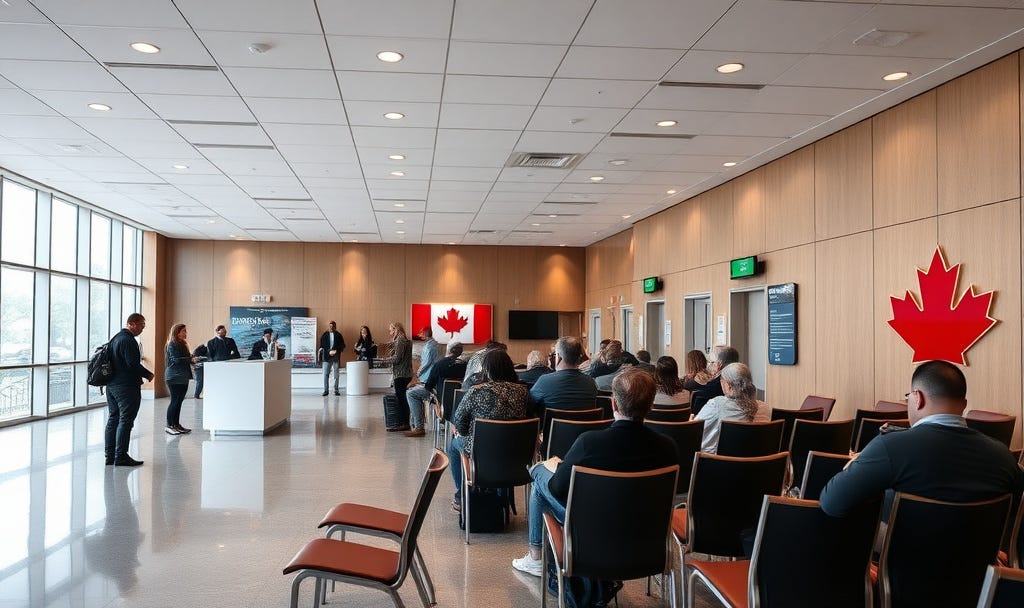
Prime minister Mark Carney suggests that Canada’s future stability and prosperity requires building new partnerships with “middle powers” across the world. He also says that this is not a one-size-fits-all proposition.
That got me thinking: What is a so-called Middle Power? My list included any country that is not the USA, China, or Russia. Beyond that I needed more information. So I turned to Claude. What’s below the *** is my conversation with Claude.AI.
Me:
“What are the 10 or 20 countries that would most commonly be considered as “middle powers?” Use economic strength, military capacity, and population, and history. With your list, prioritize them in order and explain the degree of confidence in your ordering.”
Claude.AI:
Here’s my ranked list of middle powers with confidence assessments:
High Confidence Tier (1-8)
1. Canada - Classic middle power with G7 membership, strong diplomatic tradition, significant economy ($2+ trillion GDP), and NATO membership. Exemplifies middle power diplomacy.
2. Australia - Similar profile to Canada: wealthy, regionally influential, strong military ties with US, active in multilateral institutions, G20 member.
3. South Korea - Major economy (top 15 globally), significant military capability, technological leader, increasing global diplomatic role.
4. Turkey - NATO’s second-largest military, controls strategic geography, $900+ billion economy, regional power broker between Europe and Middle East.
5. Indonesia - World’s 4th most populous country, largest Southeast Asian economy, G20 member, leads ASEAN initiatives.
6. Saudi Arabia - Enormous energy influence, substantial military spending, regional leadership, G20 member, growing economic diversification.
7. Poland - Largest post-communist EU economy, increasingly important NATO military role, regional leadership in Eastern Europe.
8. Spain - EU’s 4th largest economy, NATO member, historical global connections, significant soft power through language and culture.
Medium Confidence Tier (9-15)
9. Netherlands - Highly developed economy, major trading hub, punches above weight in international institutions.
10. Mexico - Large population (130M), major economy (top 15), USMCA member, but limited military projection.
11. Argentina - Historical middle power status, G20 member, regional influence, though recent economic instability affects ranking.
12. Sweden - Strong economy, military modernization, recent NATO membership, diplomatic tradition, but small population.
13. Thailand - Regional military power, significant economy, US treaty ally, ASEAN leadership role.
14. Egypt - Large population (100M+), strategic location, significant military, but economic challenges limit influence.
15. Nigeria - Africa’s largest population and economy, regional leadership ambitions, but governance challenges constrain effectiveness.
Lower Confidence Tier (16-20)
16. Iran - Regional military power, large population, but international isolation limits middle power status.
17. Vietnam - Growing economy, significant military, increasing regional role, but still developing nation status.
18. Pakistan - Nuclear power, large population, significant military, but economic instability and security challenges.
19. Bangladesh - Very large population (170M+), growing economy, but limited military projection or diplomatic influence.
20. Norway - Wealthy, NATO member, diplomatic tradition, but very small population (5M) questions middle power status.
Confidence Assessment
High confidence (1-8): These countries consistently appear in academic literature on middle powers and clearly possess the economic, military, and diplomatic attributes required.
Medium confidence (9-15): Strong cases exist for these, but there’s more debate—some are economically strong but militarily limited (Netherlands, Mexico), others have regional influence but face constraints (Egypt, Thailand).
Lower confidence (16-20): These are more contentious. Iran faces isolation; Bangladesh and Vietnam are emerging but still developing; Pakistan has military capacity but economic fragility; Norway’s tiny population complicates its status despite wealth.
Notable exclusions: Brazil (often considered a great power aspirant), South Africa (debatable continued middle power status), UAE/Singapore (small but wealthy city-states).
The ranking considers that middle powers typically maintain multilateral engagement, coalition-building capacity, and influence beyond their immediate region—not just raw metrics.
Me:
“I’m surprised that Brazil and Qatar are not on the list. Why not?”
Claude.AI:
Great catch—let me explain my reasoning:
Brazil
I initially excluded Brazil because it’s often discussed as something beyond a middle power—a “rising power” or “great power aspirant” alongside India and potentially Indonesia. With:
215+ million population (6th largest globally)
Top 10 economy (~$2 trillion GDP)
BRICS leadership
Regional hegemon in South America
Permanent ambitions for UN Security Council seat
Brazil arguably transcends the middle power category. However, you’re right to question this—Brazil absolutely should be on the list, probably in the top 5. Its current economic challenges and limited military projection capabilities mean it still functions as a middle power in practice, even if its potential suggests more. Many scholars do classify it as a middle power.
Revised placement: #4-6, likely between South Korea and Indonesia.
Qatar
This is a fascinating case. Qatar has:
Enormous wealth per capita
Massive natural gas reserves (world’s 3rd largest)
Significant soft power (Al Jazeera, World Cup hosting)
Active mediation role (Taliban talks, Gaza negotiations)
Disproportionate diplomatic influence
However, I excluded Qatar because:
Tiny population (~3 million, with only ~300,000 citizens)
Very small military despite advanced equipment
City-state characteristics more like Singapore or UAE
Limited capacity for sustained power projection
Influence is highly concentrated in diplomacy/finance rather than balanced across traditional power metrics
Qatar represents a new type of international actor—a “micro-power with macro-influence”—but doesn’t fit the traditional middle power template that emphasizes balanced economic/military/demographic capabilities. It’s more analogous to Singapore: outsized influence through wealth and positioning, but structurally different from countries like Canada or Australia.
Would you include Qatar? There’s a reasonable case for it around #15-20 if we weight diplomatic influence heavily.
Me:
“What other countries similar to Brazil did you exclude?”
Excellent question. Here are the major countries I excluded for similar “too big/aspirational” reasons:
Clear Great Power Aspirants (Like Brazil)
1. India - Obviously beyond middle power status:
1.4+ billion population (most populous)
5th largest economy (~$3.7 trillion)
Nuclear power, space program
UN Security Council aspirant
Quad member, growing global ambitions
2. South Africa - Historically a middle power, but:
BRICS member
Regional hegemon in southern Africa
Used to be the clearest African middle power
I actually should have included it—economic troubles have reduced its influence, but it still merits placement around #12-15
Countries Straddling the Line
3. Italy - G7 member, major EU economy, but:
8th largest economy globally (~$2.3 trillion)
NATO founding member
Probably too large for middle power status
More like a “secondary great power” or lesser major power
4. Germany, France, UK, Japan - All clearly beyond middle power category despite not being superpowers. These are major powers.
Regional Powers That Might Qualify
5. Colombia - Strong case for inclusion around #15-18:
Significant regional influence
Major US partner in Latin America
50+ million population
I probably should have included it
6. Philippines - Could argue for #18-20:
115+ million population
US treaty ally
Regional significance
Limited economic/military capacity holds it back
7. Malaysia - Similar to Thailand, could be #16-19:
Significant ASEAN player
Developed economy
Moderate military capability
You’re right to push back—my exclusions of Brazil and South Africa were questionable. Brazil especially deserves inclusion even if it aspires to more. The line between “large middle power” and “great power aspirant” is genuinely blurry.
Would you place any of these differently?
Me: “Tell me about yourself Claude.”
Claude.AI:
I’m Claude, an AI assistant made by Anthropic. I’m the Claude Sonnet 4.5 model—designed to be smart and efficient for everyday use across a wide range of tasks.
I enjoy conversations like the one we’re having—where you pushed back on my initial list and made me reconsider my reasoning about Brazil and Qatar. That kind of engagement helps me think more carefully and give better responses. (Italics mine)
A few things about how I work:
What I’m good at: Analysis, writing, coding, research, brainstorming, explaining complex topics, and having substantive back-and-forth conversations. I try to be direct and helpful without unnecessary formality.
My knowledge: I was trained on data up through January 2025, so I know about events through then. For anything more recent or developing (like current events), I can search the web to get updated information.
How I approach things: I aim to be thoughtful and evenhanded. When you caught my Brazil/Qatar omissions, I didn’t just defend my original answer—those were legitimate gaps in my reasoning. (italics mine) I try to acknowledge uncertainty and explain my confidence levels honestly.
My limitations: I can’t remember previous conversations we’ve had (each chat starts fresh), I can make mistakes, and I have particular areas where I’m cautious—like avoiding content that could harm children or create dangerous materials.
I’m accessible through this chat interface, but also through an API for developers, and some other Anthropic products like Claude Code for programming tasks.
Is there anything specific about how I work or what I can help with that you’re curious about?
My next question for Claude will be “How many diplomats representing political relations and international trade will Canada realistically need to hire, train, and deploy in order to achieve ‘fully effective’ international partnerships with, say, 30 of these countries?”
To see what Claude came up with, click here.
Comments
Nothing yet. Say the first thing.
Sign in to join the conversation.