
Hi. Handstamp is a weekly music newsletter created by me, Josh Coyne. In each edition, I talk to a creative person about live performances that have meant something to them. Previous guests include Anna B Savage, Cassandra Jenkins, Chastity Belt, Chet Faker, Christian Lee Hutson, Courtney Marie Andrews, Craig Finn, Gold Panda, Holy Fuck, Idlewild, Jasmine.4.t, Jason Stewart, Madi Diaz, Mat Baynton, NoSo, Public Service Broadcasting, Rio Kosta, Searows, Uwade and We Are Scientists.
The first weekend of Coachella has passed. From my perspective - streaming the odd set on YouTube from 5000 miles away - it’s hard to gauge what will and won’t ‘hit’ in Indio. CMAT’s packed Gobi Stage audience suggests it’s not JUST the self-serious influencer types we hear about who are willing to brave the sun exposure and $30 pints nowadays. Yet, some high-streaming American indie bands of apparent acclaim walked out to nobody and the legendary David Byrne dealt with Justin Bieber’s overspill.
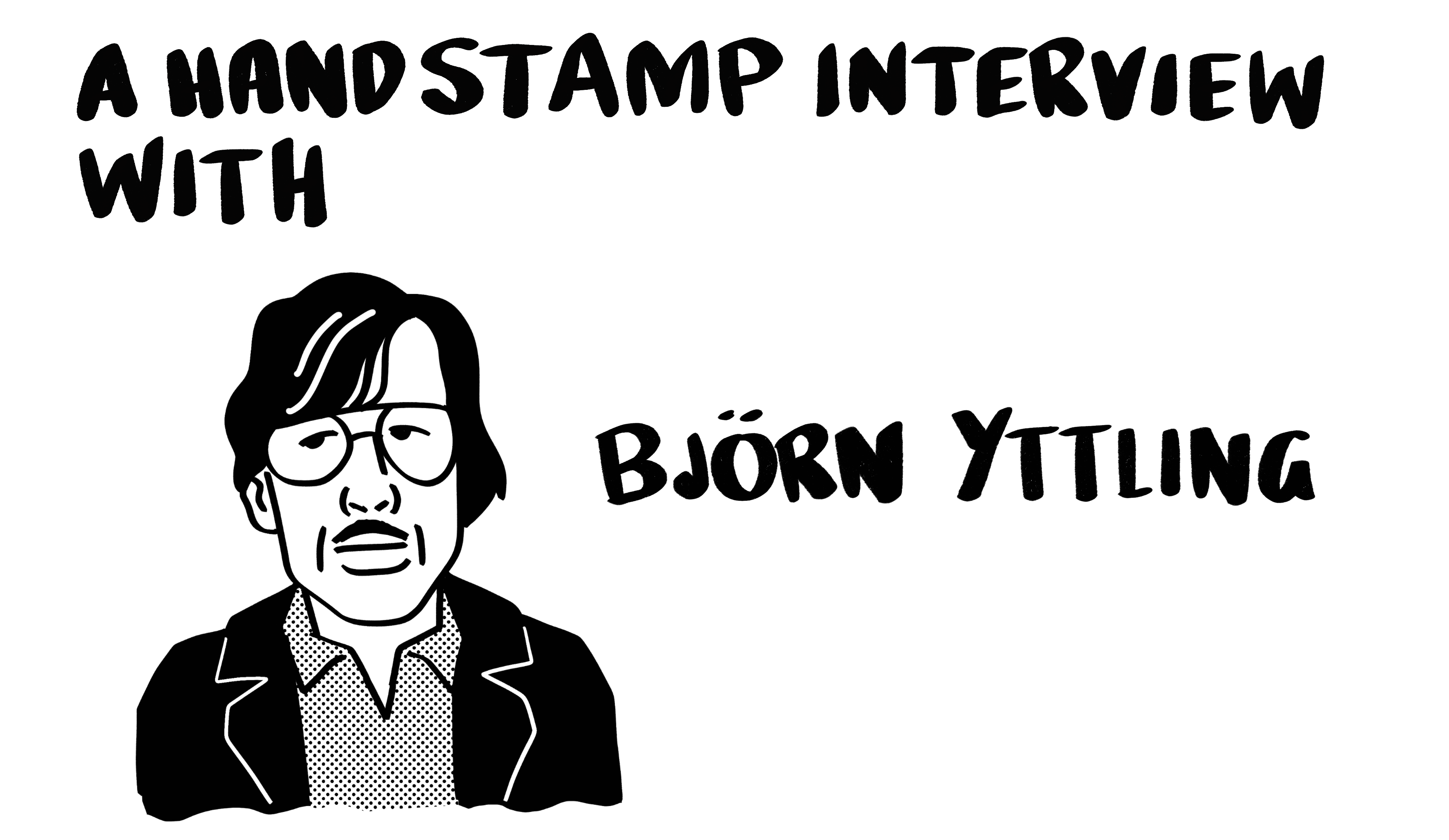
Somebody who had a pretty successful Coachella weekend was prolific Swedish songwriter, musician and producer, Björn Yttling. The founding member of Peter Bjorn and John performed a triumphant set with longtime collaborator Lykke Li, but a couple of weeks before that, he connected with me from Stockholm, just before he left to complete local hockey coaching duties. We discussed his expansive and dynamic work for the project Yttling Jazz, but first went back to his hometown of Norsjö.
Björn Yttling: “I lived there until I was 15 or something. In Sweden we have something called Dansband, which is like Swedish country. They played popular songs with a lot of reverb and you dance to it for three hours. That was the live situation in Norsjö. In the 80s, it was either that or people playing the accordion out on their porch.”
Handstamp: Just neighbours playing for everybody? I guess that can either be a treat or a negative, depending on your taste.
Björn Yttling: “[laughs] Some people were really good, actually. Anyway, then we started playing music ourselves, playing covers of Depeche Mode and so much more. Anything from ZZ Top to Jean-Michel Jarre.”
“Improvisation in sports is crucial, because you don’t always have time to think about it and sometimes have to play fast, like Charlie Parker. I think it’s a beautiful analogy, there are a lot of similarities, but you don’t get hit quite as hard in jazz.”
Handstamp: It sounds like you may have adopted synths early. Was there a show you saw that informed that choice?
Björn Yttling: “We never saw a show with a synth, because they didn’t really happen there. It was all about listening to cassette tapes and on the radio, passing stuff on to your buddies. People didn’t really love that type of music around there at the time, it was all about boogie and blues.”
Handstamp: Obviously jazz eventually made a major impact on you, do you remember first seeing a performance that influenced you in that genre?
BY: “The biggest impact for me was in high school, when I was 16, because I moved to a different city that had a jazz club. Our math teacher owned the club and he made sure we could go for free, if we wanted to. That was really cool, as even though it was over an hour away from Stockholm, they still got some really interesting artists to stop by. It was high-level stuff. I saw a band play, with an enormous player from that city called Bobo Stenson, who is one of the biggest Swedish jazz players ever. He would regularly play at that club.”
Handstamp: Were there any other inspiring shows that you saw around that time?
BY: “Well, one of the most formative things I saw was Herbie Hancock in 1993, in Stockholm at a festival. My school buddy Magnus played with him, which was really exciting. He was 19 and so was I at the time. When he called me to tell me he would be playing with Herbie Hancock, it was a really big deal. It was very inspiring to see him play with such a great artist, a legend.”
Handstamp: Did the experience of seeing a peer achieve that give you an extra push?
BY: “Oh, yeah. He was always so good, so trying to keep up with him made me much better than I was. Having such a good musician in my class definitely helped. The greatest part is that I still play with him, hang out with him, play tennis with him and he played on this most recent Yttling Jazz record.”
Handstamp: That’s beautiful. Is tennis your main sport, I noticed you’re wearing some sort of team attire.
BY: “This is ice hockey, I’m about to go and coach. No rush, I’m just pretty prepared.”
“When you’re seeing a free jazz band, those people don’t want to act like they’ve ever rehearsed, then you see some great rock bands and they don’t want to act like they’ve ever improvised.”
Handstamp: You’ve been actively involved in making and performing music for decades now. Has that affected your ability to enjoy live shows fully?
BY: “I think so. It’s like, if you’re a football coach and you go to watch the game, it won’t be like the Average Joe going to a game. You think about what could be different or what is particularly impressive about it. Still, occasionally you get blown away. For example, when we played Coachella, with Peter Bjorn and John, we shared a stage with My Bloody Valentine and The Cure. It was around 15 years ago, but seeing them play, all these years later and still going for it, sounding so great, it was inspiring. I can still get into it, but there’s more to it. If I go to see a jazz concert, I can be pretty blown away but I can’t really JUST be a fan.”
Handstamp: I guess watching an impressive free jazz player and hearing My Bloody Valentine’s wall of sound are mind-blowing in uniquely different ways too.
BY: “When you’re seeing a free jazz band, those people don’t want to act like they’ve ever rehearsed. Then you see some great rock bands and they don’t want to act like they’ve ever improvised. Watching a punk band, it should seem like they’re barely making it through the show, while watching a jazz band, you want to feel taken care of, maybe. I think maybe I’m somewhere in between those two feelings. Sometimes you want it to sound a little bit broken and not too slick.”
Handstamp: A lot of people are craving performances from real human beings, so live improvisation seems like a good reminder of that, as it celebrates embracing the moment. What’s your approach with Yttling Jazz?
BY: “I’m doing a mixture, really. I will use hand signs to indicate certain things, you know, shorter solos, longer solos… I like it to be a mix of rehearsed and improvisation, so you never really feel totally safe while performing.”
Handstamp: How does that carry over into your hockey team, do you like them to be super drilled or free flowing?
BY: “[laughs] that a good one, because it’s similar. You have to use your energy, but if the other team has more energy, you have to be able to fall back on the system, or arrangements that you have worked out. Right now, the team doesn’t have the basics, because they’re so young, so we have to go with as much energy as possible. But yes, improvisation in sports is crucial, because you don’t always have time to think about it and sometimes have to play fast, like Charlie Parker. I think it’s a beautiful analogy, there are a lot of similarities, but you don’t get hit quite as hard in jazz.”
Handstamp: Thankfully. Can you pinpoint a show that had a significant effect on you?
BY: “It took me a long time to see Bob Dylan. I couldn’t afford to see him in the 90s, so I only recently just saw him in Stockholm, last year. The papers wrote him down, but he is still fantastic, he’s still doing whatever he feels like and playing the way he wants to. That’s what’s so great about him. Another one, which is probably not expected from me, is Mr. Bungle. I’m not a super fan of them, but what I remember from the show is that they played a really long song and the amp broke down half way through. The singer, Mike Patton from Faith No More, then just decided to start the song over again. The song was like 11 minutes long, but they didn’t care. It was a memorable moment, which made me realise some things about the relationship between the audience and those on stage. I just thought it was quite ballsy.”
Handstamp: You spoke about not being hit when playing jazz, but I understand the new album, Illegal Hit, is basically a reference to that part of hockey. The record is out, how have you felt about sharing the music in a live environment?
BY: “I’ve been playing a lot of pop and rock music, playing songs, so it’s been refreshing for me to do the jazz thing. I feel very confident that if we start the song in a different key, or whatever, it’s still going to be something good. Also, I worked with so many great musicians on the album, but sometimes they can’t make it live, so we aren’t always rehearsing, but it’s still taking shape and working out. People expect me to play a different version every night, which is a different experience. I’m playing right now with Lykke Li, who I just made an album with and you have to play specific versions of the songs people know, of course. Playing the jazz shows actually makes it more fun to play rock and pop shows, somehow, because you get a bit of both.”
Yttling Jazz are set to tour Sweden in May 2026 and his production on Lykke Li’s The Afterparty can be heard from 8th May. Subscribe to Handstamp Substack for future interviews, follow @itshandstamp on social media and just bloody listen to Chief Springs on your chosen platform, will you? This week’s illustrations by Geo Law.
No posts
Comments
Nothing yet. Say the first thing.
Sign in to join the conversation.