
What are YOU preparing for?
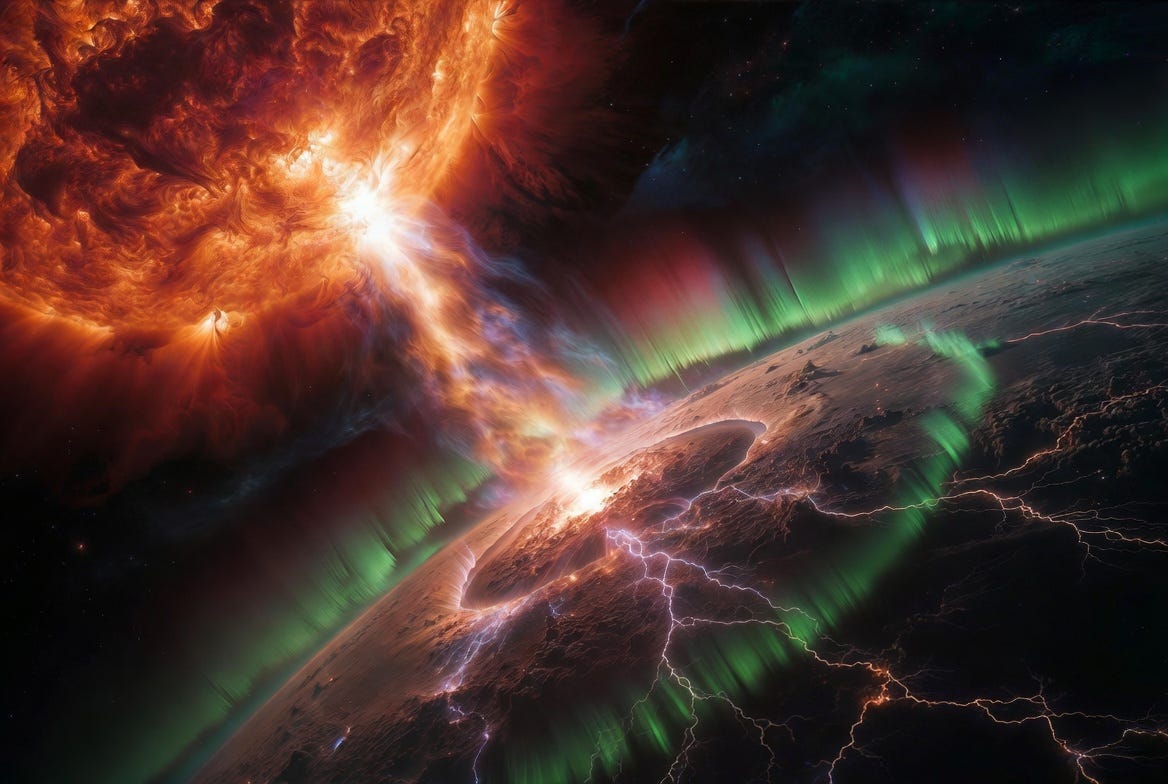
Earth’s geological and climatic history is punctuated by periods of abrupt, catastrophic change rather than purely gradual evolution. Emerging interdisciplinary evidence points to a recurring ~12,000-year cycle involving extreme solar activity, geomagnetic weakening, and significant terrestrial disruption. This article synthesizes recent scientific observations — including accelerated magnetic field decline, unusual auroral displays, solar-seismic correlations, and geological markers like polystrate fossils — into a working hypothesis: the Solar-Electromagnetic Catastrophe Cycle.
This cycle proposal does not necessarily require a dramatic 90-degree crustal flip, as proposed by renowned researchers Ben Davidson from Space Weather News, The Ethical Skeptic Roger Cunningham and others, although it draws significantly on his compelling body of work. Instead, it proposes that massive plasma influxes during solar superstorms, interacting with a weakened geomagnetic field, induce electrical surges along conductive faults and destabilize the low-velocity zone (LVZ) in the upper mantle. The result is chaotic lithospheric “rocking,” mantle heaving, increased volcanism, rapid sedimentation events, and climatic disruption. Regions like the Appalachian Mountains and the Eastern Rockies may offer relative refuge due to elevation and geological stability.
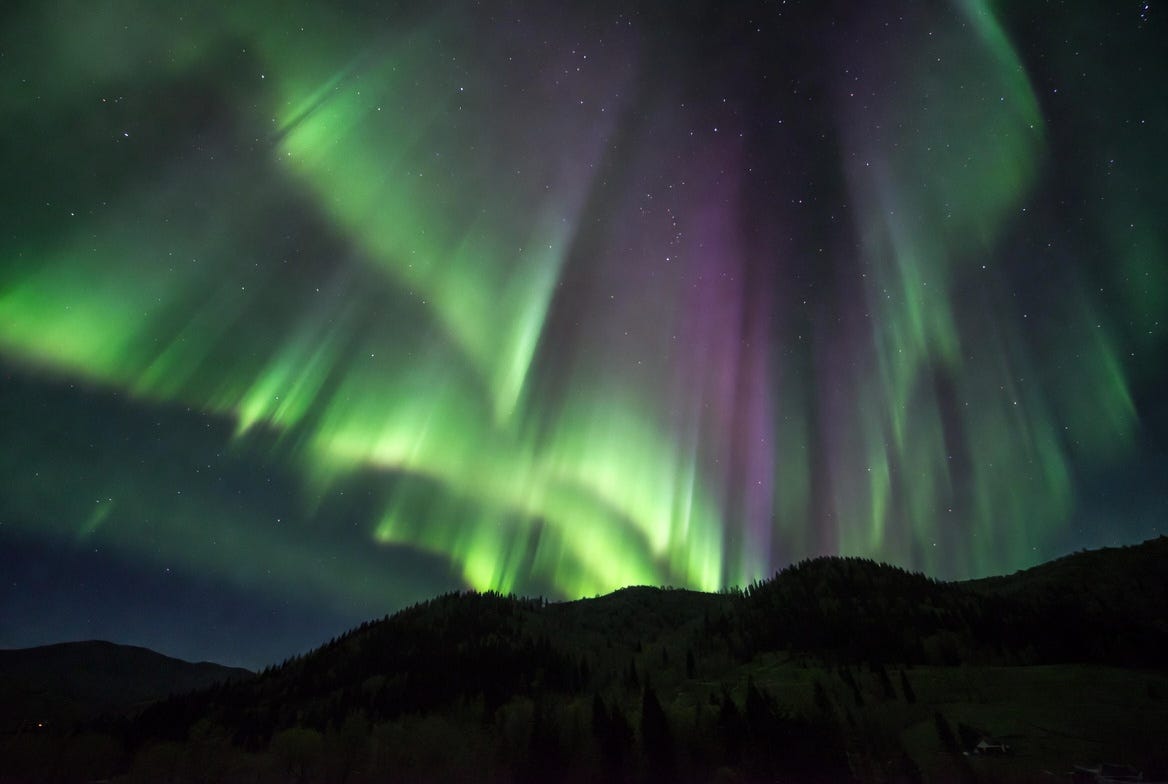
Earth’s magnetic field has weakened by approximately 10–30% since the mid-19th century, with acceleration noted in recent decades. The 2025 World Magnetic Model (WMM2025) and Swarm satellite data confirm ongoing rapid changes, including pole migration (North Magnetic Pole at ~36 km/year) and expansion of the South Atlantic Anomaly.
This weakening has dramatic real-world consequences. Strong geomagnetic storms in 2024–2026 produced vivid auroras at unusually low latitudes, including Florida, Georgia, Arizona, North Carolina, Texas, and even parts of the Yucatán. These events demonstrate that solar plasma now interacts more intensely with Earth’s atmosphere as the protective shield thins.
A field weakened by 50–60% (plausible in coming years and very likely within most of our lifetimes) would allow far deeper penetration of charged particles and induced currents, amplifying any solar outburst.
The Sun is capable of far more powerful outbursts than the 1859 Carrington Event (estimated X20–X45). The 774–775 CE event, marked by a global radiocarbon spike, was likely 10–20 times stronger. In an Electric Universe framework, a future “micronova-like” superflare or extreme coronal mass ejection (CME), triggered during periods of heightened interstellar dust or galactic positioning, could deliver massive plasma energy to Earth.
Modern Solar Cycle 25 (peaking ~2024–2026) has already produced numerous strong X-class flares, underscoring the Sun’s variability.
Recent peer-reviewed research supports the idea that solar activity can influence terrestrial seismicity. The foundational 2020 study by Marchitelli et al. found a highly significant correlation between solar proton density and large earthquakes (M≥5.6), with a one-day lag.
Subsequent 2024–2026 studies, including Japanese research from the University of Tsukuba, have strengthened this link. Mechanisms include:
Ground-induced currents (GICs)
Ionospheric disturbances creating electric fields
Reverse piezoelectric effects in rocks
Thermal stress from solar heat transfer
Highly conductive faults appear to act as pathways for these electrical surges, potentially reducing friction or adding stress to critically loaded systems.
This electrical “superstorm” component becomes far more dangerous when combined with a weakened magnetic field… indeed these conditions are closely related, as the Earth’s magnetic field is weakening because of the galactic wave that traverses our solar system every 12,000 years, and this is also what causes the solar superstorm/micronova.
The low-velocity zone (LVZ, part of the asthenosphere at ~80–250 km depth) is already a weak, partially molten layer that allows lithospheric plates to move. Enhanced electrical heating and mechanical stress from intense GICs could increase partial melt or further reduce viscosity.
This creates a “styrofoam panels on turbulent water” dynamic: independent jostling and vertical heaving of crustal blocks, rather than a single coherent global shift. The outcome includes widespread (but patchy) earthquakes, fault reactivation in unexpected areas, and surges in volcanic activity as magma finds new pathways. Massive ash and aerosol injections could then trigger multi-year “nuclear winter” conditions.
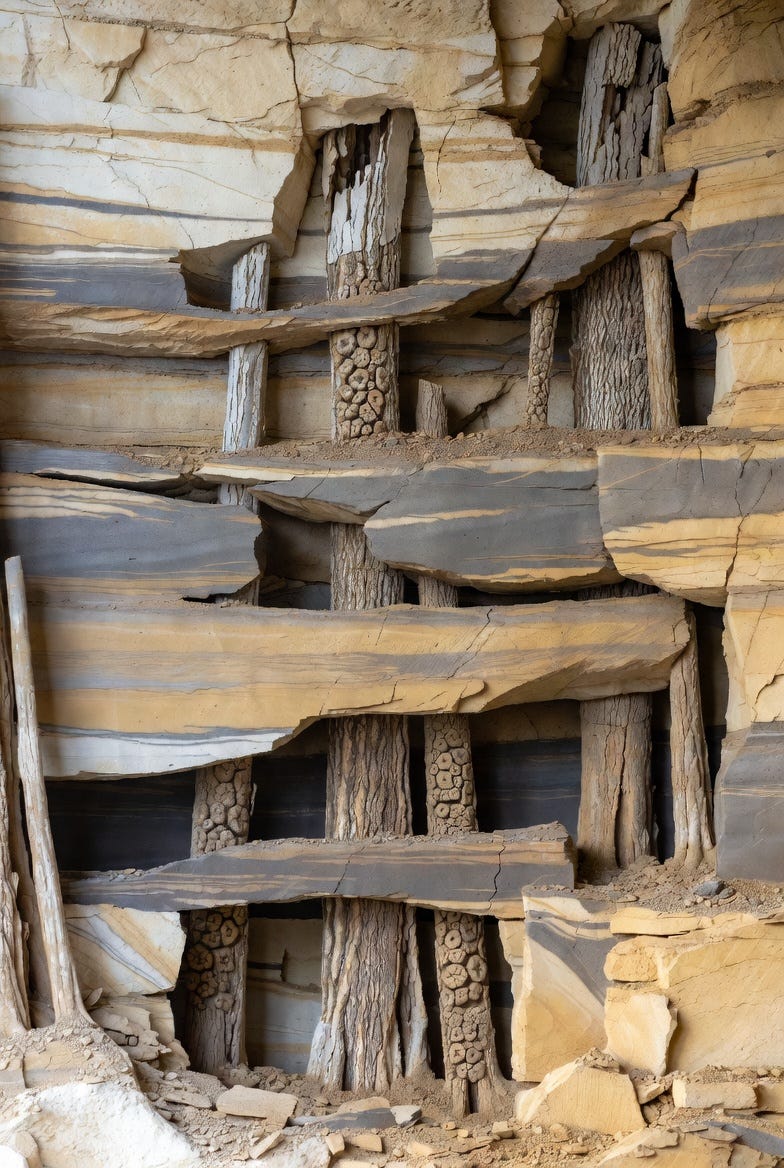
Polystrate fossils — upright trees spanning multiple sedimentary layers — provide tangible evidence of rapid, catastrophic burial. Famous sites include Yellowstone’s Specimen Ridge (volcanic lahars and ash), Joggins Fossil Cliffs (deltaic flooding), and various Appalachian coal measures.
These features require rapid deposition (days to years per major layer) to preserve upright trunks before decay. Many show mixed signatures: clastic flood sediments combined with volcanic ash/tephra (glass shards, specific minerals). In a superflare + LVZ destabilization scenario, oceanic sloshing from crustal rocking plus widespread volcanic activation would produce exactly such hybrid deposits.
Proxy records reveal recurring clusters of geomagnetic excursions, rapid climate shifts, and catastrophic layers approximately every 12,000 years. The Younger Dryas (~12,900–11,700 years ago) stands out as a period of abrupt cooling, megafaunal extinctions, and evidence of cosmic/solar disturbance. The Laschamp excursion (~41,000 years ago) and potential earlier analogs further support cyclicity.
Some researchers link these to solar superflare activity during geomagnetic weakening, possibly modulated by galactic positioning and interstellar dust influx.
Where can you survive what is to come?
In this scenario, the Appalachian Mountain range, especially at or above the 2,000 foot elevation in the ancient, stable Blue Ridge Mountains would likely fare better than coastal or low-lying regions. Key advantages:
Protection from tsunamis and major flooding due to elevation and distance inland
Relatively stable basement rock less prone to extreme disruption
Abundant freshwater springs, forests, and resources for self-sufficiency
Primary risks would include volcanic ash fallout (roof collapse, water contamination, respiratory issues), localized earthquakes/landslides on steep slopes, prolonged cooling/dark skies affecting agriculture, and total grid/communication collapse from GICs.
Another strong candidate is the Eastern Rocky Mountains, particularly high-elevation areas of Colorado, Wyoming, and Montana. Much like the Appalachian highlands, these inland mountainous zones benefit from significant elevation (often 5,000–10,000+ feet / 1,500–3,000+ meters), providing substantial protection from any oceanic sloshing, tsunamis, or major coastal flooding that could result from lithospheric rocking and mantle heaving. The distance from both the Pacific and Atlantic/Gulf coasts (hundreds of miles) further reduces direct inundation risks, while the ancient crystalline basement rocks in many areas offer relative geological stability compared to active plate boundaries.
The Rockies also possess abundant natural resources critical for long-term survival: reliable freshwater from snowmelt and mountain streams, extensive forests for fuel and foraging, and arable valleys suitable for cold-hardy agriculture once the initial “nuclear winter” phase subsides. However, residents would need to prepare for heavy volcanic ash fallout, potential landslides on steep terrain, and localized seismic activity along reactivated faults. Overall, the high plateaus and intermountain basins of the Eastern Rockies represent another strategic inland refuge, complementing areas like southern Appalachia in a future period of heightened solar-terrestrial stress.
The convergence of a weakening magnetic field, increasing solar activity, documented solar-seismic correlations, and geological evidence of past catastrophes suggests we may be approaching a nodal point in the ~12,000-year Solar-Electromagnetic Catastrophe Cycle. While full causation chains require more modeling (particularly energy transfer to the LVZ), the correlations are growing too strong to ignore.
This hypothesis bridges mainstream space weather and seismology research with catastrophist interpretations of the geological record. It calls for urgent interdisciplinary study: expanded solar monitoring, LVZ electrical modeling, detailed sediment geochemistry at polystrate sites, and practical preparedness planning.
Civilization has survived previous cycles. With awareness and preparation — especially in resilient inland highland areas — we may do so again. This website is dedicated to education and preparedness for what is to come, so that as many of us can survive as possible.
Acknowledgments: This article was developed through extended collaborative dialogue with Grok, research by Ben Davidson as well as The Thunderbolts Project, synthesizing scientific literature, geological observations, and some speculative mechanisms. All interpretations are the author’s, building on publicly available research as of May 2026.
Comments
Nothing yet. Say the first thing.
Sign in to join the conversation.