
By Karla Lategan
“Wake up, it’s 2016.”
Natalie smiles into the camera in a pink tank top and skinny jeans. Major Label’s “Lean On” blares as she performs some variation of a TikTok dance in front of L.A.’s palm-tree-flecked skyline. Washed in the purple tones of the Rio de Janeiro Instagram #filter, the video feels like a time capsule — perfectly designed to recreate the carefree iPhone 7 ambiance of the mid-2010’s.
Though the scene around her is an imitation, it’s clear her excitement is not. Natalie is part of a growing cohort of young people using every power available to forcibly turn back the clock. Hervé Léger’s bodycon dresses backlogged on Vinted saves, chrome eyeshadow tutorials trending on Instagram, girl-centric pop music soundtracking TikTok’s dances — everything short of the dog filters’ unfurling tongue and Avicii himself have been dug out of old Snapchat memories, under the anthemic motto “2026 is the 2016.”
It seems we’re all collectively closing our eyes and wishing ourselves backward. But can we really jar the zeitgeist of a bygone era and keep it shelf-stable long enough only to crack open on the coldest of cultural winters? And why, now, are we so eager to rummage through our prepper pantries?
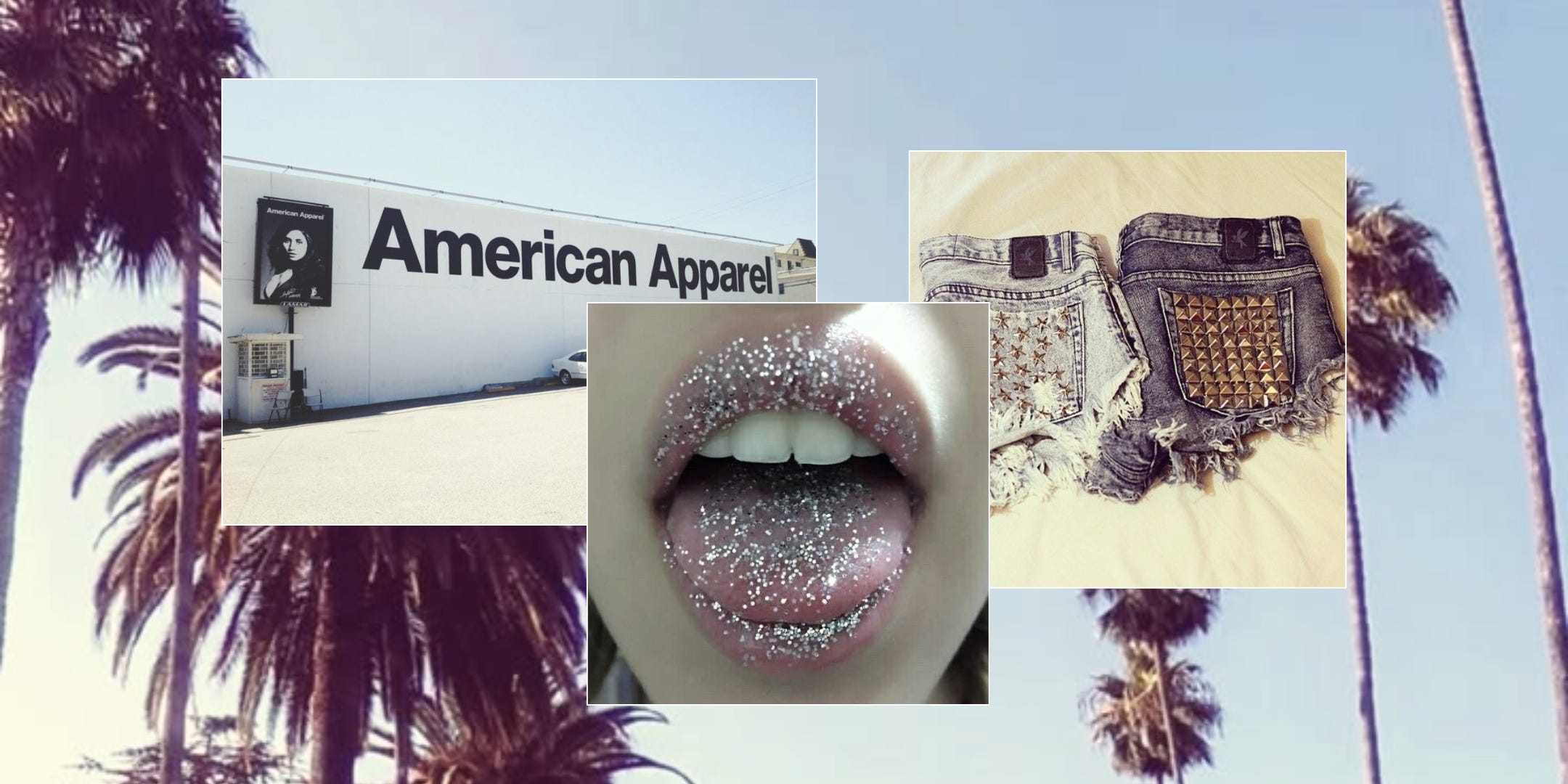
Looking back at the early 2010s, the era felt scored with an undeniable sense of forward momentum — so much so that it has since been flattened into the shorthand of “millennial optimism.” That optimism was not just felt, but seen. It lived in maximal cut-crease glam, in the sugary-saturation of Tumblr pink, in the layering of neon green over neon orange, and in the thousand variations of palm tree print sold from Primark to Paco Rabanne.
On TV, Lena Dunham “found herself” in Bushwick warehouses and lost herself to season-long situationships, all while dressed in bright green jersey tops and lady-bird print dresses. At the same time, independent print magazines, like NYLON, ran articles with step-by-step instructions on “How To Change The World,” next to spreads of brightly clad, upbeat young warriors ready to leave their mark in tweed and Aztec print.
And design houses — from Stella McCartney’s unicorns, to Gucci’s parrots and Dries Van Noten’s cheetah print — reached for motifs that implied terrain not yet mapped. In a time when the culture still believed the future was wide open, fashion dressed for its expansion.
Back then, the future felt malleable and fashion engaged with it playfully. After 2016, the culture hardened. Politics became increasingly polarising and our clothes, like the world around them, turned black and white.
Now, a decade on, the aesthetics that once defined the big and bold 2016 era — saturation, gloss, the word “swag,” and sing-along pop — are back. Gen Z, who feel cheated out of the Bushwick Warehouse Raves, BuzzFeed Office Jobs, and the VICE gonzo documentaries they were promised by millennials and their Obama-era optimism, are once again using dress as a deliberate tool to influence mood.
So-called “dopamine dressing” — a trend of late 2025 to use dress to positively influence moods — arrived as a workaround: a way of engineering pleasure back into our lives when it stopped arriving on its own. Fashion creator Sammie Lena describes dopamine dressing as “wearing clothes that bring you the most joy and confidence.” Her list of clothes that induce this kind of euphoria includes but is not limited to: leopard print, polka dots, gingham, layering bold colours over metallics, and adding on as much big, chunky jewellery as your arms can carry.
This logic hasn’t faded into a fast fad. If anything, it’s intensified through to the new year into an outright call to arms. Matthieu Blazy’s Chanel in Bambi spots, Alaïa in tiger stripes and Prada in zebra — bold animal prints are again appearing everywhere from fur coats to ballet flats, dressing the collective psyche in the wild, the ungoverned, and the untamed.
Off the runway, Addison Rae is wearing aqua blue latex dresses, Kylie Jenner and Timothée Chalamet are in head-to-toe Chrome Hearts orange, and Rachel Sennot’s I Love LA is studded in barely there, skin-tight neon. Fashion is once again in the mood to play, and to step foot onto the playground is to insist that fun is still to be had.
Against a backdrop of hardened cultural division, fewer certainties, and narrower futures, this visual excess insists on novelty when none feels guaranteed.
Our growing appetite for play goes beyond how we dress, and into our relationship with the broader world. Across feeds and For You Pages — “my year of whimsy,” “whimsy goals,” “how to add more whimsy into your life.” The word “whimsical” has become nothing short of a Gen Z buzzword, with countless videos and articles detailing how to rewire play into your life, whether it be cutting your pancakes in the shape of love hearts, sending postcards to friends, or bedazzling your BIC lighter with pink rhinestones. Embracing our collective sense of silliness is a way of refusing seriousness as the default emotional register.
In the same tone, young people are consciously switching algorithms for analogue: CDs, mixtapes, DVDs, and magazines. Physical media that reinforces presence over convenience;
choices, patience, and limits over easy-access, infinite-scroll, device-driven dopamine.
Just before escaping London’s January greys for a South American holiday, a friend dug out her old family camcorder. We tested it in the living room before she left, waving at the lens, watching ourselves move across a small screen in big pixels. Lugging the heavy bulk from its dusty box, through easyJet’s carry-on prison, and across the mountains of the Colombian jungle — just to film a worse version of what an iPhone could — might seem like nothing more than nostalgia-driven escapism. But it felt like something deeper: a desire to be more present with our memories as we make them. Signaling a return to the same carefree style of capturing memories we had back in the mid 2010s, when the collective gaze still faced forwards.
We can’t return to 2016, no matter how much glitter we pack onto our eyelids, but we don’t need to. Dressing for a brighter future may be how we begin to believe it. Aesthetics don’t just reflect how we feel; they train how we move through the world. Against the greyscale dopamine drought of recent years, the bright and playful optimism of the 2010s feels like a breath of fresh air. To reach for these aesthetics now is to borrow the same visual language – one that treats optimism not as a mood, but as a muscle. 🌀
Thanks for reading HALOSCOPE! This post is public so feel free to share it.
Karla Lategan is a writer based in East London. Her work explores the intersection of fashion, culture and media. Originally from Australia, and with a background in sociology, she writes with a curiosity for people and the social forces that shape them.
Comments
Nothing yet. Say the first thing.
Sign in to join the conversation.