
🏈🏈🏈🏈🏈🏈🏈🏈🏈
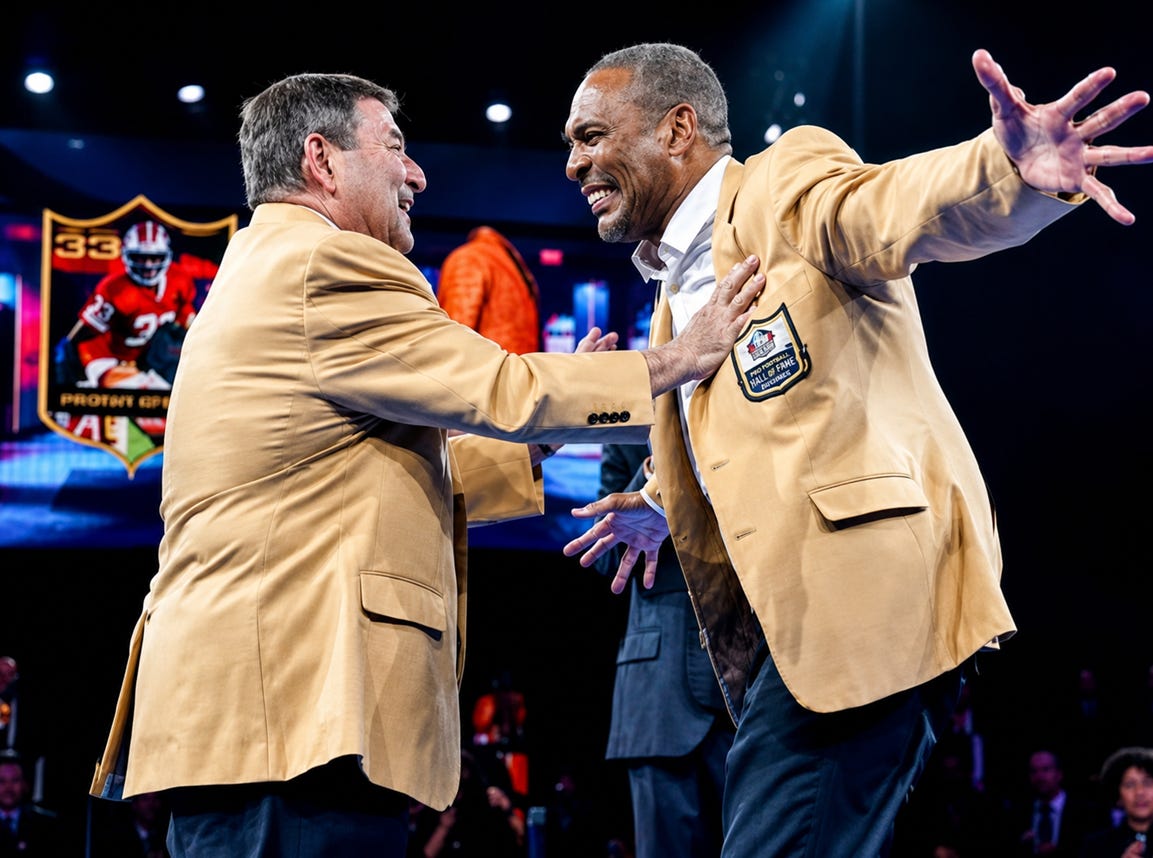
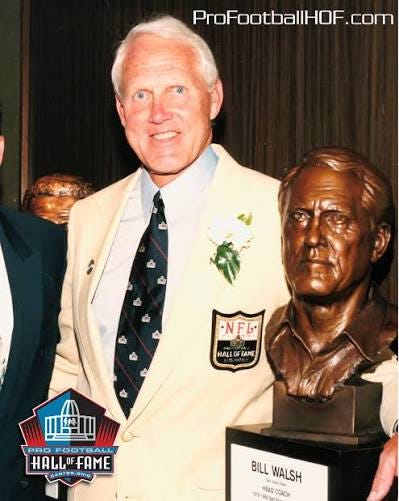
CANTON — Coach Bill Walsh and running back Roger Craig are together again, immortalized here in the Pro Football Hall of Fame: Walsh from the Class of 1993, Craig as a 2026 Class inductee.
On Friday night, former 49ers Hall of Fame team owner Eddie DeBartolo Jr. fit Craig for his Gold Jacket as member of the Class of 2026, some 33 years after he last played. Craig’s bronze bust was scheduled to be unvieled Saturday.
Craig joins a 2026 Class that includes quarterback Drew Brees, wide receiver Larry Fitzgerald Jr., linebacker Luke Kuechly and kicker Adam Vinatieri.
Days before he passed in 2007, Walsh was intensly focused on getting Craig inducted into the Hall of Fame. During a lunch at Walsh’s home, we had a discussion that still echoes in my memory.
“We all know I do not have long,” Walsh told me. “But I will never rest in peace until I know Roger is in the Hall of Fame.”
Walsh hosted a few sportswriters at his home during that period, most of them also selectors for the Pro Football Hall of Fame. They remember similar conversations.
“I think he wanted us to make a promise,” said Ira Miller, a former sportswriter and Hall of Fame selector. “We couldn’t promise, of course, but Bill wasn’t somebody who took no for an answer. It is hard to forget what Bill said.”
And it was easy to remember when Craig was officially inducted. Craig’s bust will join Walsh’s in the Pro Football Hall of Fame Gallery, along with that of DeBartolo and several other former 49ers.
🏈🏈🏈🏈🏈🏈🏈🏈🏈🏈
In the 33 years Craig waited, he reached the finalist stage only once before, in 2010, while still a Modern-Era candidate.
His induction fulfilled not only one of Walsh’s final requests, it made good a promise the coach made to Craig.
“Roger, don’t you worry,” Walsh said. “You will be a Hall of Famer. Just be patient.”
Craig never forgot.
“Of course, I remember he said that and all the other things Bill did for me,” Craig said after learning of is induction in Februrary. “I was so fortunate that Bill saw something that so many others did not, maybe not even me. It made my career, it made my life. He kept on pushing for me.
“It was awesome to win it during the week the Super Bowl was in San Francisco so I could have my wife and family with me.”
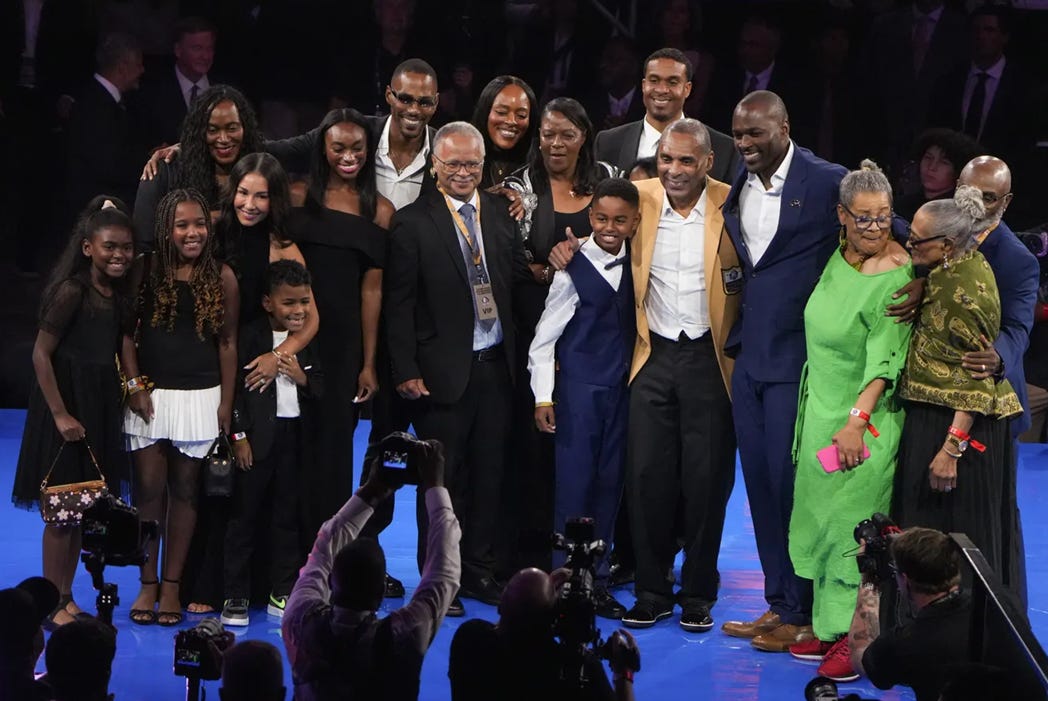
Craig’s wife and family were all with him when he received the Gold Jacket in Canton Friday night.
🏈🏈🏈🏈🏈🏈🏈🏈🏈🏈
🏈🏈🏈🏈🏈🏈🏈🏈🏈🏈
Walsh remained genuinely upset when Craig did not enter the Hall years earlier.
“It took a while and sometimes it was stressful,” Craig said. “But I am in now. I am in forever. Bill was so supportive in every way.”
Walsh saw a football truth that others missed.
🏈🏈🏈🏈🏈🏈🏈🏈🏈🏈
🏈🏈🏈🏈🏈🏈🏈🏈🏈🏈🏈🏈🏈🏈🏈🏈
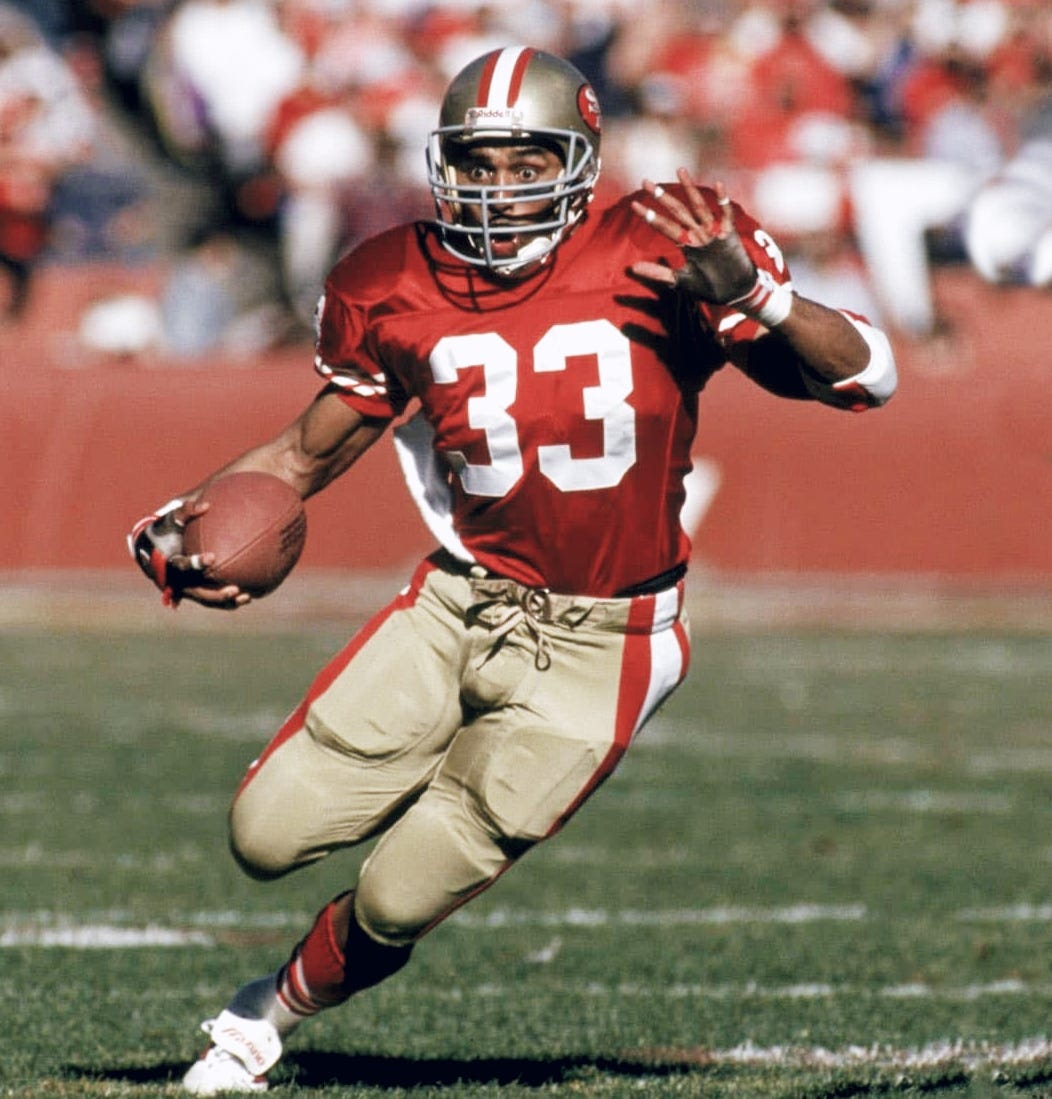
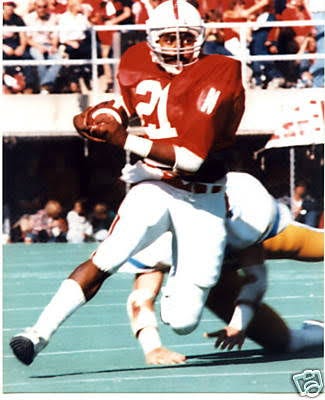
Craig arrived from Nebraska as a fullback whose college résumé offered little evidence of the receiving role ahead for him. He caught only 16 passes during his college career.
Walsh, who worked with us at NFL Draft Scout, dismissed reports that Craig could not catch.
“Don’t tell me what he can’t do,” Walsh said. “We can change that. He just hasn’t done it yet.”
Walsh saw balance, toughness and versatility. He also saw possibilities. Craig could run inside, reach the corner, block or leave the backfield as a receiver. That range of skills allowed Walsh to create problems that conventional defensive personnel could not easily handle.
The transformation required work. Craig sometimes caught as many as 100 passes a day in practice while developing the hands and timing demanded by the offense. Nebraska used him mostly on simple passes. Walsh expanded the assignment to screens, wheel routes and patterns commonly run by wide receivers.
Craig lined up at halfback and fullback. Walsh also sent him in motion, forcing defenses to reveal how they intended to cover. A short completion to Craig could serve the same purpose as a running play, with the added possibility that he might break into the open field.
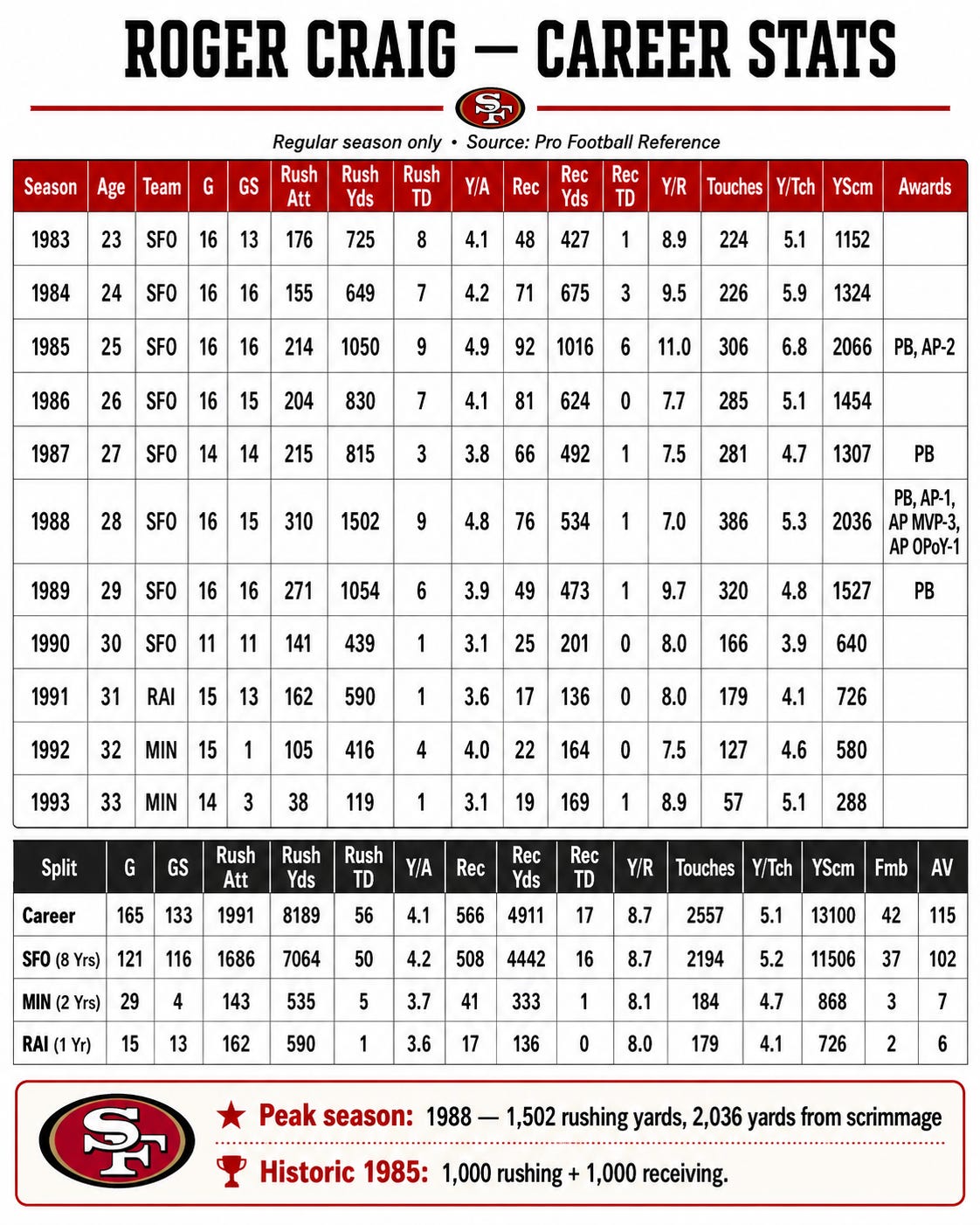
The result became historic in 1985, when Craig became the first NFL player to rush for 1,000 yards and gain another 1,000 receiving in the same season.
“Craig was the future of what running backs would become,” Walsh said.
Craig gave the West Coast Offense a player who could shift responsibilities without leaving the field. Walsh called him an “extension of the quarterback.”
His production supported the description.
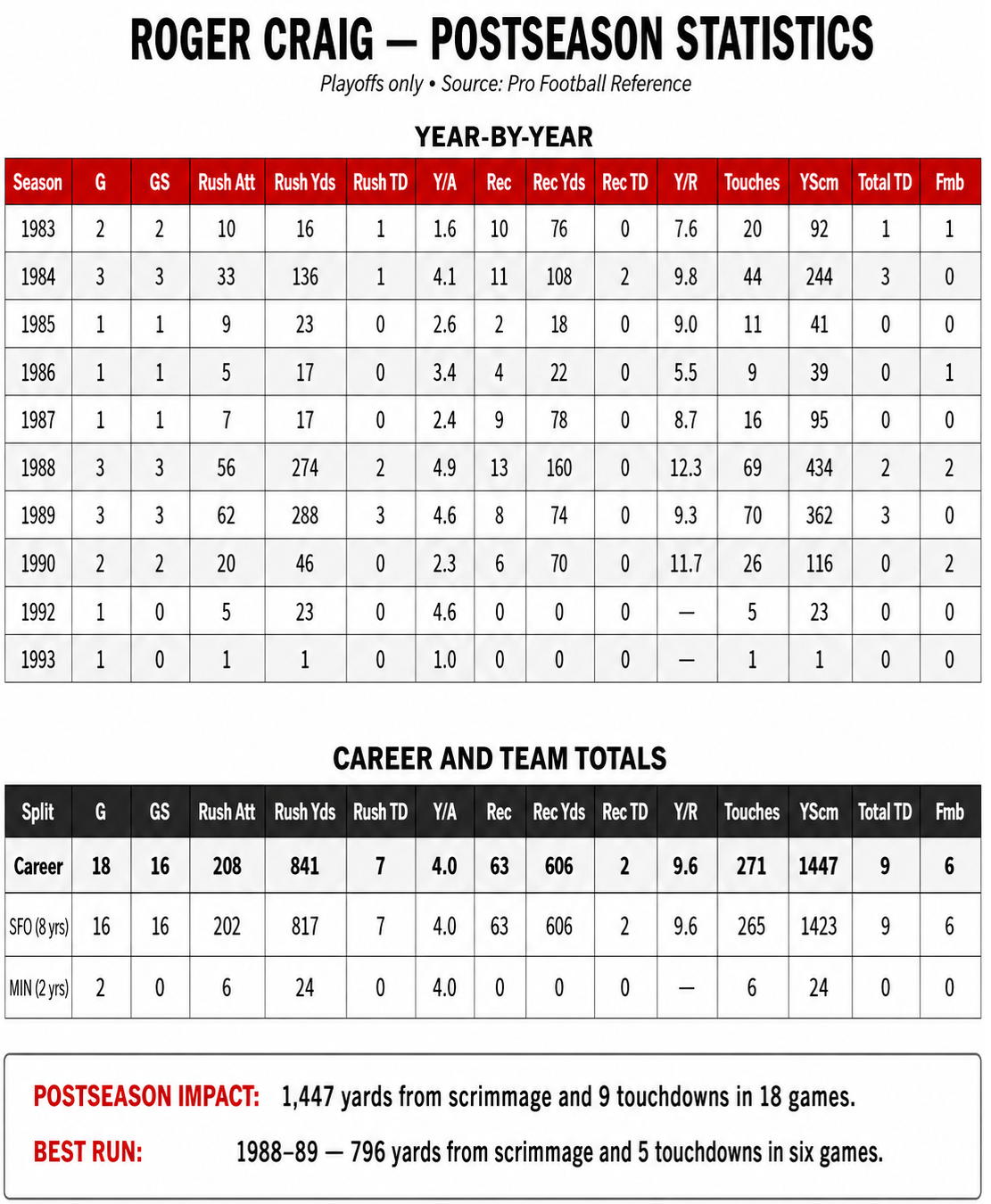
Craig became the first player to score three touchdowns in a Super Bowl. He led the NFL with 92 receptions in 1985, remarkable production for a running back in any era. Three years later he rushed for a career-high 1,502 yards and was named NFL Offensive Player of the Year.
🏈🏈🏈🏈🏈🏈🏈🏈🏈🏈🏈🏈🏈🏈🏈🏈
One of Roger Craig’s most memorable runs came against the Los Angeles Rams in 1988. An added feature in this video: John Madden and Pat Summerall describe Craig’s running style. Double-click on the video to activate it.
🏈🏈🏈🏈🏈🏈🏈🏈🏈🏈🏈🏈🏈🏈🏈🏈
Walsh credited Craig’s ability to run, catch and block with allowing the San Francisco offense to “spread its wings.”
The influence remains visible. Christian McCaffrey, another versatile 49ers back, operates with many of the same demands Walsh placed on Craig decades earlier.
Craig’s value also reached beyond the offense.
He set a tone in a locker room filled with powerful personalities, including Joe Montana and Ronnie Lott. Former teammates remember his optimism, preparation and willingness to lead when circumstances became difficult.
“Roger was always upbeat, always positive and when times were tough that meant a lot,” said Lott, the highly regarded Hall of Fame defensive back.
One lasting image comes from Edgewood Park, where Craig conducted punishing workouts that became part of 49ers lore. Jerry Rice later joined him there and chased the same conditioning standard.
Rice did not become Jerry Rice by accident. Craig helped establish the expectation he followed.
Walsh foresaw this moment years ago. Craig’s election finally completed the promise.
Bill Walsh can now rest in peace.
🏈🏈🏈🏈🏈🏈🏈🏈🏈🏈🏈🏈🏈🏈🏈🏈🏈🏈🏈🏈🏈🏈🏈🏈
courtesy of Pro Football Reference
🏈🏈🏈🏈🏈🏈🏈🏈🏈🏈🏈🏈🏈🏈🏈🏈🏈🏈🏈🏈🏈🏈🏈🏈
No posts
Comments
Nothing yet. Say the first thing.
Sign in to join the conversation.