
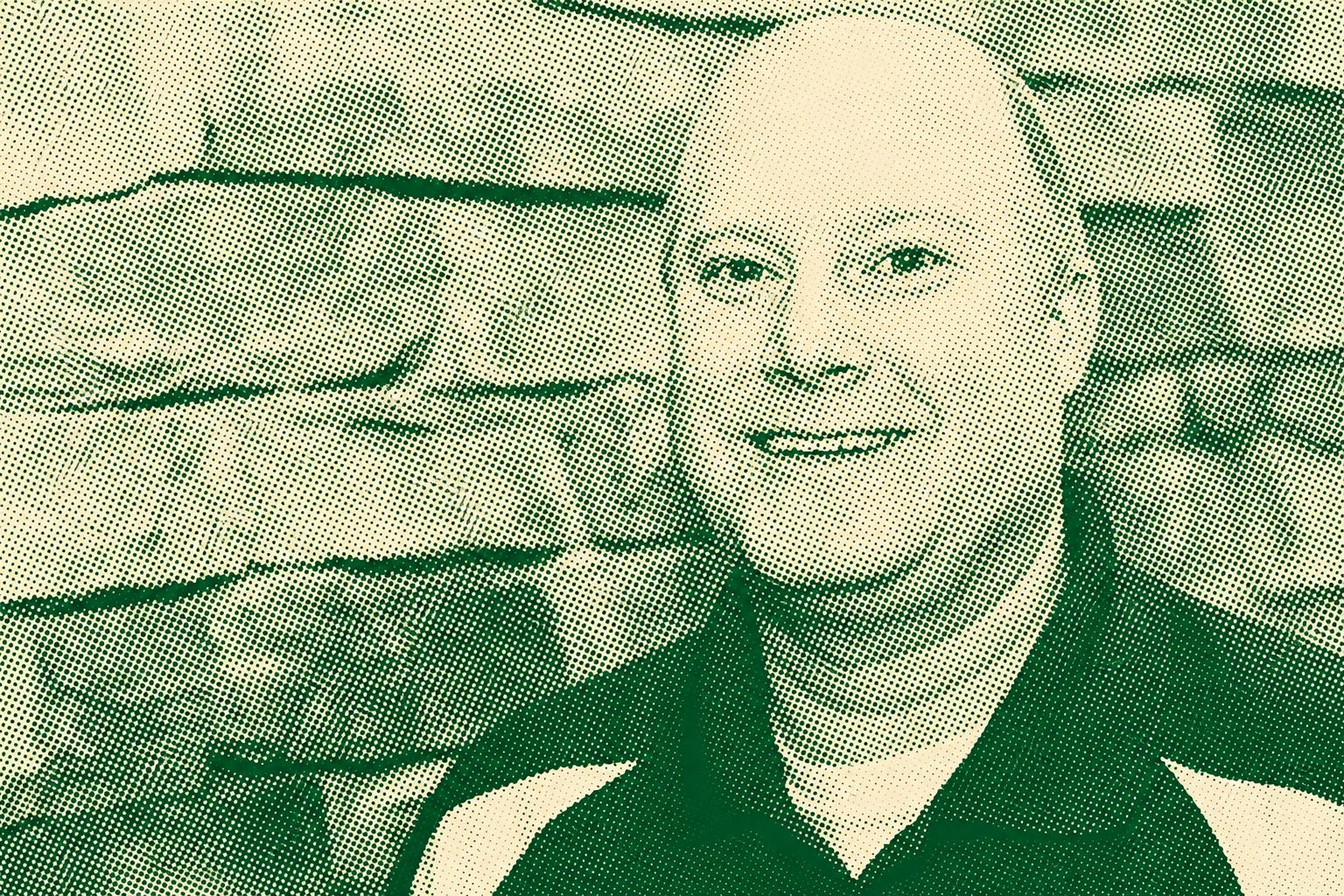
Derek Falkenstein has been in Physical Therapy since 1993 and has spent the past 20 years building Country Roads Physical Therapy in North Central West Virginia with his co-founder Mike Barkley. He entered the profession when his final semester of tuition at West Virginia University cost $928. Today, one of his clinic directors carries more than $250,000 in student debt.
As reimbursement has tightened and experienced clinicians have become harder to afford, Derek’s response has been to build the talent he simply cannot hire through uncapped continuing education, formal manager development, and profit sharing that gives clinic directors a direct stake in what they build. We sat down to discuss what two decades of private practice taught him about developing people, sharing ownership, and building leaders.
ben.barron: It looks like you’re already on site, ready to roll with your evaluation at 9:30.
derek.falkenstein: Yes, always ready, my friend. We’re keeping busy over here.
ben.barron: Well, look, I appreciate you taking the time and I know you have to get back to patient care. That’s actually one of the things I’d love to get into. I imagine the challenges you’re facing today in 2026 are much different than when you first opened Country Roads.
derek.falkenstein: Mike and I try to get together at least once every two weeks. Lately, it’s been weekly because of the number of changes going on and the things we’re trying to keep going. Staffing is always going to be a challenge, and it seems to be more and more acute.
derek.falkenstein: We met with our local university here at WVU because, when I was a young therapist, they made a point of having in-state people in the program. They knew there was a shortage in West Virginia, and that was already an issue back in 1990. Now the universities are scrambling for dollars, just like everybody else, and bringing more out-of-state people into the program.
derek.falkenstein: They might graduate 50 students, which sounds great, but often more than half of them may go back to their home states, leaving us with very few people. Staffing is a frustration. That’s a huge thing.
derek.falkenstein: We’re trying to work with other private practice owners to find a voice. There are a lot of very large practices that work outside the hospital networks, and they have a pretty big voice. Smaller private practice owners with one, two, seven or eight clinics don’t have as big a voice. I’ve been pounding the drum in my state, trying to get a group of us together that does things the right way. We need, as private practices, to figure out how we can work together to improve everybody.
derek.falkenstein: When we started, we brought a lot of things to West Virginia. Dry needling wasn’t really here in this part of the state. Astym wasn’t part of a lot of what people did. Then other clinics in our area started incorporating them. I had a patient ask, “Does it piss you off that now everybody’s doing the things?”
derek.falkenstein: I always said the one thing that can hurt us as a profession is if people go to physical therapy and get bad care. If they think, “Physical therapy can’t help me,” it hurts all of us. If we’re making other therapists step up, be better, stay current and pursue continuing education, that’s only going to help us as a whole.
derek.falkenstein: Staffing is a big thing. Reimbursement is obviously the other. But to me, how are we going to differentiate ourselves as the most appropriate initial caregiver for many musculoskeletal injuries? How do we make sure doctors and patients understand that, when you get hurt, running off and getting an MRI isn’t necessarily the best choice? How do we educate our payers, physicians and patients to understand that, when you’ve got an injury, this is where you should come? We’re the best source for getting you better fast. I think that’s one of our big challenges.
ben.barron: Yeah. Agreed.
ben.barron: I imagine you’re running wait lists at the vast majority of your clinics. Is that fair?
derek.falkenstein: Yes, yeah.
ben.barron: That’s not unusual. It’s what I hear from everybody out there, and it speaks to the fact that the market wants our services while the labor market is constrained. One of the worst things is when people don’t get great care, and 1B is when people don’t get care because we don’t have the capacity to get them in somewhere and meet their needs.
ben.barron: When you look three, five or seven years out for Country Roads, how are you going to continue meeting the needs of the market if thousands of physical therapists are not suddenly going to show up on your doorstep? Do we need to look differently at how we’re providing care, the care model and what we measure?
derek.falkenstein: I had done a continuing education series with Mike Timko, who was a professor at Pitt and WVU. Dr. Delitto was his mentor. He did a series looking at the upper extremity, lower extremity, back and cervical spine, with a model that basically said, look, we’re going to be frontline people.
ben.barron: Yep, sure.
derek.falkenstein: We’ve got to be able to rule out, you know, hey, when do we got to get people to a higher level of care? When are they appropriate for us? How can we quickly and aggressively address what they need?
derek.falkenstein: I thought that was a great way of looking at it, so I brought him in-house to do the lecture series for all of my therapists. I felt like, as a company, this is the kind of company I want to be. I want us to be very proactive about treating people and understanding early, hey, when do we just have to get this person back to the doctor because they’re going to be better served on that end?
ben.barron: Oh, wow, that’s amazing.
derek.falkenstein: Then how can we most quickly address their needs? People can’t come 40 or 50 times. We’ve got to get them stabilized, get them a program and get them out of here. If all of my clinicians are working with this mindset, we can maybe get people better faster. We can also get people who need to be at another site out the door faster. Those are ways we can open volume in our schedule and give ourselves more time to work with the people we need to work with.
derek.falkenstein: We need to get these people in, and we need to make sure they’re getting quality care at the outset. They’ve got to have a program on day one that they’re working on, and then we’ve got to progress that program from visit to visit. The days of somebody coming in and saying, these are my exercises and I’m just going to go through them, that doesn’t work.
ben.barron: I’m a physical therapy nerd at heart, and I always love hearing people’s origin stories. What drew you to the profession in the first place?
derek.falkenstein: Growing up, I was sure I wanted to be a veterinarian. I was 99.9% sure. When I was in middle school, I had written to colleges to find out which ones offered veterinary studies. My plan throughout high school was to become a veterinarian.
derek.falkenstein: Then, when I was a senior in high school, I blew my knee out wrestling. I was highly rated in the state, and we had a tournament starting the next day. A kid in practice did a move, and the first time he did it, it was great. When we wanted to show the coach, I had weight on that knee, and when he twisted me, it ripped.
derek.falkenstein: The next day, my mom made a phone call, and I was off to physical therapy. I had no idea what that was.
ben.barron: Wild.
derek.falkenstein: My mom and I remember the appointment a little differently. I remember sitting with her while I was on ice and telling her, “I think I could do this for a living. This is something that interests me.”
derek.falkenstein: She remembers me asking, “I wonder how much these people make.” There’s a slight difference between those two memories.
ben.barron: Hold on, hold on. If that was the question you asked, you wouldn’t have gone into the profession.
derek.falkenstein: Yeah, well, you know, I didn’t know what I didn’t know there. That was my first exposure to physical therapy, and from that first day, that’s what I wanted to do.
derek.falkenstein: I had a little bit of a roadblock getting there because my parents, trying to do what was best for me, found out that getting into physical therapy school was very difficult. At that time, West Virginia University was one of the last schools still offering a Bachelor of Science in physical therapy. The program admitted only 20 students a year, with something like 1,000 applicants and more than 500 who had the qualifications.
derek.falkenstein: A gentleman in the athletic training department told me that if I wanted to become a physical therapist, I was never going to get in as an undergraduate. He recommended getting an athletic training degree first because that would supposedly give me a better chance of being accepted into physical therapy school.
ben.barron: Ohh.
derek.falkenstein: I did all of the prerequisites, made one B and had a 3.92. Then I went into the athletic training interview, and they asked why I wanted to be an athletic trainer. I looked at the person who had given me the advice and said, “I don’t want to be an athletic trainer. I want to be a physical therapist. You told me the way to become a physical therapist was to get my athletic training degree first, so that’s why I’m here.”
derek.falkenstein: The athletic training program didn’t accept me. I had basically put all my eggs into getting into athletic training, and because I didn’t have the prerequisites to apply as a sophomore for physical therapy, I lost a year.
derek.falkenstein: When I finally interviewed for physical therapy school, I had already scheduled engineering classes. The guy asked, if you want to be a physical therapist, why are you applying to engineering? I explained that I had already lost a year and couldn’t stay in school forever. If I didn’t get into physical therapy school, I had to get my degree, and I had to get a degree in something that would allow me to make a living. I would just have to change course.
derek.falkenstein: I think they looked at me and said, if we believe this guy could be any kind of therapist, this is going to be our only chance to get him, so we’d better accept him. I was lucky enough to become one of the 20 people accepted, and I graduated in 1993.
ben.barron: You were faced with the reality that you had to get out of school with a degree you could use, and if it wasn’t physical therapy, you had to make another choice. That’s interesting in today’s context, when people may be asked to spend $200,000 on an education before they can enter the profession. Man, higher education is a little different from what it used to be.
derek.falkenstein: Oh, absolutely. My last semester at West Virginia, my tuition was $928. That was not books, and it was not room and board, but that was my tuition. You can’t get a couple of textbooks for that today.
derek.falkenstein: One of our directors has more than $250,000 in student loan debt. I mean, to me, that’s really hurting our profession. If you look at the bang for your buck, we don’t look great when we compare ourselves with what physician assistants can do in a shorter period. If you want to work in physical therapy, you may actually do better financially as a physical therapist assistant than as a physical therapist when you consider how long it takes to earn the degree.
derek.falkenstein: I think that’s going to be one of our biggest challenges as a profession. How the heck do we continue getting great-quality students into the program when, financially, they’re putting themselves at a disadvantage? They’re going to school for seven years, but they’re just not going to make what somebody with that education should be able to make. To me, it’s a big challenge, and it’s something I’m concerned about.
ben.barron: I’d love to hear about the director you mentioned who has $250,000 in debt. How has that affected his life and career path? Let’s call it what it is. That’s a mortgage payment without a house. At a really personal level, how do you see the choices he has to make being directly affected by that economic reality?
derek.falkenstein: He’s a great young therapist. He came to us as a student on his last rotation, and by the second week, he basically told me, “I want to work with you. I need to figure out how to make this happen.”
derek.falkenstein: Outpatient physical therapy doesn’t pay what somebody might receive in home health or skilled nursing, but he had a love for outpatient, and that’s what he wanted to do. He sat down with me really early and asked, “What can I do to position myself so that, as you grow, I can grow with you?”
derek.falkenstein: We do a fairly aggressive profit share with our directors, with 25% of the profits from the clinic they run. He ended up taking, I think, 93 hours of continuing education during his first year with the company, all of which we paid for. We don’t put a limit on continuing education, and it’s not unusual for our therapists to complete 20 to 40 hours in a year.
ben.barron: Wow.
derek.falkenstein: I told him, look, if you’re going to be the director of a new clinic, you need to be able to do Astym, dry needling and high-level manual techniques. Anything I was able to send him to, he went to.
derek.falkenstein: We also started a management development program because the company was growing, and he was one of the first people to enter the program. Because of his motivation and drive, we were able to promote him to a director position after about a year. We’ve tried to create a model where, as we’re growing, you can grow with us.
derek.falkenstein: I did have to laugh the other day. Mike Barkley and I sat down and, with the help of my dad, developed a matrix for raises because we wanted more of a process. We looked at where you were in comparison to the average salary for that position in our company and then at your performance. If you were a young therapist knocking it out of the park, you could get a bigger raise than somebody who had been with the company for 30 years, was still good, but was already near the top of their pay scale.
derek.falkenstein: I was sitting down with one of the directors going over it, and she’s a young director herself. She goes, “If I keep giving all my therapists who are great these great raises, how do I keep my profit up? Because then they cost more.”
derek.falkenstein: I said, “That is actually the problem we’ve been dealing with ever since I opened this company. We want to pay our therapists as best we possibly can. We want to reward them for the excellent job they do for us, but we get less and less every year.”
derek.falkenstein: On one hand, you’ve got amazing therapists, and on the other, shrinking margins. So how do you do that? That’s the challenge for anybody who wants to have great therapists, build into the people and reward the people you’ve got.
ben.barron: You could have approached that in several ways. You could have been desperate to hire somebody and simply said, we’ll make it happen, or you could have said that’s not how things work. Instead, you laid out a path and said, we’ll invest in you, but here’s what we need from you.
ben.barron: You guys have been in business for just over 20 years, correct?
derek.falkenstein: Yeah, just over 20. We opened in June 2006.
ben.barron: That’s amazing. Congratulations. When did you start profit sharing with clinic directors?
derek.falkenstein: We started it when we opened our third clinic. Mike Barkley and I were initially working together in West Fairmont, and as we filled up, we had a meeting and said, “What if we opened a clinic on the opposite side of town?” Two months later, we were open in East Fairmont.
derek.falkenstein: We had this crazy, unrealistic idea that if you decided you wanted to open a clinic, you could simply decide to do it and open one. Then it took us about three years to open our third clinic.
derek.falkenstein: That third clinic was the first time somebody who wasn’t an owner was going to become a director. We wanted that person to have ownership in the clinic and to benefit from the hard work. We wanted to hire good people, make sure they could be paid well and give them a vested interest in doing the things that Mike and I did as owners.
derek.falkenstein: The truth is, nobody’s going to treat it exactly like your business. When I started, I was the only therapist. Mike was a silent partner at the time and had his own home health business, so it was basically all on me.
derek.falkenstein: I treated patients from 6 a.m. to 9 p.m., Monday through Friday, with a new patient every 30 minutes, no breaks and no lunch. Then I would take home five loads of laundry, work until about 2 a.m., fall asleep, wake up at 5 and do it again.
derek.falkenstein: My ex-wife tells a story about driving past the clinic with our young daughter. My daughter pointed to the building and said, “That’s where Daddy lives,” because I wouldn’t see them awake from Sunday night until Saturday morning. Those were the hours I was putting in to make it go.
derek.falkenstein: Any time you start your own business, you’re going to put a lot of sweat equity into it. We wanted to make sure our directors understood that if they put in that sweat equity, there would be an additional benefit for them. That was something we believed early on.
ben.barron: Those directors likely don’t arrive with a great deal of business experience. They might not know what P&L stands for on a P&L statement. Understanding how important business acumen is, and that it may be as important as being the best physical therapist in the room, how do you identify the right talent without falling into the traditional pitfall of finding your best therapist and promoting that person into a job where they’re doing less therapy?
derek.falkenstein: I think we learned that by making that mistake. When we opened a clinic in Morgantown, we promoted a fantastic clinician. She was great, and then it just didn’t take off.
derek.falkenstein: That slowed our development because the clinics we had previously opened had done well. We had promoted the right person at our Buckhannon clinic, and that clinic took off, so we thought, okay, we’ve got this down. We’ve got it figured out.
derek.falkenstein: Then we made that move in Morgantown, and it didn’t go. Morgantown was our highest-rent location and had more overhead, so it took a long time to get a return on that investment. We had to acknowledge that just because somebody is a great therapist doesn’t mean that person is going to be a great manager.
derek.falkenstein: We looked hard at what we needed to do differently. One of our directors and I completed a yearlong business and clinic management program through EIM. We looked at what they felt was important, what we could take from it and what we needed to teach our own future managers.
derek.falkenstein: The business has changed so much. When I graduated in 1993, I always say that physical therapy was a service. Now it’s a business, and you’ve got to work for everything you have. People shop for their care in a way they didn’t before, and they’re shopping based on quality.
derek.falkenstein: I also think private practices have done a poor job of explaining the price difference between us and hospital-based care. Hospitals get paid more than we do, so if a patient has a deductible and is paying part of the cost, you would think that person may pay more out of pocket at the hospital. We need to figure out how to communicate that we may cost less than a hospital.
derek.falkenstein: When I opened Country Roads, I didn’t want to burn bridges with the local hospital system, where I had worked as a director for about 10 years, so I didn’t take patients with me. The only person I took was my mother because she kind of had to stay with me.
ben.barron: That’s fair. I think that one’s allowed to slip through the non-solicitation agreement.
derek.falkenstein: Yeah, so the only patient I had on the first day was my mom. I remember that when she received her explanation of benefits from the hospital, she said, “Look how much you’re going to be making.” The hospital had been paid about $148.
derek.falkenstein: Then, God knows how many months later, I received my first payment for the same service, and it was $48. That was the difference.
derek.falkenstein: How do we make sure people understand that, not only for the bang for their buck but for efficacy, we’re the best place to go?
ben.barron: I think what I’m hearing is that you’re trying to create an environment where your therapists spend more time doing the work that distinguishes them, which is their ability to evaluate, diagnose and prescribe a plan of care. If they can do those things well, then mobilize patients to spend less time in the clinic when appropriate, they can create capacity for other members of the community who need their services.
ben.barron: In the past, a practice owner might have looked at the number of therapists, visits or evaluations as the measure of whether the business was growing. The idea that keeps sticking with me now is something closer to lives impacted. How many people can Country Roads get through the front door and help, and how can we create more capacity with the therapists we have?
derek.falkenstein: Back in the day when I started, everybody was three times a week. We were just going to bring everybody in three times a week. Then that switched, and maybe we were going to bring the orthopedics in three times and others in twice.
derek.falkenstein: I’ve told my therapists that I should see their patients stepping down. When we’re starting out, you may have a total knee that we’ve got to treat aggressively and make sure they’re on a program, but they should be doing this outside of here, too. We need to get them to twice a week, then once a week, then once every two weeks, while making sure they’re doing well and doing the things they need to do.
derek.falkenstein: We shouldn’t say, I’m going to see this person twice a week, and that’s simply what we’re going to do. That can’t happen because we’ve got three people waiting to get in. If somebody is reaching the end of their care, they should be doing more on their own. They should be doing more self-management. We’ve got to make sure we transition them that way so they understand physical therapy isn’t something they’re supposed to do forever.
derek.falkenstein: At the same time, people will come to us for a knee, and then we find out they went somewhere else for their back because they didn’t know we treated backs. They’re not always educated about everything we do.
derek.falkenstein: I’ve tried to make sure our staff tells patients that, just as they have a family doctor, we’re their family physical therapist. Whatever they need, we’re the people they can come to, whether it’s their knee, their back or something else.
derek.falkenstein: We think of ourselves as a family environment, and that’s how I want our staff to think of us. We’re your family physical therapist. We’re here for whatever you need, and if you come here and we’re not where you need to be, we’re going to send you where you need to go. I think that’s important.
ben.barron: I love that, Derek. I know you have an evaluation to get to, so thank you for taking the time and for creating the capacity in your clinic to get that patient in, despite all of the competing priorities you’re managing as a practice owner. I really appreciate it.
derek.falkenstein: That’s why we do what we do, Ben. Thank you, my friend.
Ben Barron | SVP @ Net Health | LinkedIn
Derek Falkenstein | Founder @ Country Roads Physical Therapy | LinkedIn
No posts
Comments
Nothing yet. Say the first thing.
Sign in to join the conversation.