
Last month, my friend Mallory shared a writing tip she’d heard: If you want to write a memoir one day, you have to write down what happens to you—not how it makes you feel, but what is actually said, what is actually done. She’d paraphrased it from her friend, the memoirist Katharine Smyth, who’d paraphrased it from the memoirist David Plante. My jaw clenched. I’d just read Famesick by Lena Dunham, a memoir she’s said to have written by piecing together old emails and journals like a detective, a detail I remembered because I’d used it to punish myself for not journaling in 10 years. I replied to Mallory with the passion of a person who can only be yelling at themselves:
“WRITING EVERYTHING DOWN IS NOT A LIFE!”
My panic betrayed me. Mallory laughed, which I deserved. When I read, last week, in various places (The Paris Review, The Oxonian Review), about the writer Rachel Aviv’s penchant for interview subjects who keep diaries, because their records tend to give their stories a fullness that mere testimony lacks, I likewise experienced this information as a personal attack. Nevermind that I had no desire to be interviewed or plans to write a memoir; the betrayal—by Plante, by Dunham, by Aviv—was in their implication that detailed documentation was useful for understanding or processing a life. It’s uncontestable, I recognize. And yet, how dare they?
I’ve worked to build a fairly robust defense system against record-keeping. Primarily because I am so liable to be overtaken by it, and feel cursed to live in fear of not having done it adequately, forever appraising life with Didion’s presentiment of loss (“On Keeping a Notebook,” 1968). Which is to say, I’m easily triggered by this topic. It’s material that I have this anxiety as someone who has written close to a thousand personal essays in the same 10 years during which I claim “I did not journal”—this is, I fear, a sad reality of the record-keeper: The correct amount of record-keeping will always exceed that which has been recorded.
Coming to understand my impulse to record, retreat, repeat as pathological has been helpful to me. When I turned 30 and started working for myself, posting myself online less often and taking fewer photos in general, I began collecting anti-documentation sentiments whenever I encountered them: Sarah Manguso’s suggestion “to forget it all so that I’m clean for death. Just the vaguest memory of love, of participation in the great unity.” (Ongoingness, 2015). Tavi Gevinson’s “trust that I’ll retain what I need to later, and if not, accept the price of a life fully lived.” (Rookie, 2016). Alan Watts’s claim that “you cannot think simultaneously about listening to the waves and whether you are enjoying listening to the waves.” (The Wisdom of Insecurity, 1951). These pronouncements remind me that record-keeping can obscure, distract, interrupt; that it’s unethical to worship the records unless we also grapple with the costs of making them.
It’s notable that Didion, Manguso, and Gevinson are or were chronic record-keepers; no doubt Watts speaks from experience, too. There seems a clear, poetic line between neuroticism and the desire to write one’s way out of it. To strain against one’s own psychic impulse for capture. To recognize that, for many of us, the satisfaction gained by record-keeping resembles pleasure less than Lacan’s jouissance: compulsion indulged to the point of pain. And so abstaining from documenting, or at least occasionally resisting it, can become, for the neurotic, a kind of wellness exercise—a sacrifice of preservation made for the sake of presence. “The ways we miss our lives are life,” Randall Jarrell once wrote in a poem (“The Girl in the Library,” 1951). Why not welcome this part of life too?
When I became a parent, my fledgling willingness to forget my life was catastrophically interrupted. Fine, fine, I could forget the details of this or that vacation, or the precise way I felt on a Tuesday afternoon aged 32, but forget my child? As I wrote in 2024, I took more than 3,000 photos of Sunny during her first four months of life. Right away I recognized this as an expression of anxiety as much as amazement: Babies change so quickly that the preservational quality of photography takes on a new urgency. This is what Sunny looked like on the car ride home from the hospital; this is how she sounded when she started making noises on purpose. Tomorrow she’ll look and sound different.
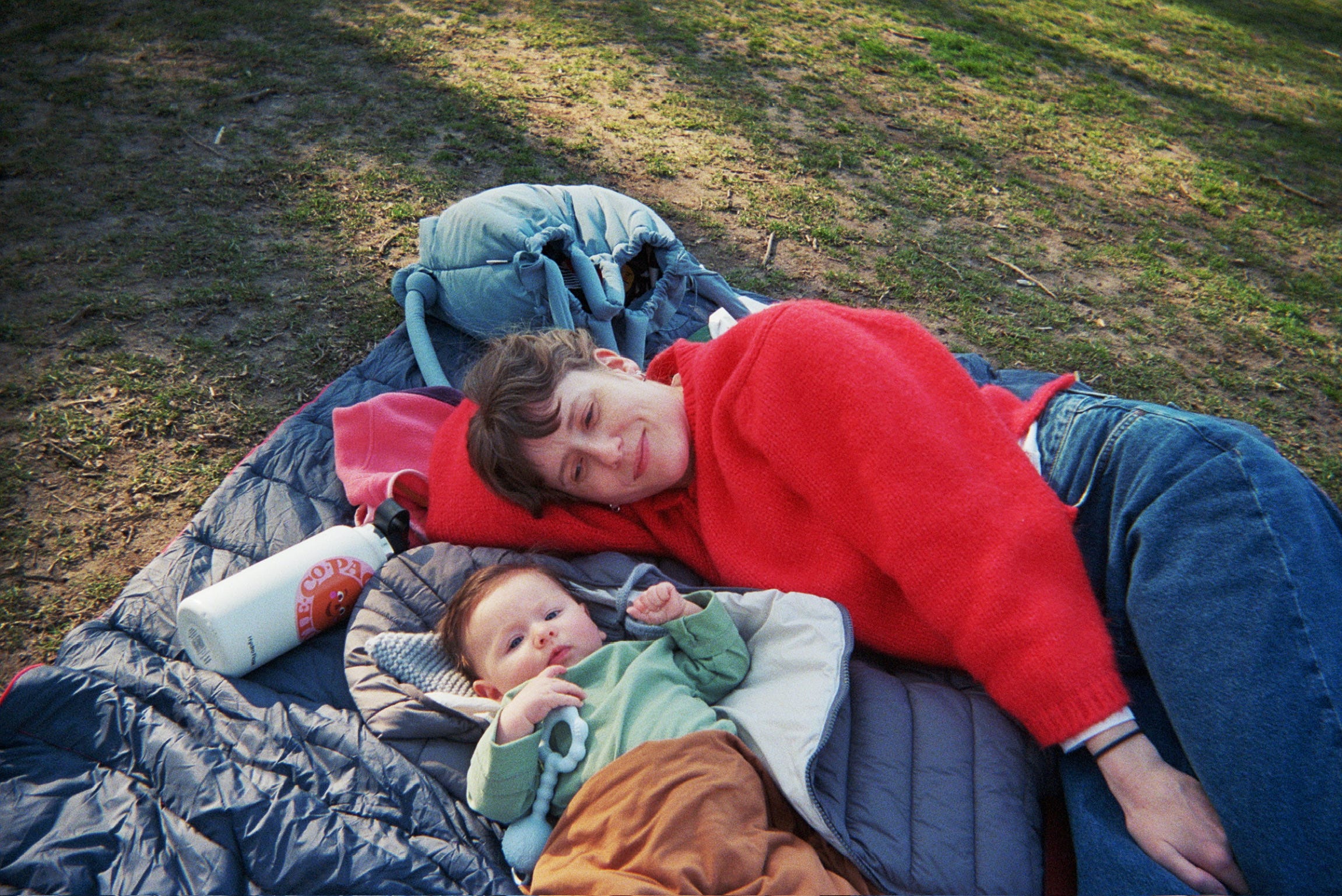
As she got older and became aware of the camera, I tried to slow down. I made an effort to recognize, once again, that the act of recording could be an imposition; a besmirching of the present for the benefit of the future. At the same time, the pressure to document had assumed a new dimension. Sure, yes, documenting was a channel for my paranoia, drowning out my discomfort with the passage of time by insisting I could somehow pin it down, but there was more at stake now, no? This wasn’t just about me but about Sunny—about imparting her with a gift, an archive of what she herself would be incapable of remembering. It was about responsibility.
So many parenting tips supported this view:
Interview your child on camera at least once a year.
Curate photos from every season into a book so they don’t get lost in your camera roll!
Keep a journal to capture the silly little things your kids say and do.
Save your kids’ artwork in frames that double as archival storage containers.
Take a photo of your family in the same place every year to track how they’ve changed and grown.
The first year of Sunny’s life, I bought and tried to keep a five-year line-a-day journal (ma’am, five years?), filling it out in random bursts—every day for a week; nothing for a month; every other day for two weeks, filling in two entries at a time; a smattering of entries recorded in a single afternoon, using photos to jog my memory. Sometimes I would flip through it wistfully, comforted by the details I’d already suspended in time. Slowly the entries grew sparse, though, less detailed, more paranoid:
March 25, 2024: “Took Sunny outside to see the tree on our block start to blossom little pink blowers. Diaper-only underneath her too-big fleece winter suit. She was uninterested.”
May 7, 2024: “I swear her front left gum is so swollen but the tooth never comes. Today we laid on the bed face-to-face just smiling and laughing, inches away. The most magical feeling in the entire world. I love her so so much.”
September 26, 2025: “Recently our love for Sunny has been bringing us to tears. The more she understands about the world, the more I want to protect and preserve her spirit. She is so sweet and clever and delightful and hilarious. Been trying to accept that 90% of these memories will be lost to time.”
January 19, 2026: “I am backlogging some entries this morning, which I know isn’t the spirit of the journal, but this time is so precious and difficult and FULL that I feel a sense of loss at not recording it. But I need to accept the loss. The loss is life! Being present matters more.”
Then blankness.
I resent the sheer scale of this book; nearly 2,000 possible entries, of which we’ve filled out maybe 50. I imagine Sunny taking note of this as an adult. Huh, she’ll think. They couldn’t write one line a day? This is, now, the primary purpose of the book: to be a white-hot point of shame balanced on my bedside table, taunting me in my sleep.
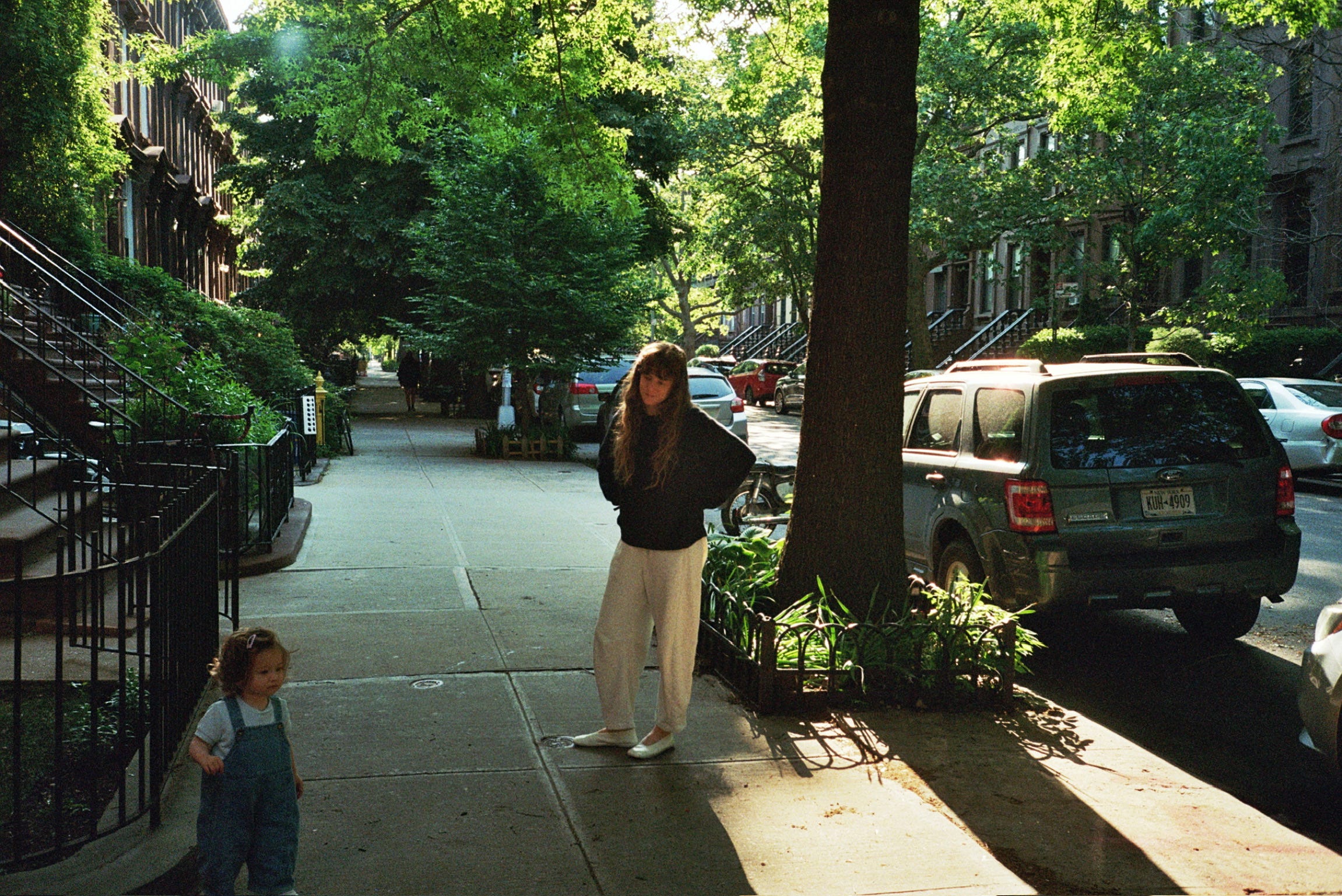
I write entries nearly every day in my head—always when I’m with Sunny, my hands tied—that never actually make it into the book. Yesterday’s: “After a lifetime of enduring ponytails begrudgingly during meals (to keep food out of her hair), this morning Sunny requested one for the first time. ‘I look like mom!’ she said, delighted.” Today’s: “This morning Sunny held up a skunk figurine and declared to the room, with the authority of a teacher, skunks are a type of dog.” She’s never made me laugh more. Why don’t I write things in the book? I can’t. I can’t. Stop making me.
WRITING EVERYTHING DOWN IS NOT A LIFE!
“There’s [a] sense in which treating time as something that we own and get to control seems to make life worse,” writes Oliver Burkeman in Four Thousand Weeks, his pièce de résistance on “time management.” Here he’s talking about compulsively planning for the future, which is, in a sense, the ultimate aim of the record-keeper who fears she’ll one day forget. “The real problem isn’t planning,” he writes. “It’s that we take our plans to be something they aren’t.” This is especially true when it comes to parental documentation. The practice we start in order to allay future anxiety—the specter of time passing, the details gone with it—induces present anxiety; present loss.
Something to consider: Sunny’s adulthood will not be transformed by knowing the day on which she requested her first ponytail (July 22, 2026). Yes, there is pleasure and amusement—for me, maybe one day for Sunny—in reading the entries, but they won’t change her life. And they’re certainly not worth the thrum of anxiety their blank counterparts have sent pulsing through me for two-plus years, some of the most vulnerable of my life, during which I’ve never tried harder to be present, to observe more closely, to love more deeply. They’re worth a little anxiety, maybe, but not that much. The real problem isn’t planning. It’s that we take our plans to be something they aren’t. Documenting is fine; it might lead, one day, to a sweet afternoon of remembering, a detailed interview, a great memoir. But the most thoroughly documented life will not bring it back, make it real again, in all its detailed splendor.
A memory I never wrote down but which sticks out in my mind like a bookmark: Sunny was eight months old. It was the Fourth of July. Avi and I took her to my friend Michelle’s parents’ house in Jersey to swim and grill out. We sat around their pool on squeaky lounge chairs in the hot sun, catching up. A rotund Sunny bounced on my leg in her first bathing suit. “Do you remember Michelle at this age?” I asked her parents, a sparkle in my eye, leaning in to catch the details. They looked at each other and then at me, amused, and with laughter in their voices, replied easily: “Not at all.”

Read last Friday’s 15 things here—the weekly free previews are coming to an end but I’ll keep previewing every once in a while!
Hope you have a nice Sunday,
Haley
No posts
Comments
Nothing yet. Say the first thing.
Sign in to join the conversation.