The offer is not the finish line. It’s the negotiation phase. In this post, I break down what actually matters when reviewing an offer, why money isn’t the only thing to negotiate, and how I made sure the role worked for my career and my family.
Final interviews are not about proving your technical skills. By the time you reach this stage, those questions are already settled. What interviewers are really evaluating is how you show up under pressure, how you communicate risk, and whether they can trust you inside their decision-making environment. In security leadership roles especially, judgment, tone, and cultural fit matter as much as…
Most job descriptions are long, vague, and exhausting to decode, especially when you are applying at scale after a layoff. In this post, I share a simple ChatGPT prompt I use to translate job descriptions into plain English and quickly assess how well my experience matches the role. By pasting in a job description and your resume, this approach helps you decide whether a job is worth applying to,…
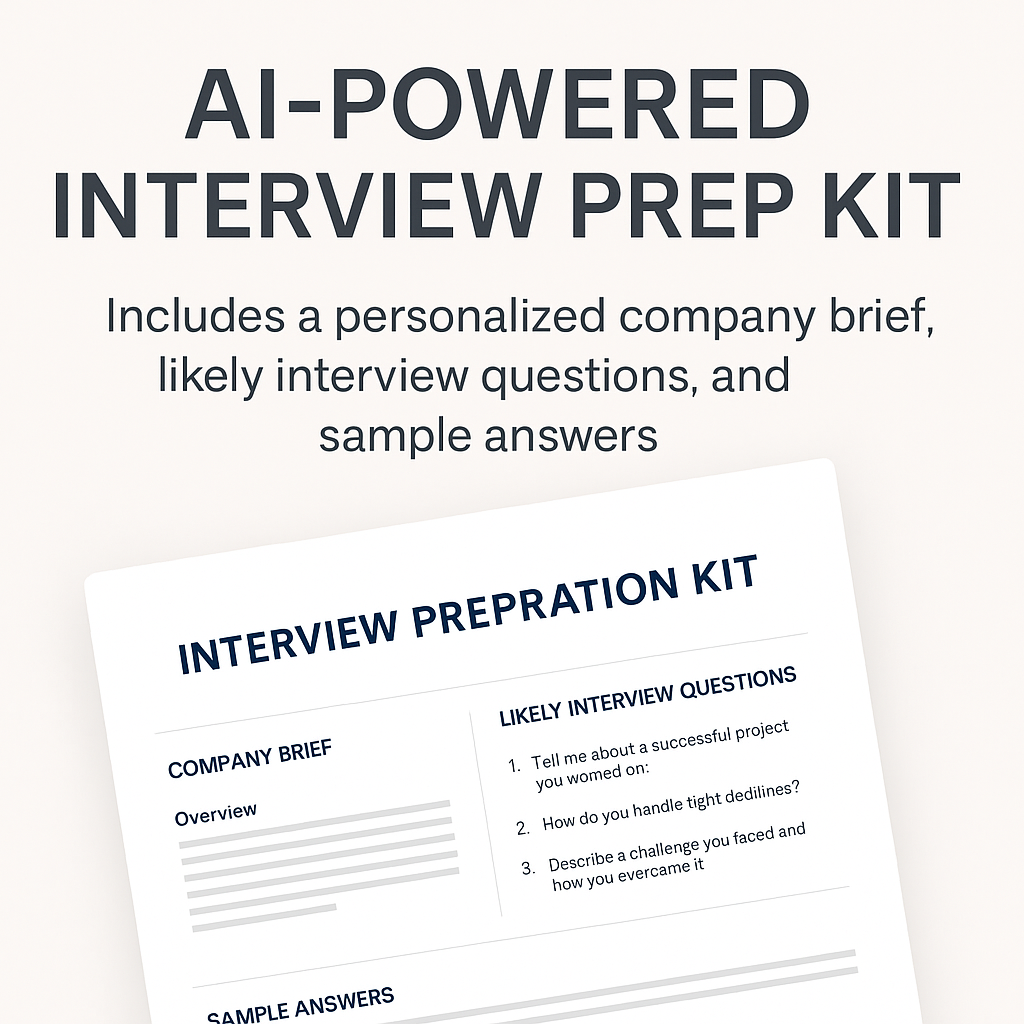
Over months of refining my interview prep process with GenAI and OpenAI’s deep research tools, I’ve built a system that surfaces only the high-signal insights about companies, interviewers, and hiring managers—while also generating tailored questions and strong practice answers. After seeing friends land excellent tech jobs using this method, I’ve automated and productized it into an AI-Powered…
ChatGPT’s Deep Research is a powerful tool for job seekers, offering tailored insights into a company’s security posture, leadership, tech stack, and culture. Available on the Plus plan and higher, it gives users 25 high-quality research queries per month—enough to prep for multiple interviews with depth and confidence. With the right prompt, it turns surface-level prep into strategic insight that…
Interview preparation is more than just rehearsing answers—it’s about building a structured library of career success stories. Following Amazon’s advice to prepare for their final interview, I realized the value of documenting key experiences early in the job search process. This approach not only helps with structured responses but also boosts confidence in interviews. If I had started this…
Navigating the “What are your salary expectations?” question is crucial, especially after a layoff. Most job applications require an answer, but you don’t have to lock yourself into a number too early. If possible, leave it blank or use a broad range. In interviews, try to get the employer to share their budget first, and when giving a number, always provide a range based on market data and…
ChatGPT can be a powerful tool for job seekers, helping with mock interviews, refining responses using the STAR method, and improving communication skills. It also assists in researching companies, practicing technical questions, and crafting follow-up emails. By leveraging AI for interview prep, candidates can gain confidence and refine their answers to stand out in competitive job markets.
The STAR method (Situation, Task, Action, Result) is a structured approach to answering behavioral interview questions effectively. It helps candidates provide clear, concise, and compelling responses that highlight their problem-solving skills and real-world impact. By preparing STAR-based answers in advance, job seekers can confidently navigate interviews and showcase their qualifications with…
This post explores how cybersecurity professionals can leverage a layoff as an opportunity to upskill and stay competitive in a rapidly evolving industry. It provides actionable tips for identifying skill gaps, utilizing free and paid training resources, gaining hands-on experience, and balancing learning with a job search. Whether you’re diving into cloud security, refining your threat analysis…