
The homemade tooth powder recipes below are 100% natural, perfectly edible, and full of the minerals your teeth need to re-build enamel, maintain healthy teeth and gums as well as whiten your teeth naturally.
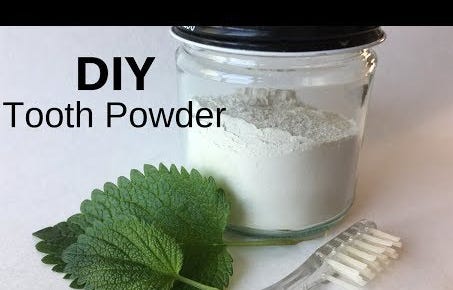
When combined with a diet rich in the fat-soluble vitamins A, D, and K-2 and devoid of mineral-stealing anti-nutrients, homemade tooth powder recipes like these can transform your dental health.
Transforming your dental health is not an overnight fix. Therefore, if you are experiencing any tooth pain right now. Download my FREE guide, 3 Natural Solutions to Control Tooth and Gum Pain.
Tooth powder is mixture of a variety of ingredients to replace toothpaste as a cleaning substance. It often contains baking soda, herbs like cloves, mint, or cinnamon, and an artificial sweetener for taste.
Although the use of tooth powder has regained in popularity recently, it’s not just another trendy home remedy. According to How Stuff Works, it actually dates back to ancient history as an important part of dental care.
The first use of tooth powder dates back thousands of years to the Ancient Egyptians, Greeks, Chinese and Romans. Even before Cleopatra was around, the people of Egypt kept their teeth clean with powders or pastes made from burnt eggshells mixed with pumice and the power of ox hooves’ ashes.
The Chinese added herbs, salt, and ginseng to enhance the cleaning properties and taste of the powder. Greeks and Romans used crushed bones and oyster shells to make a grittier powder. To prevent bad breath, the Romans also added powdered bark and charcoal to their teeth cleaner.
Around 1000 A.D., the Persians realized the danger of overly abrasive tooth powders that cause tooth damage. So they created a milder substance using burnt snail shells, herbs, and honey.
In the 18th century, Britain was the first to market tooth powder. Baking soda was usually the key component, and they added more abrasive substances like brick dust, earthenware, and cuttlefish to thoroughly polish teeth.
By the early 19th century, two other important ingredients were added to common tooth powder: Borax for a foaming effect, and glycerin turning the powder into a paste. This made the product easier to use and added a more cleansing effect. Later on, toothpaste was put into collapsible tubes and contained fluoride to strengthen tooth enamel. Thus, toothpaste as we know it today was born.
Today, most store-bought toothpastes contain glycerin, which has actually been shown to weaken tooth enamel over the long-term. That’s because it layers the teeth with a film that prevents the minerals in your saliva from interacting with your tooth enamel.
By using a tooth powder, you can leave out the fluoride and glycerin and instead pack your homemade tooth powder with the minerals your tooth enamel needs. You can also add goodies like xylitol (which has been shown to prevent cavities), and cinnamon and clove oils (which have been used in India to heal cavities for centuries). Below are 3 recipes for either buying or mixing your own tooth powder.
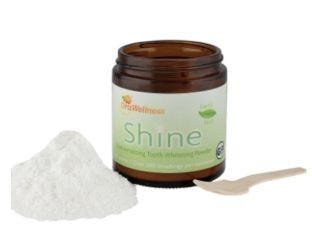
If you don’t want to mess with making your own tooth powder, Orawellness offers their revolutionary tooth powder, “Shine”. It’s already mixed and ready to go for you.
However, I prefer Their Do-it-yourself (DIY) recipe if you want to make your own :)
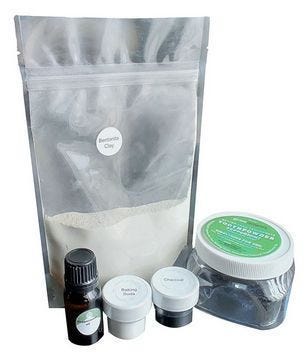
Ingredients:
4 tbsp. Bentonite Clay
2 tsp. Baking soda
3/4 Activated Charcoal
1 or 2 drops of flavor enhancers (such as clove, cinnamon, peppermint)
Directions:
Mix all ingredients in a clean glass jar. I like to use a baby food jar. To use, pour a little amount on the palm of your non-dominant hand, wet your toothbrush and dip lightly onto your hand to coat the brush and brush away.
I tend to switch back and forth between this mixture and Recipe one tooth powder I mention above.
Most of these ingredients can be found through VitaCost. Vitacost offers all the top, most trusted brands for vitamins, supplements, and whole foods, but at discount prices.
Ingredients:
• 1/2 c. bentonite clay (where to buy bentonite clay powder)
• 3 Tbsp. xylitol powder (where to buy xylitol)
• 4 Tbsp. coconut oil, warmed to liquid
• 20 drops cinnamon essential oil
• 20 drops clove essential oil
• 30 drops Concentrate trace minerals (where to buy trace mineral drops)
• 3 Tbsp. water (possibly more)
Directions:
Thankfully, I have a stainless steel blade on my food processor, so I have no qualms using my food processor to make this homemade toothpaste recipe.
Bentonite clay can act like a magnet attracting positively charged heavy metals from your utensils, so you only want it to come into contact with a truly stable metal like stainless steel (which is used to mine the clay).
1. Place all dry ingredients in the food processor and pulse until well mixed.
2. In a liquid measuring cup, mix coconut oil, essential oils, trace minerals, and water.
3. Slowly pour the liquids into your food processor while continuing to pulse. Mix until smooth; add more water if necessary to reach desired consistency.
Love to have your feedback on which tooth powder you liked the best!
Oil Pulling: An Ancient Practice for Healthier Gums and a Brighter Smile
Chew on This: Birch Twigs and Natural Oral Care-Discover the Ancient, Affordable, and Eco-Friendly Way to Clean Your Teeth
Healthy Gums, Healthy Body -A Guided Journey to Natural Oral Wellness. In this hands-on program, you will discover a wealth of tools and resources to kick-start your journey toward dental self-sufficiency. Rooted in time-honored traditions and proven recovery methods, everything I share is designed to empower you.
No posts
Comments
Nothing yet. Say the first thing.
Sign in to join the conversation.