
Joey Shamah grew up in Brooklyn in a tight-knit community where, as he puts it, everyone was a merchant. His father ran an apparel business.
He went to NYU, learned the basics of purchase orders and inventory, and spent his early twenties looking for an idea worth betting on. In 2004, he launched e.l.f. Cosmetics, selling quality makeup for a dollar a piece.
Every major retailer told him nobody wanted it.
A viral email he didn’t write changed everything. T
he company went public in 2016 and now carries a market cap around four billion dollars. Here’s what stayed with me.
When Joey broke down why a CoverGirl lip gloss cost six dollars while e.l.f. could sell one for a dollar, the answer had almost nothing to do with the product. The formulation cost roughly the same to make regardless of brand.
What the incumbents were paying for was the celebrity spokesperson, the circular ads, the shelf fees, and decades of corporate overhead. Joey stripped all of that out and handed the savings to the customer.
In almost any mature industry, there is a gap between what something costs to make and what it costs to sell under an established brand.
That gap is someone’s opportunity.
When Joey pitched beauty editors at Glamour, Vogue, and Good Housekeeping, he walked through the entire product line first and saved the price for last. He’d ask editors what they thought it would cost.
Then he told them everything was a dollar. In most pitches, people lead with the number and spend the rest of the time justifying it. Joey let the product make the case first, so the price landed as a revelation rather than a red flag.
For years, Joey’s biggest obstacle with retailers wasn’t that they disliked the product. It was that they were afraid of it. A dollar lip gloss next to a six dollar CoverGirl meant potentially losing five dollars of revenue on every customer who switched.
The fear was cannibalization.
Then H-E-B took a chance, and the buyer emailed the next morning: e.l.f. wasn’t stealing customers, it was creating entirely new ones. That single data point became the entire sales pitch going forward.
If you’re trying to break into a space controlled by incumbents, the most powerful argument isn’t that you’re better. It’s that you add something they don’t capture.
In September 2006, someone sent a mass email claiming e.l.f. was being acquired by Bloomingdale’s and that prices were going up. Joey didn’t write it and has no idea to this day who did.
Within days, the site went from fifty orders a day to eighteen thousand. He got on a plane to China and figured it out. That year they’d been projecting two million in revenue. They ended up at eight million and turned their first profit.
What he engineered wasn’t the lucky break. It was the decision to treat it as a mandate rather than a crisis.
When the L’Oréal deal collapsed after a $225 million handshake, Joey went back to running the business. When the company eventually went public and reached a four billion dollar market cap, what made e.l.f. worth that much wasn’t a patent or a secret formula.
It was a decade of accumulated proof: data showing the product was incremental rather than cannibalistic, a direct-to-consumer operation built years before D2C became fashionable, and a customer base earned one spinning rack at a time.
That kind of proof is impossible to replicate quickly. The most durable advantages tend to look, from the outside, like nothing special.
That’s usually the point.
Joey is clear-eyed about how much luck ran through all of it. He didn’t write the Bloomingdale’s email.
He didn’t engineer the moment when Revlon and L’Oréal launched expensive drugstore lines that flopped, accidentally opening the shelf space e.l.f. would eventually occupy.
But he was also the guy answering customer service calls himself, printing shipping labels by hand, and flying to China on a moment’s notice to fill forty thousand orders he hadn’t planned for.
Luck showed up. He was already in the building.
P.S. If you loved the episode, follow the show in your podcast app so you never miss one. And please SHARE this newsletter so others can learn from some of the world’s greatest entrepreneurs!

In 2004, Joey Shamah launched a makeup company on a question almost everyone thought was insane:
Could he sell high-quality cosmetics for… $1?
At the time, the whole beauty industry ran on the exact opposite belief. Expensive meant good. The big brands poured fortunes into celebrity faces, glossy ads, and premium shelf space.
And passed the cost on to you.
But Joey had a different thought: What if you spent the money on the actual product, skipped everything else, and handed the savings to the customer?
Every major retailer told him the same thing: it’ll never work.
The dollar stores he was sure would love it passed. Meeting after meeting ended in no.
But then a couple of unexpected breaks changed everything. And his entire business turned around.
So how do you actually make a good lipstick for a dollar? What was the strange twist that sent orders through the roof overnight?
And how did a scrappy operation run out of a New Jersey warehouse turn into one of the most disruptive brands in beauty?
Learn all this and more on the latest How I Built This!
This week on the Advice Line, I’m joined by Ronnen Harary, co-founder of Spin Master and PAW Patrol. Today, Ronnen is working on a new book about why your 20s are the best time to start a business. But the theme he keeps returning to is innovation: in today’s world, staying fresh and constantly reinventing your product is what keeps a brand alive.
First up, Ann: How do I handle rising costs without scaring off my customers?
Ann’s Yearly Company sells gold bangles, and after 10 years of success, soaring gold prices are squeezing her. She wants to protect her margins without breaking the promise her customers love. Our advice: nothing in her branding actually locks her into a single product… and that opens up more room to maneuver than she thinks.
Next, Felix: How do I scale a small family business without breaking it?
Felix is taking over Island Bee Company, his parents’ decades-old honey and skincare business, and wants to scale it way up, but worries growth could break what makes it special. Ronnen and I landed at odds: he sees a path through social media, I lean slower and steadier. The real question underneath it all is what kind of business Felix actually wants to run.
Finally, Matt: How do I separate work from life when the work is personal?
Matt’s Wandering Soul Beer was born from a personal tragedy, created to honor and memorialize it. The business has had its ups and downs, but the deeper challenge is that running it can feel like reliving the loss. Our advice centered on boundaries… concrete, hard-and-fast rules that create real separation between the work and the life.
Ronnen leaves us with this: Staying fresh isn’t optional. The brands that endure are the ones that keep innovating, never resting on what worked yesterday.
If you would like to be featured on an upcoming episode, call and leave a 1-minute message at 1-800-433-1298 or send a voice memo to hibt@id.wondery.com

What do you bury underground for people to dig up 250 YEARS from now?!
Well, on this episode we find out! And it’s all to do with America’s official 250th birthday time capsule!
This massive 2,000-pound steel container is being buried 10 feet underground in Philadelphia, filled with items from all 50 states. But here’s the really cool part… engineers are using incredible science to make sure it survives anything!
They built it in a tube shape with no corners (so it won’t leak), wrapped it in a capsule INSIDE a capsule, and even designed a trapped air pocket to push water away – the same engineering used in submarines and rockets!
What will the people of the future think when they discover this message from our time?
Tune in to discover the bonkerballs engineering behind preserving history for centuries to come!
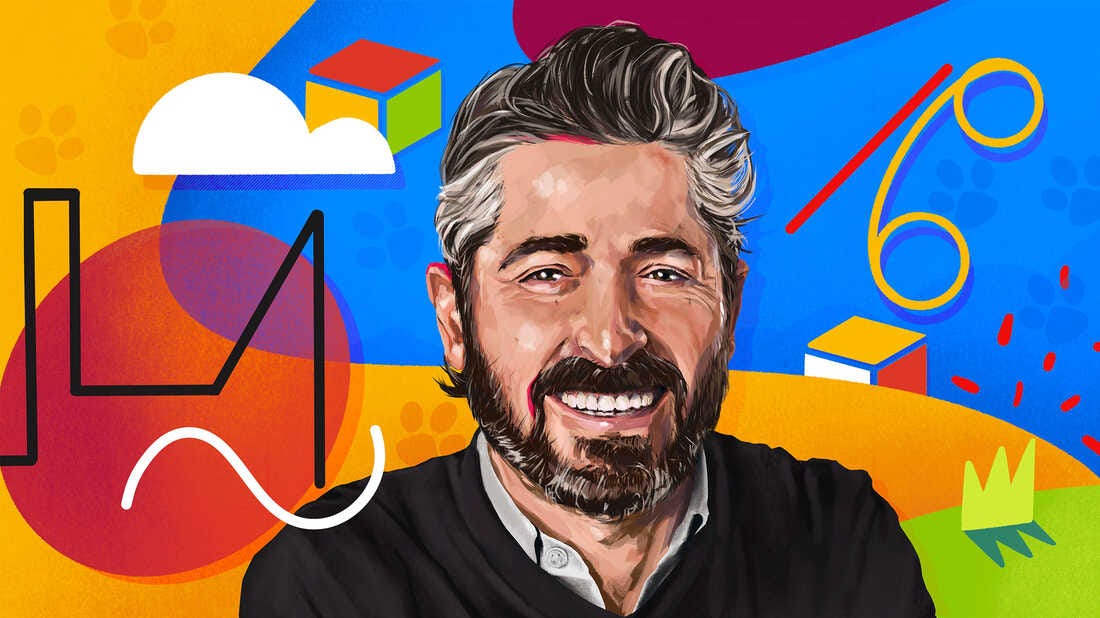
Ronnen Harary built a $4 billion toy empire by ignoring everything the industry considered essential.
Instead, he trusted something far less quantifiable: the gut instinct that comes from thinking like a seven-year-old and chasing that magical “ah-hah” moment when an idea just feels right.
Spin Master’s origins were humble and a little absurd.
In the mid-1990s, Ronnen and his friend Anton Rabie started selling the Earth Budd. It wasn’t glamorous, but it taught them how to spot a fun idea and bring it to market fast.
Over the next 25 years, that same intuition led to a string of hits: Air Hogs, Bakugan, and the global phenomenon PAW Patrol.
What set Ronnen apart was his willingness to bet on instinct in an industry obsessed with playing it safe. While competitors analyzed trends to death, he and his partners followed their childlike sense of wonder.
Today, Spin Master is a publicly-traded company spanning toys, TV shows, and video games!
What do you want more or less of?
Just send a tweet to @guyraz or a message on IG to @guy.raz or LinkedIn and put #GuyRazNewsletter at the end so I can find it.

Comments
Nothing yet. Say the first thing.
Sign in to join the conversation.