
Maxine Clark spent twenty years climbing the ranks at the May Department Stores Company, eventually running Payless ShoeSource, one of the largest shoe retailers in the country.
At 48, she walked away from all of it to open a store where kids could stuff their own teddy bears. People told her, to her face, that she’d lost her mind. Build-A-Bear now does over half a billion dollars a year.
Here’s what I took from her story, and what applies whether you’re building a stuffed animal empire or anything else.
Maxine’s idea for Build-A-Bear came from a ten-year-old. She was driving her neighbor’s kids home after a failed hunt for a sold-out Beanie Baby, and the girl, Katie, said something offhand about how easy stuffed animals would be to make themselves.
Most adults would have smiled and changed the subject. Maxine went home and started writing a business plan that night. The skill that matters here isn’t creativity.
It’s attention.
Good ideas rarely arrive labeled as good ideas. They arrive as small, unremarkable comments that most people let pass through them without friction. Build the habit of catching them.
When Maxine opened the first Build-A-Bear store, she filled it with merchandise made by the exact same vendors who’d made shoes for Payless. The landlord who gave her a generous first lease did it because he’d done business with her for two decades in her old job.
Every relationship she built over twenty years at a department store conglomerate became raw material for a company that had nothing to do with department stores. People treat a career change as a clean break from everything that came before it. It rarely is.
The contacts, the trust, the credibility you’ve built doing one thing are transferable in ways you won’t fully understand until you need them.
Build-A-Bear’s basic concept, a store where customers make their own stuffed animal, was never something Maxine could trademark. Anyone could have copied it, and people tried. What she actually protected were specifics: the brand name, the design, exclusive mall lease agreements that kept competitors out of the same shopping centers.
Her own words on this are worth remembering: it’s not so much that you protect an idea, it’s that you make sure you can afford to protect what you’ve built. If your business depends on nobody else thinking of your idea, you don’t have a business yet.
You have a head start.
Spend it building something specific enough to defend.
During the 2008 financial crisis, Maxine assumed holiday sales would carry the company through, because surely nobody skips buying a teddy bear for their kid at Christmas. She was wrong, and she ended up laying off seventy five employees in January 2009, the worst possible month to be looking for a new job.
Her own assessment of that decision is blunt: she should have made the cut months earlier, when it would have been easier on the people losing their jobs. The lesson isn’t about layoffs specifically.
It’s about timing. The cost of acting on bad news always goes up the longer you wait to admit it’s bad news.
Maxine ran Build-A-Bear for sixteen years before stepping down as CEO in 2013. The instinct for any founder is to keep a hand on the wheel, to second-guess the next person’s decisions, to treat every change to the thing you built as a small betrayal.
Maxine made a deliberate choice not to do that with her successor, Sharon Price John, even when John made calls she personally disagreed with. Most of those calls turned out fine.
Some of them turned out better than what Maxine would have done herself. She says the second most important thing a founder can do, right after coming up with the idea in the first place, is find someone who can run it better than they could.
Letting go is not the end of the founder’s job. It’s one of the hardest parts of it.
Maxine still believes the outcome was half hard work and half luck, but she’s quick to point out that luck has a habit of finding the people who show up tired and go anyway. Build the company. Show up tired. Go anyway.
P.S. If you loved the episode, follow the show in your podcast app so you never miss one. And please SHARE this newsletter so others can learn from some of the world’s greatest entrepreneurs!

When Maxine Clark left her job as president of Payless Shoes, people assumed her next move would be something big. A new fashion concept. A footwear brand. Something that “made sense.”
Well, instead, she opened a store where kids stuffed their own teddy bears.
Unusual… In fact, many of her contemporaries thought she had lost her mind.
But, as most of these stories go, it turned out to be a brilliant idea.
The first Build-A-Bear store opened in a Saint Louis mall in October 1997.
And to her complete and utter shock: she hit her yearly sales projection in ONE quarter. Absolutely incredible!
Of course, it wasn’t always smooth sailing: the financial crisis nearly broke the business and she made the tough decision to step away from the company for a time.
But, all of this led to one of the most iconic kids brands ever created. Build-A-Bear has withstood the test of time.
And may very well endure another 30+ years of success by the time she’s done with it.
This week on the Advice Line, I’m joined by Shazi Visram, founder of Happy Family Organics. Shazi built one of the most successful organic baby food brands in the country, and she sees entrepreneurship as one of the most creative outlets a person can have.
First up, Daisy: How do I grow my brand in America?
Daisy is taking over her dad’s barefoot shoe brand, Freet Barefoot, and wants to build up brand awareness in the U.S market. We pushed her to think about a distribution channel she probably hasn’t considered yet… one that’s increasingly shaping purchase decisions before customers ever visit a website.
Next, Rachel: How can I make my product grow faster?
Rachel’s SprinkleBites makes protein-packed sprinkles, and she’s weighing whether to private-label for other brands to boost revenue. Shazi and I were aligned: why dilute your own brand to build someone else’s?
Finally, Andrew: Should I raise money or keep bootstrapping?
Andrew’s PlantAmika makes a soil additive that releases fragrance when you water your plants. He’s invested about $30K of his own money and is wondering if it’s time to raise. Shazi and I saw things slightly differently. But we agreed on the real question Andrew needs to answer before either path makes sense.
Shazi leaves us with this: You earn your confidence along the way. It doesn’t arrive before you start—it comes with time, with caring about your product, and with figuring things out as you go.
If you would like to be featured on an upcoming episode, call and leave a 1-minute message at 1-800-433-1298 or send a voice memo to hibt@id.wondery.com

What if I told you that BEES might play games just for the fun of it?!
Today, we dive into a fascinating discovery from Queen Mary University of London, where researchers taught buff-tailed bumblebees to roll tiny wooden balls into goals for rewards (we call it "bee ball"!).
But here's the unexpected part that changed everything… scientists noticed that some bees were rolling balls around even when there was NO prize to earn!
One single bee played with the balls 117 times over an 18-day study! Scientists discovered that for it to count as play, it has to be voluntary, spontaneous, and rewarding all by itself… and these bees checked every box!
Tune in to discover why even tiny insects know that sometimes the best reward is simply having fun!
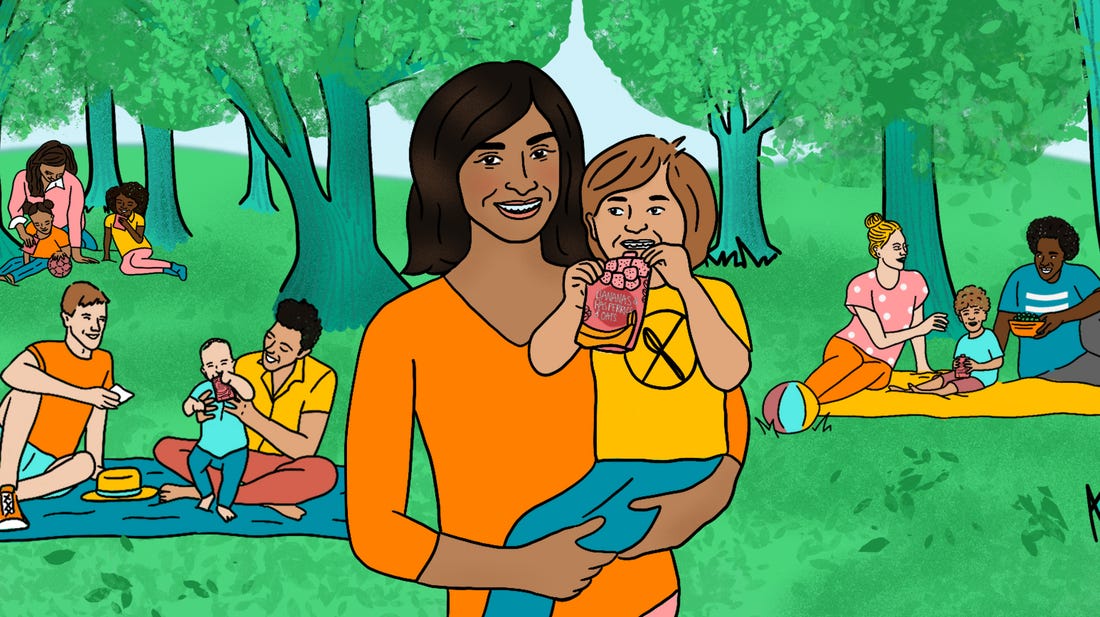
While she was in business school, Shazi Visram ran into an old friend who had recently become a mother of twins. The friend confided that she felt like a failure… she simply didn’t have time to make healthy, homemade meals for her babies.
That offhand conversation planted a seed: what if organic baby food could be both convenient and genuinely nutritious?
Shazi’s insight was deceptively simple. Most baby food came in jars, processed and shelf-stable but stripped of nutrients and flavor.
Why not sell it frozen instead, preserving the quality of fresh organic ingredients?
When she shared the idea, plenty of people thought she was crazy to take on Gerber, the entrenched giant that dominated the category. But Shazi believed parents wanted something better and convinced dozens of friends and family to invest in her vision.
Building Happy Baby meant fighting for freezer space, educating skeptical parents, and competing against a brand with decades of trust.
But Shazi’s timing aligned with a growing demand for organic, transparently-sourced food. And 15 years later (at the time of our recording), she was doing hundreds of millions per year.
What do you want more or less of?
Just send a tweet to @guyraz or a message on IG to @guy.raz or LinkedIn and put #GuyRazNewsletter at the end so I can find it.

Comments
Nothing yet. Say the first thing.
Sign in to join the conversation.