
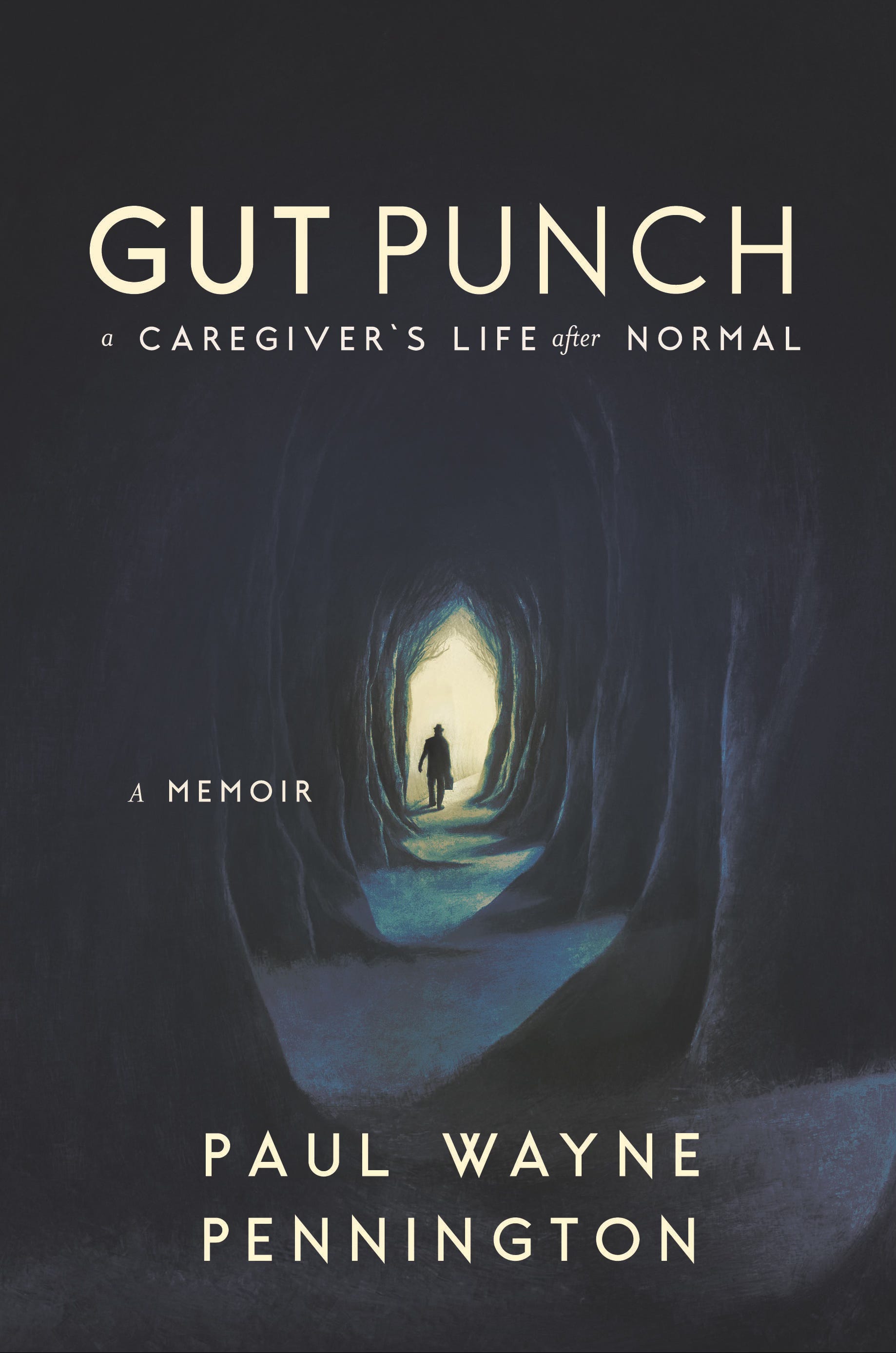
I never set out to write my soon to be released book.
Not this one.
I did not sit down one day with a grand plan, a polished outline, or a sudden desire to fulfill a lifelong dream of being an author. I was not looking to build a brand. Or chase a book deal. I was not trying to light a fire around a larger conversation.
I was just trying to make sense of what had happened.
Or perhaps more accurately, I was trying to make sense of what was happening to me after so much had happened to her.
When someone you love goes through a medical crisis, the world rightly turns toward the patient. As it should. They are the ones being infused, scanned, poked, poisoned, and patched back together. They are the ones carrying such a massive visible burden.
But caregiving does something much less visible to the person standing beside them.
It changes you too.
During the crisis, I did what most caregivers do. I stood strong. Kept my head down. I managed what could be managed and ignored what could not. I did what needed to be done.
At the time, that felt like strength.
Later, I realized it was also survival. A necessary means to an end.
Because when the crisis begins to pass and the world expects gratitude and relief, something strange happens to a caregiver.
You realize you are not ok.
That part surprised me.
The after. Not during treatment. Not in the middle of chaos. But after.
After the massive shift in priorities. After the routines built out of necessity. After everyone assumes you should be thankful and back to normal. After the finish line that, for a caregiver, does not always feel like one.
That was when I started writing.
Not because I had answers. Nope. Because I didn’t.
Not because I thought anyone would read it. Nope. Because I needed to unpack it.
Writing became my method of unpacking deeply stored memories and emotions. And when I didn’t slow my writing, it began to evolve into something more. The more I wrote, the more I realized I was not simply documenting an experience. I was excavating one.
Line by line, I was uncovering what caregiving had cost, what it had changed, and what it had left behind.
Somewhere along the way, the journal became a manuscript. And the manuscript became a book I never intended to write.
But now I understand better why it had to be written.
Caregivers need language for what happens to them too.
Because too many caregivers walk out of treatment centers carrying invisible weight, deeply packed memories and emotions, with no roadmap for the aftermath.
Because too many caregivers have been conditioned to confuse silence with strength.
Because “getting through it” is not the same as processing it.
And because there is life after survival, but it rarely looks the way you expect it to.
I did not write Gut Punch to fulfill my lifelong desire to become an author.
I wrote it because I know what it feels like to lose your old normal and to have no idea what comes next.
I wrote it because I know what it feels like to be immensely grateful that your loved one made it through, while being quietly confused about why you feel disoriented, detached, and so unlike yourself.
I wrote it because caregivers deserve more than a pat on the back and a passing “how are you holding up?”
They deserve honesty. They deserve language. They deserve a moment. And they deserve the understanding that there is nothing wrong with them and they are not alone.
Sometimes the work we are called to do is not the work we would have chosen.
Sometimes the thing we never intended to write becomes the thing we most needed to say.
And maybe, if we are lucky, it becomes something someone else needed to hear.
In the coming weeks, I will be sharing more about the book, and what I hope it gives to caregivers trying to find their footing after the crisis subsides.
No posts
Comments
Nothing yet. Say the first thing.
Sign in to join the conversation.