
This issue is a hands-on tutorial. I cover what Claude Science actually is, where it beats a normal chat assistant, the real toolbox it ships with, and then five worked examples: a literature review, an article summary, a sample-size check, a trial-design critique, and a personal-genomics interpretation linked to the medical literature.
Regular Claude is a conversation. You ask, it answers from what it learned during training. That is powerful for reasoning and writing, but it has no live access to primary data, and a tendency to fabricate plausible-but-fake citation
Claude Science is a research environment with Claude operating it. Underneath the chat there is Python/R compute sandbox, package management, file storage, plus direct, programmatic connections to the primary databases and literature that scientists actually use. When you ask a scientific it writes code, queries the real source, runs the analysis, and hands you back files with the original identifiers attached.
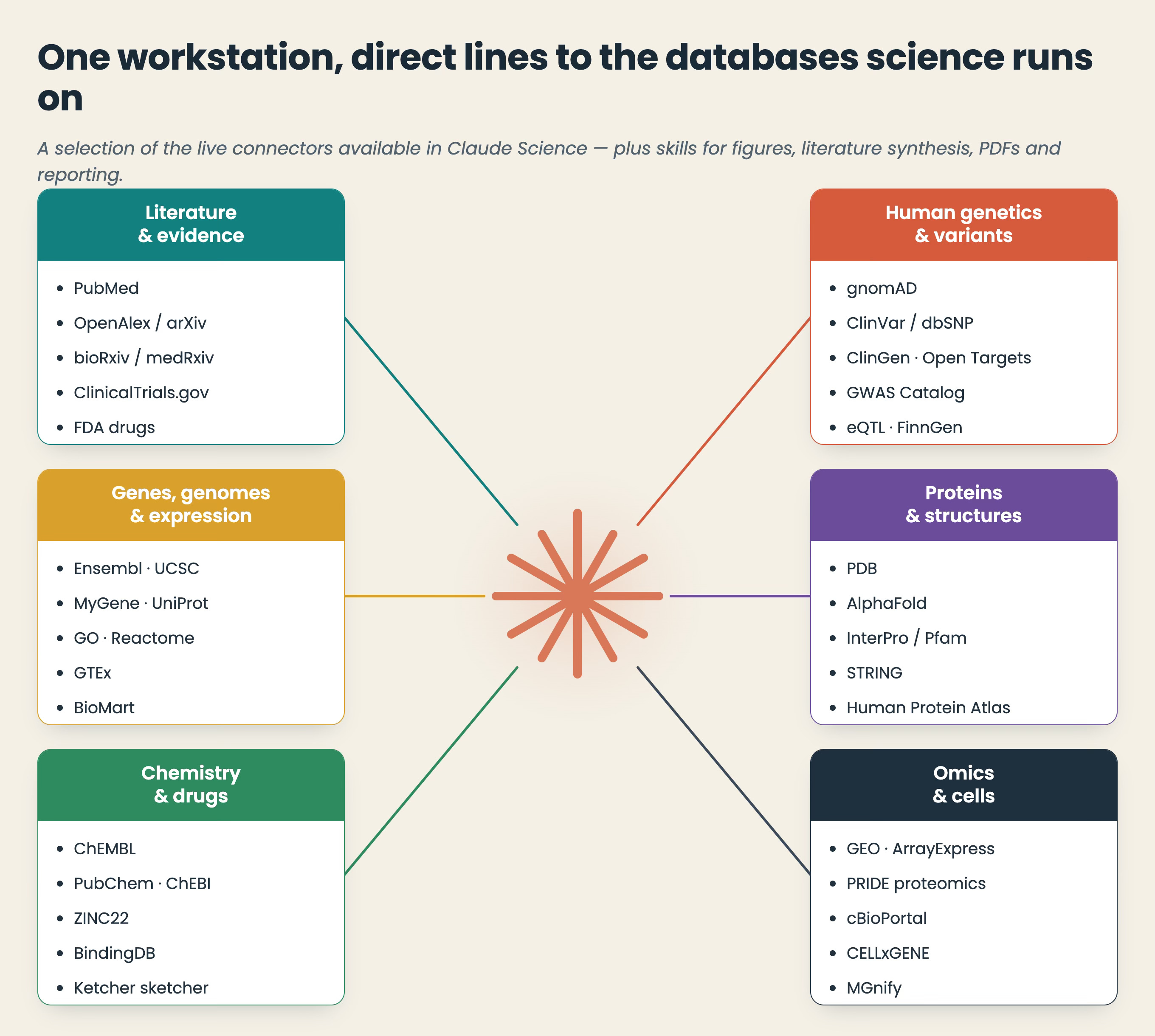
Figure: Applications of Claude Science
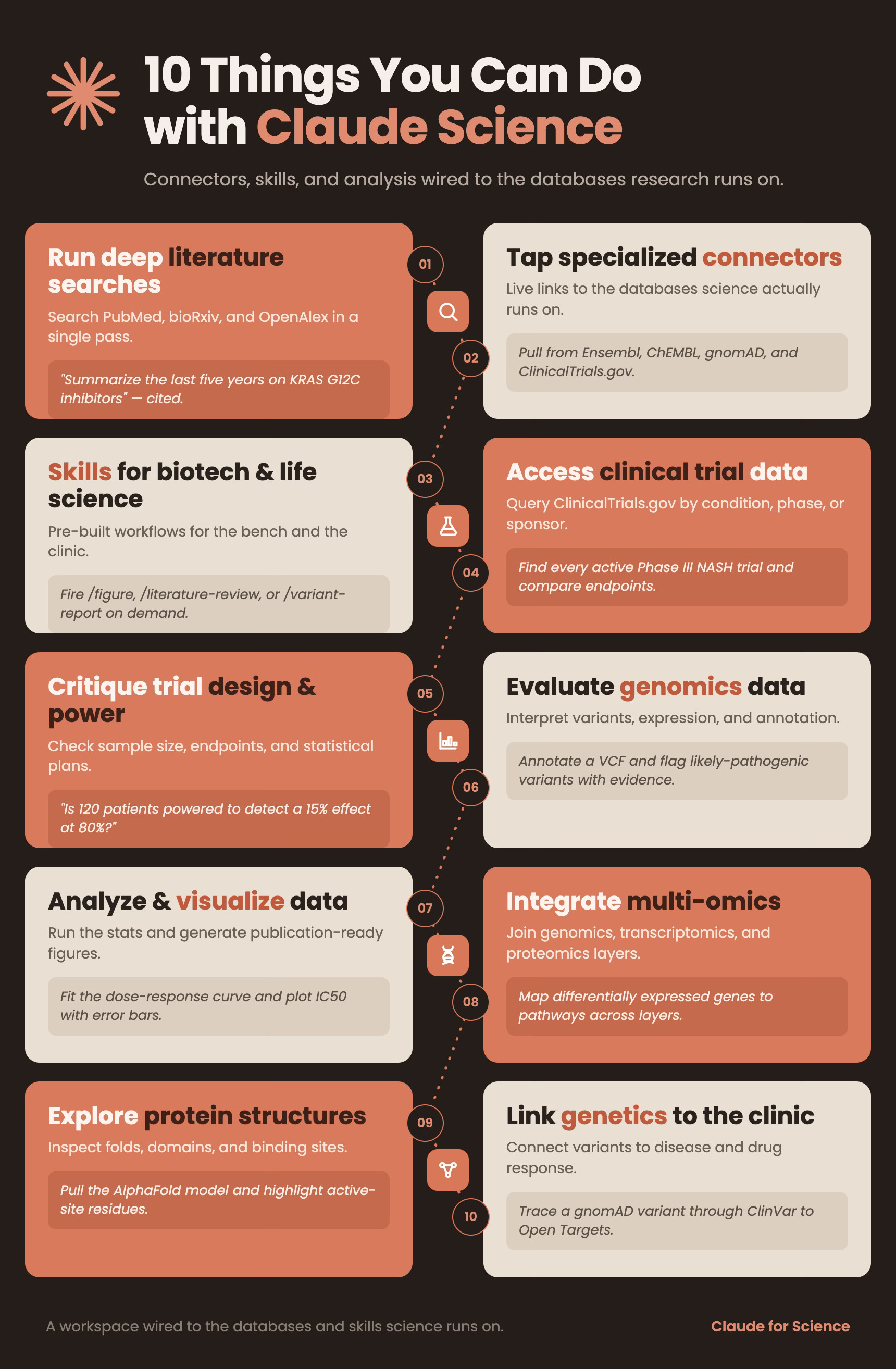
Figure 2: Example of applications of Claude Science.
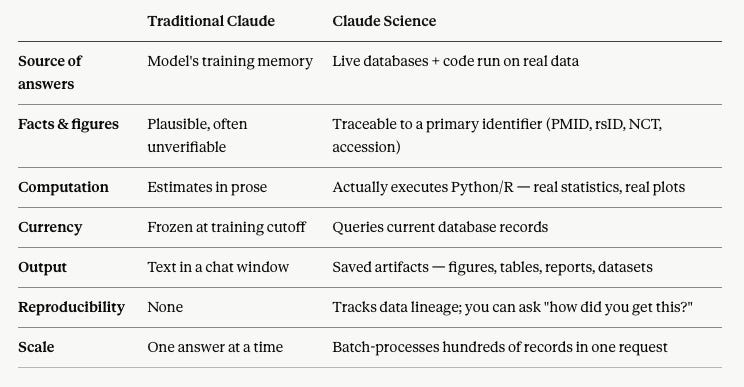
Claude Science gives you checkable answers.
The full guide breaks down all five examples, a literature review, a paper summary, a sample-size calculation, a clinical-trial critique, and a personal-genomics workflow, with the exact prompts to use, the sources to pull from, and the simple checks that keep a wrong fact out of your work.
Comments
Nothing yet. Say the first thing.
Sign in to join the conversation.