
For much of this year I’ve felt like an automaton. Various factors out of my control have dulled my typically unruly emotions and sense of self — I’ve felt as if I’m fighting through white noise, that new stimuli are wearying instead of interesting, and that my curiosity and vivacity in general are dull shadows of what they once were. Now that I’m halfway through the year, I’ve been looking back on the things that cut through that white noise and reminded me of my own humanity.
Last year I spent a lot of time thinking about the ethical implications of escapism. The conclusion I came to was that engaging with media in an escapist manner — using it as a way to avoid engaging with the world — was wrong. I think I was too cruel and black-and-white in my characterization of ‘escapist’ readers. Media can certainly be used to dull one’s experience, but I’ve started to see this as a reaction to a feeling of overwhelm more than anything else. I’ve certainly spent a lot of time escaping this year, and whenever I’ve encountered something that has pulled me back into the world, I have remembered that media and art can be so good, that at their best they exist in a continuum with ‘the real world’ and even shape it — there is no real division here, art and life flow into each other.
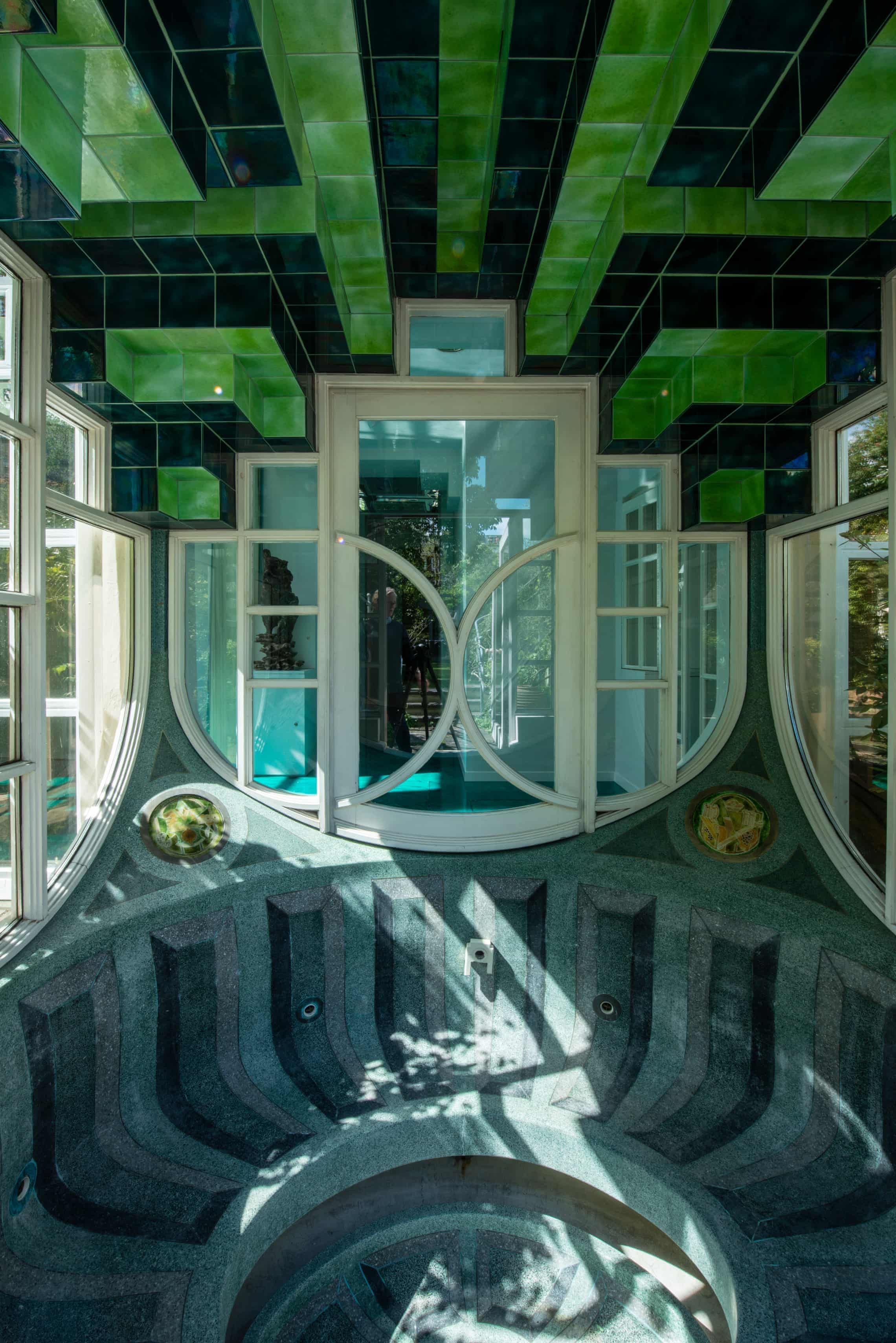
The most striking example of this that I’ve encountered has been the Cosmic House, the intricately designed former private residence of a postmodernist architect in London. I was overwhelmed by the warmth radiated by the space, which was playful and comfortable in equal measure. Despite the heady theoretical underpinnings of the space’s design, there was no sense of stark abstraction — the house is filled with rooms which invite one to lounge with friends, or to sit alone with a book for hours. Tongue-in-cheek touches like a ‘cosmic loo’ or dizzying optical illusions do not serve to dispel this feeling — instead, the house becomes a space where esoterism and grand ideas intertwine with everyday comforts. It was so easy to imagine living in the space, or growing up in it.
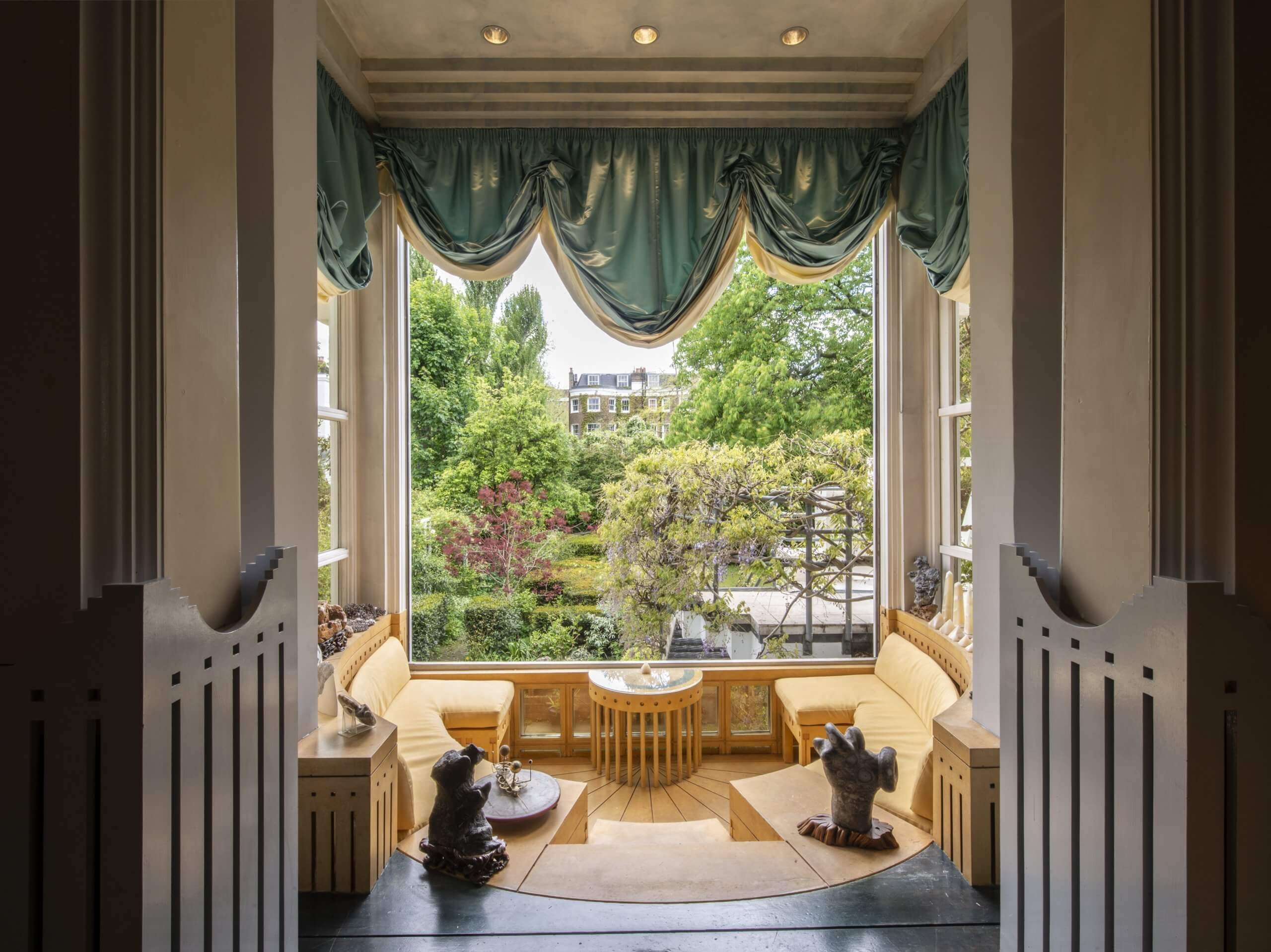
What struck me most about the house was the evidence of design, of the human hand, in everything. For me, it centred the joy of design and the joy of encountering good design. I felt as if I had been hit over the head by this joy. So often I notice bad design — a shoddy new build, a space designed for cars and not people, my evil tiny bathroom — and I have started to focus on these terrible things as if they are a sort of scum on top of something clean, whether that’s the earth or an imagined more beautiful past, I’m not sure. An imagined sublime beckons — something that would take me outside of myself, outside of this body which trudges through space and time and collapses the mundane experience of having to live.
This imagined space where everything is beautiful, and which the hand of the contemporary person has not marked, can be pretty unpleasant, even repellent, when you actually encounter it, though. A few years ago, I went to the Pyrenees, then Iceland. There were so many good things about those trips, but, sitting down to eat at the top of a waterfall in the Pyrenees, I started to feel a creeping terror of the stark mountains that looked like unreal cutouts against the sky. There was no reaction I could have to them that wasn’t ‘wow, that’s beautiful’. There was nothing to hold onto, no warmth. When I arrived in Iceland, left Reykjavik, and moved further north, this sense of dread intensified until it was near unbearable. The treeless landscape, which barely gave a foothold to human life, instilled in me a deep fear. I felt that I was dissolving, that the horrific sublimity of the mountains and fjords left no space for my identity, desires, plans, life.
It took me a long time to think through these experiences and realize that sublimity is only an imagined escape. There is nowhere to live in it, nowhere to move forward. Dissolving one’s identity in the face of something greater might feel nice in the moment, but it doesn’t really provide any solution for the difficulties of living day to day. Good art and design does, though, things made by people with an eye to the pleasure of other people. There is no ‘real world’ that is somehow more meaningful than a world shaped by people. The most meaningful version of the world emerges when art and design shape the flow of everyday experience.
Italo Calvino’s If On a Winter’s Night a Traveller encompasses this maxim to me. Please read this if you haven’t already. Its frame narrative is told in the second person, and follows a reader who sits down to read Italo Calvino’s new novel, If On a Winter’s Night a Traveller. We then encounter a first chapter of this imaginary novel within a novel before our reader protagonist realizes that there’s been a printing error, and that the rest of the book just repeats the first chapter. He goes to the bookstore to replace his copy, and instead finds himself with another book, which has also, mysteriously, been wrongly printed. This search for the original book leads the reader to some bizarre and delightful places, and his search is interspersed with chapters from imaginary books which all speak to each other, and the frame narrative, in wonderful ways. What strikes me most about this book is that it’s a narrative about the desire to read a good book, and it shows how this desire interplays with the satisfaction of an enjoyable reading experience to create character and relationships. The narrative emerges out of the experience of encountering media, and reminds us that this is not a passive experience — we take the things we encounter in media into our lives, and use them as tools to make meaning, to socialize, to find a way forward.
Rereading this wonderful book, and encountering the Cosmic House, have led me to revel in the places in which art and design touch my life, shape my movements, and allow me to articulate my identity. This has been a surprisingly life-affirming process, and collecting these moments has allowed me to fight the always-encroaching depressive haze. It’s funny to me that both the book and the house are artefacts of the much-maligned postmodern. Maybe reflecting on what it is to make and encounter things can be very beautiful, actually! Perhaps reflection on the made world, instead of reflection on the self and especially instead of reflection on the sublime, is the way forward, at least for me.
No posts
Comments
Nothing yet. Say the first thing.
Sign in to join the conversation.