
The ongoing drought across Europe is not only affecting vegetation and exacerbating wildfires, but it is also beginning to severely impact the continent's rivers. The following graphics illustrate the “health” of European rivers based on numerical models driven by real in-situ observations. The colors represent the current status of each river compared to a long-term climatology, categorized into five classes of increasing severity.
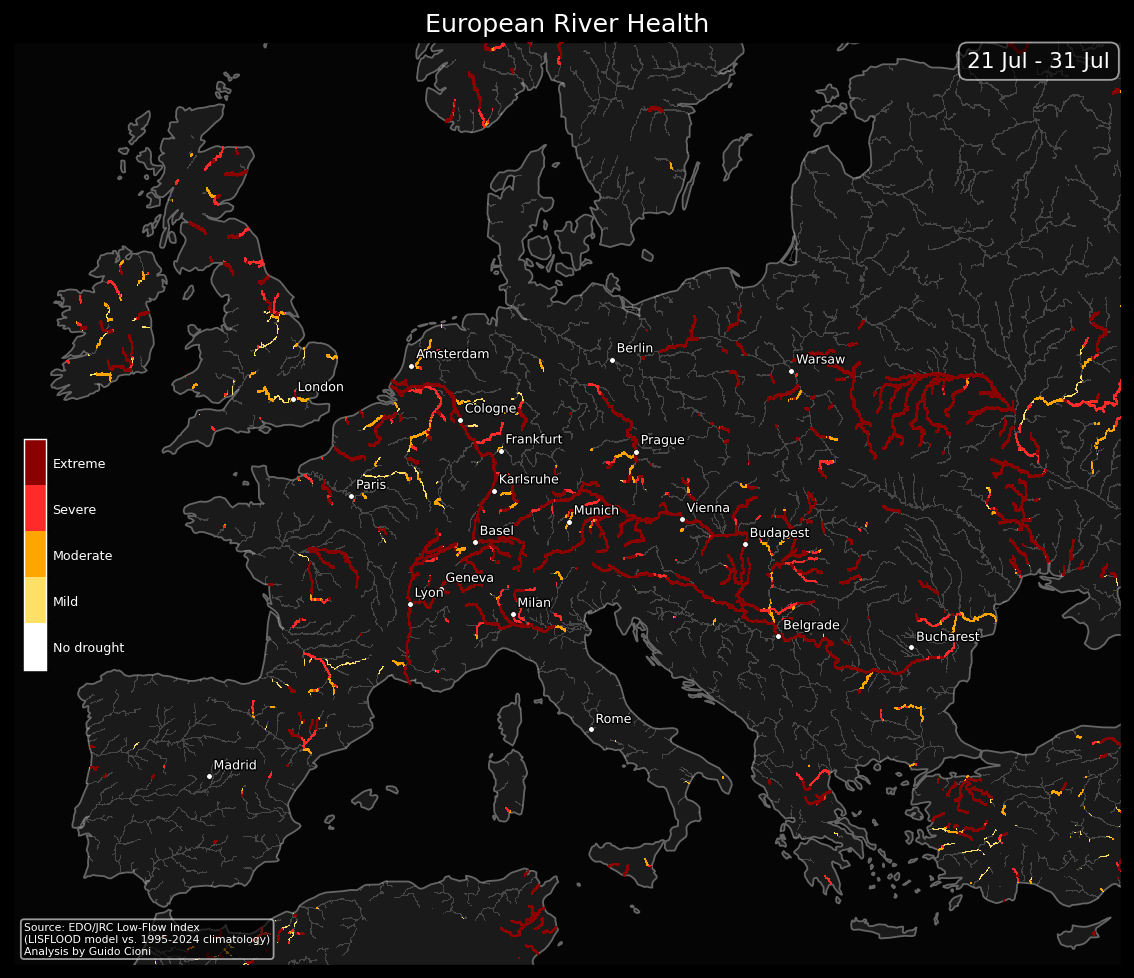
As the data clearly shows, most rivers in Central and Eastern Europe are currently experiencing extreme drought conditions. In some cases, such as the Danube and the Rhine, these extreme conditions have persisted for weeks, if not months.
For example, consider the water level of the Rhine measured at Cologne (Köln). By compiling historical data, we can track these levels back to 1981 (though even older data likely exists in non-digitized archives, but I wasn’t able to find them).
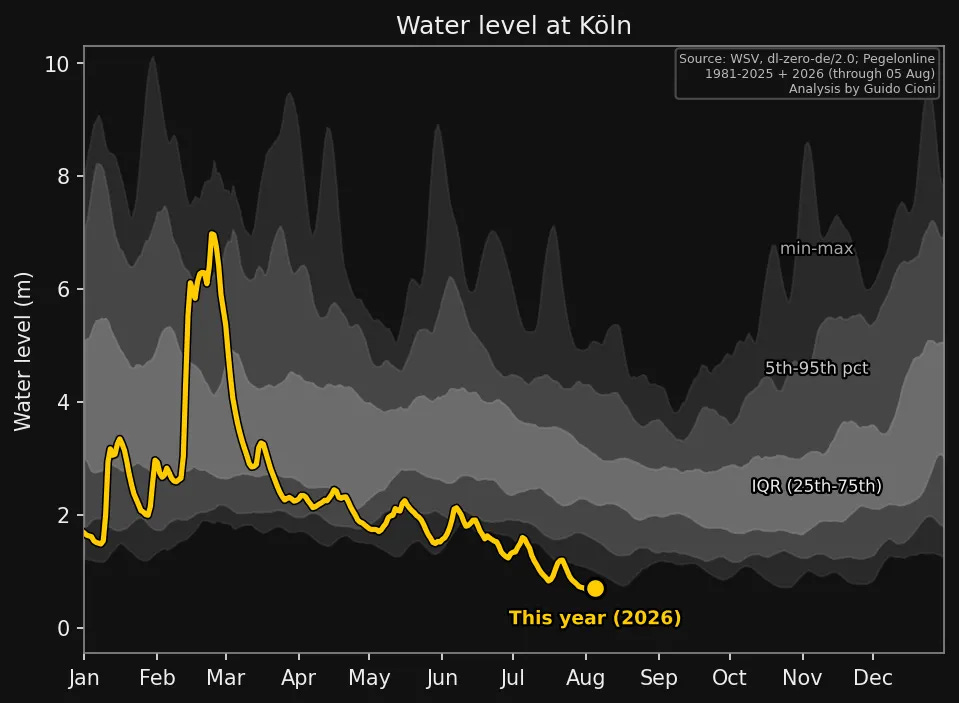
On August 1st, the Rhine’s water level at Cologne reached a staggering historic low of just 68 cm. This dropped below the previous record low of 69 cm, which was set in October 2018. This drastic drop threatens to disrupt key sectors of the German economy (such as the chemical and steel industries) which rely heavily on river transport.
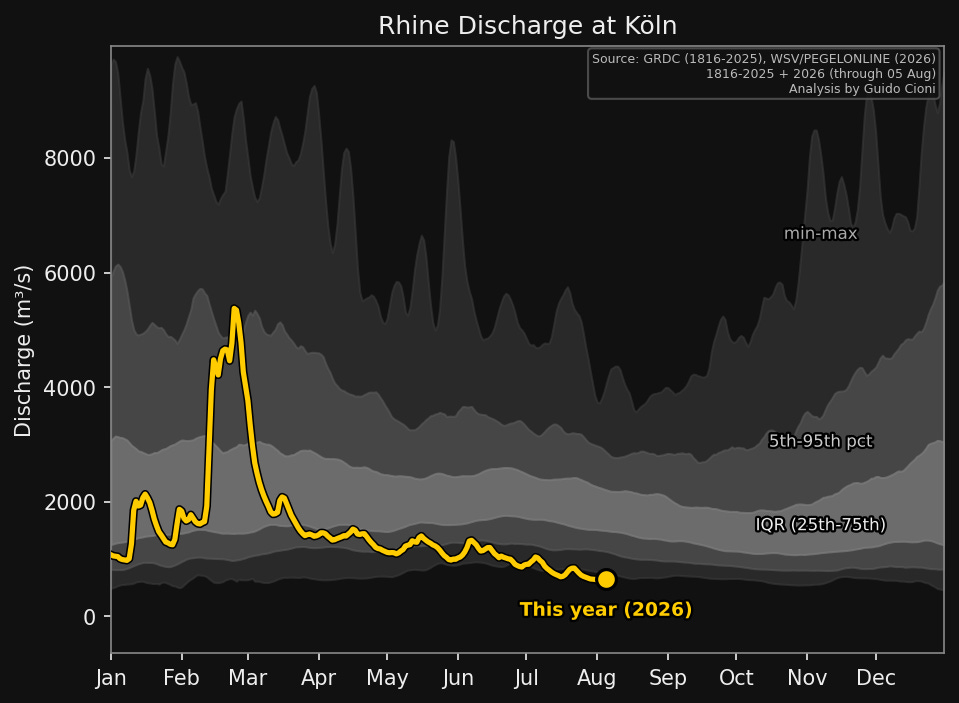
Regarding the river’s discharge (essentially the flux of water passing through), historical records dating back to 1816 indicate that while the August values aren’t the absolute lowest ever recorded (those typically occur in winter) they are extremely close, setting a new record low for the month of August.
Similarly historic conditions have been recorded on the Danube at Budapest. These low water levels have had severe consequences for energy infrastructure. In Hungary, the Paks nuclear power plant (which supplies nearly half of the country's electricity) was forced into an unprecedented shutdown of reactor units because the river level dropped 28 cm below its 2018 record low. The water level fell so much that the intake pumps could no longer draw sufficient water to safely cool the plant. Romania's Cernavoda nuclear plant has faced similar drought-related shutdowns.
There is little need to explain the root cause: a profound lack of precipitation. The following map displays the number of precipitation days for June and July. While not a direct measure of precipitation anomaly, it remains highly representative of the drought’s scale.
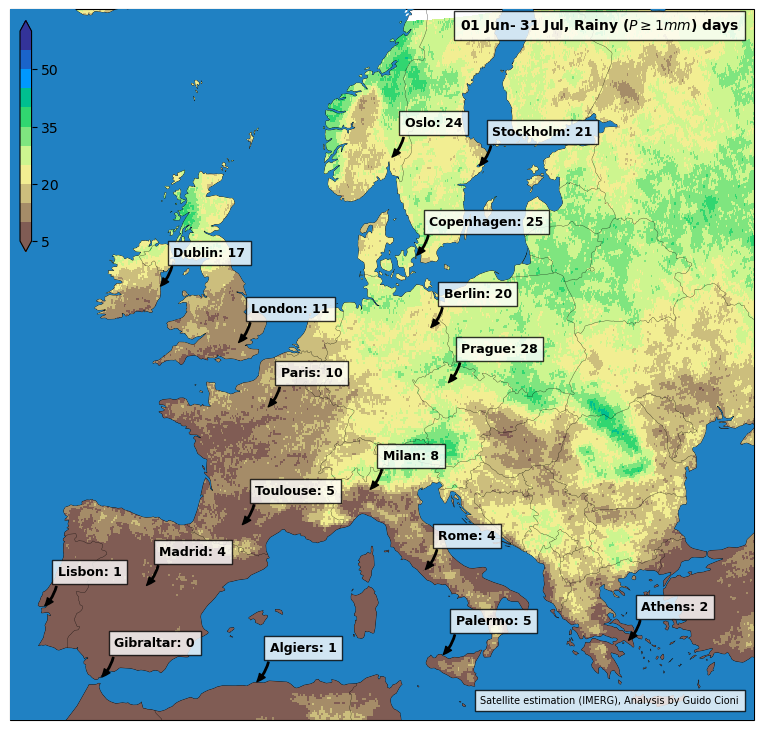
Most of Western and Southern Europe has seen few, if any, days of precipitation over the past two months. While an arid summer is typical for places like Algiers, it is entirely anomalous for cities like Paris.
No posts
Comments
Nothing yet. Say the first thing.
Sign in to join the conversation.