
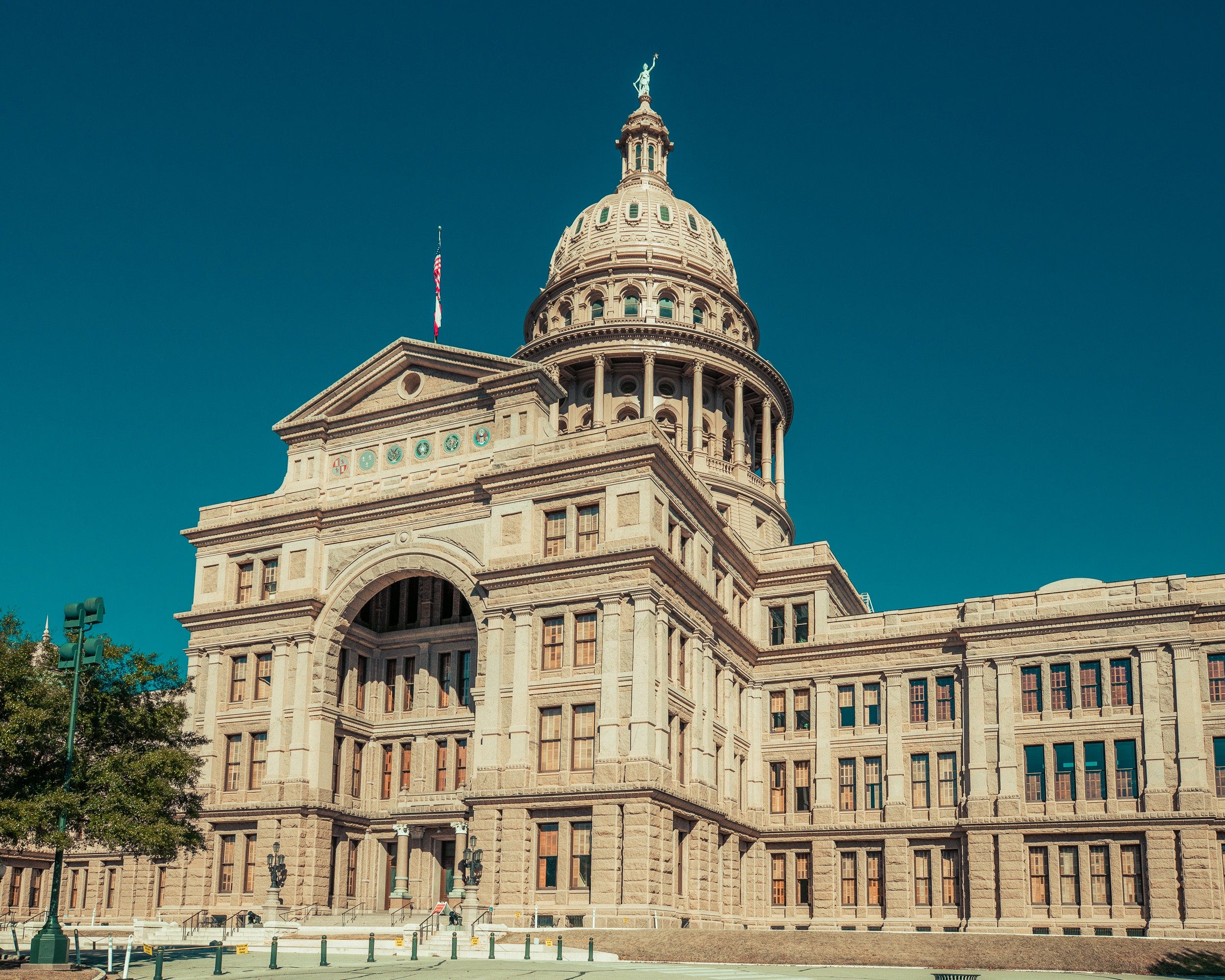
In the face of efforts by Texas Republicans to enact a brutal, democratically illegitimate gerrymander, Democrats in the State House took the only action they could: they fled the state, denying a quorum, and preventing the House from conducting business. Given that the legislators face heavy fines for their actions, it’s brave—but necessary—action.
Last night, Texas Gov. Greg Abbott raised the stakes by threatening the fleeing state legislators with removal from office.
But, as is the case with other petty tyrants, Abbott’s threat is heavier on punchy rhetoric than it is on the law. Even stipulating that we live in unprecedented times, a judicial decision embracing Abbott’s legal argument would be in a league of its own.
Just to set the scene, each chamber of the Texas Legislature requires a two-thirds quorum to do business.1 Because Democrats in the State House have fled to Illinois to deny the House a quorum, it can’t conduct business and therefore can’t adopt the obscenely gerrymandered congressional districts that the legislature is considering.
It’s clear, under rules adopted by the State House in the last several years, that legislators who deliberately act to deny a quorum can be fined $500 per calendar day of absence. But Abbott has now threatened that the legislators could actually be removed from office for fleeing the state. The crux of his argument is that, by fleeing the state to prevent the House from conducting its business, the legislators have “abandoned” their offices.
Abbott’s claim here is baseless, but easy enough to understand. He’s relying on a 2021 opinion from Texas Attorney General Ken Paxton from a similar situation. Paxton was asked (1) whether a state legislator can act to prevent a quorum and (2) whether doing so would create a vacancy in office.
The conclusion of Paxton’s opinion is, basically: I don’t know, but maybe. A court would have to decide.
Paxton says that a public official can vacate their office by abandoning it, but that it’s unclear whether preventing a quorum by fleeing the state would count as abandonment. Paxton is right that abandonment would cause a vacancy in office. There aren’t a ton of examples of “abandonment,” but even so, the idea that preventing a quorum counts as “abandonment” is internally inconsistent.
Paxton cites a state appeals court’s decision from 1920,2 which notes, in relevant part:
Abandonment is a species of resignation. Resignation and abandonment are voluntary acts. The former is a formal relinquishment; the latter a relinquishment through nonuser. Abandonment implies nonuser, but nonuser does not, of itself, constitute abandonment. The failure to perform the duties pertaining to the office must be with actual or imputed intention on the part of the officer to abandon and relinquish the office. The intention may be inferred from the acts and conduct of the party, and is a question of fact.
Note the emphasized language: abandonment is (1) “failure to perform the duties pertaining to the office” (2) done with “actual or imputed intention . . . to abandon and relinquish the office.”
It’s absurd to think that the legislators’ actions here would qualify. A state legislator leaving the state to deny quorum so that the House can’t conduct business isn’t acting with the intent to abandon their office. They’re actively using the powers of their office.
As a result, Paxton’s opinion is intentionally equivocal—he doesn’t even offer a conclusion as to whether this would count as abandonment, and says that the courts would have to decide.
Abbott’s threat relies on this language, and escalates by claiming that he’ll attempt to fill the fleeing legislators’ seats. But a careful examination of what he’s actually saying reveals how weak the threat is. He’s saying:
Ken Paxton says this might be abandonment.
I’ll go to court to test that argument and see if I can get these legislators’ seats declared vacant.
If I do, then I’ll schedule special elections.
There are a lot of “if” statements there, but they’re worth unpacking. First, neither Paxton nor Abbott can point to a judicial decision in any state ever holding that purposely denying quorum constitutes “abandonment.” I don’t think there is such a case, and I’ve never seen that argument suggested before. One of the leading nineteenth-century treatises on public officers makes clear that abandonment or “nonuser” of office “must be total[.]” Partial abandonment, or implied abandonment under ambiguous circumstances, is legally insufficient. Moreover, as the Texas Tribune has noted, fleeing to deny quorum is a time-honored tradition in Texas dating back to the 1870s.
Second, even if this were abandonment, the appropriate remedy for that is likely expulsion from the legislature, not judicial action. The Texas Legislature has the power to expel members (by a two-thirds vote, which requires a quorum),3 and is understood to have near-exclusive authority over legislative misconduct.
Third, let’s assume that the previous “if” statements are satisfied: this is abandonment, a court says that it has the power to make that determination, and the offices are ordered vacated. What happens next?
Abbott’s claim here uses deliberately ambiguous language. He notes that, if the offices are ordered vacant, “That empowers me to swiftly fill vacancies under Article III, Section 13 of the Texas Constitution.” But the Texas Constitution doesn’t give Abbott the power to fill the vacancies; it just gives him the responsibility to order that special elections take place.4
To that end, I’ve seen some people suggest that Abbott is claiming that he will fill the seats with appointments of his own. He’s using cagey language that certainly implies he’ll fill the vacancies himself, but it’s just saber-rattling. His citation of Article III, Section 13, makes clear that the extent of what he’d do is call special elections. Of course, if we’re at that point, then we’re in a bleak place. But mistaking this threat for another helps no one.
In short, Abbott is making a baseless, unprecedented argument. There’s no legal support that either he or Paxton can muster for it. Any court embracing this argument will be arriving at a conclusion contradicted by two hundred years’ worth of contradictory practices and understandings.
Thanks for reading Guaranteed Republics! This post is public so feel free to share it.
“Two‑thirds of each House shall constitute a quorum to do business, but a smaller number may adjourn from day to day, and compel the attendance of absent members, in such manner and under such penalties as each House may provide.” Tex. Const. art. III, § 10.
Steingruber v. City of San Antonio, 220 S.W. 77, 78 (Tex. Comm’n App. 1920).
“Each House may determine the rules of its own proceedings, punish members for disorderly conduct, and, with the consent of two‑thirds, expel a member, but not a second time for the same offence.” Tex. Const. art. III, § 11.
“When vacancies occur in either House, the Governor, or the person exercising the power of the Governor, shall issue writs of election to fill such vacancies; and should the Governor fail to issue a writ of election to fill any such vacancy within twenty days after it occurs, the returning officer of the district in which such vacancy may have happened, shall be authorized to order an election for that purpose.” Tex. Const. art. III, § 13(a).
No posts
Comments
Nothing yet. Say the first thing.
Sign in to join the conversation.