
Hello reader, this is Alex - Head of Growth for early-stage startups. I'm a big fan of helping others scale their companies and educating my peers on the best path, so here are a couple of free resources for you.
If you’re new to the newsletter, I share weekly marketing and growth tactics that will help you quickly grow your SaaS business 🚀.
Fast at diagnosing a broken GTM. Fast at building a positioning framework. Fast at knowing which channel deserves budget and which one is burning it.
I was right. But I was thinking about the wrong kind of fast.
The fractional model has always been about leverage. You bring senior judgment into a company that can’t afford a full-time CMO. You work across multiple clients. You move quickly because you’ve seen the problems before.
That model still works. But the ceiling just got a lot higher for the people willing to combine it with something new.
Agentic AI isn’t replacing the fractional leader. It’s turning the good ones into something closer to a small agency - with a team that never sleeps, never gets distracted, and never misses a brief.
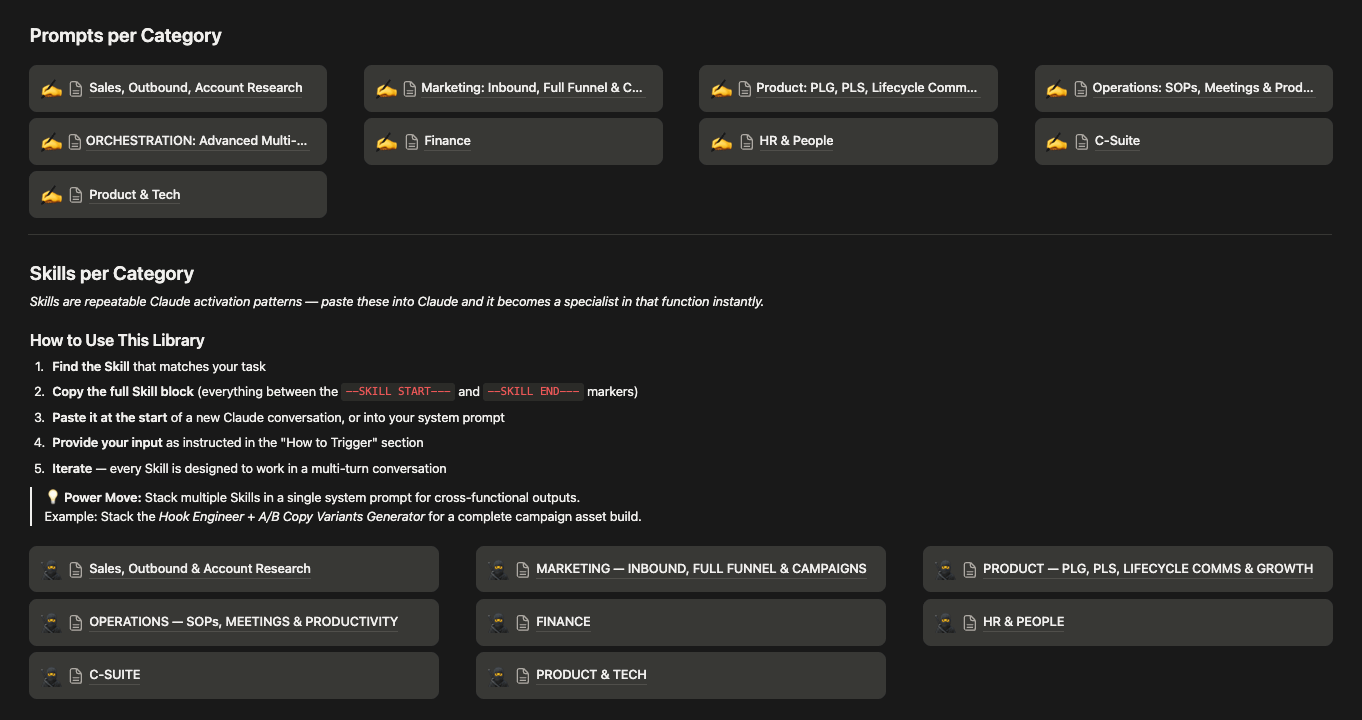
Most people using AI are still in prompt-response mode. They ask a question, get an answer, copy it somewhere.
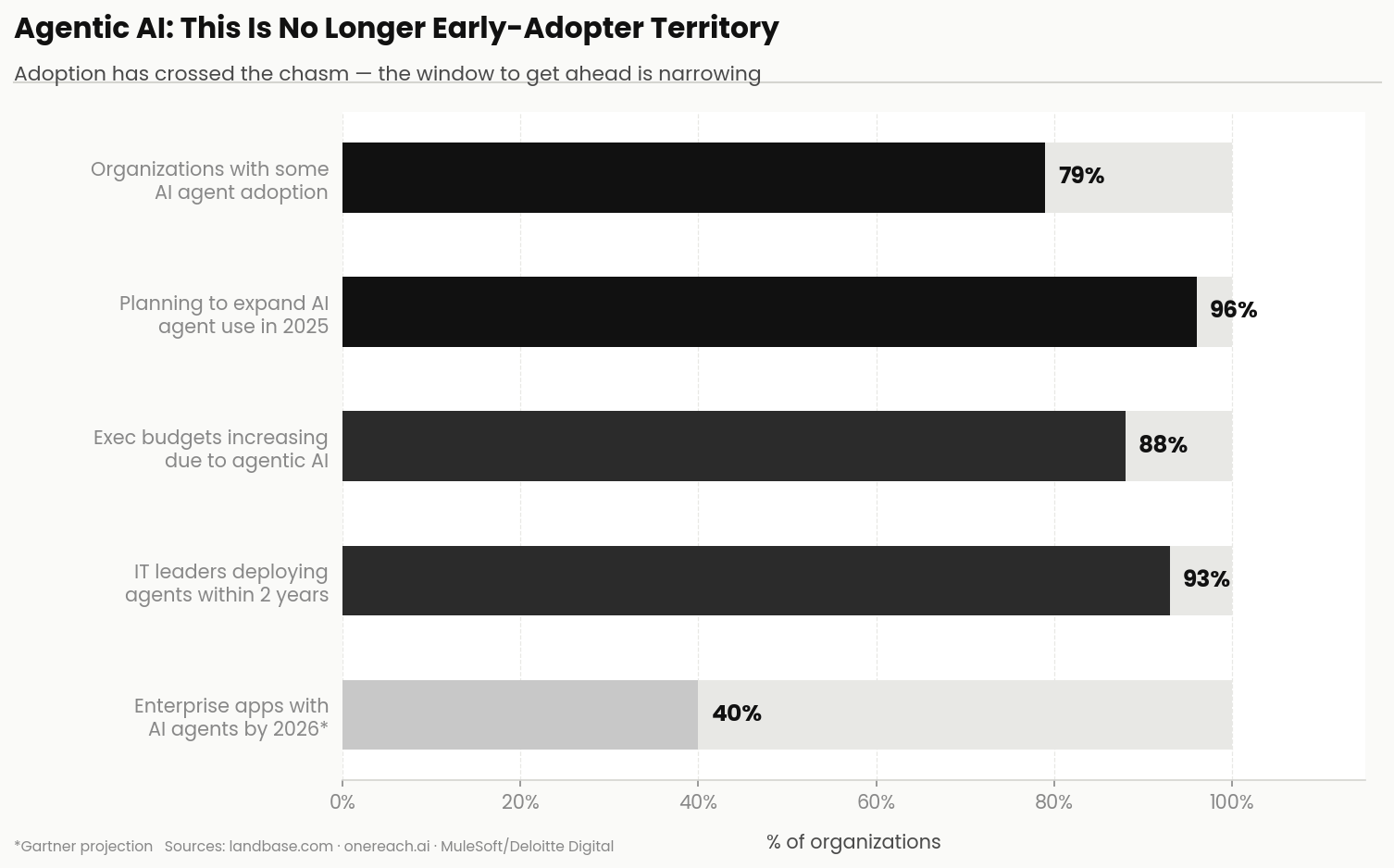
That’s useful. It’s not agentic.
Agentic AI takes a goal, breaks it into steps, uses tools, and executes - without you holding its hand through every task.
In practice: I give Claude a brief, connect it to Notion, web search, and a few other tools. It handles an entire workflow while I’m on a client call. Not one output. A complete system of outputs - structured, categorised, linked, and ready to review.
The difference is the difference between a calculator and a junior operator.
Let me give you something concrete.
I started working with a client where the founding team had strong domain expertise but zero content infrastructure. They were posting occasionally on LinkedIn. The company page was the main presence. Reach was minimal. No leads coming from content.
The problem wasn’t that they lacked things to say. The problem was that nobody had ever turned what they knew into a system.
Here’s what we built in under two weeks using agentic workflows:
First, I had Claude scrape and analyse competitors - their content angles, their engagement patterns, the topics where they had strong authority, and the gaps they were leaving open.
That research became the foundation of a content strategy for each individual on the founding team - not the company page. The founders’ personal brands were built around their actual expertise.
Then Claude populated a Notion content calendar. Not just titles. Full post copy, content pillar tags, image prompts, and publish dates - six months of material, structured and categorised from day one.
What took 10 minutes of briefing from me would have taken two full days manually—probably more.
The outcome after those first two weeks: each founder’s personal LinkedIn was already outperforming the company page. Not because the content was viral. Because it was consistent, specific, and built on actual competitive intelligence - not guesswork.
Do you need help with your startup in implementing Automation and Claude into your business?
Book a discovery call with me!
The traditional fractional leader sells hours. Even the good ones - the ones who charge on value - are ultimately constrained by execution bandwidth.
There are only so many content calendars you can build. Only so many competitive audits. Only so many outreach sequences you can personalise before you hit a wall.
Agentic AI removes that wall.
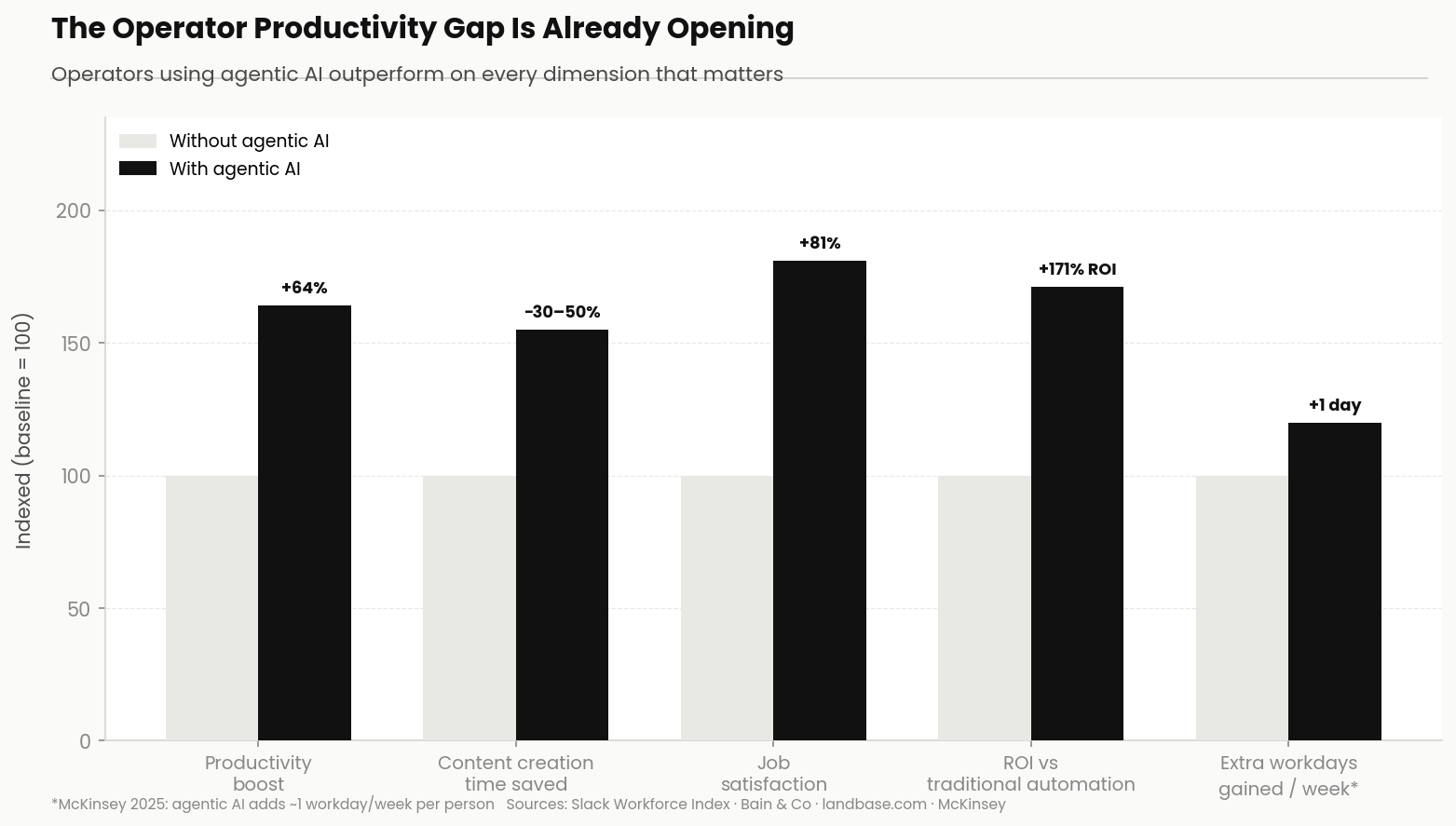
My leverage as a fractional CMO has always been judgment and strategy. What slowed me down was execution. Research took time. Building infrastructure took time.
Producing the actual assets - content, briefs, frameworks - took time.
Now it doesn’t. Not in the same way.
I set the direction. I define the brief. I review and approve. The execution layer runs underneath that, faster and more consistently than any junior hire I’ve ever worked with.
The result: I can run deeper work for more clients without sacrificing quality. The research is better. The content is more grounded. The systems are more complete.
The AI Product Manager Playbook
For anyone curious about the mechanics, here’s how a typical engagement looks now:
Research phase. Before touching a content strategy, I run a competitive intelligence loop. Claude scrapes competitor content across platforms, identifies topic clusters, flags engagement patterns, and surfaces the gaps. What used to be a week of manual work takes a few hours.
Strategy phase. Based on that research, I define content pillars per individual - not generic company messaging. Each person’s expertise becomes the content lens. I write the brief. Claude populates the structure.
Production phase. Full post copy, platform-specific formatting, image prompts, metadata. All of it goes directly into Notion with correct dates, status fields, and pillar tags. The calendar is live before most clients have had their second onboarding call.
Distribution and tracking. Engagement data feeds back into the research loop. What’s working shapes what gets written next. The system improves over time without starting from scratch each month.
This isn’t a tool stack. It’s infrastructure. The kind of infrastructure that used to take months and a small team to build.
I want to be direct about something.
This doesn’t make judgment less important. It makes it more important.
An agentic system is only as good as the brief it receives. Garbage in, garbage out - faster. The CMO’s job is still to know what good looks like. To recognise when a content angle is weak. To push back on positioning that’s vague. To understand which metric actually matters for this client at this stage.
The difference is you spend your time on that - on the thinking - and the execution follows at a pace that wasn’t possible before.
The fractional leaders who will fall behind are the ones treating this as a nice-to-have. The ones still doing competitive research manually. Still writing every brief from scratch. Still building content calendars one post at a time.
The ones who will pull ahead are the ones who treat agentic AI as infrastructure - the same way the best operators treat CRM as infrastructure. You build it once, you maintain it, and it multiplies everything else you do.
If you’re reading this and wondering where to start
Start with the workflow that costs you the most time. Not the most glamorous one. The one you dread.
For most fractional leaders, that’s research. Or content production. Or building the same onboarding infrastructure for every new client.
Pick one. Map the steps. Brief the agent. Review the output. Iterate.
You don’t need to rebuild everything at once. You need one agentic workflow that actually runs - and the confidence it gives you will do the rest.
The fractional model isn’t dying. It’s evolving. The best version of it looks like a senior operator with leverage that used to require a team.
That’s what the agentic CMO is.
And it’s available now - to anyone willing to build it.
Connect with me on LinkedIn and Twitter to get more free content on B2B and GTM.
Book a 1-on-1 free discovery call (only for founders - no sales pitch please)
Comments
Nothing yet. Say the first thing.
Sign in to join the conversation.