
You know those fine moments when you crack open a fortune cookie and discover a message that's exactly on point? This newsletter issue is that moment, my friend!
Like many others, I have been experimenting with various AI tools and prompts to become more efficient in content marketing. Specifically, I’m referring to long-form content created to gain more share in Search Engine Result Pages (SERP) and drive qualified leads.
The methods that I have tried range from prompt-chaining with ChatGPT to using tools such as Agility Writer and Surfer AI. I will share the content tech stack in my next newsletter issue.
Coming back to the main topic of this issue, I can say that although the content draft prepared by AI is decent, they are a lot to improve if we have to satisfy both the search engines as well as the human readers.
I have conceptualized a simple framework to improve the AI-generated content to hit the high notes of SEO and engage the crowd, aka your readers. This framework is called OPERA.
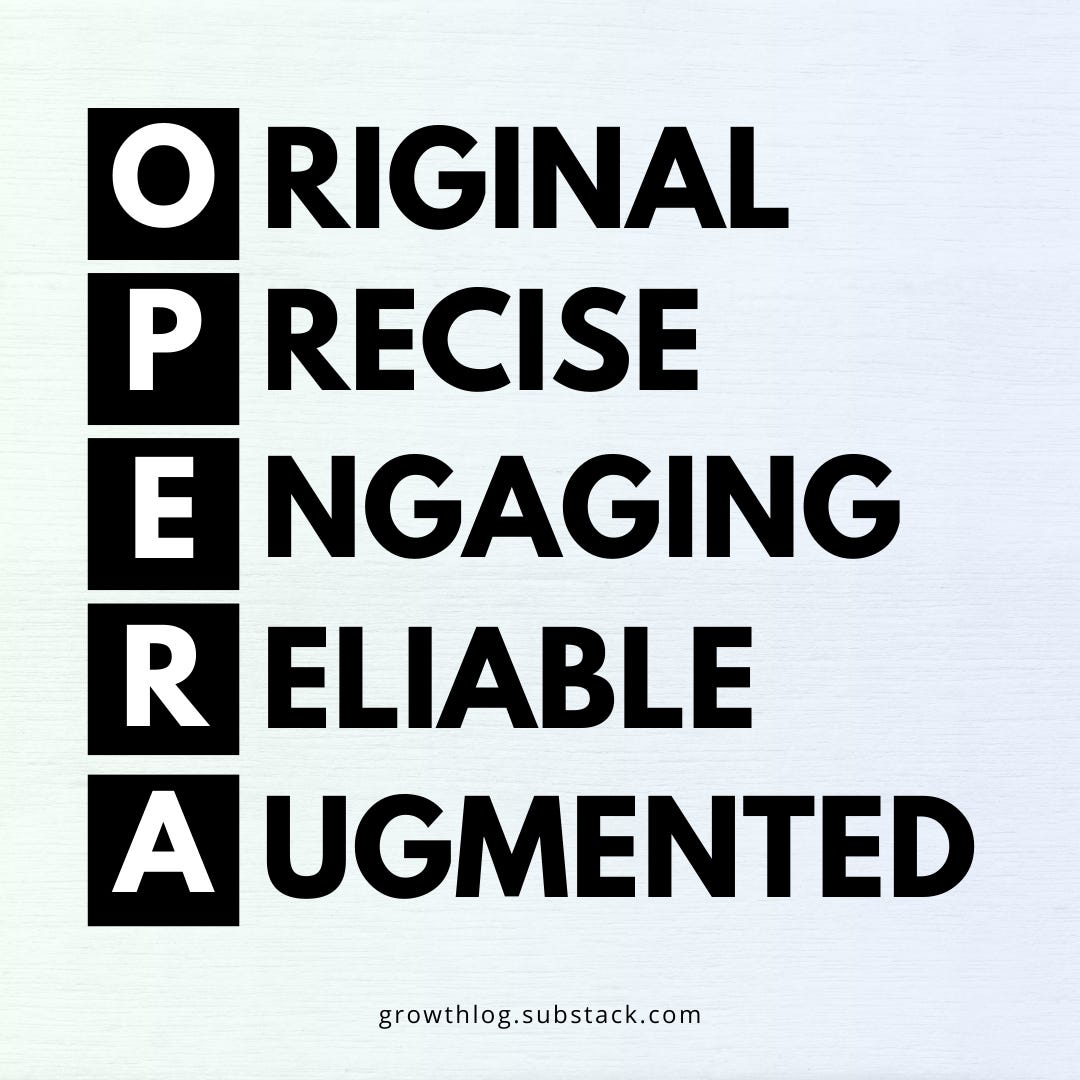
Now, let’s dive in!
O is for Original
Originality is about serving up fresh insights and ideas that readers can't find anywhere else. For instance, you can interview experts within your organization to get unique ideas. You should also add your first-hand experiences because people love learning from personal experiences.
The content created by AI often gives an average view without any strong stance or practical experience. That’s where the original human experience will make a difference.
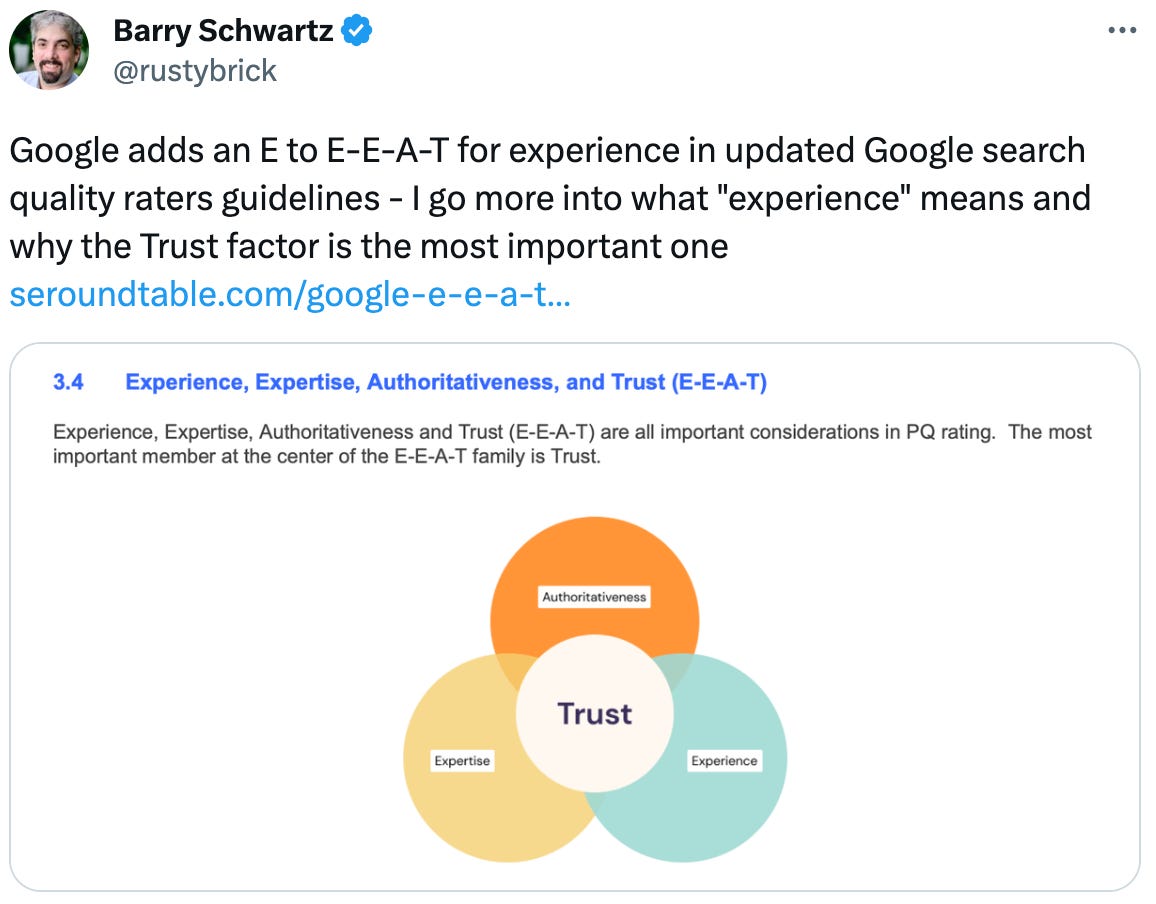
Not only do readers love original experiences, but Google is also a big fan. It's all in the E-E-A-T (Experience, Expertise, Authority, Trustworthiness) guidelines.
P is for Precise
It’s easy to get lost in AI-generated content ramblings. Mainly because AI can get a bit...verbose. To avoid that, keep the content concise and strictly remove all the content that is not adding value.
Consider providing readers with the exact information they need as soon as possible. For example, start with a 'summary' section early in the article or deliver the answer right up front in the first subheading (H2).
Here is an example of how the summary of the post is shown early in the article.
E is for Engaging
Just the text is never enough. Add images, charts, memes, quizzes, and anything that tickles the readers' fancy.
You can also ask ChatGPT to code an interactive quiz based on the content you have created and just add the final script to the content page.
Apart from that, you can repurpose infographics for Pinterest and even elevate your Quora answers.
R is for Reliable
Whenever you edit content, be it AI-generated or otherwise, fact-check and ensure you're offering accurate information backed by reputable sources. That makes your site trustworthy and reliable.
In Google’s EEAT guideline, Trust is the most important factor. If a site is not trustworthy, it does not matter even if they write expert content.
A is for Augmented Keywords
You have your primary keyword, and then you have the LSI (related) keywords. Tools like Clearscope and Surfer can crawl through the search result to come up with LSI keywords and FAQs that complement your main keyword.
Even if you prepare a content outline based on these keywords and feed the keywords to AI, it will miss some of them.
Now, you need to go through the keywords, phrases, and Q&A content you had initially selected and evaluate what the AI has missed. After that, add the missing pieces and make sure everything reads natural based on a structured flow.
That’s it!
Keep your content compositions original, precise, engaging, reliable, and augmented!
Additionaltional resources
No posts
Comments
Nothing yet. Say the first thing.
Sign in to join the conversation.