
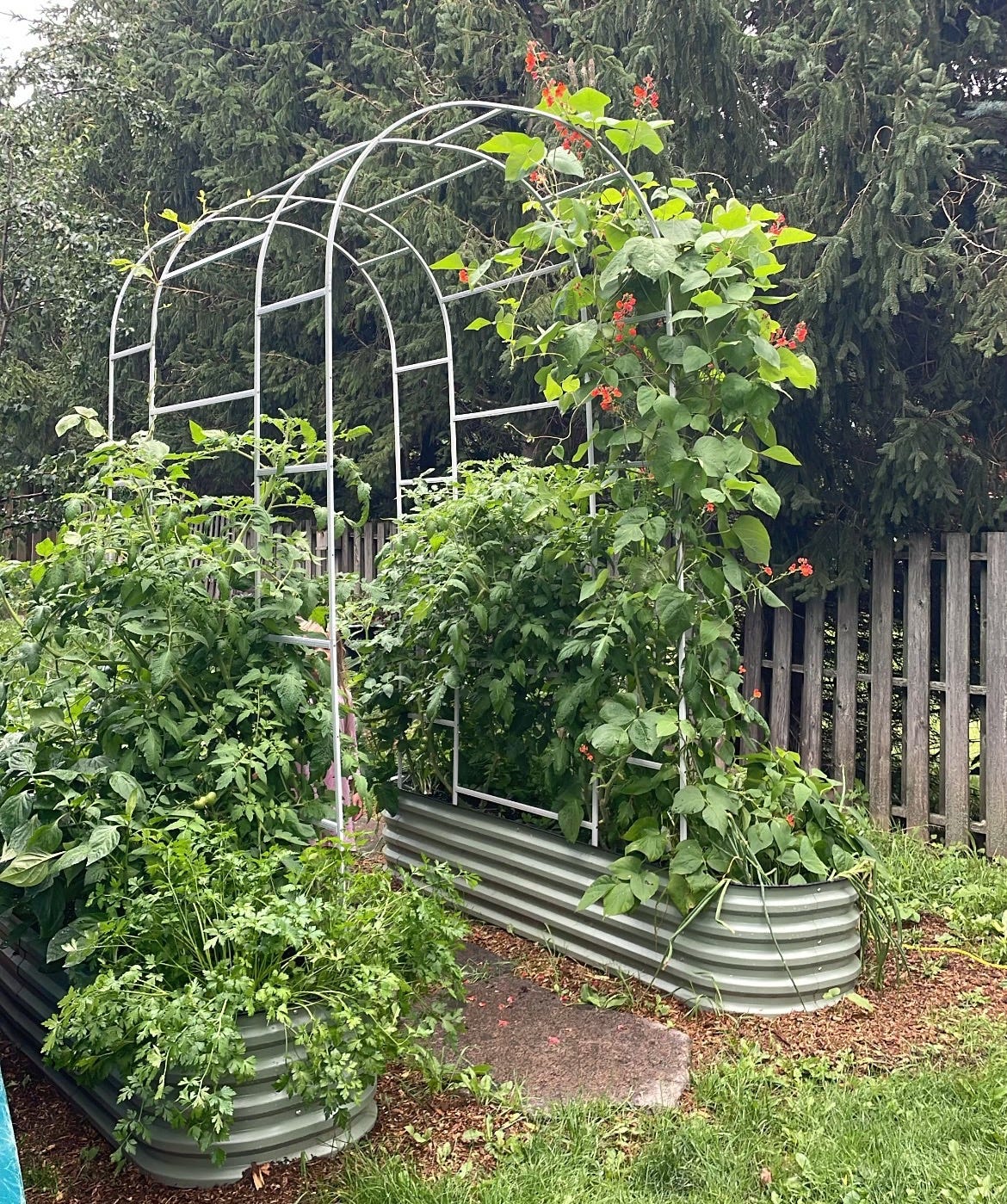
Runner beans are one of those plants I originally noticed because of how beautiful they are.
They climb quickly, cover a trellis in lush foliage and produce clusters of flowers that can range from deep crimson and peach to white and bicoloured blooms. They look like something you would intentionally grow as an ornamental vine, especially when hummingbirds and bumblebees begin visiting the flowers.
But runner beans are not simply a flowering vine that happens to produce beans.
They are a genuinely useful food crop, and I do not think enough gardeners realize just how many different ways they can be harvested and eaten. I certainly didn’t when I first became interested in growing them.
Runner beans are Phaseolus coccineus, which makes them a different species from the common garden bean, Phaseolus vulgaris. Common beans include many of the bush beans, pole beans, snap beans and dried beans we regularly grow.
Runner beans are native to the mountainous regions of Mexico and Central America. Although we usually grow them as annuals in Canada, the plant is actually a tender perennial. In climates where the soil does not freeze, the thickened roots can survive underground and send up new growth the following season.
In approximately Zone 9 and warmer, runner beans may survive outdoors with protection. Even then, success can depend on winter moisture, drainage, temperature and the individual variety. Cicada Seeds notes that they have not successfully overwintered their runner beans outdoors in Zone 8a, but gardeners in warmer zones may have better luck under a thick layer of mulch.
For those of us gardening in colder zones, there is also the experimental option of digging and storing the thick roots indoors in a similar way to dahlia tubers. I have not tried this yet, but it is fascinating to think that the runner bean we treat as a one-season vegetable is naturally capable of living for several years.
Of course, we can also simply collect the mature beans and replant them each spring.
For the cost of one garden centre impulse buy, you’ll unlock the full Growing With Beccalynne experience — garden downloads, practical mini guides, essays, and access full of resources designed to help you grow a more abundant, low-effort garden without overcomplicating it.
Runner beans are vigorous climbing plants. The vines twine around their supports and can easily grow eight to twelve feet in one season, so this is not the bean for a tiny tomato cage. They need a tall, sturdy trellis, arch, fence or bean teepee that can support a substantial amount of foliage.
They are generally direct-sown after the danger of frost has passed. The variety I am growing can be planted approximately one inch deep and four inches apart, with a trellis around six feet tall or higher. Runner beans grow best with consistent moisture and mulching around their roots can help keep the soil cool.
One of the interesting differences between runner beans and common beans is that runner beans tend to appreciate cooler growing conditions. They are more tolerant of cool temperatures than many regular beans, but extreme summer heat can interfere with pollination and cause flowers to drop without producing pods.
That does not necessarily mean the plant is finished.
The vines can remain healthy through a hot spell and begin setting beans again when temperatures cool. Afternoon shade, consistent watering and mulch may help in particularly hot climates.
This may also explain why runner beans can perform so beautifully going into late summer and early autumn, when some of our other beans are beginning to slow down.
This is where runner beans became much more exciting to me.
They are not simply harvested once in a single form. We can eat them at several different stages, which makes them an incredibly flexible crop.
The first way to use runner beans is to harvest the whole pods while they are still young and tender.
At this stage, they can be prepared similarly to green beans because runner bean pods can have a slightly rougher or firmer texture, they are often sliced before cooking. They can be steamed, boiled, sautéed, roasted or added to soups and other cooked dishes.
The key is to harvest them before the beans inside begin swelling significantly. Once the pod becomes large, stringy and fibrous, it may no longer be enjoyable as a whole green bean.
This also means we should not look at an older pod and assume we missed our opportunity completely. We may have missed the green-bean stage, but the beans developing inside are becoming another kind of harvest.
As the pods mature and the beans inside become plump, the outer pod becomes too tough to eat. At this stage, we can open the pod, remove the fresh beans and cook them as shelling beans.
Think of them in the same general category as fresh lima beans or other fresh shell beans.
Fresh runner beans do not normally require the lengthy soaking that dried beans do. They can be simmered until tender and added to soups, stews, bean salads, grain bowls, pasta dishes or simple meals with herbs, garlic and butter.
Cicada Seeds specifically recommends steaming the fresh mature beans and serving them with butter and salt, which sounds like the kind of garden meal I would happily eat straight from the bowl.
The third major harvest comes when the pods are allowed to dry fully on the vine.
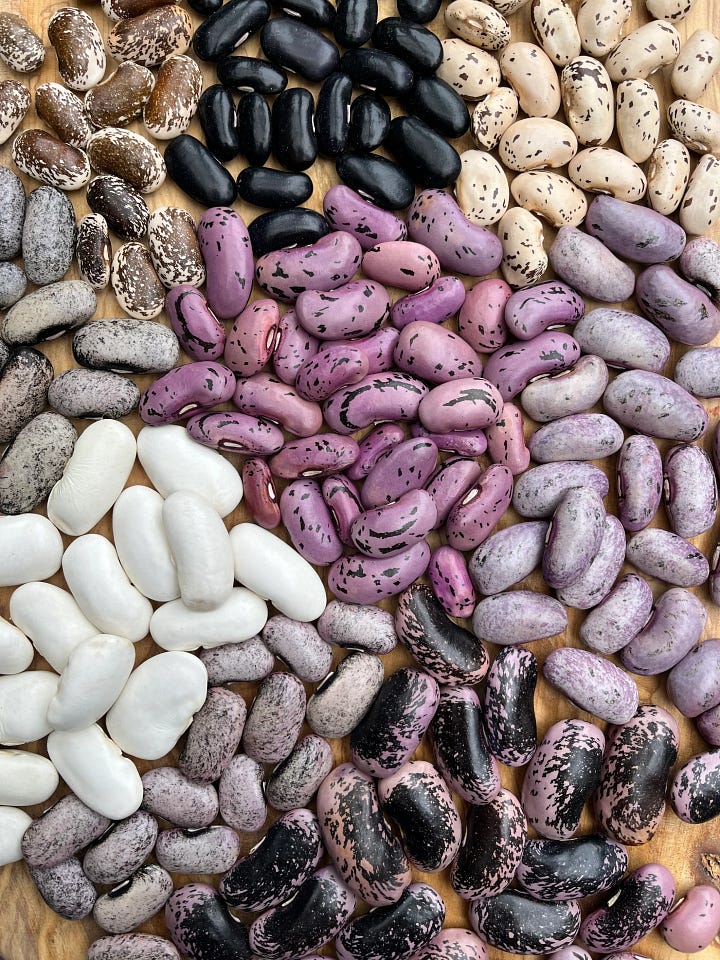
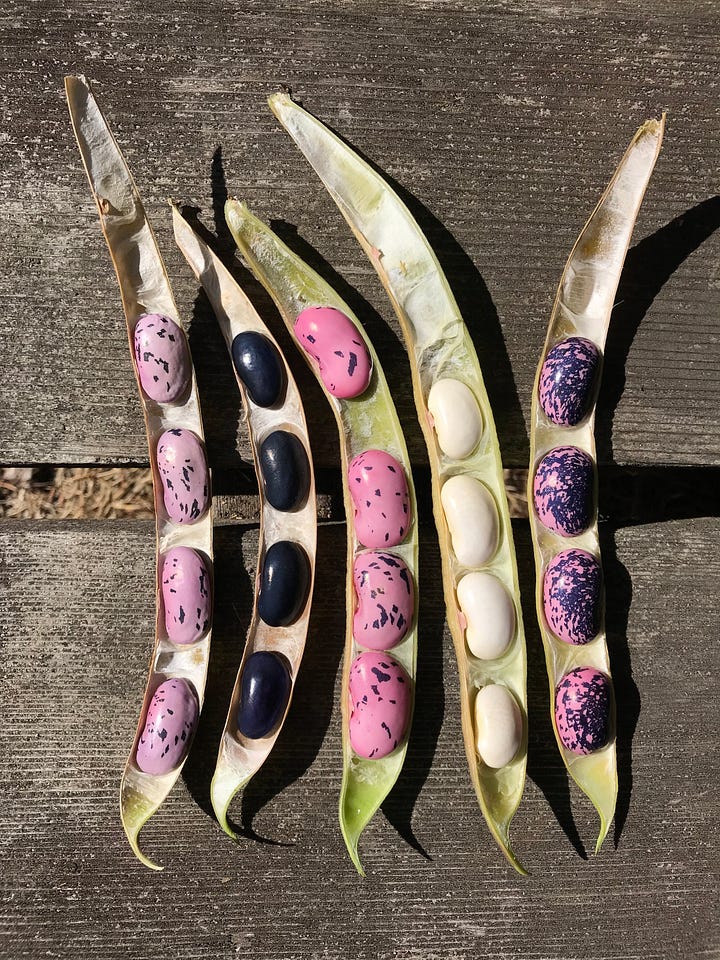
Once the pods are papery and the beans inside are hard, they can be shelled and stored as dried beans for winter. Depending on the variety, the beans can be beautifully marked with shades of purple, violet, black, red, brown and cream.
Dried runner beans can be soaked and thoroughly cooked before being used in chilli, soup, stew, baked bean dishes or anywhere we would normally use a substantial dried bean. Their flavour has sometimes been described as rich or chestnut-like.
Like other mature beans, runner bean seeds should not be eaten raw or undercooked. They contain lectins that are broken down through proper soaking and thorough cooking. Raw or inadequately cooked beans can cause significant digestive illness.
Being able to harvest one plant as a tender green bean, a fresh shelling bean and a dried storage bean is incredibly useful. We can harvest some pods early, let others mature and still leave a selection to dry for winter meals and next year’s seed.
The flowers are edible too.
They have a mild, slightly bean-like flavour and can be added to salads or used as a colourful garnish. They can also be lightly cooked, although I would be reluctant to remove too many flowers when each one has the potential to become a pod.
I would consider the flowers more of an occasional garden taste than a major harvest. They are also valuable to hummingbirds, bumblebees and other pollinators, which is one of the reasons runner beans can be such a wonderful addition to an edible landscape.
They offer height, colour, movement, habitat and food, all from the same planting.
My runner beans came from Cicada Seeds and I chose the Amethyst Dream Runner Bean Mix Seeds.
This is not a single uniform runner bean variety. It is a diverse mix that Cicada Seeds has been developing over several years. Its foundation came from the British Pop Runner Bean Mix created by Adaptive Seeds, which included edible-pod varieties selected for characteristics such as vigour, long pods and yield.
Additional runner beans from seed swaps, independent seed growers and other mixes have since been added. The result is a genetically and visually diverse population with flowers that may be crimson, peach, white or bicoloured and seeds in an incredible range of colours and patterns.
That diversity is a huge part of what interested me.
I am not only growing beans for production. I am growing a population I can observe. I want to see which flower colours appear, which plants grow most vigorously, which vines handle my garden conditions best and what the mature beans look like.
Because runner beans can cross with other runner beans, a diverse mix like this also gives gardeners the opportunity to save seeds and gradually select plants that perform well in their own gardens.
The pods from this mix can be eaten young as green beans. The mature beans can be shelled and cooked fresh, or the pods can be dried completely for a winter supply of dried beans.
It truly is an ornamental vine and a pantry crop wrapped into one plant.
Anyone who would like to try the Amethyst Dream Runner Bean Mix or explore the other seeds available through Cicada Seeds can use my discount code:
I think runner beans deserve much more recognition in our gardens. They are beautiful enough to cover an arch or fence, vigorous enough to create shade and privacy, loved by pollinators and capable of feeding us at several different stages.
They are not merely flowers with a few edible beans attached.
They are perennial plants disguised as annuals in cold climates, edible landscaping, a fresh summer vegetable, a shelling bean and a pantry crop for winter.
Once I understood everything we could actually do with them, growing runner beans made a whole lot more sense.

Meet The Author.
Hi there! I’m Becca, the heart behind Growing With Beccalynne.
From Eastern Ontario Canada, gardening has been apart of me my whole life starting with my great grandpa when I was little. I’ve been building and educating through my own garden since 2018. By day, I run my business as a virtual assistant and creating content for you (@growingwithbeccalynne on all platforms). Here, I pour my love for soil science, creating gardens, growing plants and the joys of creating a low effort garden to love long term.
Ways To Keep Growing With Me:
Become a Paid Subscriber: For the cost of a monthly garden centre impulse buy, you can unlock the full Growing With Beccalynne experience — weekly downloads, private essays, seasonal workbooks, and access to the growing Growers Vault of resources designed to help you build a healthier, lower-effort garden.
Explore the Garden Resources I Share : Seasonal notes, how-to guides, soil-building methods, herb-bed layouts, and the real process of growing a backyard garden with ease. These tools are here to help you grow more confidently without overwhelm.
Follow Along on Instagram - Come hang out with me on Instagram for real-time garden updates, photos from the backyard, short-form videos, seasonal reminders, plant rambles, garden experiments, and the honest in-between moments that don’t always make it into a full post.
💬 Feel free to like or comment on this newsletter so more Substack users can find it!
Comments
Nothing yet. Say the first thing.
Sign in to join the conversation.